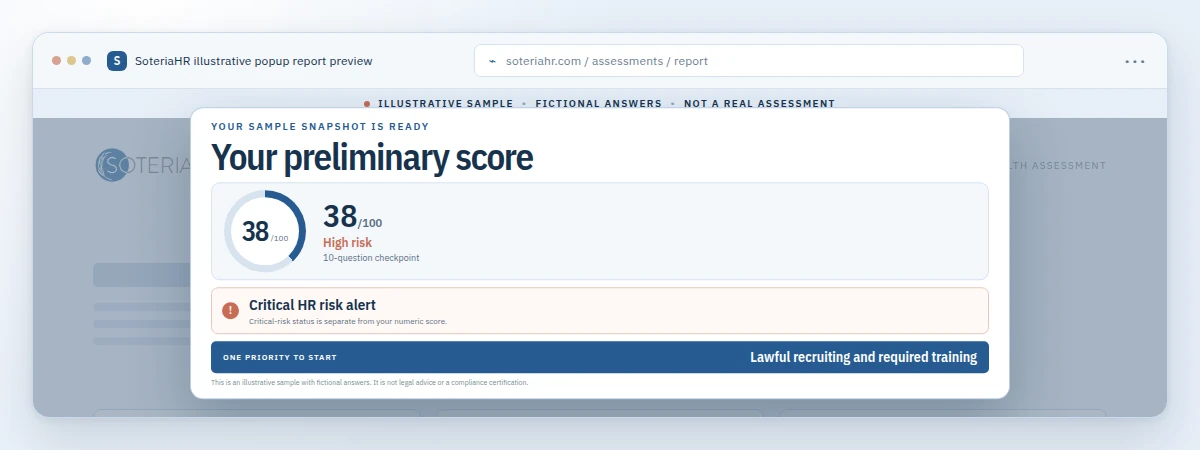
Onboarding employees is the structured, multi-stage process of integrating new hires into your organization — covering compliance, training, culture, and relationship-building from the moment an offer is accepted through the first full year of employment. It is, in short, how you convert a signed offer letter into a confident, productive team member. Yet despite its outsized impact on retention and performance, too many companies still treat onboarding as a one-day administrative task.
That oversight is expensive. According to SHRM, organizations with strong onboarding programs improve new hire retention by 82% and boost productivity by over 70%. Furthermore, employees who experience a structured onboarding process are significantly more likely to remain with their employer beyond the critical first year.
Whether you are a founder, COO, HR generalist, or operations manager scaling a team, this guide breaks down exactly what onboarding employees means, why it matters, how to do it well, and how to avoid the mistakes that quietly cost companies their best people.
What Does Onboarding Employees Actually Mean?
The term onboarding originated in organizational psychology. According to Wikipedia’s overview of onboarding, it refers to the mechanisms through which new employees acquire the knowledge, skills, behaviors, and relationships they need to become effective organizational insiders. In practice, that is a far broader mandate than most companies realize.
Onboarding employees is not a single event. It is a deliberate journey — one that ideally begins before the employee’s first day and continues well into their first 90 days, or even their first full year. It encompasses five overlapping dimensions that researchers and HR professionals often call the “5 C’s”:
- Compliance — Legal requirements, documentation, and mandatory training
- Clarification — Role expectations, success metrics, and performance standards
- Culture — Company values, norms, rituals, and unwritten rules
- Connection — Relationships with teammates, managers, and cross-functional colleagues
- Check-back — Ongoing feedback, support, and development conversations over time
Together, these dimensions create the psychological safety and operational readiness that allow new hires to contribute meaningfully and stay long-term. Miss even one, and the onboarding experience feels incomplete — no matter how polished the welcome packet looks.
For a deeper look at how this plays out operationally, the guide to what employee onboarding really involves from Soteria HR walks through each dimension with practical context for growing teams.

Effective onboarding employees starts with a genuine welcome — not just a pile of paperwork.
Onboarding vs. Orientation: A Critical Distinction
These two terms are frequently used interchangeably — but they describe very different things. Understanding the difference is essential for building a program that actually works.
Orientation is a discrete event, typically spanning the first day or first week. It covers introductions, basic logistics, workstation setup, and administrative paperwork. It is necessary, but it is not sufficient.
Onboarding, by contrast, is an extended, intentional experience. It includes orientation, but also role-specific training, cultural immersion, relationship-building, goal-setting, mentorship assignment, and structured check-ins across weeks and months. Think of orientation as the opening chapter — and onboarding as the full story.
Confusing the two is one of the most common reasons new hires feel lost, disengaged, or ready to quit in their first 90 days. In fact, Gallup research shows that only 12% of employees strongly agree their organization does a great job of onboarding new people. That statistic reveals an enormous, fixable opportunity for most businesses.
What About “Induction” — Is It the Same Thing?
In the UK, Australia, and parts of Europe, the process of onboarding employees is often called induction. The terminology differs, but the underlying intent is the same: welcome, equip, and integrate new hires so they can do their best work. Regardless of what you call it, the principles of effective new hire integration are universal.
The Key Stages of Onboarding Employees: A Step-by-Step Process
A well-designed onboarding program moves through several distinct phases. Each stage builds on the previous one, and skipping any phase creates gaps that are difficult to recover from later. Here is how to structure the process from start to finish:
- Pre-Boarding (Before Day One) — Send a personalized welcome email, complete digital paperwork in advance, set up technology access and system permissions, ship equipment if remote, and prepare the new hire’s workspace. A smooth first day starts well before it begins. Reducing day-one friction sets a powerful tone of organizational competence.
- Compliance and Documentation (Days 1–3) — Collect all legally required forms, including Form I-9, W-4, and any state-specific notices. Ensure benefits enrollment windows are acknowledged and that mandatory training is scheduled promptly. Employers must verify Form I-9 within three business days of an employee’s start date — no exceptions.
- Structured Orientation (Days 1–5) — Introduce the new hire to the team, walk through company values and culture, review the employee handbook, explain communication norms, and set clear performance expectations for their first 30 days. Orientation should feel welcoming, not overwhelming.
- Role-Specific Training (Weeks 2–4) — Assign a formal buddy or mentor, schedule job-specific skills training, and grant access to all tools and systems the employee needs to perform effectively. This phase bridges the gap between general company knowledge and actual job performance.
- Cultural Integration (Ongoing, Months 1–3) — Facilitate team introductions across departments, encourage participation in meetings and rituals, and create intentional opportunities for the new hire to build relationships beyond their immediate team. Cultural fit is not accidental — it is cultivated.
- 30-60-90 Day Check-Ins (Structured Milestones) — Hold structured one-on-one meetings at the 30-, 60-, and 90-day marks to address open questions, gather honest feedback, review goal progress, and reinforce the new hire’s sense of direction and belonging. These conversations prevent small problems from becoming resignation triggers.
- Extended Development and Feedback (Months 4–12) — Continue with quarterly check-ins, development planning, and growth conversations through the full first year. Research consistently shows that onboarding programs extending to 12 months produce the strongest retention and performance outcomes.
For a detailed walkthrough with actionable steps, the employee onboarding process guide on Soteria HR covers each phase with specific tactics you can implement immediately.
Onboarding Compliance: The Legal Layer You Cannot Ignore
Beyond culture and connection, onboarding employees carries serious legal responsibilities. Employers must collect specific documentation, provide required notices, and complete enrollment steps within defined timeframes. Missing these is not just an HR headache — it is a legal liability with real financial consequences.
Federal Compliance Requirements
- Form I-9 (Employment Eligibility Verification) — Required by the U.S. Citizenship and Immigration Services. Must be completed within three business days of the employee’s start date. Penalties for non-compliance range from $272 to over $27,000 per violation.
- Form W-4 (Tax Withholding) — Required by the IRS for all new employees. Determines federal income tax withholding and must be collected before the first payroll cycle.
- New Hire Reporting — Employers must report new hires to the relevant state agency within 20 days of hire, per the Personal Responsibility and Work Opportunity Reconciliation Act.
- FLSA Notice Requirements — Some states require distribution of a wage notice or written pay statement under the Fair Labor Standards Act framework at the time of hire.
State-Specific and Benefits Compliance
Beyond federal requirements, many states mandate additional workplace notices, anti-harassment training, and paid leave disclosures at or near the time of hire. Benefits enrollment windows — typically 30 days for health insurance — are equally time-sensitive. Missing these windows can leave employees without coverage and create legal exposure for the employer.
Therefore, a documented compliance checklist is not optional — it is essential infrastructure for any onboarding program. This is precisely where many growing companies stumble. Without dedicated HR expertise, compliance steps get missed, and the consequences follow. Soteria HR helps organizations stay protected from day one.
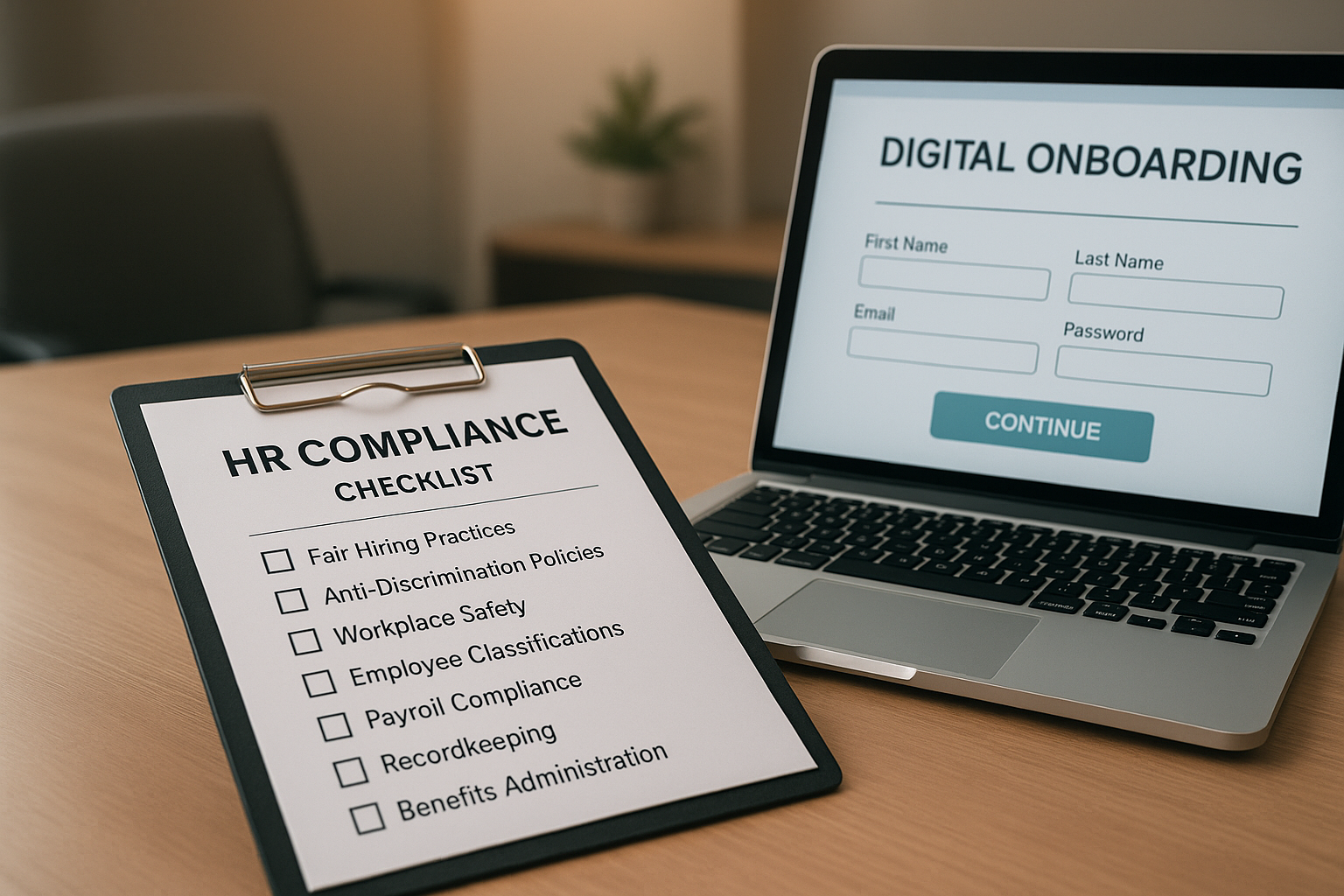
Compliance during onboarding employees is not optional — missing key steps creates real legal exposure for employers.
The Business Case for Onboarding Employees Effectively
When onboarding works well, the results are measurable and meaningful. New employees reach full productivity faster, voluntary turnover drops, and team morale rises. Conversely, poor onboarding sends talented people right back out the door — often within their first 90 days.
The Cost of Getting It Wrong
Replacing an employee typically costs between 50% and 200% of their annual salary, depending on the role and seniority. For a growing company with 25 to 100 employees, repeated early-stage turnover can be financially devastating — and culturally corrosive. According to the U.S. Bureau of Labor Statistics Job Openings and Labor Turnover Survey, voluntary separations remain a persistent challenge across industries, particularly in the first year of employment.
The ROI of Getting It Right
Strong onboarding programs deliver clear, documented returns. Consider these benchmark figures:
- 82% improvement in retention — Organizations with structured onboarding retain significantly more new hires (SHRM)
- 70%+ boost in productivity — Structured programs accelerate new hire time-to-productivity (Glassdoor)
- 2x faster ramp time — Employees with a formal onboarding experience reach full performance roughly twice as fast as those without
- Stronger employer brand — A great onboarding experience generates positive word-of-mouth referrals, improving future recruiting
Furthermore, onboarding directly shapes a new hire’s perception of your entire organization. First impressions are powerful. A disorganized or chaotic onboarding experience signals — fairly or not — that the rest of the company may be equally chaotic. In addition, it erodes the confidence of new hires precisely when they need it most.
Curious whether your current approach is falling short? This honest breakdown of common onboarding mistakes that sink new hires from Soteria HR is a useful self-assessment tool.
How Company Culture Shapes the Onboarding Experience
Culture is not something you hang on a wall or list in a slide deck. It is something new employees feel from their very first interaction with your organization. Effective onboarding intentionally communicates your values, behavioral norms, and shared expectations — so new hires understand not just what their job is, but why it matters.
This means introducing new hires to team rituals, communication styles, decision-making expectations, and the unwritten rules that make your workplace function. In addition, pairing every new employee with a formal onboarding buddy or mentor dramatically accelerates cultural integration — and reduces the anxiety that naturally accompanies a new job.
The Buddy System: A Simple Tool With Big Results
An onboarding buddy is a peer — not a manager — assigned to help a new hire navigate their first 30 to 90 days. The buddy answers informal questions, provides cultural context, and helps the new employee build their internal network. Research from Microsoft found that new hires with an onboarding buddy are 23% more satisfied with their experience after one week, and the effect compounds over time.
For growing companies, culture-aligned onboarding also reduces the risk of a poor cultural fit becoming a larger organizational problem. The long-term benefits of employee onboarding extend far beyond day one — they compound across the entire employment relationship.
Remote Employee Onboarding: What Changes and What Stays the Same
Remote and hybrid work arrangements require a deliberately adapted approach to onboarding employees. The core principles remain the same — compliance, culture, connection, clarification, and ongoing feedback. However, the methods must shift to account for the absence of physical proximity.
Remote Onboarding Best Practices
- Ship equipment before day one — Remote hires should receive their laptop, peripherals, and any welcome materials at least two to three days before their start date.
- Provide a detailed digital onboarding portal — A centralized online hub with links to all tools, documents, training materials, and contact directories eliminates the confusion that derails remote starts.
- Schedule virtual introductions intentionally — Do not leave remote hires to introduce themselves organically. Arrange structured video calls with team members, cross-functional partners, and leadership in the first two weeks.
- Increase check-in frequency — Remote employees are at higher risk of feeling invisible. Weekly one-on-ones with the manager during the first 30 days are a minimum standard, not a bonus.
- Create virtual social touchpoints — Casual video coffee chats, virtual team lunches, and digital watercooler channels help remote hires build the informal relationships that in-office employees build naturally.
- Clarify communication norms explicitly — Remote teams have varied expectations about response times, meeting protocols, and asynchronous work. Document and share these norms early, rather than leaving new hires to figure them out the hard way.
Without these intentional adjustments, remote new hires frequently feel isolated, confused, and undervalued — all of which are early warning signs of voluntary departure.
Onboarding Best Practices for Small and Mid-Sized Businesses
You do not need a Fortune 500 HR department to run an exceptional onboarding program. However, you do need intentionality, documentation, and consistency. Here are the practices that make the biggest, most lasting difference:
- Document and standardize every step — A written onboarding checklist ensures nothing falls through the cracks, regardless of who is running the process on any given day.
- Personalize the welcome experience — A handwritten note, a team lunch, or a small welcome gift signals genuine care. Small gestures carry disproportionate meaning at the start of a new job.
- Set clear 30-60-90 day goals — Give new hires written milestones so they understand what success looks like early in their tenure. Ambiguity breeds anxiety.
- Assign accountability — Designate a specific person — not “the team” — responsible for each new hire’s onboarding experience. Shared responsibility often means no responsibility.
- Gather feedback at every milestone — Ask new hires what is working and what is not. Their real-time perspective continuously improves the process for everyone who follows.
- Measure onboarding outcomes — Track 90-day retention rates, time-to-full-productivity, and new hire satisfaction scores. What gets measured gets improved.
- Extend onboarding to 12 months — The best onboarding programs do not end at 90 days. They include quarterly check-ins and development conversations through the full first year.
For a complete breakdown of these tactics, the employee onboarding best practices guide from Soteria HR is an excellent starting point for teams at any stage of growth.
Common Onboarding Mistakes That Cost Companies Their Best Hires
Even well-intentioned companies make preventable onboarding mistakes. Understanding these pitfalls is the first step toward avoiding them. Specifically, the following errors appear most frequently in organizations that struggle with early-tenure turnover:
- Information overload on day one — Bombarding new hires with every policy, tool, and procedure in their first eight hours guarantees nothing sticks. Spread information delivery across the first two to four weeks.
- No clear point of contact — New hires who do not know who to ask for help quickly feel alone and unsupported. Assign a named buddy and a named manager contact from day one.
- Treating onboarding as a one-day event — Orientation is not onboarding. Companies that conflate the two consistently see higher 90-day turnover.
- Skipping cultural integration — Role training without cultural context produces technically competent employees who feel like outsiders. Both are necessary.
- Failing to set clear expectations — New hires who do not know what success looks like in their first 30 days often default to anxiety and disengagement.
- Ignoring compliance deadlines — Missing I-9, W-4, or benefits enrollment deadlines creates legal exposure and signals organizational dysfunction to the new hire.
- Never asking for feedback — Onboarding programs that are never evaluated never improve. Regular pulse surveys from new hires provide the data needed to continuously iterate.
How Technology Can Strengthen the Onboarding Process
Modern HR technology can dramatically improve the consistency and scalability of onboarding employees. Specifically, HR Information Systems (HRIS) — software platforms that centralize employee data, automate workflows, and track compliance tasks — have made it possible for smaller companies to run enterprise-quality onboarding programs without large HR teams.
Key Technology Tools for Onboarding
- HRIS platforms (e.g., BambooHR, Rippling, Gusto) — Automate paperwork, track compliance checklists, and centralize employee records from pre-boarding through year one.
- Learning Management Systems (LMS) — Deliver structured training modules for compliance, role-specific skills, and company culture at scale, with built-in completion tracking.
- E-signature tools (e.g., DocuSign, HelloSign) — Eliminate paper-based bottlenecks by enabling digital completion of all required forms before day one.
- Onboarding portals — Dedicated digital hubs that give new hires a single place to find their schedule, contacts, tools, policies, and training resources.
- Employee engagement platforms (e.g., Lattice, Culture Amp) — Enable structured check-ins, pulse surveys, and goal-tracking conversations throughout the first year.
However, technology is a tool — not a strategy. The most sophisticated HRIS cannot replace genuine human connection, intentional cultural integration, or consistent manager follow-through. Technology works best when it amplifies a well-designed human process, not when it substitutes for one.
How Outsourced HR Can Elevate Your Onboarding Program
Many growing companies do not have a dedicated internal HR team — and that is perfectly normal. However, that gap creates real risk when it comes to onboarding employees consistently and compliantly. An outsourced HR partner can design, document, and manage the entire onboarding process on your behalf.
Specifically, an outsourced HR partner brings:
- Pre-built compliance checklists tailored to your state and industry
- Documented onboarding workflows that standardize the experience regardless of who is running it
- Expertise in benefits enrollment, required notices, and legally mandated training
- Cultural onboarding frameworks that align with your company’s values and goals
- Ongoing HR support so that onboarding doesn’t drop off after the first week
Soteria HR partners with growing small and mid-sized businesses to design onboarding programs that are fully compliant, culture-aligned, and built to support long-term retention. Learn more about how outsourced HR supports onboarding at soteriahr.com.
Frequently Asked Questions About Onboarding Employees
What does onboarding employees mean?
Onboarding employees is the structured, multi-stage process of integrating new hires into an organization — covering compliance, training, culture, and relationship-building so they can perform effectively and feel engaged from day one through their first full year.
How long should employee onboarding last?
Most HR experts recommend onboarding last at least 90 days, though the most effective programs extend to a full 12 months. Research consistently shows that longer, more structured onboarding produces stronger retention and faster time-to-productivity outcomes.
What is the difference between orientation and onboarding?
Orientation is a single event — typically the first day or week — that covers paperwork, introductions, and basic logistics. Onboarding is a broader, ongoing process that includes orientation but also encompasses role training, cultural integration, goal-setting, mentorship, and regular feedback conversations over months.
Why does onboarding employees matter for retention?
According to SHRM, organizations with strong onboarding programs improve new hire retention by 82%. Employees who feel supported, prepared, and connected in their first months are far more likely to stay long-term and become high performers.
What are the main stages of onboarding new employees?
The main stages are: pre-boarding (before day one), compliance and documentation (days one through three), structured orientation (days one through five), role-specific training (weeks two through four), cultural integration (months one through three), and extended development and feedback through the full first year.
What compliance tasks are required during onboarding?
Required compliance tasks include completing Form I-9 within three business days of the start date, collecting Form W-4, reporting the new hire to the state, providing any required workplace notices, and meeting benefits enrollment deadlines. Failing to complete these steps exposes employers to significant legal and financial penalties.
What is pre-boarding and why does it matter?
Pre-boarding is the period between a job offer acceptance and the employee’s first day. It includes sending a welcome email, completing digital paperwork, setting up technology access, and preparing the workspace. Effective pre-boarding reduces day-one friction, signals organizational readiness, and strengthens the new hire’s confidence before they even arrive.
What are the 5 C’s of onboarding employees?
The 5 C’s are Compliance, Clarification, Culture, Connection, and Check-back. Together, they represent the five core dimensions that a complete onboarding program must address to fully integrate a new hire — legally, operationally, culturally, socially, and developmentally.
How does onboarding affect employee productivity?
A structured onboarding process helps new employees reach full productivity significantly faster than those without formal support. Research from Glassdoor found that strong onboarding can improve new hire productivity by over 70%, and employees with formal onboarding programs typically ramp to full performance roughly twice as quickly.
Can small businesses benefit from a formal onboarding process?
Absolutely. Small businesses often feel the impact of turnover more acutely than large organizations because each departure represents a larger share of total capacity. Even a simple, documented onboarding checklist dramatically improves retention and reduces the cost and disruption of repeated early-tenure hiring.
Should remote employees have a different onboarding process?
Yes. Remote onboarding requires additional intentionality around equipment shipping, digital onboarding portals, virtual introductions, increased check-in frequency, and explicit communication norms. Without these adjustments, remote hires frequently feel isolated, confused, and disengaged — increasing early-departure risk significantly.
How can outsourced HR improve the onboarding process?
An outsourced HR partner like Soteria HR can design, document, and manage the entire onboarding process — from compliance paperwork and state-required notices to cultural integration frameworks and 90-day check-in schedules — so growing businesses deliver a professional, consistent onboarding experience without building a full internal HR team.
Conclusion: Onboarding Employees Is a Strategic Investment
Onboarding employees is not a box to check — it is the foundation of every successful employment relationship. When you invest in a thoughtful, structured, and legally compliant onboarding experience, you send a clear message to every new hire: we are glad you are here, we are ready for you, and we are committed to your success.
The data is unambiguous. Strong onboarding employees programs improve retention by 82%, accelerate productivity by over 70%, and generate compounding returns in culture, morale, and employer brand. Consequently, every dollar and hour invested in onboarding pays dividends for years. In contrast, every dollar saved by skipping or shortcutting the process tends to cost multiples of that saving in turnover, rehiring, and lost institutional knowledge.
If you are ready to build — or meaningfully improve — your onboarding program, Soteria HR is here to help. We partner with growing small and mid-sized businesses to create onboarding experiences that are compliant, culture-aligned, and built for long-term success. Because your people deserve a great start — and so does your business.