Contract HR services give growing companies access to experienced human resources professionals without the cost, risk, or long lead time of a full-time hire. If you are a founder, office manager, or operations lead currently juggling hiring, compliance, and employee relations on top of your actual job, this model is built for you. Unlike a generic listicle of national outsourcing brands, this guide breaks down exactly what contract HR services include, how they compare to PEOs, ASOs, and full-time hires, what they cost in 2025, and how to choose a partner that fits your company’s stage of growth. By the end, you will know precisely what to ask a provider before you sign anything.
What Are Contract HR Services?
Contract HR services are outsourced human resources support delivered by an external provider on a flexible, project-based, or ongoing retainer basis, rather than through a salaried internal employee. Companies use this arrangement to get senior-level HR expertise, day-to-day administration, and compliance protection at a fraction of the cost of building an in-house department.
Unlike hiring a single full-time HR manager, contract HR services scale with your actual workload. Some companies use a provider for just a handful of hours each month, while others rely on one for full HR administration, benefits management, and ongoing compliance monitoring. Human resources, or the broader field of managing an organization’s workforce, spans everything from hiring to termination, which is exactly why smaller companies often fall behind without dedicated help.
For example, a 40-person manufacturing company might contract an HR firm to manage its employee handbook, hiring pipeline, and payroll coordination. Meanwhile, a growing tech startup might instead need help building a custom HR playbook ahead of its next hiring wave. Either way, contract HR services fill the gap between doing nothing and building a full internal department too soon.
How Outsourced HR Support Actually Works
Most engagements begin with an audit of where your company stands today. A provider reviews current policies, payroll processes, and compliance exposure, then recommends a scope of work. As a result, you get a plan built around your actual risks, not a one-size-fits-all package pulled off a shelf.
From there, the relationship typically falls into one of two structures. Retainer-based contracts provide ongoing, monthly support covering employee relations, benefits administration, and compliance questions as they come up. Project-based contracts, on the other hand, address a single need, such as writing a handbook or managing one difficult termination correctly.
Furthermore, most providers integrate directly with your existing systems and staff rather than replacing them. A good HR partner supports your office manager, taking complex compliance and people-management work off their plate instead of adding another layer of process. According to the U.S. Department of Labor, employment law requirements vary significantly by state and business size, which is precisely why many growing companies choose outsourced support rather than trying to track every rule internally.
Contract HR Services vs. PEO vs. ASO: Understanding Your Options
Before comparing providers, it helps to understand the three most common outsourced HR models, since these terms are often used loosely and interchangeably online.
- PEO (Professional Employer Organization): Becomes a co-employer of your staff, running payroll and benefits under its own tax ID. This model suits companies wanting bundled benefits at scale, though it usually means less flexibility.
- ASO (Administrative Services Organization): Handles payroll processing and HR administration, but you remain the legal employer of record throughout.
- Contract HR services: Act as an advisor, administrator, and compliance partner while you stay the sole employer of record, with no co-employment and no bundled tax ID requirements.
In short, contract HR services generally offer the most flexibility of the three, since you are not locked into a single payroll platform or a co-employment agreement. Consequently, this model tends to appeal most to companies that already have payroll running smoothly and simply need strategic HR guidance layered on top.

Contract HR services connect growing businesses with hands-on expertise, without a full-time hire.
Key Benefits of Contract HR Services for Growing Companies
Growing companies choose flexible HR solutions for reasons well beyond simple cost savings. Consider the following benefits:
- Lower overhead: You get senior-level HR expertise without the salary, benefits, or training costs tied to a full-time employee.
- Compliance protection: A dedicated provider tracks changing employment laws so small mistakes don’t turn into costly legal issues.
- Faster hiring support: Recruiting help means open roles get filled with a focus on long-term fit, not just speed.
- Specialized expertise: You gain access to a team of professionals who have solved similar HR challenges across many industries, instead of one generalist.
- Scalability: Support grows or shrinks with your headcount, instead of locking you into one fixed role and salary.
- Objectivity: An outside partner can flag risky decisions, such as a rushed termination, without internal politics clouding the advice.
In short, flexible HR solutions let leadership teams focus on strategy and growth. Meanwhile, the day-to-day people problems get handled by someone who specializes in exactly that, rather than whoever happens to have bandwidth that week. To see the full breadth of what this kind of partnership can cover, this overview of HR services and consulting outlines the strategic side in more depth.
Contract HR vs. Full-Time HR Hire: Which Fits Your Business?
Choosing between contract HR services and a full-time hire depends largely on your company’s size and complexity. Consequently, it helps to compare the two options side by side.
In many cases, businesses eventually use both, leaning on contract HR support to build strong systems, then adding an internal HR leader once volume justifies it. Providers such as those detailed in Soteria HR’s consulting services often work alongside newly hired internal HR staff rather than being fully replaced by them.
What’s Typically Included in an HR Outsourcing Package?
While every provider structures things a little differently, most HR outsourcing packages include a similar core set of services:
- Full-service HR administration, from onboarding through offboarding.
- Strategic HR consulting for performance, culture, and growth planning.
- Benefits management, including plan design and vendor coordination.
- Compliance and risk management to reduce legal exposure.
- Employee handbook creation and regular policy updates.
- Recruiting and hiring support focused on long-term fit.
- Payroll coordination that integrates with your existing systems.
For a more complete breakdown of what’s typically bundled into these packages, this detailed list of HR consulting services walks through each offering in more depth. Similarly, the day-to-day administrative side is covered in this guide on HR admin services for growing businesses.
Industry-Specific Contract HR Needs
Not every industry needs the same package, however. Manufacturers, for example, face unique challenges around shift scheduling, safety compliance, and high turnover on the floor. As a result, providers who understand these dynamics can build policies that actually reflect operational reality rather than generic office-based templates. This detailed look at how HR consulting helps manufacturing companies breaks down exactly what that looks like in practice. Professional services firms, healthcare practices, and multi-location retailers each have their own compliance quirks too, which is why asking a provider about direct industry experience matters more than checking a generic feature list.
How to Choose the Right HR Outsourcing Partner
Selecting a provider is a bit like hiring a key employee. Therefore, it pays to follow a structured process instead of picking whoever responds first.
- Define your HR needs and gaps. List out where you’re currently struggling, whether that’s compliance, hiring, benefits, or day-to-day administration, so you can match a provider to your actual priorities instead of a generic sales pitch.
- Verify compliance expertise. Ask potential providers how they track federal, state, and local employment law changes, and request examples of how they’ve helped clients avoid costly mistakes.
- Ask about scalability. Confirm the provider can expand or reduce services as your headcount changes, since a rigid contract can become a real limitation once growth accelerates.
- Review pricing and contract terms. Compare pricing structures, minimum commitments, and exit clauses so you understand exactly what you’re paying for and how easily you can adjust later.
- Check references and sample deliverables. Request references from similarly sized companies and ask to see a sample handbook or HR playbook before signing anything binding.
- Confirm credentials and technology fit. Look for certifications from recognized bodies such as SHRM, and make sure their tools integrate cleanly with the payroll and HRIS software you already use.
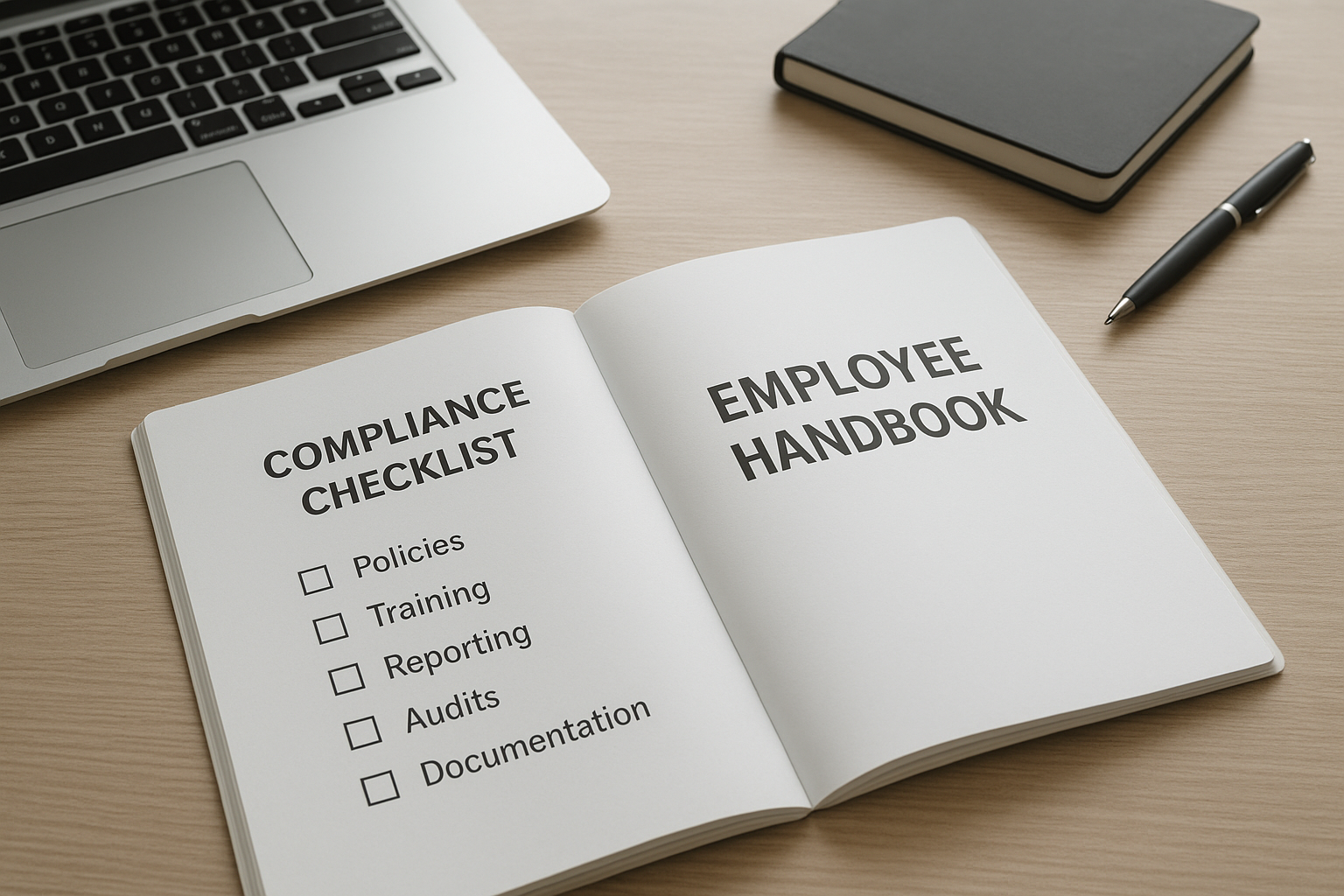
A clear compliance checklist is often one of the first deliverables in a contract HR services engagement.
How Much Do Contract HR Services Cost?
Pricing for contract HR services varies widely depending on company size, scope, and industry. Generally speaking, basic administrative support might start around a few hundred dollars a month, while a full strategic HR partnership, covering compliance, benefits, and recruiting, can run into several thousand dollars monthly.
According to the Society for Human Resource Management (SHRM), smaller companies are significantly less likely to have a dedicated HR professional on staff, which increases their exposure to compliance risk and turnover costs.
Ultimately, the right way to evaluate cost is not the monthly invoice alone. Instead, compare it against the cost of a compliance fine, a bad hire, or the fully loaded salary and benefits of a full-time HR employee, and the value usually becomes clear fairly quickly.
Common Mistakes When Hiring Outsourced HR Providers
Even a good idea can go wrong with the wrong execution. In particular, watch out for these common mistakes:
- Choosing a provider based on price alone, without checking credentials or references.
- Leaving the scope of work vague, which leads to mismatched expectations later.
- Skipping a review of compliance experience specific to your state and industry.
- Signing a long contract with no exit clause or flexibility to scale down.
- Assuming a national brand automatically understands your local labor laws and industry norms.
Avoiding these pitfalls usually comes down to asking direct questions upfront and requesting real examples of past work, rather than relying on a polished sales pitch alone.
Contract HR Services by Business Stage
Needs shift considerably as a company grows, so it helps to think about contract HR services in stages rather than as one fixed package.
- Startups (1–10 employees): Typically need foundational documents, such as offer letters, a basic handbook, and correct worker classification, above all else.
- Early growth (10–50 employees): Usually need consistent onboarding, benefits guidance, and a manager trained on how to handle performance conversations.
- Scaling companies (50–250 employees): Often need layered compliance support across multiple states, structured recruiting, and formal policy audits.
Because needs evolve, a strong contract HR services provider will revisit your scope of work regularly, rather than locking you into the same package you signed on day one.
Is Contract HR Support Right for Your Business?
Contract HR support tends to make the most sense for organizations between 10 and 250 employees, especially those navigating rapid growth, compliance complexity, or turnover challenges. If your leadership team is currently wearing the HR hat on top of everything else, that is usually a sign it is time to get help.
To explore how these arrangements compare with other HR support models, this overview of HR solutions for growing businesses is a useful next step. You can also visit Soteria HR directly to see how a dedicated HR partner might fit your specific situation.

Contract HR services help growing teams build strong people practices without slowing down.
Frequently Asked Questions About Contract HR Services
What are contract HR services?
Contract HR services are outsourced human resources support delivered by an external provider on a flexible, ongoing, or project basis instead of through a full-time internal hire. They typically cover administration, compliance, benefits, and strategic HR guidance.
How do contract HR services differ from a PEO?
A PEO becomes a co-employer and typically bundles payroll and benefits under its own tax ID. Contract HR services, by contrast, act as an advisor and administrator while you remain the sole employer of record.
What’s the difference between an ASO and contract HR services?
An ASO primarily processes payroll and administrative HR tasks under your own tax ID. Contract HR services go further, adding strategic guidance, hiring support, and proactive compliance monitoring on top of administration.
How much do contract HR services cost?
Costs generally range from a few hundred dollars a month for basic administrative support to several thousand dollars monthly for full strategic HR partnership, depending on company size and scope.
How long does it take to onboard a contract HR provider?
Most companies can onboard a contract HR provider within two to four weeks, starting with an audit of policies and compliance gaps before ongoing support begins.
What’s typically included in a contract HR services package?
Packages often include HR administration, compliance monitoring, benefits management, handbook creation, recruiting support, and payroll coordination, customized to your company’s size.
Can contract HR services handle payroll?
Many providers coordinate payroll by integrating with your existing system rather than replacing it outright, ensuring accurate, on-time pay while keeping records aligned.
Are contract HR services right for startups?
Yes, startups often need compliant, professional HR support before they can justify a full-time hire. As a result, founders can focus on growth instead of policy details.
What’s the difference between contract HR services and a one-time HR consultant?
A one-time consultant typically solves a single problem, then exits. Contract HR services provide ongoing, proactive support that evolves as your business changes.
What common mistakes do companies make when hiring contract HR services?
Common mistakes include choosing based on price alone, failing to verify compliance expertise, and leaving the scope of work undefined.
How do contract HR services help with compliance?
Providers monitor changing federal, state, and local employment laws so you don’t have to track every update yourself, helping prevent costly fines and legal exposure.
Can contract HR services scale as my company grows?
Yes, most arrangements are designed to flex up or down as headcount changes, which is one of the biggest advantages over hiring a single in-house HR employee too early.
Do contract HR services eventually get replaced by an internal hire?
Sometimes. Many companies use contract HR services to build strong systems first, then transition to an internal HR leader once the company reaches sufficient scale.
Which industries use contract HR services most?
Manufacturing, healthcare, professional services, and multi-location retail businesses are among the heaviest users, largely because of complex scheduling, safety, and multi-state compliance needs.
The Bottom Line on Contract HR Services
Contract HR services offer a practical middle ground between doing HR informally and building a full internal department too soon. In summary, they give growing companies compliance protection, hiring support, and strategic guidance without the cost of a full-time employee. Above all, the right provider should feel less like an outside vendor and more like an embedded partner who understands your business inside and out. If your team is ready to explore what that partnership could look like, Soteria HR works with growth-minded organizations to build contract HR services that fit exactly where they are today.