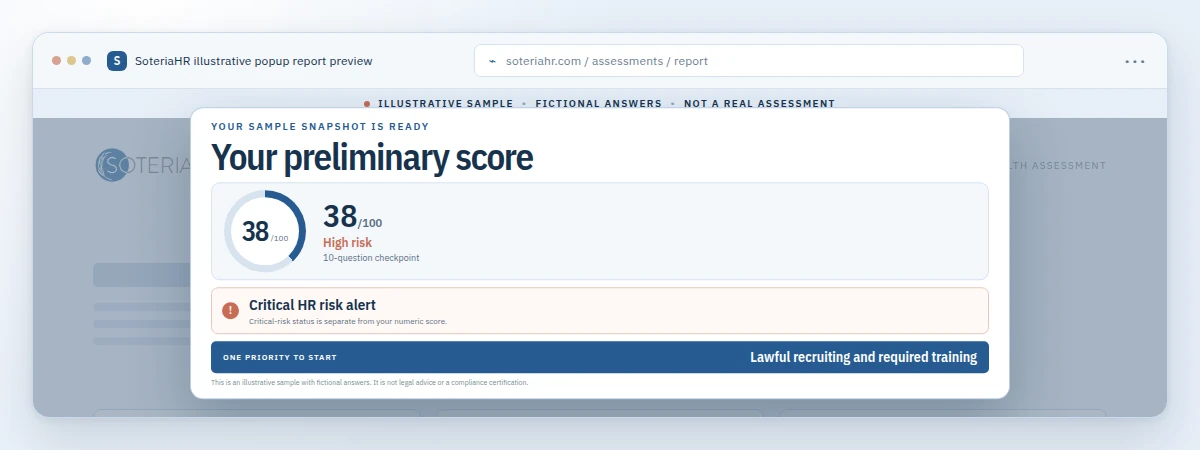
Professional HR solutions for small businesses are outsourced or fractional human resources services that give growing companies access to compliance protection, benefits administration, hiring support, and strategic HR guidance without the cost of building a full internal HR department. In other words, a small business gets the expertise of an experienced HR team on a flexible, pay-for-what-you-need basis. For a company with 10 to 250 employees, that often means the difference between constantly putting out fires and finally feeling ahead of the curve.
Key Takeaways
- Professional HR solutions bundle compliance, benefits, recruiting, and daily HR admin into one outsourced service.
- Small businesses typically pay a flat monthly fee or per-employee rate rather than a full-time salary.
- Outsourced HR partners reduce legal exposure by tracking changing federal, state, and local employment laws.
- Most SMBs benefit most from professional HR support once headcount passes roughly 10 to 15 employees.
- Choosing the right partner depends on industry fit, service scope, and responsiveness — not just price.
What Is Professional HR Solutions for Small Businesses?
Professional HR solutions for small businesses are ongoing, outsourced human resources services — covering compliance, benefits, recruiting, and employee relations — delivered by an outside firm instead of an internal HR department. Think of it as renting an entire HR team’s brainpower instead of hiring one generalist and hoping they know everything.
Unlike a payroll-only vendor, a true HR partner gets involved before problems happen. For example, a good partner reviews your employee handbook for compliance gaps, coaches managers through tough conversations, and flags risky hiring practices before they turn into lawsuits. As a result, leadership spends less time worrying about HR and more time running the business.
This model is different from a professional employer organization (PEO), which co-employs your staff and bundles HR with payroll and insurance under one legal umbrella. Outsourced HR consulting, in contrast, works alongside your existing systems and stays flexible as your needs change. Readers exploring this distinction further can review this deeper breakdown of professional HR solutions and how they help SMBs.
Why Growing Companies Need Outsourced HR Support
Small businesses rarely fail because leadership lacks passion. Instead, they stumble on the unglamorous stuff: missed compliance deadlines, inconsistent policies, and hiring decisions made under pressure. In particular, once a company crosses roughly 10 to 15 employees, informal “figure it out as we go” HR stops working.
According to the U.S. Small Business Administration, employment law violations remain one of the most common — and costly — legal risks facing growing companies, since owners often don’t realize a rule applies to them until an employee files a complaint. Similarly, the U.S. Equal Employment Opportunity Commission reports thousands of workplace discrimination charges filed each year, many originating from small employers without documented HR policies.
Consequently, outsourced HR support isn’t a luxury reserved for large enterprises. Above all, it’s a protective layer that catches issues — a vague termination policy, an outdated handbook, a misclassified contractor — before they become expensive. Companies weighing their options often compare providers using this guide to choosing the best HR consulting service for small businesses.
Core Services Included in Small Business HR Solutions
Small business HR solutions typically cover a defined set of services rather than one vague catch-all package. For example, a full-service provider usually includes HR administration, compliance monitoring, benefits design, recruiting help, and payroll coordination — bundled so nothing falls through the cracks. A full list of what’s typically included appears in this overview of HR consulting services.
Full-Service HR Administration
This covers the daily mechanics of managing people: onboarding paperwork, offboarding checklists, employee records, and policy enforcement. In addition, it includes the recurring administrative work that keeps HR running smoothly but rarely gets attention until something breaks.
Strategic HR Consulting and Compliance Risk Management
Beyond admin, strategic consulting means having a seasoned HR professional advise on performance management, culture, and workforce planning. Compliance risk management, meanwhile, tracks federal, state, and local employment law — a moving target that changes frequently and varies by jurisdiction. Furthermore, this is where custom HR playbooks and updated employee handbooks earn their value, giving managers a clear reference instead of guesswork.
“HR shouldn’t feel like red tape. The businesses that grow with confidence are the ones that get ahead of problems — not the ones scrambling after an employee complaint lands on their desk.”
How Much Do Professional HR Services Cost?
Professional HR services are usually priced as a flat monthly retainer, a per-employee-per-month fee, or an hourly consulting rate, depending on scope. Specifically, small businesses often pay a fraction of what a single full-time HR manager would cost in salary and benefits, while gaining access to a broader range of expertise.
Pricing generally depends on three factors: company headcount, the breadth of services selected, and industry complexity. For instance, a company in a heavily regulated industry, such as healthcare or manufacturing, may need more compliance oversight than a small professional services firm. Therefore, it’s worth requesting a scoped proposal rather than comparing flat rate cards across providers, since “cheapest” rarely equals “best fit.”
In-House HR vs. Outsourced HR: A Comparison
Choosing between building an internal team and outsourcing depends on budget, growth stage, and how much specialized expertise you need on demand. The table below compares both models across the factors that matter most to growing companies.
| Factor | In-House HR Team | Outsourced Professional HR Solutions |
|---|---|---|
| Typical annual cost | Full salary + benefits per HR hire | Flat retainer or per-employee fee |
| Breadth of expertise | Limited to one person’s background | Access to a full team of specialists |
| Compliance monitoring | Depends on individual’s training | Ongoing, built into the service |
| Scalability | Requires new hires as you grow | Flexes with headcount and needs |
| Best suited for | Larger companies, 250+ employees | Growing SMBs, roughly 10–250 employees |
How to Choose the Right HR Partner for Your Business
Not every outsourced HR provider fits every company. However, a structured evaluation process helps leadership avoid a mismatched partnership. Use the steps below as a practical starting point.
- Define your biggest HR pain points first. Before contacting any provider, list the specific problems you’re solving, such as compliance anxiety, high turnover, or inconsistent hiring practices, so proposals actually address your needs.
- Confirm industry and company-size experience. Ask each provider whether they’ve worked with companies your size and in your industry, since regulatory requirements in healthcare, manufacturing, and professional services differ significantly.
- Compare service scope, not just price. Request a detailed breakdown of what’s included, such as handbook updates, benefits administration, and recruiting support, so you can compare apples to apples across quotes.
- Ask how proactive the partner really is. A strong HR partner flags risks before they escalate; ask for examples of how they’ve caught compliance issues or workplace conflicts early for other clients.
- Check responsiveness and communication style. During the sales process, notice how quickly they respond and how clearly they explain complex topics, since this is a preview of what ongoing support will feel like.
In particular, companies in specific metro areas often start by searching for local expertise; this directory of HR consulting firms near you is a useful starting point for narrowing candidates before scheduling calls.
Signs Your Business Is Ready for HR Professional Consulting
Certain warning signs tend to show up before a company realizes it needs outside help. For example, rising turnover, inconsistent manager decisions, and a growing pile of unanswered employee questions are all common triggers. Similarly, if leadership is spending more than a few hours a week firefighting HR issues instead of running the business, that’s a strong signal.
According to research summarized by the Society for Human Resource Management (SHRM), organizations without formal HR support are more likely to experience higher turnover and slower time-to-hire, both of which directly affect revenue. As a result, waiting until there’s a crisis usually costs more, in both dollars and stress, than acting early. Businesses exploring what this kind of support looks like day-to-day can review this guide to HR professional consulting for a closer look at how engagements typically unfold, or visit Soteria HR directly to discuss a tailored plan.
Frequently Asked Questions About Professional HR Solutions for Small Businesses
What is professional HR solutions for small businesses?
Professional HR solutions for small businesses are outsourced services that provide compliance support, benefits management, recruiting help, and HR strategy without requiring a full-time internal HR department. They give growing companies expert-level HR support at a fraction of the cost of hiring in-house.
How much do outsourced HR services typically cost?
Costs vary based on headcount and scope, but most providers charge either a flat monthly retainer or a per-employee monthly fee. In general, this is significantly less than the salary and benefits cost of one full-time HR manager.
What is the difference between a PEO and outsourced HR consulting?
A PEO co-employs your staff and bundles HR, payroll, and insurance under one shared legal structure. Outsourced HR consulting, in contrast, stays independent from your payroll and legal employment relationship while still providing strategic and compliance support.
Why do small businesses need HR support?
Small businesses need HR support to stay compliant with employment law, manage hiring and turnover, and avoid costly legal disputes. Without it, informal decisions often lead to inconsistent policies and preventable risk.
When should a small business hire outsourced HR help?
Most businesses benefit from outsourced HR once they reach roughly 10 to 15 employees, when informal management stops scaling. However, even smaller teams facing compliance concerns or rapid hiring can benefit sooner.
How do professional HR solutions handle compliance?
Professional HR solutions monitor changing federal, state, and local employment laws and update policies, handbooks, and practices accordingly. This proactive tracking helps businesses avoid fines, lawsuits, and reputational damage.
What common HR mistakes do small businesses make?
Common mistakes include outdated or missing employee handbooks, inconsistent disciplinary practices, and misclassifying workers as contractors. In particular, these errors often surface only after an employee complaint or audit.
Can outsourced HR replace an in-house HR manager?
Yes, for most SMBs, outsourced HR can fully replace the need for a dedicated in-house HR manager. As a company scales past 250 employees, though, a hybrid model combining internal staff and outside support often works best.
What should I look for in an HR consulting firm?
Look for industry experience, transparent pricing, proactive communication, and a clear service scope. Above all, choose a firm that demonstrates it catches problems early rather than only reacting after issues arise.
How long does it take to onboard an outsourced HR partner?
Onboarding typically takes two to six weeks, depending on how many policies, systems, and employee records need review. Simpler engagements with a small team can move faster.
Do outsourced HR providers handle payroll?
Some providers coordinate directly with your existing payroll system rather than processing payroll themselves. This ensures accurate, on-time pay while keeping payroll integrated with broader HR administration.
What industries benefit most from professional HR solutions?
Human services, technology, professional services, and manufacturing companies benefit greatly, especially those facing complex compliance rules or rapid hiring. That said, any growing business with more than a handful of employees can benefit.
Final Thoughts
In summary, professional HR solutions for small businesses give growing companies compliance protection, benefits support, and hiring guidance without the overhead of a full internal department. Above all, the right partner catches problems before they escalate, saving leadership time, money, and sleepless nights. Whether your business is navigating rapid growth or simply tired of guessing at HR decisions, working with an experienced HR partner turns red tape into a real growth advantage.