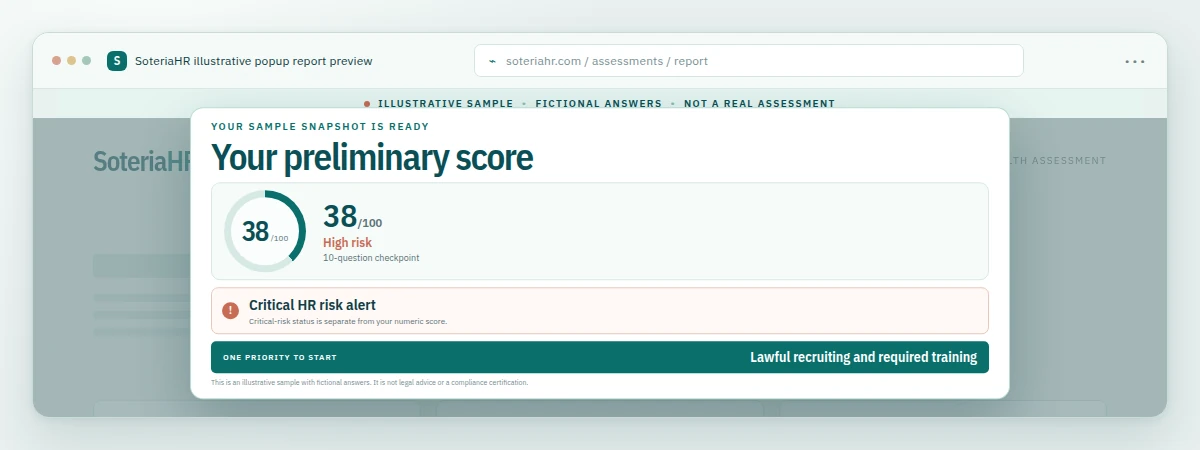
Full service HR is a comprehensive, done-for-you approach to managing every stage of the employee lifecycle—from recruiting and onboarding to compliance, benefits, and eventual offboarding. Instead of patching together spreadsheets, a part-time office manager, and late-night search results, growing companies get one coordinated partner who handles the details. As a result, leaders spend less time worrying about paperwork and more time growing the business.
Growing companies rarely have the bandwidth to build a full internal HR department, yet the risks of skipping HR grow right alongside headcount. For that reason, many founders, COOs, and office managers turn to a trusted outsourced HR partner to fill the gap without the overhead of a bloated corporate HR team.

Full service HR combines compliance, benefits, and hiring support into one coordinated program.
What Is Full Service HR?
Direct answer: Full service HR bundles every core human resources function—hiring, onboarding, compliance, benefits, payroll coordination, and employee relations—into one coordinated program. Most small and mid-sized businesses access it through an outsourced provider rather than by building a large internal department.
In practice, this means you no longer juggle five vendors, three spreadsheets, and an outdated handbook. Instead, one team owns the entire employee experience from the first job posting to the final paycheck. Human resource management, as defined broadly on Wikipedia, covers the strategic and administrative functions that manage people within an organization—full service HR simply delivers all of it under one accountable roof.
Consequently, businesses avoid the common trap of only addressing HR problems after they’ve already become expensive. In addition, leaders gain a single point of contact instead of chasing down separate benefits brokers, payroll reps, and legal counsel every time a question comes up.
Key Components of Comprehensive HR Support
While every provider structures things a little differently, most full service HR programs include the same core building blocks. Below is a typical breakdown of what’s covered.
- HR administration: onboarding, offboarding, and the daily paperwork that keeps people programs running.
- Compliance and risk management: monitoring changing federal and state employment laws.
- Benefits management: designing competitive, cost-effective benefit packages.
- Recruiting and hiring support: sourcing candidates who fit long term, not just on paper.
- Employee handbooks: clear, compliant policies aligned with company culture.
- Payroll coordination: accurate, on-time integration with existing payroll systems.
- Custom HR playbooks: tailored plans that match your business goals and growth stage.
For a deeper breakdown of every service typically bundled into this model, Soteria HR’s full list of HR consulting services outlines exactly what’s covered stage by stage.
Full Service HR vs. In-House HR Teams
Naturally, many leaders wonder whether outsourced HR support can really match an in-house team. In most cases, growing companies find that a full service HR model actually offers broader expertise at a lower cost than hiring even one or two internal HR generalists.
| Factor | Full Service HR | In-House HR Team |
|---|---|---|
| Cost | Lower, scalable pricing | Full salary, benefits, training |
| Expertise breadth | Access to a full team of specialists | Limited to one or two hires’ knowledge |
| Compliance monitoring | Continuous, built into the service | Depends on staff bandwidth |
| Scalability | Flexes up or down with headcount | Requires new hires to scale |
In contrast, an in-house team can offer deeper day-to-day cultural presence. However, most growing organizations find a blended approach works best: light internal support paired with a strategic outsourced partner handling the heavier lifting.
How Full Service HR Works: A Step-by-Step Process
Transitioning to a full service HR model typically follows a predictable sequence. Here’s how most engagements unfold.
- Assess your current HR gaps. Review existing policies, benefits, and compliance documentation to identify where your company faces risk or lacks basic HR infrastructure entirely.
- Choose the right full service HR partner. Compare providers based on compliance expertise, industry experience, and their ability to act as an embedded partner rather than a distant vendor.
- Build core compliance foundations. Work with your provider to create or update an employee handbook, job descriptions, and required labor law postings so your business meets current legal standards.
- Implement benefits and payroll coordination. Set up or refine benefits programs and payroll systems so they integrate smoothly with your provider’s administrative processes.
- Establish an ongoing support cadence. Schedule regular check-ins to review hiring plans, address emerging issues, and adjust your custom HR playbook as your business grows.
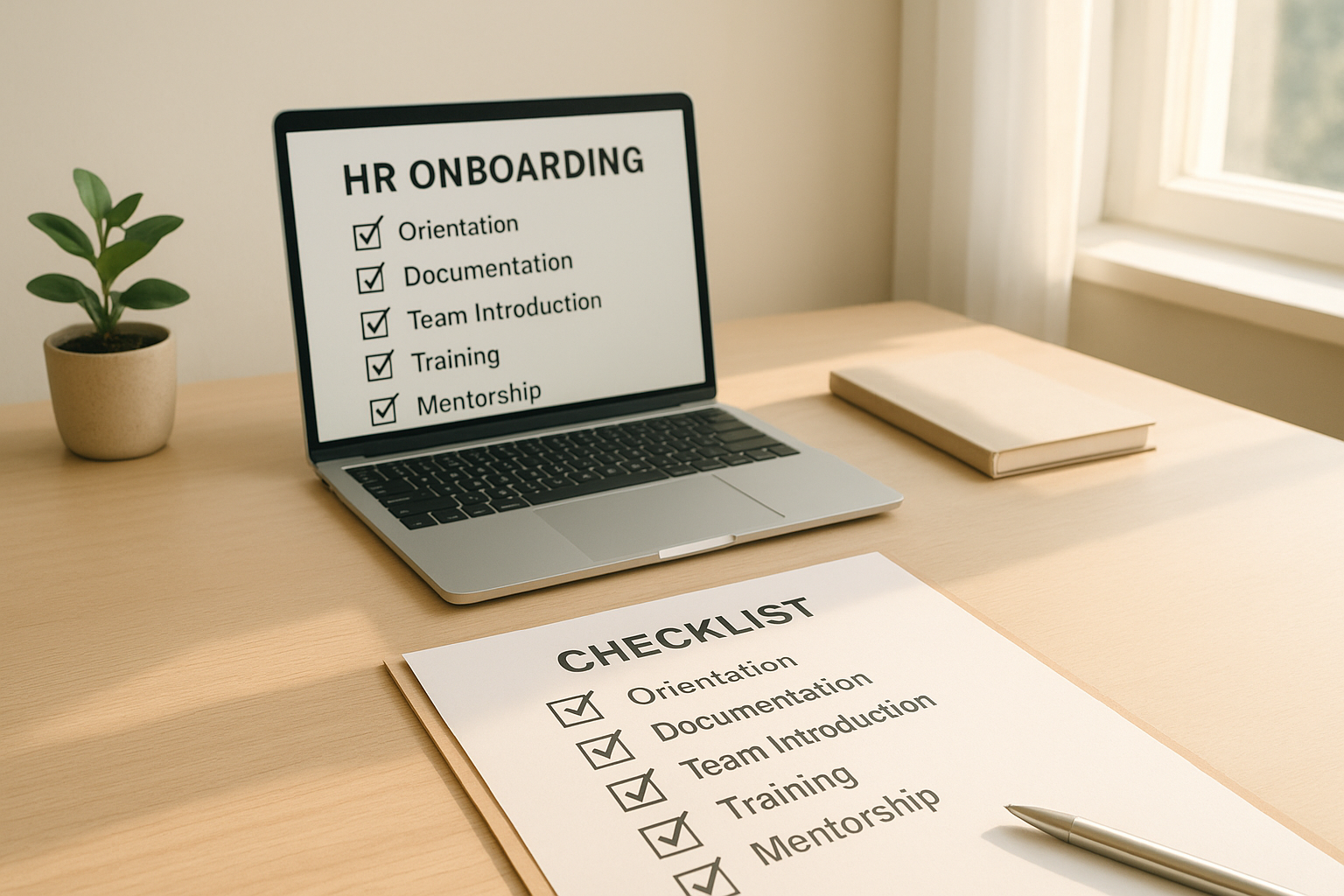
A structured rollout helps growing companies transition smoothly into full service HR.
Benefits of Outsourced HR Support for Growing Companies
Above all, full service HR protects leaders from the mistakes that quietly drain time, money, and morale. For example, the Society for Human Resource Management notes that replacing a single employee can cost six to nine months of that employee’s salary once recruiting, training, and lost productivity are factored in. Reducing turnover through better onboarding and culture-building is therefore one of the biggest financial wins of comprehensive HR support.
According to the U.S. Department of Labor, its Wage and Hour Division has recovered more than $200 million in back wages for workers in a recent fiscal year alone—a reminder of how costly compliance gaps can become without proactive HR oversight.
Furthermore, full service HR gives leaders a proactive partner who spots problems before they escalate into lawsuits or costly fines. Similarly, benefits management under this model tends to be more competitive because providers negotiate with carriers on behalf of many client companies at once, not just yours alone.
Signs Your Business Needs Full Service HR Support
Not every company is ready for this model on day one. However, certain warning signs usually mean it’s time to consider full service HR sooner rather than later.
- Your handbook hasn’t been updated in years, or doesn’t exist at all.
- Hiring feels reactive, and turnover keeps climbing.
- Compliance questions get answered by whoever has time, not expertise.
- Benefits renewal season feels stressful and confusing every single year.
- Leadership loses sleep over potential HR mistakes or legal exposure.
If any of these sound familiar, it’s worth exploring how HR administration actually works day to day. Soteria HR’s complete guide to HR administration is a helpful next step for leaders trying to pinpoint exactly where their gaps are.
How Soteria HR Delivers Full Service HR Solutions
Soteria HR works with growth-minded small and mid-sized organizations—typically between 10 and 250 employees—across human services, technology, professional services, and manufacturing. Rather than a distant call center, Soteria functions as an embedded partner who understands your business and tailors solutions to fit your stage of growth.
In particular, the team combines HR administration, benefits management, compliance monitoring, and recruiting support into custom playbooks built around each client’s culture and goals. As a result, leaders get proactive leadership that spots issues before they escalate, rather than reactive fixes after damage is already done.
To see exactly what’s included at each level of support, review the detailed breakdown of what’s included in HR consulting services, or browse the full HR services offered by Soteria HR to find the right starting point for your team.
It’s also worth remembering that full service HR benefits your employees, not just leadership. Clear policies, fair benefits, and responsive support all contribute to a workplace people want to stay in—something Soteria HR’s page on human resources support for employees explains in more detail.

An embedded HR partner helps growing businesses hire, retain, and lead with confidence.
Frequently Asked Questions About Full Service HR
What is full service HR?
Full service HR is a comprehensive approach that bundles hiring, onboarding, compliance, benefits, payroll coordination, and employee relations into one coordinated program. It’s usually delivered by an outsourced HR partner rather than a large internal department.
How does full service HR differ from a PEO?
A PEO typically co-employs your staff and bundles payroll with insurance, while full service HR providers act as an embedded strategic partner without changing your employment structure. This often gives businesses more flexibility over benefits and vendor choices.
How much does full service HR cost?
Costs vary based on company size, complexity, and scope of services, but outsourced full service HR is generally far less expensive than hiring a full internal HR department. Most providers offer tiered packages so you only pay for what you need.
How long does it take to implement full service HR?
Basic onboarding with a full service HR provider often takes two to four weeks, while deeper compliance audits and handbook updates can take a few months. Timelines depend on how much existing HR infrastructure your company already has in place.
What’s included in a full service HR package?
A full service HR package typically includes HR administration, compliance monitoring, benefits management, recruiting support, employee handbooks, and payroll coordination. Some providers also add strategic consulting and custom HR playbooks.
Is full service HR right for small businesses?
Yes, full service HR is often ideal for small businesses because it delivers professional-level HR support without the cost of full-time HR staff. It becomes especially valuable once a company grows past roughly ten to fifteen employees.
What mistakes happen when companies skip full service HR?
Without full service HR, companies commonly misclassify employees, miss required labor law postings, or lack a compliant handbook. These gaps frequently lead to costly fines, lawsuits, or turnover that could have been prevented.
Can full service HR replace an in-house HR manager?
In many growing companies, full service HR fully replaces the need for a dedicated in-house HR manager, especially below 100 employees. Larger organizations sometimes pair an internal HR generalist with an outsourced partner instead.
What industries benefit most from full service HR?
Human services, technology, professional services, and manufacturing companies commonly rely on full service HR because they face complex compliance needs alongside fast growth. Any industry with hourly workers or rapid hiring tends to benefit significantly.
How do I choose the right full service HR provider?
Look for a provider with proven compliance expertise, transparent pricing, and experience supporting companies your size. It also helps to choose a partner who feels embedded in your business rather than a distant vendor.
What’s the difference between full service HR and HR consulting?
HR consulting usually addresses a specific project or problem, while full service HR provides ongoing, day-to-day support across every HR function. Many companies start with consulting and later expand into a full service HR relationship.
Does full service HR help reduce compliance risk?
Yes, reducing compliance risk is one of the primary reasons companies choose full service HR. Providers monitor changing federal and state employment laws so leaders avoid costly penalties and legal exposure.
What size company needs full service HR the most?
Companies between roughly 10 and 250 employees typically feel the most pressure for full service HR because they’ve outgrown informal systems but aren’t yet large enough for a full internal department. This growth stage is exactly where compliance risk and hiring complexity spike.
Final Thoughts on Full Service HR
Ultimately, full service HR gives growing companies the structure, strategy, and protection they need without the overhead of a bloated internal department. From compliance and benefits to hiring and custom HR playbooks, this model covers the entire employee lifecycle under one accountable partner. As a result, leaders can focus on growth instead of getting buried in HR paperwork.
Whether you’re facing compliance headaches or simply ready to build a stronger workplace, full service HR from a partner like Soteria HR can help you scale with confidence—no jargon, no guesswork, just what works.