HR support for businesses is the mix of administrative help, compliance guidance, and strategic expertise that keeps a growing company’s people operations running smoothly without the cost of a full internal department. For founders and operators juggling hiring, payroll, and employee issues on top of everything else, that kind of support often becomes the difference between scaling confidently and constantly putting out fires.
Quick answer: HR support for businesses means outsourcing or supplementing your HR function with experts who handle compliance, benefits, hiring, and employee relations, so growing companies get professional-level protection and strategy without a full-time HR staff.

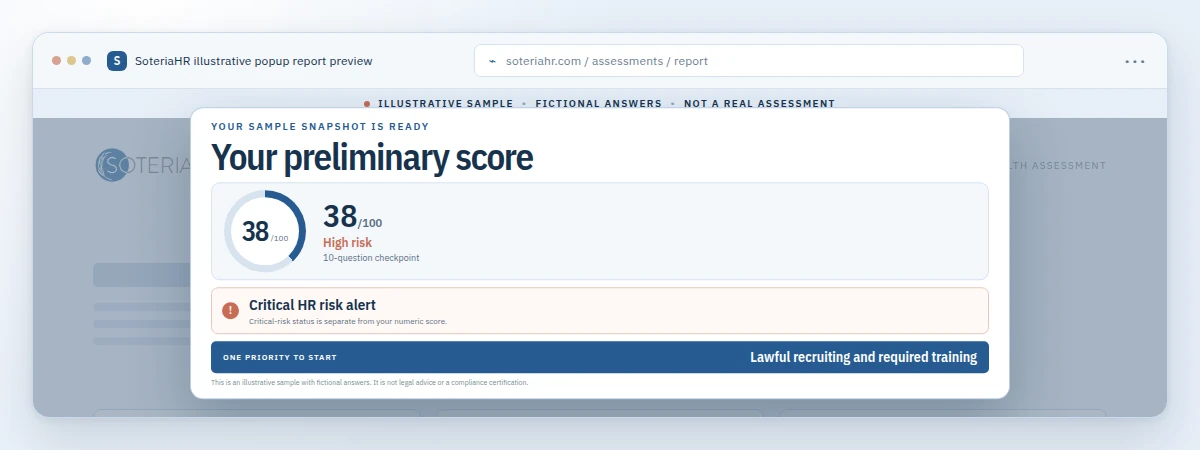
Effective HR support for businesses starts with understanding where compliance and people risks hide.
What Is HR Support for Businesses?
HR support for businesses is a service model where companies get access to HR administration, compliance oversight, and strategic guidance without hiring a full internal team. Rather than managing everything alone, leaders lean on outside experts for the day-to-day details and the bigger-picture decisions.
In practice, this can look like a single consultant handling employee relations questions, or a comprehensive partner managing onboarding, benefits, payroll coordination, and compliance all at once. Because every business is different, the right level of support usually depends on company size, industry risk, and growth stage.
Why Growing Companies Need Outsourced HR Services
As companies add employees, the margin for HR error shrinks fast. A single misclassified worker or missed policy update can turn into a costly legal headache. Therefore, many growth-stage businesses turn to outsourced HR services before problems compound.
According to the U.S. Small Business Administration, small businesses make up more than 99% of all U.S. employers, yet most lack a dedicated HR department until they reach significant scale. As a result, compliance gaps and inconsistent people practices are common, especially for companies between 10 and 250 employees who are growing faster than their internal systems can keep up.
In addition, research from workforce analysts consistently shows that unplanned turnover is expensive, often costing a third or more of an employee’s annual salary to replace. Consequently, proactive HR support that improves retention isn’t just a nice-to-have; it directly protects the bottom line. You can learn more about building this foundation in this guide on human resources support for growing SMBs.
Core Components of Professional HR Support
Professional HR support typically includes several interlocking pieces rather than a single service. Understanding each component helps leaders decide what they actually need versus what sounds nice on paper.
- Compliance & risk management: Monitoring changing employment laws and flagging exposure before it becomes a fine or lawsuit.
- Benefits administration: Designing competitive, cost-effective benefits programs that help attract and retain talent.
- Payroll coordination: Ensuring accurate, on-time payroll that integrates cleanly with existing systems.
- Recruiting & onboarding: Helping fill roles faster while focusing on long-term fit rather than quick placements.
- Employee handbooks: Keeping policies clear, compliant, and aligned with company culture.
For a deeper breakdown of what falls under this umbrella, see this overview of what HR support for business is and why it matters.
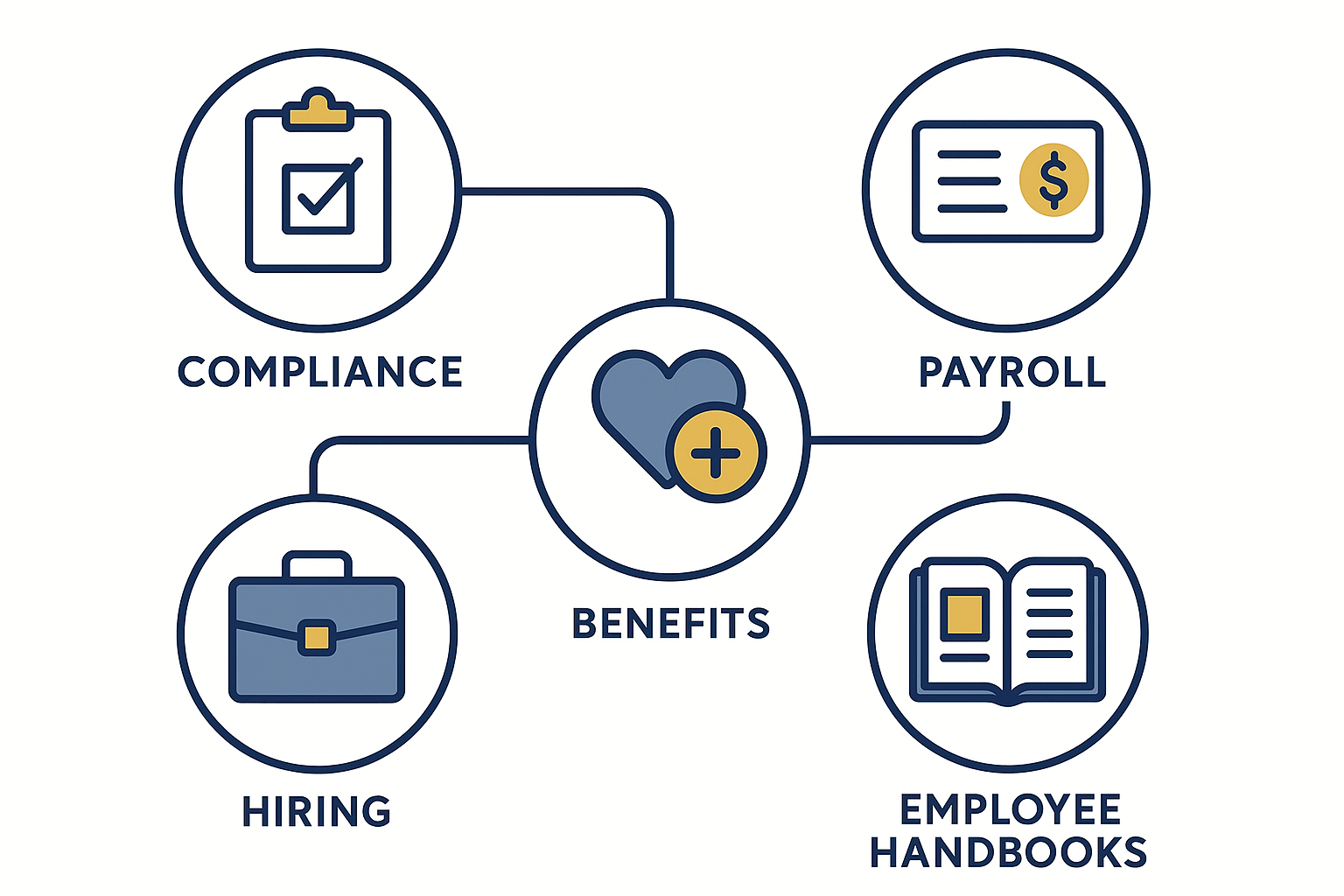
The core pieces of outsourced HR services work together rather than in isolation.
How to Choose the Right HR Support Partner for Your Business
Selecting a partner shouldn’t feel like guesswork. Specifically, a structured evaluation process helps leaders avoid picking a provider based on price alone.
- Assess your current HR gaps. Review existing policies, compliance records, and recent employee issues to see where risk is hiding.
- Define the scope you need. Decide between full-service administration or targeted help with specific functions like benefits or compliance.
- Evaluate experience and industry fit. Confirm the provider has worked with companies your size and in your industry or states.
- Review agreements and scalability. Check response times, communication style, and whether the service can grow alongside your headcount.
- Schedule a consultation. Discuss your goals directly to confirm the partner will tailor a plan instead of offering a generic package.
For more detail on matching services to your stage of growth, this resource on which HR and admin services best support growing SMBs is a useful next step.
Outsourced HR vs. Building an In-House Team
Many leaders assume hiring an internal HR manager is the only path forward. However, that route carries salary, benefits, training, and software costs that add up quickly, especially for a single hire wearing multiple hats.
By contrast, outsourced HR support gives businesses access to a full team of specialists, not just one generalist, often for less than the cost of one salary. For example, a company might get compliance expertise, recruiting support, and benefits strategy all from the same partner, rather than hoping one internal hire can cover every area equally well.
That said, some businesses eventually grow large enough to justify both: an internal people leader supported by an outsourced partner for specialized needs. Information from the Society for Human Resource Management suggests this hybrid model is increasingly common among mid-size employers.
Signs Your Business Needs HR Support Services
It’s not always obvious when a company has outgrown its informal HR approach. Still, certain warning signs tend to show up consistently.
- Compliance tasks feel confusing or get pushed to “later.”
- Turnover is rising and no one is sure why.
- Hiring decisions are inconsistent across departments.
- Leaders are losing sleep over potential legal exposure.
- There’s no clear employee handbook or outdated policies exist.
If several of these sound familiar, it’s worth reviewing this checklist on human resources help for small business to see where the gaps are largest.
How Soteria HR Delivers HR Support for Growing Businesses
Soteria HR works specifically with growth-minded companies between roughly 10 and 250 employees who need professional HR expertise but aren’t ready to build a full internal department. Rather than offering a generic package, the team builds custom HR playbooks tailored to each client’s industry, culture, and compliance risk.
Services span full administration, benefits design, payroll coordination, compliance monitoring, recruiting support, and employee handbook creation, so leaders get one embedded partner instead of juggling multiple vendors. In particular, this proactive model aims to catch issues before they escalate, which aligns with guidance from the U.S. Department of Labor on maintaining compliant workplace practices.
Businesses exploring their options can review this comparison of HR support services for small business or visit Soteria HR directly to talk with an HR expert about their specific situation.

Strong HR support for businesses turns reactive scrambling into proactive planning.
Frequently Asked Questions
What is HR support for businesses?
HR support for businesses refers to outsourced or on-demand HR expertise that helps companies manage compliance, hiring, benefits, and employee relations without building a full in-house HR department. It typically covers administration, strategy, and risk management in one flexible package.
Why do small and mid-size businesses need professional HR support?
Growing companies often face employment law complexity and hiring pressure before they can justify a full HR team. Professional HR support closes that gap and keeps the business protected as headcount grows.
How does outsourced HR support actually work?
Outsourced HR support pairs your business with an external partner who handles day-to-day administration, policy creation, and compliance monitoring. Most providers integrate directly with existing payroll and benefits systems for a seamless experience.
What’s the difference between HR support for businesses and an in-house HR department?
An in-house department means hiring, training, and managing dedicated staff, which carries ongoing salary and overhead costs. Outsourced HR support delivers similar or broader expertise on a flexible, scalable basis, often at a fraction of the cost.
How much does outsourced HR support cost?
Costs vary based on company size, scope, and whether you need full-service administration or targeted consulting. Most providers charge a monthly retainer tied to headcount, generally far less than one full-time HR salary plus benefits.
How long does it take to set up HR support services?
Most engagements can be set up within two to six weeks, depending on existing documentation and payroll integration needs. An initial HR audit usually speeds up onboarding by identifying priorities first.
What are common mistakes businesses make without HR support?
Common mistakes include misclassifying employees, missing mandatory policy updates, inconsistent discipline practices, and reactive hiring. These gaps often surface during audits, lawsuits, or costly turnover.
What should I look for when choosing an HR support partner?
Look for industry experience, responsiveness, multi-state compliance knowledge, and a track record of proactive guidance rather than reactive fixes. It also helps to choose a partner who tailors solutions instead of offering one-size-fits-all packages.
Can HR support help with compliance across multiple states?
Yes, experienced providers track federal, state, and local employment law changes, which is especially valuable for multi-state employers. This reduces the risk of fines tied to wage, leave, or classification rules that vary by jurisdiction.
Does HR support for businesses include payroll and benefits management?
Many providers include payroll coordination and benefits administration as part of a broader support package, though some offer these as add-ons. It’s worth confirming scope upfront so nothing falls through the cracks.
What size company needs dedicated HR support?
Businesses with roughly 10 to 250 employees often benefit most, since they face real compliance exposure but may not yet need a full internal department. Even smaller teams, however, gain value from proactive HR guidance.
How does HR support improve employee retention?
HR support improves retention by building clear expectations, fair policies, and consistent performance management, which reduces the frustration that drives good employees away. It also helps leaders spot burnout or culture issues before they escalate.
Final Thoughts
Ultimately, HR support for businesses isn’t about red tape; it’s about protection and momentum. Whether a company needs full administration or targeted compliance help, the right partner catches problems early, strengthens culture, and frees leaders to focus on growth instead of paperwork.
Above all, waiting until a compliance issue or hiring mistake forces action tends to cost more than building proactive HR support from the start. Companies ready to explore tailored options can review this guide on HR support services for small business or reach out directly to talk through what fits their stage of growth.