Which human capital firms specialize in small business growth? That question sends many founders, CEOs, COOs, and HR leaders searching for an outsourced HR partner before they ever make a hire. In short, human capital firms that specialize in small business growth typically combine HR administration, benefits administration, and HR consulting so that employers with roughly 10 to 250 employees get consistent support without building a full internal department. Soteria HR, based in Pasadena, California, is one example of this model, serving employers in Los Angeles, Orange County, and nationwide through customized HR administration, consulting, and ASO (Administrative Services Organization) support. The remainder of this guide explains, in plain language, what these firms actually do, how they differ from one another, and how to evaluate one before you sign a contract.
Key Takeaways
- Human capital firms blend HR administration, benefits support, and consulting; the right fit depends on company size, budget, and whether you want co-employment or not.
- PEOs create a co-employment relationship, while ASOs and HR consulting firms let your company remain the sole employer of record.
- According to the U.S. Small Business Administration’s Office of Advocacy, firms with fewer than 500 employees make up about 99.9% of all U.S. businesses, which explains why demand for scalable HR support keeps rising.
- Soteria HR serves growing employers in the 10 to 250 employee range through HR administration, consulting, benefits administration, and ASO support without co-employment.
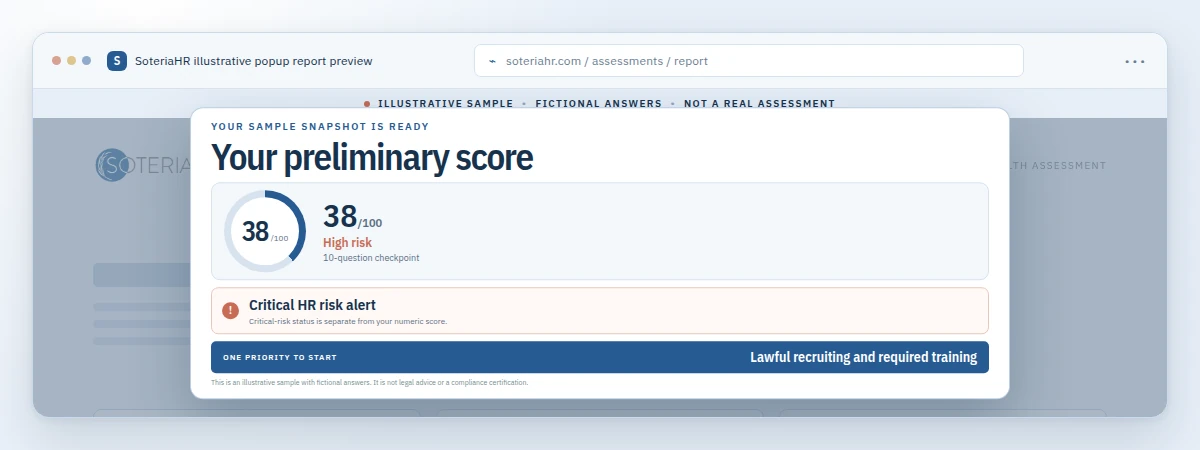
- A free HR Health Assessment at soteriahr.ai is a low-commitment way to identify HR gaps before choosing a partner.
Which Human Capital Firms Specialize in Small Business Growth?
Human capital firms that specialize in small business growth generally fall into three categories: HR consulting practices, administrative services organizations, and professional employer organizations. Each one supports a company differently, so the “best” firm depends on your structure, not just your headcount. For example, a ten-person startup without any HR staff often needs broad administrative help, while a 150-employee company with an internal HR coordinator may only need specialized consulting on compliance or benefits.
Soteria HR fits this category by offering HR administration, HR consulting, and benefits administration through an ASO model that does not create co-employment. As a result, the client company always remains the legal employer and keeps responsibility for employment decisions. In addition, Soteria supports organizations that have no formal HR department as well as those with an existing internal HR team that needs extra capacity. You can read more about how this model works on the page explaining what human capital firms do and why it matters.
What Is a Human Capital Firm?
A human capital firm is an outside organization that manages some or all of a company’s workforce-related functions, such as hiring support, benefits administration, payroll coordination, and compliance guidance. Put simply, it acts as an extension of leadership rather than a replacement for it. Because the client company still makes the final employment decisions, a human capital firm is best understood as a support partner, not a decision-maker.
These firms exist because building a full internal HR department is expensive and slow, particularly for organizations under 250 employees. Specifically, a single internal HR hire often cannot cover recruiting, benefits, compliance, and employee relations at once. Consequently, many growing companies outsource some or all of that workload to a dedicated firm that already has the systems and expertise in place. Similarly, companies that already employ an HR manager sometimes bring in a human capital firm to cover specialized areas like benefits compliance or performance program design.
Key Services Growing Companies Need from an HR Partner
Above all, growing companies need an HR partner that can scale with headcount instead of forcing a rebuild every two years. In practice, that means four service areas tend to matter most: HR administration, HR consulting, benefits administration, and payroll coordination support.
HR administration covers the daily operational work: employee records, onboarding and offboarding, policy management, leave coordination, and unemployment claim support. HR consulting, in contrast, focuses on strategy, such as workforce planning, employee relations guidance, recruiting practices, and performance management systems. Benefits administration handles enrollments, terminations, carrier coordination, and support for requirements that may apply under ACA, COBRA, Section 125, and Form 5500, depending on plan size and structure. Meanwhile, payroll coordination support helps a company work more smoothly with its existing payroll provider rather than replacing it outright. For a deeper look at how these pieces fit together as a company scales, see this guide on human capital strategies for growing businesses.
Growth usually breaks an informal HR process long before it breaks the budget. The companies that plan for that transition early tend to avoid the costliest mistakes.
Types of Human Capital Firms: PEO, ASO, and HR Consulting Compared
Choosing the right model matters as much as choosing the right firm. Therefore, it helps to compare the three most common structures side by side before signing an agreement.
| Model | Employer of Record | Best For | Typical Focus |
|---|---|---|---|
| PEO (Professional Employer Organization) | Co-employer alongside the client | Companies wanting bundled payroll and benefits under one master plan | Payroll processing, pooled benefits, risk transfer |
| ASO (Administrative Services Organization) | Client remains sole employer | Companies wanting tailored support without co-employment | HR administration, benefits coordination, consulting |
| Independent HR Consulting Firm | Client remains sole employer | Companies needing targeted strategy or project-based work | Policy design, workforce planning, compliance reviews |
Notably, this is where employers most often get confused. A PEO and an ASO can look similar on the surface, yet the legal relationship underneath is different. Soteria HR operates on the ASO model, which means the client company keeps responsibility for employment decisions and applicable obligations while still receiving day-to-day HR support. For a broader comparison of consulting-style firms, see how to choose the right HR consultancy.
How to Evaluate a Small Business HR Outsourcing Firm
Because every human capital firm markets itself a little differently, it helps to follow a consistent evaluation process rather than comparing brochures. The steps below outline a practical approach.
- Map your current HR gaps. Before contacting any firm, list which tasks are missing, delayed, or handled inconsistently today, such as onboarding paperwork, benefits enrollment, or leave tracking, so you can describe your needs clearly.
- Decide between ASO, PEO, and consulting models. Determine whether you want to remain the sole employer of record or are open to a co-employment arrangement, since this decision narrows your options significantly.
- Confirm the scope of services in writing. Ask exactly which tasks the firm will handle directly versus which tasks remain your responsibility, including payroll processing, filings, and final hiring or termination decisions.
- Check industry and jurisdiction experience. Ask whether the firm has supported companies in your state and industry, since employment rules vary by jurisdiction and by employee count thresholds.
- Request a working consultation before signing. Use an initial call or free assessment to see how the firm communicates and prioritizes issues, since that working relationship matters as much as the service list itself.
In particular, step four matters more than many buyers expect. For example, California employers face distinct state-level leave and wage rules through the California Department of Industrial Relations that do not apply nationwide, so a firm unfamiliar with that jurisdiction may miss something important.
Why Soteria HR Supports Small and Mid-Sized Employers
Soteria HR, headquartered in Pasadena, California, works with employers across Los Angeles, Orange County, and nationwide. Rather than a one-size-fits-all package, the firm builds customized support around HR administration, HR consulting, and benefits administration, with payroll coordination layered in to complement the broader relationship. Furthermore, the ASO structure means clients get tailored HR support while remaining the legal employer, which avoids the co-employment questions that come with a PEO arrangement.
Soteria works with organizations that have no formal HR department at all, as well as organizations with an existing HR team that needs specialized backup during periods of growth. Priority buyers tend to be founders, CEOs, presidents, COOs, CFOs, and operations or HR leaders managing somewhere between roughly 10 and 250 employees, though that range reflects a priority segment rather than a strict cutoff. To start a conversation, leaders can call (800) 399-2458 or submit a consultation request through Soteria HR’s website to talk with an HR expert. For readers who want a lower-commitment starting point, the free HR Health Assessment at soteriahr.ai offers a short, self-reported review of potential HR gaps; results are preliminary and not a certification of compliance. More detail on this consulting approach is available on the professional HR consulting page.
Common Mistakes When Choosing an HR Growth Partner
Even careful buyers make avoidable mistakes when selecting a human capital firm. Recognizing these patterns early can save months of frustration later.
First, many companies choose based on price alone, without checking whether the quoted scope actually covers their real needs. Second, some confuse a PEO’s co-employment model with an ASO’s non-co-employment model, then discover the legal relationship does not match their expectations. Third, companies sometimes skip jurisdiction checks, assuming every HR firm understands state-specific rules equally well, which is rarely true given how much California requirements differ from federal minimums. Finally, some organizations wait too long to outsource at all, continuing to patch together HR processes informally until a compliance issue or a fast hiring push forces an urgent decision. In contrast, companies that search for a partner proactively, before a crisis hits, generally have more options and better negotiating leverage. If you are searching locally, this overview of HR consulting services near you can help frame what to expect from a regional provider.
Frequently Asked Questions
What is a human capital firm?
A human capital firm is an outside organization that supports workforce functions such as HR administration, benefits, and recruiting strategy, while the client company remains the employer of record. It acts as a support partner rather than a replacement for leadership decisions.
Which human capital firms specialize in small business growth?
Firms that combine HR administration, consulting, and benefits administration in a scalable package tend to specialize in small business growth, since that combination matches how smaller organizations actually expand. Soteria HR, which serves employers of roughly 10 to 250 employees through an ASO model, is one example that fits this profile.
How is an ASO different from a PEO?
An ASO (Administrative Services Organization) provides HR support while the client company stays the sole legal employer. A PEO (Professional Employer Organization), however, becomes a co-employer, which shifts certain administrative and payroll responsibilities onto the PEO itself.
Does working with Soteria HR create co-employment?
No. Soteria HR operates as an ASO, meaning clients remain the employer and keep responsibility for employment decisions and applicable obligations, rather than entering a co-employment relationship.
How much does outsourced HR support typically cost?
Pricing varies widely based on employee count, scope of services, and whether the model is ASO, PEO, or project-based consulting, so published national averages can be misleading. The most reliable approach is to request a scoped quote after describing your specific gaps and headcount.
How long does it take to onboard an outsourced HR partner?
Onboarding timelines depend on how much existing documentation a company has and how many employees need records transferred. Simpler engagements can begin within a few weeks, while benefits-heavy transitions often take longer to align with plan renewal dates.
What company size benefits most from a human capital firm?
Companies with roughly 10 to 250 employees are often a priority segment because they have outgrown informal HR habits but may not yet need a full internal department. That said, this range reflects common demand rather than a strict eligibility rule.
What mistakes do growing companies make when choosing an HR partner?
Common mistakes include choosing based on price alone, confusing ASO and PEO structures, and ignoring state-specific requirements. Waiting until a compliance problem forces a rushed decision is another frequent and costly mistake.
What should a company look for in an HR consulting firm?
Look for clear written scope, relevant jurisdiction experience, and a transparent explanation of what remains your responsibility versus the firm’s. A strong consulting relationship should feel collaborative rather than purely transactional.
Can a human capital firm help with California-specific HR rules?
A firm with California experience can help employers understand state-specific leave, wage, and civil rights requirements that go beyond federal minimums. Always confirm a firm’s jurisdiction experience before assuming it covers your state’s rules.
What is the difference between HR administration and HR consulting?
HR administration covers daily operational tasks like records, onboarding, and leave tracking. HR consulting, in contrast, focuses on strategy, such as workforce planning, culture, and performance systems.
How can a company start evaluating its own HR gaps before hiring a firm?
A short self-assessment is a practical starting point. Soteria HR offers a free HR Health Assessment at soteriahr.ai, including a brief Quick HR Check, to help surface potential gaps before a consultation; results are self-reported and preliminary, not a compliance certification.
Is outsourced HR support only for companies with no internal HR team?
No. Many human capital firms, including Soteria HR, support companies that already have an internal HR person or small team and simply need additional specialized capacity, such as benefits compliance or policy design.
In summary, the firms that answer “which human capital firms specialize in small business growth” best are the ones that combine HR administration, benefits administration, and consulting into a scalable, jurisdiction-aware package. Choosing between an ASO, a PEO, and an independent consulting firm comes down to how much legal separation and flexibility your company wants to keep. Soteria HR, serving Pasadena, Los Angeles, Orange County, and employers nationwide, offers one ASO-based option for companies roughly in the 10 to 250 employee range that want tailored support without co-employment. Whatever model you choose, start with a clear map of your current gaps, verify jurisdiction experience, and confirm scope in writing before signing an agreement. For a next step, call (800) 399-2458, submit a consultation request to talk with an HR expert, or complete the free HR Health Assessment at soteriahr.ai to clarify priorities first.