Employee onboarding means the structured process a company uses to welcome, train, and integrate a new hire from the moment they accept an offer through their first several months on the job. For founders and HR leaders at growing companies, understanding what onboarding really means is the first step toward building a program that improves retention, speeds up productivity, and protects the business from avoidable turnover. This guide breaks down the definition, explains why it matters, and shows how to build a process that actually works.
Quick answer: Employee onboarding means the formal process of integrating a new employee into a company, covering paperwork, training, culture, and performance expectations—usually over the first 30 to 90 days, not just the first day.
What Employee Onboarding Means for Your Organization
At its core, employee onboarding means far more than collecting signed forms on someone’s first morning. It is the ongoing process of helping a new hire understand their role, meet their team, learn company systems, and reach full productivity. According to the general definition used across HR research, onboarding is the mechanism through which new employees acquire the knowledge, skills, and behaviors needed to become effective organizational members.
For small and mid-sized employers, this distinction matters. Consequently, a company that treats onboarding as a single-day event often sees new hires struggle longer and leave sooner. In contrast, organizations that treat onboarding as a 90-day journey tend to see faster ramp-up and stronger retention.

Understanding what employee onboarding means helps managers set new hires up for long-term success.
Why a Strong New Hire Onboarding Process Matters
Research consistently links structured onboarding to better outcomes. For example, organizations with a standard onboarding process report notably higher new-hire productivity than those without one, according to data frequently cited by the Society for Human Resource Management. Similarly, employees who go through strong onboarding are significantly more likely to stay with their employer beyond the first year.
Above all, a thoughtful new hire onboarding process reduces early turnover, which is one of the most expensive problems a growing company can face. Replacing an employee often costs six to nine months of that person’s salary once recruiting, training, and lost productivity are factored in. Therefore, investing in onboarding is less an HR formality and more a direct business strategy.
Soteria HR works with employers across Los Angeles, Orange County, and nationwide to build onboarding processes that fit their size and stage. If you want to see how your current process compares, a structured employee onboarding process is often the single highest-leverage HR project a growing company can tackle.
Core Components of an Effective Onboarding Program
An effective onboarding program typically includes several interconnected pieces rather than a single checklist. Specifically, most strong programs cover the following areas:
- Pre-boarding: paperwork, equipment setup, and welcome communication before day one.
- Orientation: policies, handbook review, and compliance forms.
- Role training: job-specific skills, tools, and workflows.
- Culture integration: introductions, mentorship, and team norms.
- Performance check-ins: scheduled reviews at 30, 60, and 90 days.
Furthermore, a well-built new hire onboarding checklist ties these components together so nothing gets missed when hiring picks up.
Employee Onboarding vs. Orientation: What’s the Difference?
People often use these terms interchangeably, but they are not the same. Orientation is typically a single session covering paperwork and basic policies. Onboarding, on the other hand, is the broader, longer process that includes orientation as one small piece. If you want a deeper breakdown, Soteria’s page on the definition of onboarding employees and what it really means covers this distinction in more detail.
A Step-by-Step Onboarding Process for Growing Teams
Building a reliable onboarding process does not require an enterprise HR department. Instead, it requires a clear sequence that any manager can follow. Here is a practical five-step framework:
- Prepare before day one. Send paperwork, set up equipment, and assign a point of contact so the new hire feels ready, not rushed.
- Deliver a structured first day. Review the handbook, introduce culture, and complete required forms such as Form I-9 and benefits enrollment.
- Provide role-specific training. Cover job expectations, tools, and who to ask for help during the first two weeks.
- Schedule 30-60-90 day check-ins. Review progress and address concerns before they grow into bigger problems.
- Gather feedback and close gaps. Use input from managers and new hires to refine the process over time.
For a complete walkthrough with templates, Soteria’s guide to an effective employee onboarding process expands on each step in detail.
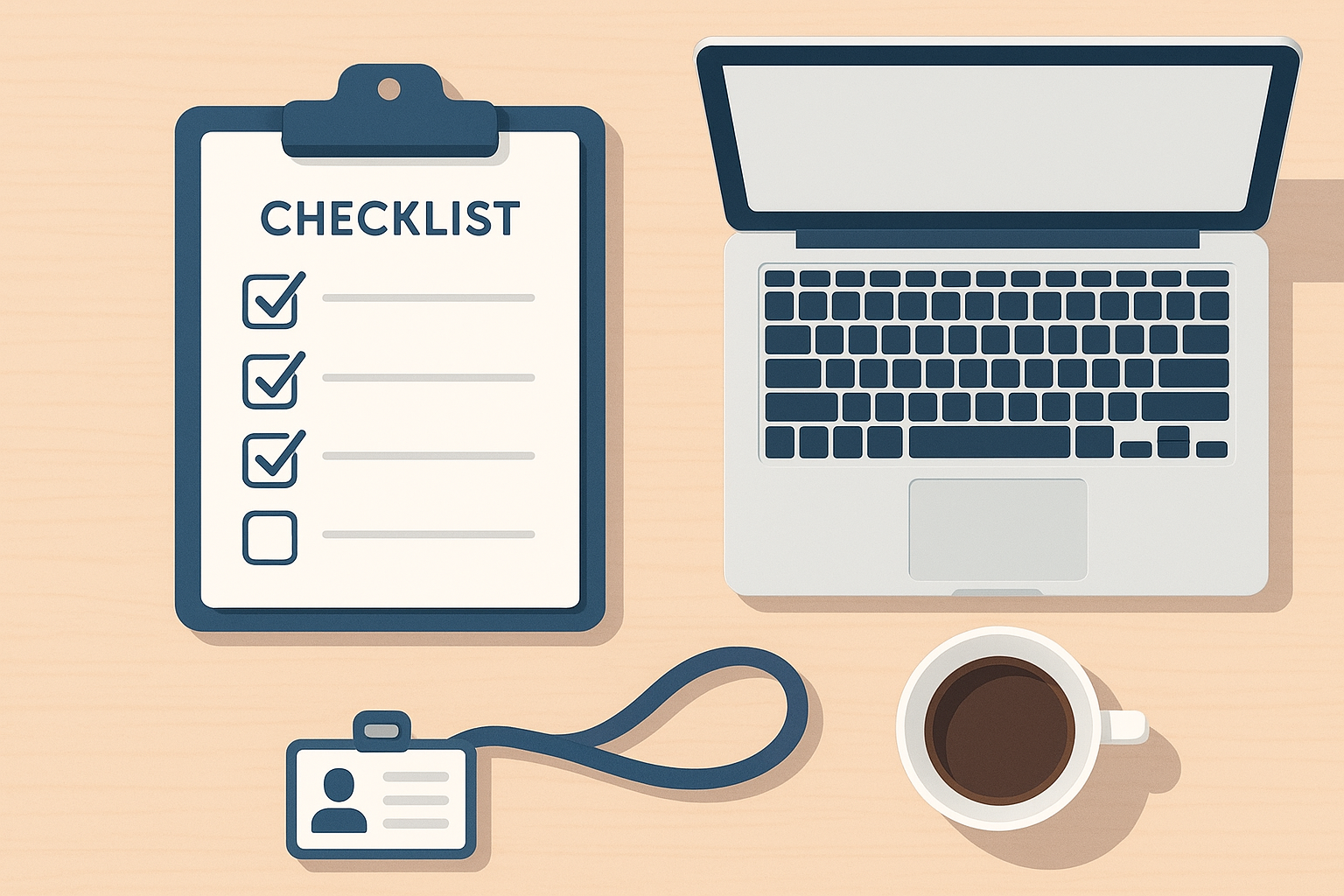
A written checklist keeps every onboarding step consistent, even during busy hiring periods.
Common Onboarding Mistakes That Undermine Retention
Even well-intentioned employers fall into predictable traps. In particular, treating onboarding as a single day, skipping role-specific training, and failing to schedule follow-up check-ins are among the most damaging mistakes. Inconsistent documentation and unclear performance expectations also contribute to early turnover.
Soteria HR’s related article on how companies are wiping out with onboarding walks through these pitfalls in more depth, along with practical fixes for each one.
Compliance gaps are another frequent issue. As a result, employers should confirm requirements such as Form I-9 verification and new hire reporting with the U.S. Department of Labor, since rules can vary by state and employer size.
How Soteria HR Supports Your Onboarding Strategy
Soteria HR, based in Pasadena, California, provides hands-on outsourced HR services for growing organizations across Los Angeles, Orange County, and nationwide. In particular, the team helps employers build onboarding workflows, coordinate benefits enrollment, and maintain compliant employee records through HR administration and ASO support, all without creating a co-employment relationship.
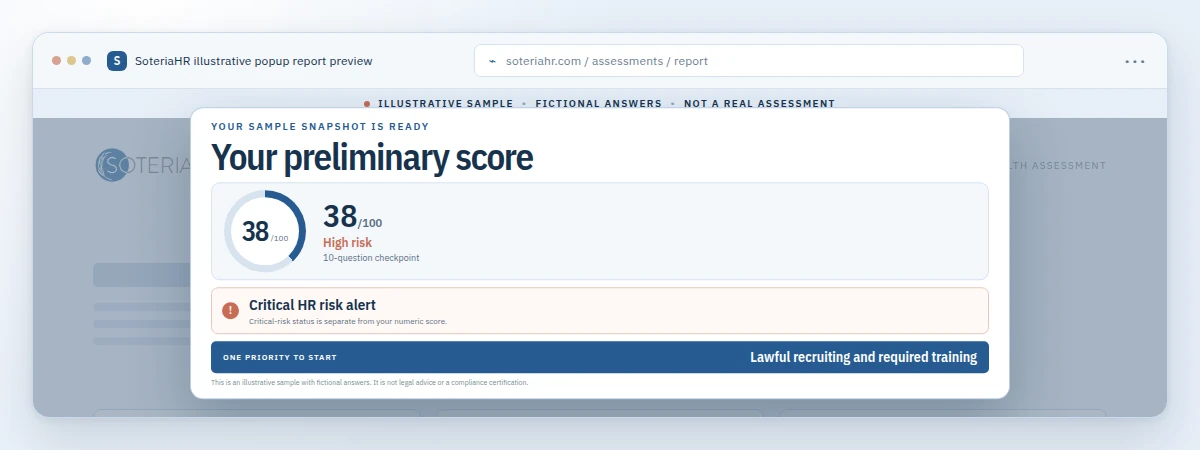
Whether your company lacks a dedicated HR department or simply wants to strengthen an existing one, Soteria’s consultants can help translate onboarding priorities into a workable process. To get a quick read on where your current program stands, try the free HR Health Assessment at soteriahr.ai, or visit Soteria HR directly to learn more about available services.
If you would rather talk through your situation first, you can reach the team at (800) 399-2458 to talk to an HR expert about building or improving your onboarding process.
Frequently Asked Questions About Employee Onboarding
What employee onboarding means, explained simply
Employee onboarding means the structured process employers use to integrate new hires into their role, team, and company culture, typically spanning the first 90 days of employment. It goes beyond paperwork to include training, relationship-building, and performance clarity.
How long does employee onboarding typically last?
Most structured onboarding programs run between 30 and 90 days, though some organizations extend check-ins through the first year. The right length depends on role complexity and how quickly a new hire needs to reach full productivity.
What’s the difference between onboarding and orientation?
Orientation is a single event, often one day, covering paperwork and basic policies. Onboarding is a longer process that includes orientation plus training, mentorship, and milestone check-ins over weeks or months.
Who is responsible for employee onboarding in a small business?
In small businesses without a dedicated HR department, responsibility often falls to the hiring manager, an office administrator, or an outsourced HR partner. Clear ownership prevents steps from being missed during busy growth periods.
What should a new hire onboarding checklist include?
A solid checklist covers pre-start paperwork, equipment setup, required compliance forms, role-specific training tasks, and scheduled check-in dates. It should also name who owns each task so nothing falls through the cracks.
How much does a poor onboarding process cost a company?
Poor onboarding contributes to early turnover, which replacement-cost research commonly estimates at six to nine months of an employee’s salary. Beyond direct costs, weak onboarding slows productivity and can damage team morale.
What are the most common onboarding mistakes employers make?
Common mistakes include treating onboarding as a single-day event, skipping role-specific training, and failing to schedule follow-up check-ins. Inconsistent documentation and unclear expectations are also frequent problems.
How does remote employee onboarding differ from in-person onboarding?
Remote onboarding requires extra attention to shipping equipment early, scheduling video introductions, and creating written documentation that replaces hallway conversations. Regular virtual check-ins help remote hires feel connected to the team.
What HR compliance steps happen during onboarding?
Compliance steps typically include completing Form I-9 verification, distributing required notices, enrolling eligible employees in benefits, and setting up payroll and tax withholding correctly. Requirements vary by state and employer size, so it helps to confirm applicable rules with resources like the Department of Labor.
How can outsourced HR support improve onboarding?
An outsourced HR partner can standardize onboarding paperwork, coordinate benefits enrollment, and flag compliance gaps before they become problems. This frees founders and managers to focus on training and team integration instead of administrative tasks.
What’s a reasonable timeline for building an onboarding program?
Most growing companies can build a workable onboarding framework in two to four weeks by starting with a checklist, a first-week schedule, and a 30-60-90 day check-in plan. The program can then be refined over time as hiring needs change.
How do you measure whether onboarding is working?
Track early turnover rates, time-to-productivity, and new hire survey feedback collected at 30, 60, and 90 days. Consistent improvement in these metrics signals that the onboarding process is achieving its purpose.

Culture integration is one of the core components of what employee onboarding means in practice.
The Bottom Line on What Employee Onboarding Means
In the end, employee onboarding means much more than a stack of forms signed on a new hire’s first day. It is a deliberate, multi-week process that shapes whether someone becomes a productive, engaged team member or leaves within the first few months. Consequently, employers who invest in structured onboarding tend to see stronger retention, faster ramp-up, and fewer compliance headaches down the road.
If your organization is ready to strengthen its approach, Soteria HR can help you build or refine an onboarding process that fits your size and goals. Call (800) 399-2458 to talk to an HR expert, or start with the free HR Health Assessment to see where your priorities should begin.