How do benefits vendors support small businesses with employee packages? In short, a benefits vendor works alongside a small business to design, administer, and maintain group health insurance, retirement plans, and other perks so the employer can offer a competitive employee package without building an in-house benefits department. This partnership typically covers plan selection, carrier coordination, enrollment, renewals, and ongoing compliance support. For companies with limited HR staff, that hands-on help can be the difference between a bare-bones offering and a benefits package that actually attracts and keeps good employees.
Key Takeaways
- Benefits vendors handle plan design, carrier negotiation, enrollment, and ongoing compliance so small employers do not have to manage it alone.
- According to the U.S. Bureau of Labor Statistics, benefits make up nearly 29% of total compensation costs, which is why expert support matters.
- Vendor types range from brokers and third-party administrators to PEOs and ASOs, each with different employer responsibilities.
- A clear, repeatable process helps small businesses build and maintain an employee benefits package year after year.
- Soteria HR’s ASO model delivers benefits and HR support while the client remains the employer of record, with no co-employment.
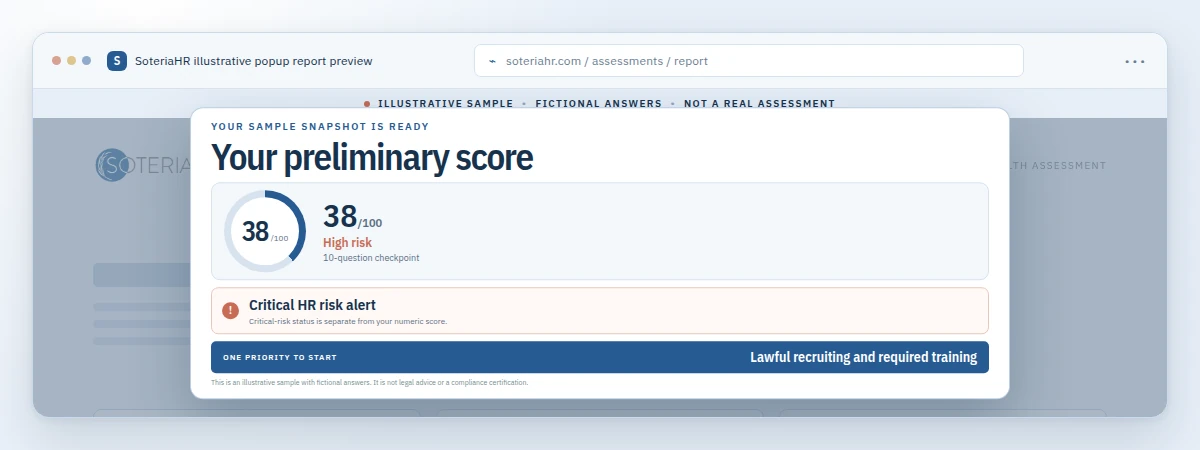
- The free HR Health Assessment at soteriahr.ai can surface benefits-related gaps before a vendor conversation even starts.
How Do Benefits Vendors Support Small Businesses With Employee Packages?
Benefits vendors are outside partners that take on the research, paperwork, and relationship management behind an employer’s benefits program. Specifically, they shop the market for health, dental, vision, and retirement options, then negotiate rates and plan terms on the employer’s behalf. As a result, a small business owner gets access to the kind of leverage and expertise that larger companies have in-house, without hiring a full benefits team.
In practice, benefits vendors support small businesses across four areas: plan design, open enrollment, day-to-day administration, and compliance. During plan design, the vendor compares carriers and coverage tiers against the company’s budget and workforce needs. During enrollment, they prepare employee communications, answer questions, and process elections. Afterward, they manage terminations, life-event changes, and renewals so coverage stays accurate throughout the year.
Above all, a good vendor relationship frees up the owner or office manager to focus on running the business. Consequently, many growing employers pair a benefits vendor with a broader HR partner, since benefits rarely operate in isolation from onboarding, leave, and payroll coordination.
What Is a Benefits Vendor?
A benefits vendor is an outside company or consultant that helps an employer select, manage, and administer employee benefits such as health insurance, retirement plans, and leave programs. The term covers several distinct roles, and the differences matter when a small business is deciding who to call. For a closer side-by-side look at those options, see this breakdown of which benefits vendors are best for small and mid-sized companies.
How benefits vendors support small businesses, core services
Regardless of the exact vendor type, most offer a similar core toolkit. For example:
- Carrier research, quoting, and renewal negotiation across medical, dental, vision, and ancillary lines.
- Open enrollment coordination, employee communication, and benefits education sessions.
- Compliance support for requirements such as COBRA continuation coverage and the ACA employer mandate.
- Administration of Section 125 cafeteria plans and related plan documents.
- Ongoing eligibility tracking, billing reconciliation, and mid-year life-event changes.
“A benefits package only works if someone is actively managing it. Left on autopilot, even a strong plan quietly loses value for employees and for the business.” — Soteria HR
How Employee Benefits Providers Help With Plan Design and Enrollment
Employee benefits providers earn much of their value during the design and enrollment stages. First, they benchmark the employer’s current offering against similar companies in the same industry and region. In addition, they model cost scenarios so leadership can see how premium increases, deductible changes, or new voluntary benefits will affect the budget before anything is finalized.
Once a plan is chosen, the provider typically builds enrollment materials, hosts employee meetings, and answers one-off questions about dependents or coverage dates. This matters for recruiting, too. In particular, a well-explained, competitive package is often what helps candidates say yes; this guide on how employee benefits providers help small companies attract talent walks through that connection in more detail.
Similarly, ongoing retention depends on employees understanding and using what they have. For that reason, many providers schedule mid-year check-ins rather than disappearing until the next renewal; see how employee benefits providers help small businesses retain talent for more on that approach.
Steps Benefits Vendors Follow to Build an Employee Benefits Package
Although every engagement looks a little different, most vendors follow a similar sequence when building or refreshing a small business benefits package:
- Assess the current workforce, budget, and any existing coverage to identify gaps, overlaps, and unused benefits before shopping for anything new.
- Benchmark plan options against carriers and market data so leadership understands typical pricing and coverage levels for companies of similar size.
- Select carriers and design plan tiers, balancing premium cost against deductibles, networks, and the voluntary benefits employees value most.
- Coordinate open enrollment, including employee communication, education sessions, election processing, and confirmation that every enrolled employee is set up correctly.
- Manage ongoing compliance, renewals, and mid-year changes, keeping documentation current for COBRA, ACA reporting, and plan-document requirements.
For a longer-term view of how these steps fit into a repeatable annual cycle, this complete guide to benefits management best practices is a useful next read.
Common Mistakes Small Businesses Make When Choosing a Benefits Vendor
Even well-intentioned employers run into predictable problems. In particular, choosing the cheapest plan without checking network adequacy often backfires once employees discover their preferred doctors are out of network. Likewise, skipping a documented compliance calendar can lead to missed COBRA notices or late ACA filings, both of which carry real penalties under federal rules from the U.S. Department of Labor’s Employee Benefits Security Administration.
Another frequent misstep is treating the vendor relationship as a once-a-year event. Instead, benefits perform better when reviewed continuously. This piece on what makes a benefits management service stand out for small companies outlines the traits that separate a reactive vendor from a genuinely proactive one.
When Should a Small Business Bring in Benefits Support?
There is no single employee count that triggers the need for outside help. However, a few signals tend to repeat. Growth past roughly ten employees often makes manual benefits tracking unmanageable, and companies that have scaled toward the 10 to 250 employee range frequently find that internal staff cannot keep up with carrier relationships, compliance deadlines, and employee questions at the same time.
In contrast, businesses that are not yet experiencing those pressures may simply want a second opinion on their current plan. Either way, a short self-assessment is often a low-risk first step. The free HR Health Assessment includes a brief two-minute Quick HR Check and a more detailed 40-question version that typically takes 10 to 12 minutes; results are self-reported and preliminary, not a compliance certification, but they can point toward where a conversation with a benefits vendor would help most.
Benefits Brokers, PEOs, and ASOs Compared
Terminology in this space can blur together. The table below separates the four models small businesses most often encounter.
| Vendor Type | What They Do | Employer Relationship | Best Fit |
|---|---|---|---|
| Benefits Broker | Shops carriers, negotiates rates, assists with enrollment and renewals. | Employer stays sole employer; broker is an advisor. | Companies that just need plan sourcing. |
| Third-Party Administrator (TPA) | Processes claims, COBRA, and Section 125 administration behind the scenes. | Employer stays sole employer; TPA handles back-office tasks. | Employers who already have a broker but need admin support. |
| Professional Employer Organization (PEO) | Bundles benefits, payroll, and HR under a co-employment arrangement. | Co-employer of record alongside the client. | Businesses comfortable sharing employer-of-record status. |
| Administrative Services Organization (ASO) | Provides benefits administration, HR consulting, and payroll coordination without co-employment. | Client remains sole employer of record; vendor is a service partner. | Growing companies that want full support but control of employment decisions. |
Soteria HR, based in Pasadena and serving employers across Los Angeles, Orange County, and nationwide, operates in that last category: an ASO model covering HR administration, HR consulting, and benefits administration, with payroll coordination layered in as needed. Clients remain the employer and keep responsibility for employment decisions throughout.
Frequently Asked Questions About Benefits Vendors and Employee Packages
How do benefits vendors support small businesses with employee packages?
They handle plan design, carrier negotiation, enrollment, and compliance so an employer does not have to build that expertise internally. That is the core of how benefits vendors support small businesses with employee packages, and it usually extends into year-round administration as well.
What is a benefits vendor, exactly?
A benefits vendor is any outside company or consultant that helps an employer choose, set up, and manage employee benefits such as health insurance or retirement plans. The term can refer to a broker, a TPA, a PEO, or an ASO, depending on the scope of services provided.
Why do small businesses use outside benefits vendors instead of handling benefits internally?
Most small businesses lack the staff time or specialized knowledge to track carrier contracts, compliance deadlines, and plan documents on their own. As a result, outsourcing that work to a vendor is often faster and more accurate than building it in-house from scratch.
What is the difference between a benefits broker, a PEO, and an ASO?
A broker mainly sources and negotiates plans, a PEO bundles benefits with payroll under a co-employment arrangement, and an ASO provides similar administrative support without co-employment. In other words, the employer stays the sole employer of record with both a broker and an ASO, but shares that status with a PEO.
How much does it cost to work with a benefits vendor?
Costs vary widely by vendor type, service scope, and company size, so there is no single industry-standard number. Because of that variation, it is best to request a specific quote based on employee count and the services actually needed, such as full administration versus occasional consulting.
How long does it take to set up a new employee benefits package with a vendor?
A full plan redesign and new carrier selection often takes several weeks to a few months, largely driven by carrier underwriting timelines and renewal dates. In contrast, administrative transitions on an existing plan can often move more quickly.
What are the most common mistakes small businesses make when choosing a benefits vendor?
Picking the lowest-priced plan without checking provider networks, skipping a written compliance calendar, and treating the relationship as a once-a-year task are the most frequent missteps. Each of these can lead to employee dissatisfaction or compliance exposure down the line.
What should a small business look for in a benefits vendor?
Look for responsiveness, transparent pricing, experience with companies of a similar size, and a clear compliance process. Above all, ask how they handle mid-year changes and renewals, since that is where ongoing value is either delivered or lost.
Can a benefits vendor help with COBRA and ACA compliance?
Yes, many vendors administer COBRA notices and support ACA reporting obligations as part of their standard service. Even so, the employer typically remains responsible for confirming that requirements are met, so it helps to clarify exact scope in writing.
Do employees deal directly with the benefits vendor or with the employer?
In most arrangements, employees can reach the vendor directly for claims questions, while the employer remains their main point of contact for policy decisions. This split keeps day-to-day questions off the employer’s plate without removing the employer from the relationship.
How often should a small business review its benefits vendor relationship?
An annual review tied to renewal is the minimum, but a mid-year check-in is a good practice too. Consequently, businesses that review more often tend to catch pricing or service issues before they become bigger problems.
Is a benefits vendor the same as an HR outsourcing company?
Not always. A benefits vendor may focus only on insurance and retirement plans, while an HR outsourcing partner, such as an ASO, typically bundles benefits administration together with broader HR consulting and administration. Many small businesses find that combined approach simpler to manage than juggling several separate vendors.
In summary, how benefits vendors support small businesses with employee packages comes down to a few consistent jobs: designing a plan that fits the budget, running enrollment smoothly, keeping compliance current, and staying available when questions or changes arise during the year. According to the U.S. Bureau of Labor Statistics, benefits make up nearly 29% of total compensation costs for private industry workers, which is a meaningful reason to get that management right rather than treat it as an afterthought. For further reading on the terminology and roles involved, see this overview of employee benefits and the IRS guidance on employer shared responsibility provisions. Whether a small business chooses a broker, a PEO, or an ASO, the right vendor relationship should feel like a partnership rather than a once-a-year transaction. Soteria HR’s ASO model delivers that kind of hands-on benefits administration and HR consulting without co-employment, so leaders can call (800) 399-2458, submit a consultation request, or visit soteriahr.com to Talk to an HR Expert about building or improving an employee benefits package.