HR risk management for startups is the habit of spotting people-related problems early and putting simple safeguards in place before they turn into costly disputes. When you are moving fast, HR can feel like paperwork you will get to later. However, a few basic practices now can save you significant time and stress.
Quick answer: Classify workers correctly, write down your key policies, keep clean records, train your managers, and review it all on a schedule. Bring in an HR expert when the stakes or headcount rise.
What Is HR Risk Management for Startups?
It means finding the places where your people practices could go wrong, then reducing the chance and the impact. For a startup, that usually means hiring, pay, classification, leave, and how you handle complaints. It does not mean building a large HR department. For a broader view, see this overview of HR risk management.
Why Startups Face Unique People Risks
Startups change quickly. Roles shift, people wear several hats, and policies often live in someone’s head. As a result, informal decisions pile up without a paper trail.
In addition, early hires set precedents. If one employee receives a perk or exception, others may expect the same. Consistency is easier to build at five people than at fifty.

Founders reviewing core employment documents, a first step in HR risk management for startups.
Common Startup HR Risks to Watch
Worker Classification
Treating an employee as a contractor is a frequent and expensive error. Federal and state tests differ. California, for instance, applies the ABC test in many situations. Review current guidance from the U.S. Department of Labor and your state agency.
Pay, Hours, and Leave
Overtime exemptions, meal and rest rules, and leave laws vary by state and employer size. Therefore, never assume a salary alone makes someone exempt.
Discrimination and Complaints
Anti-discrimination laws can apply even to small teams, with thresholds that depend on the statute. The EEOC explains federal rules. A clear complaint process helps managers respond fairly and promptly.
Records and Documentation
Offer letters, I-9 forms, policy acknowledgments, and performance notes protect everyone. Thin records make it hard to explain decisions later.
How to Build a Startup HR Risk Plan in 5 Steps
- List your people risks. Walk through hiring, pay, classification, leave, and termination. Note where decisions are undocumented.
- Confirm the rules that apply. Check official sources for your headcount, location, and effective dates.
- Put core policies in writing. Draft a handbook and offer letter template, then ask qualified counsel to review them.
- Train managers. Cover fair hiring, feedback, documentation, and when to escalate a concern.
- Review on a schedule. Revisit records and policies each quarter as headcount changes.
For more on early priorities, read HR strategy for startups and which HR strategies work best for startups.

Short, regular planning sessions keep policies and manager habits aligned as the team grows.
When Outside HR Support Makes Sense
Many founders handle the first few hires themselves. Yet support becomes valuable when you add managers, enter new states, or offer benefits. Moreover, a first employee complaint is a poor time to start from scratch.
Options include consulting, outsourced HR administration, and an ASO (Administrative Services Organization). An ASO provides HR support without co-employment, so you remain the employer and keep responsibility for employment decisions. A PEO is a different model that suits some companies well. Soteria HR is a Pasadena-based, hands-on outsourced HR partner for growing small and mid-sized organizations. It offers HR administration, HR consulting, and benefits administration for employers in Los Angeles, Orange County, and nationwide.
To compare options, see how to choose the right HR services for startups and HR consulting for tech startups.
Spot Gaps with a Free HR Health Assessment
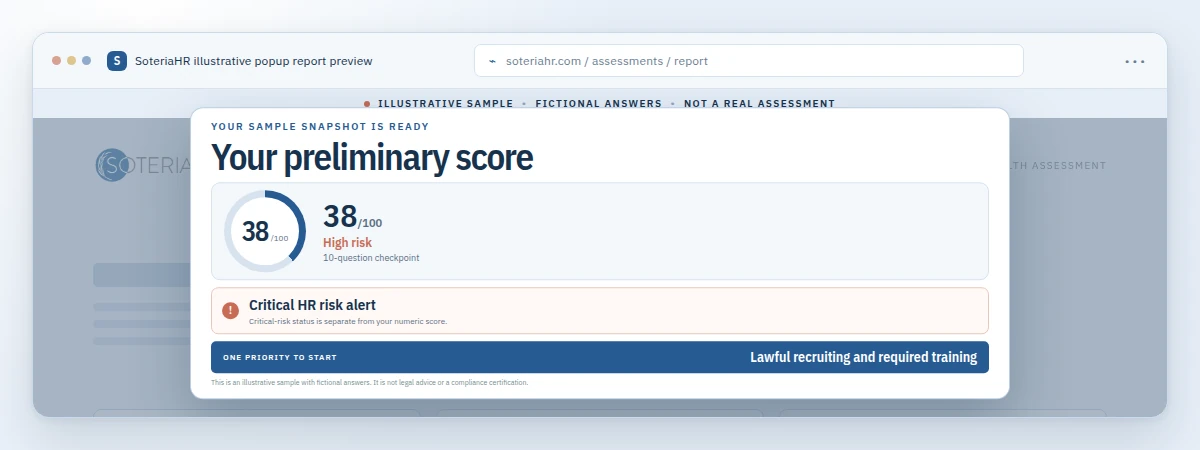
If you are unsure where to start, the free HR Health Assessment at soteriahr.ai offers a quick way to surface possible gaps and priorities. Results are self-reported and preliminary. They do not certify compliance or replace a legal audit.
Next step: Ready to talk through your priorities? Call (800) 399-2458 or request a consultation to Talk to an HR Expert.
Frequently Asked Questions
What is HR risk management for startups?
It is the practice of spotting and reducing people-related problems, such as misclassification, weak documentation, and policy gaps, before they become costly. It focuses on simple, repeatable habits rather than heavy bureaucracy.
When should a startup start thinking about HR risk?
Ideally before the first hire. Basic practices like correct worker classification and written offer terms matter from day one.
What are the biggest HR risks for early-stage companies?
Common ones include misclassifying workers, wage and hour errors, missing policies, thin personnel records, and inconsistent handling of employee complaints.
Do startups need an employee handbook?
Many employers benefit from one, and some states require certain written policies. A handbook helps managers apply rules consistently. Requirements vary by location, so confirm with qualified counsel.
How do I know if a worker is an employee or a contractor?
Classification depends on the facts of the working relationship and on federal and state tests, which differ. California, for example, applies the ABC test in many situations. Get qualified advice before deciding.
How much does HR risk management cost?
Costs depend on your size, location, and the support you need. Many startups begin with a scoped consultation to price the right level of help.
Can a founder handle HR alone?
Often yes for the first few hires, if you document decisions and verify rules with official sources. As headcount and complexity grow, extra support usually becomes worthwhile.
What is the difference between outsourced HR and a PEO?
A PEO enters a co-employment relationship with you. An ASO provides HR support while you remain the sole employer. Each model suits different needs.
What does an ASO do for a startup?
An Administrative Services Organization handles tasks such as HR administration and benefits administration without co-employment. The startup keeps responsibility for employment decisions and obligations.
What records should startups keep for employees?
Typically offer letters, job descriptions, I-9 forms, payroll records, policy acknowledgments, and performance or discipline notes. Retention periods vary by jurisdiction, so check current official guidance.
What is a common mistake in HR risk management for startups?
Waiting until a complaint or audit appears. Documenting decisions and setting basic policies early is far easier than rebuilding records later.
Does the HR Health Assessment prove compliance?
No. Results are self-reported and preliminary. They highlight possible gaps and priorities but do not certify compliance or replace a legal audit.
Conclusion
Strong HR risk management for startups comes down to a few steady habits: classify workers carefully, write down key policies, keep clear records, train managers, and review regularly. You do not need to do it all at once. Start with your biggest gaps, verify requirements with official sources, and add support as you grow. When you want a partner, talk to an HR expert at Soteria HR.
This content is for general information and is not legal or tax advice. Requirements vary by location, employer size, and circumstances. Consult qualified counsel or an appropriate advisor for guidance on your situation.