HR policies for growing organizations are the written rules that keep hiring, pay, conduct, and leave consistent as your team gets bigger. When you have five people, you can handle most questions in conversation. At thirty, that stops working, and clear policies become the way you treat people fairly and keep managers on the same page.
Quick answer: Start with equal opportunity, anti-harassment, pay and timekeeping, leave, and conduct policies. Write them in plain language, have them reviewed for your locations, and train managers to apply them the same way every time.
What Are HR Policies for Growing Organizations?
They are documented standards that explain how your organization handles people matters. Together they usually form an employee handbook, plus notices and forms. Their job is simple: set expectations, support fair treatment, and give managers something dependable to point to.

A leadership team reviews draft HR policies for growing organizations before rollout.
Why Policies Matter More as You Scale
Growth adds people, managers, and locations. As a result, informal habits turn into inconsistent decisions. Two supervisors may handle the same attendance issue differently, and employees notice.
In addition, legal obligations often change with size. Many federal rules start at specific employee thresholds, and state or local rules can differ. The U.S. Department of Labor and the EEOC publish current requirements, so check them for your situation. For more on supporting a larger team, see this guide on supporting a growing team effectively.
Which Workplace Policies Should You Write First?
Focus on the policies that protect people and set clear expectations. The table below shows a practical starting order.
| Policy | Why it comes early |
|---|---|
| Equal employment and anti-harassment | Sets standards for respect and a way to report concerns |
| Pay, hours, and timekeeping | Wage and hour rules are a common source of disputes |
| Leave and time off | Requirements vary by state, locality, and employer size |
| Conduct and discipline | Supports consistent, documented manager decisions |
| Remote work and technology use | Clarifies expectations for equipment, data, and schedules |
Later, add policies for performance reviews, expense reimbursement, and workplace safety. For a deeper look, read about building company HR policies for a compliant workplace.
How to Build Your Employee Handbook Step by Step
Here is a simple process you can follow.
- Map your footprint. List headcount, work locations, and worker types so you know which rules may apply.
- Prioritize core policies. Cover your biggest risks first, such as harassment, pay, leave, and conduct.
- Draft in plain language. Use short sentences managers can explain easily.
- Get a qualified review. Have counsel or an experienced HR professional check drafts against current official sources.
- Roll out and train. Share the policies, collect acknowledgments, coach managers, and set an annual review date.

Training managers is what turns written policies into consistent daily practice.
Common Policy Mistakes to Avoid
The biggest mistake is writing a policy you do not follow. For example, a strict attendance rule that managers ignore can make later discipline look unfair.
Another common error is copying a template without adapting it. Templates rarely reflect your states, your size, or how your team actually works. Similarly, many organizations write a handbook once and never update it. Review it yearly, and sooner if you open a new location or cross a headcount threshold.
Keeping Company Policies Current as You Grow
Treat your handbook as a living document. Keep a simple change log, note the effective date of each update, and tell employees what changed. Also verify any proposed rule separately from enacted law, since proposals may never take effect.
Policies work best alongside strong people practices. This overview of employee relations for growing companies shows how everyday conversations reinforce what is written down.
When Outsourced HR Support Makes Sense
Many founders and operations leaders do not have time to draft and maintain policies. An outsourced HR partner can help. Soteria HR is a Pasadena-based, hands-on HR partner serving growing small and mid-sized organizations in Los Angeles, Orange County, and nationwide. Its HR consulting and HR administration support covers handbooks, policies, and manager guidance.
Soteria also offers an ASO (Administrative Services Organization) option, which provides tailored HR support without co-employment. Clients remain the employer and keep responsibility for employment decisions and applicable obligations. Explore which HR services to consider during growth phases or see HR solutions for growing firms.
This content is for general information and is not legal or tax advice. Requirements vary by location, employer size, and circumstances. Consult qualified counsel or an appropriate advisor for guidance on your situation.
Frequently Asked Questions
What are HR policies for growing organizations?
They are written rules and procedures that explain how your organization treats employees, from hiring and pay practices to conduct and leave. Growing organizations need them to keep decisions consistent as the team expands.
When should a small business start writing HR policies?
Ideally before your first hire, and certainly before managers begin making case-by-case decisions. Some legal requirements depend on employee count, so review them as you grow.
Do I need an employee handbook?
Federal law does not require a handbook for every employer, but some states and situations call for specific written notices or policies. A handbook is the most common way to deliver them consistently.
Which HR policies come first?
Start with equal employment opportunity, anti-harassment, pay and timekeeping, leave, and conduct. Add others as your size and risks change.
How often should HR policies be reviewed?
Review them at least once a year and whenever laws, headcount, or locations change. A short annual calendar reminder keeps this manageable.
How do HR policies change when I hire in another state?
State and local rules on leave, pay, and notices can differ significantly. You may need state-specific addenda to your handbook.
Should employees sign an acknowledgment of the policies?
Yes, collecting signed or electronic acknowledgments is a common best practice. It documents that employees received the policies.
What is the most common mistake with HR policies?
Writing policies that the organization does not actually follow. A policy you cannot or will not apply consistently can create more problems than having none.
Can I use a handbook template?
A template can be a starting point, but it must be customized to your locations, size, and practices. Have it reviewed by qualified counsel or an HR professional.
How can outsourced HR help with policies?
An outsourced HR partner can draft, update, and roll out policies and coach managers on applying them. You remain the employer and keep responsibility for employment decisions.
How long does it take to build a basic policy set?
It varies with size, locations, and complexity. Many organizations can draft core policies in a few weeks, though review and rollout add time.
Where can I see what gaps my organization has?
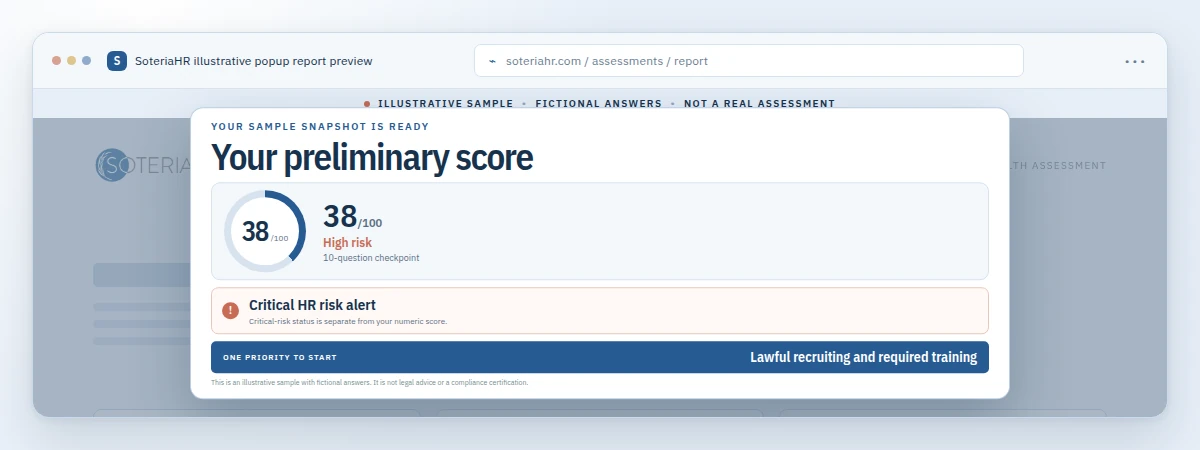
The free HR Health Assessment at soteriahr.ai can introduce potential gaps and priorities. Results are self-reported and preliminary, not a compliance certification or legal audit.
Conclusion: Build Policies That Grow With You
Strong HR policies for growing organizations start with the essentials, use plain language, get a qualified review, and are backed by trained managers. Revisit them every year so they keep pace with your team. If you want a hands-on partner, call (800) 399-2458 or submit a consultation request to Talk to an HR Expert.