
HR systems integration for small businesses is the work of connecting your payroll, benefits, timekeeping, and employee record tools so information flows between them on its own. When your team grows, retyping the same data in three places stops being a nuisance and starts causing real errors. This guide explains what integration involves, where to start, and how to avoid common missteps.
Short answer: Start by mapping how employee data moves today, clean it up, then connect your HR records to payroll first and benefits next. Test with a small group before going live, and name one owner for the connections.

A small team reviews employee records that flow between HR and payroll tools.
What Is HR Systems Integration for Small Businesses?
It is a setup where your HR tools share data automatically. A new hire entered once appears in payroll and benefits without anyone retyping it. In general terms, this is system integration applied to a human resource management system and the tools around it.
Integration does not mean buying one giant platform. Often it means making the tools you already use work together.
Why Connected HR Tools Matter as You Grow
Manual entry creates mistakes. A mistyped pay rate or a missed benefits enrollment can affect an employee’s paycheck or coverage. In addition, managers lose time chasing records that live in different places.
Connected tools also make reporting easier. Headcount, leave, and enrollment numbers match because they come from one source. For more on how cloud tools support daily HR work, see this look at how cloud HR systems improve HR administration for small businesses.
Which Systems to Connect First
Pay depends on accurate employee data, so most employers begin with HR records and payroll. Benefits usually come next, followed by timekeeping and applicant tracking.
| Connection | What it helps with |
|---|---|
| HR records to payroll | New hires, pay changes, and terminations stay consistent |
| HR records to benefits | Enrollments and terminations reach carriers on time |
| Timekeeping to payroll | Hours flow into pay without manual totals |
| Hiring to onboarding | Candidate details carry into the new-hire record |
How to Plan Your Integration Step by Step
A simple plan keeps the project manageable. Follow these steps in order.
- List your current tools. Include payroll, benefits, timekeeping, and any spreadsheets that hold employee data.
- Map the data flow. Trace a new hire from offer to payroll to benefits and mark every retyping point.
- Clean your employee data. Fix duplicates and outdated records so errors are not copied everywhere.
- Confirm vendor connections. Ask what syncs, how often, and what fees apply.
- Test with a small group. Compare results across systems and fix mismatches before full rollout.
- Assign an owner and review. Set access by role and check sync errors on a regular schedule.
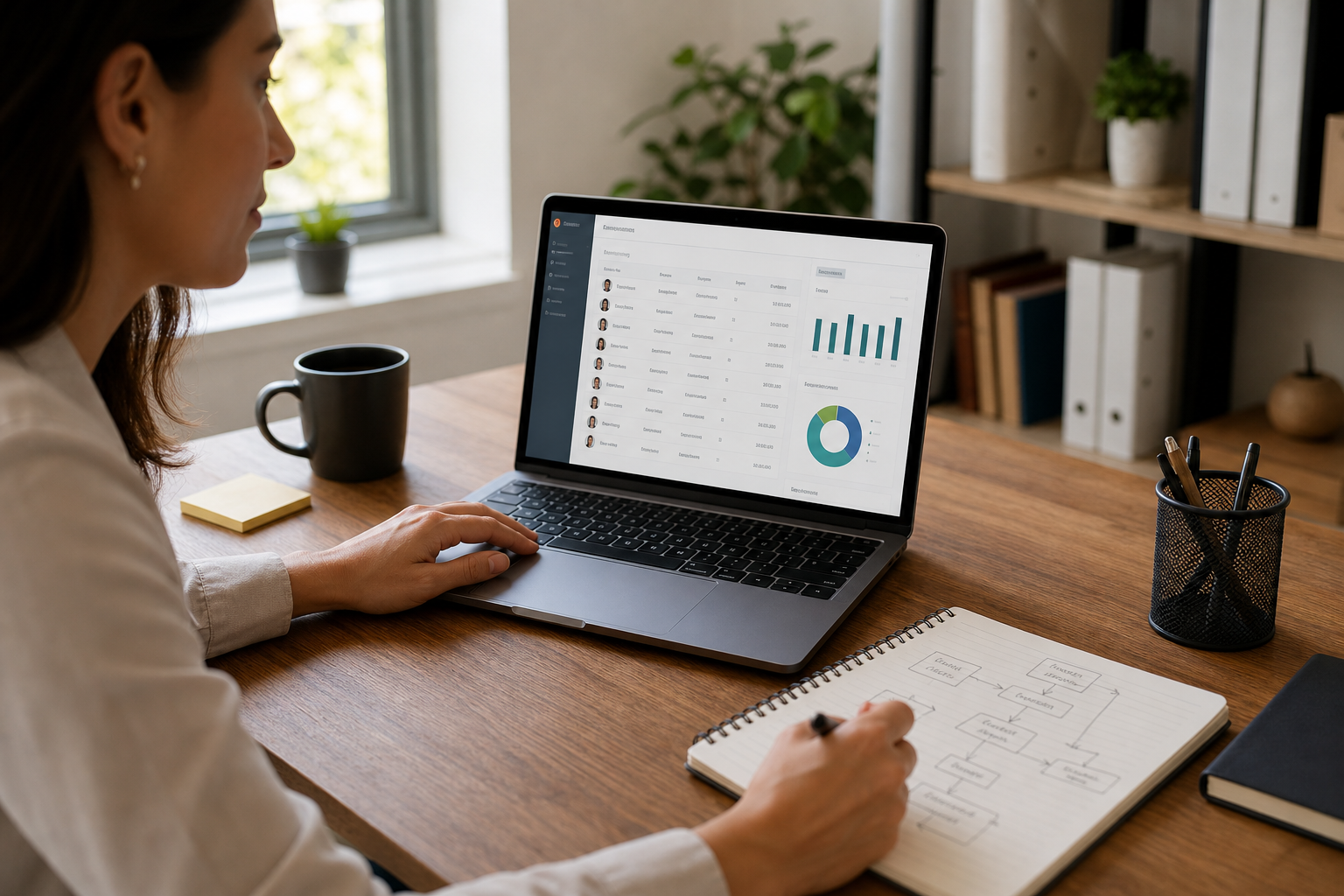
Mapping the workflow on paper first makes later connections easier to set up.
Common Mistakes When Connecting HR Software
The biggest mistake is connecting messy data. If records are wrong, integration spreads the errors faster. Therefore, clean first.
Other pitfalls include buying tools before mapping the workflow, skipping a pilot, and leaving no one in charge. Privacy also needs attention. Limit access by role, and review each vendor’s security practices.
Where Outsourced HR Support Fits
Many small employers lack time or a dedicated HR team to manage this. Soteria HR is a hands-on outsourced HR partner for growing small and mid-sized organizations, based in Pasadena, California, and serving employers in Los Angeles, Orange County, and nationwide. Its HR administration, HR consulting, and benefits administration services can help streamline workflows, and payroll coordination complements the broader relationship. Scope depends on the engagement.
Soteria’s ASO (Administrative Services Organization) option provides tailored HR support without co-employment, so you remain the employer. Learn more about what HR administration includes, explore HR support for small business, or read about custom HR solutions for growing small businesses. You can also compare this with another view on cloud-based HR systems for SMBs.
This content is for general information and is not legal or tax advice. Requirements vary by location, employer size, and circumstances. Consult qualified counsel or an appropriate advisor for guidance on your situation.
Frequently Asked Questions
What is HR systems integration for small businesses?
HR systems integration for small businesses is the practice of connecting tools such as payroll, benefits, timekeeping, and employee records so data moves between them instead of being retyped. The goal is one consistent set of employee information.
Why does integration matter for a small team?
Small teams have little time for double entry. Connected systems reduce typing errors, speed up onboarding, and make reports easier to trust.
Which systems should be connected first?
Most employers start with HR records and payroll, because pay data depends on accurate employee data. Benefits and timekeeping usually come next.
What is the difference between an integration and a manual file transfer?
An integration sends data automatically through a built-in connection. A manual transfer relies on someone exporting and importing a file each cycle, which adds delay and error risk.
How long does an integration project take?
Timing depends on the number of systems, data quality, and vendor support. A simple two-system connection may take weeks, while broader projects take longer.
How much does HR systems integration cost?
Costs vary by vendor and scope. Some connections are included in a subscription, while others carry setup or monthly fees, so ask each vendor for written pricing.
What are common integration mistakes?
Common mistakes include skipping a data cleanup, not naming an owner, and not testing before go-live. Another is buying tools before mapping the workflow.
Does integration protect employee data?
Integration can reduce loose spreadsheets and email attachments, but it does not guarantee privacy. Limit access by role and review each vendor’s security practices.
Can outsourced HR help with integration?
Yes. An outsourced HR partner can map workflows, coordinate with payroll and benefits vendors, and keep HR administration consistent. Scope depends on the engagement.
Does integration make my business compliant?
No. Systems support good records and workflows, but the employer remains responsible for legal obligations. Consult qualified counsel for legal questions.
How do I know if my systems are ready for integration?
Check whether each tool offers an integration or open connection, and whether your employee data is current. The free HR Health Assessment can help surface priorities, though results are self-reported and preliminary.
Should I replace my systems or connect them?
Connect them if they work well and offer integrations. Replace a tool when it cannot share data or no longer fits how your team works.
Conclusion: Start Small and Stay Consistent
Good HR systems integration for small businesses begins with a clear map, clean data, and one accountable owner. Connect payroll and HR records first, test carefully, and expand from there. If you want a partner on your side, Soteria HR can help you sort priorities. Talk to an HR Expert at (800) 399-2458 or submit a consultation request.