Can outsourcing HR administration improve compliance for growing businesses? In most cases, yes, when the arrangement is set up with clear roles and reliable processes, outsourcing HR administration gives growing companies more consistent recordkeeping, policy enforcement, and regulatory tracking than many stretched internal teams can manage alone. Outsourcing HR administration means shifting day-to-day HR administration tasks, such as employee records, onboarding paperwork, leave coordination, and benefits enrollment, to a dedicated outside partner. That said, outsourcing is not a substitute for sound internal decision-making, and employers remain responsible for their own compliance obligations.
Key Takeaways: Outsourcing HR Administration
- Outsourcing HR administration can strengthen compliance by centralizing recordkeeping, deadlines, and policy updates.
- Growing businesses, often in the 10–250 employee range, tend to hit a point where informal HR processes create gaps.
- An ASO (Administrative Services Organization) model lets employers keep control of employment decisions while gaining dedicated HR administration support.
- Outsourcing can reduce certain risk exposure, but it does not eliminate an employer’s legal responsibilities.
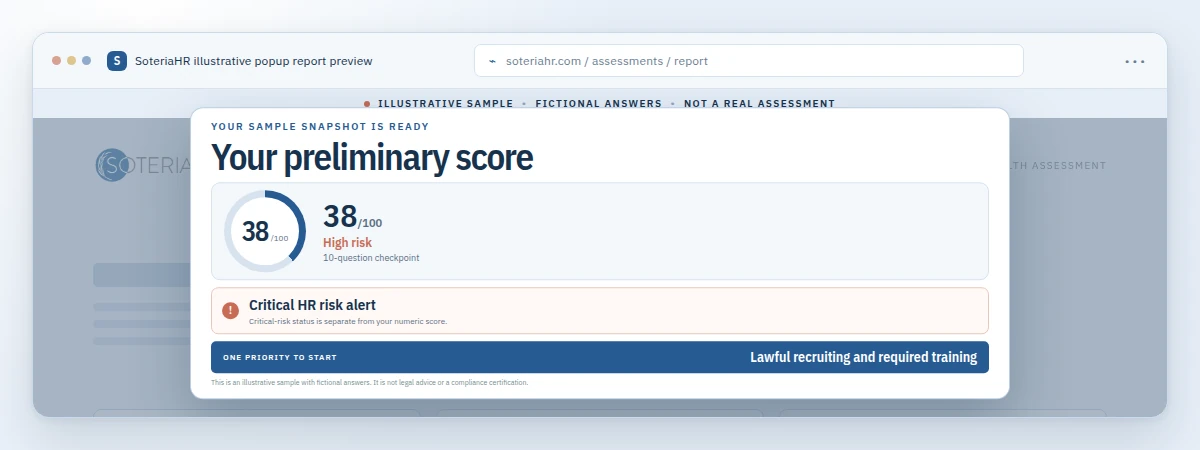
- A free HR Health Assessment can help identify where compliance gaps may exist before engaging a partner.
What Is Outsourced HR Administration?
Outsourced HR administration is the practice of handing routine, recurring HR tasks to a specialized outside partner instead of building that capacity entirely in-house. Specifically, it typically covers employee recordkeeping, onboarding and offboarding, policy administration, leave coordination, unemployment claims support, and payroll coordination with existing providers. For many growing organizations, these tasks pile up faster than anyone expected.
Soteria HR, based in Pasadena, California, delivers this kind of support through HR administration, HR consulting, and benefits administration services for small and mid-sized employers in Los Angeles, Orange County, and nationwide. In addition, the company offers an ASO option, which provides tailored HR support without co-employment, meaning the client remains the employer of record and retains responsibility for employment decisions. For a broader look at how this works day to day, see human resources help for small businesses.
Why Compliance Gets Harder as Companies Grow
As headcount increases, new legal thresholds activate. For example, federal leave requirements, state-specific harassment prevention training mandates, and local wage ordinances often kick in at specific employee counts. Consequently, a company that was fine at 15 employees can find itself out of step with the rules at 60 or 100 employees without anyone noticing the shift.
This is not a rare or hypothetical problem. According to the U.S. Equal Employment Opportunity Commission, the agency received more than 81,000 new workplace discrimination charges in fiscal year 2023, a volume that underscores how often employment issues escalate into formal complaints. Similarly, the U.S. Department of Labor’s Wage and Hour Division continues to investigate wage, overtime, and classification issues across growing employers of all sizes. In California specifically, the Department of Industrial Relations enforces its own layered set of wage, leave, and notice requirements that differ from federal rules.
Above all, founders and operations leaders rarely have time to track every threshold change while also running the business. That gap is exactly where many compliance issues quietly take root.
Can Outsourcing HR Administration Improve Compliance for Growing Businesses?
Yes, outsourcing HR administration can improve compliance for growing businesses when the partner brings structured processes, consistent documentation, and ongoing attention to changing requirements. However, the improvement comes from the quality of the processes put in place, not from outsourcing as an automatic fix. In particular, a dedicated HR administration partner reduces reliance on a single internal person’s memory for deadlines, filings, and policy updates.
For instance, consider a hypothetical 70-employee manufacturing company whose office manager also handles HR as one of many duties. Leave requests get tracked in a spreadsheet, and new-hire paperwork sometimes sits for a week. With a dedicated HR administration partner, those same tasks follow a repeatable checklist, which reduces the chance that something slips through the cracks. As a result, documentation tends to be more complete, and policy changes tend to reach managers faster.
Growing a team without a matching HR foundation often means growing exposure at the same pace as headcount. Consistent processes, not just good intentions, are what keep pace with that growth.
How Outsourced HR Administration Supports Compliance Day to Day
In practice, outsourced HR administration supports compliance through several concrete, recurring activities rather than a single sweeping action. Below is a look at where that support typically shows up.
Onboarding documentation: consistent handling of new-hire paperwork, required notices, and recordkeeping. Leave coordination: tracking requests and interacting with applicable leave laws so approvals and denials are documented. Benefits administration: supporting enrollments, terminations, and carrier coordination, including applicable ACA, COBRA, Section 125, and plan-document considerations. Policy maintenance: updating employee handbooks and communicating changes to managers. For a closer look at how these pieces connect for growing teams, see how outsourced HR solutions benefit growing organizations.
Meanwhile, benefits administration deserves particular attention. Because benefits rules touch tax, labor, and health policy at once, errors there can compound quickly. Therefore, many growing employers lean on their HR administration partner specifically to keep enrollment windows, notices, and filings on schedule. For more on where this fits into a broader support model, see the key benefits of outsourcing HR and admin tasks.
HR Administration vs. DIY Compliance vs. PEO Co-Employment: A Side-by-Side Look
Growing employers generally choose among three broad paths. Each has a different relationship to compliance responsibility, and none is universally right for every organization.
| Approach | Who Remains the Employer | Typical Compliance Support | Common Fit |
|---|---|---|---|
| In-house, no dedicated HR staff | Employer | Varies widely; often reactive | Very small teams with simple needs |
| Outsourced HR administration (ASO model) | Employer (no co-employment) | Structured, recurring, documented | Growing companies wanting tailored support |
| PEO co-employment model | Shared between employer and PEO | Bundled with payroll and benefits pooling | Employers comfortable with co-employment structure |
Notably, each model can work well depending on the organization’s structure, risk tolerance, and appetite for retaining direct employer control. Soteria HR’s ASO option specifically preserves the client’s role as the employer while adding dedicated administrative and compliance support.
Steps to Evaluate Whether Outsourcing Will Strengthen Your Compliance Program
Before signing on with any HR administration partner, it helps to walk through a short evaluation process. The following steps provide a practical starting point.
- Audit current HR tasks. List every recurring HR administration activity your team handles today, from recordkeeping to leave tracking, and note who owns each one.
- Identify recurring gaps. Look for missed deadlines, inconsistent documentation, or delayed responses in areas like onboarding, benefits enrollment, or policy communication.
- Compare capacity against complexity. Weigh your internal team’s available time against the growing number of federal, state, and local requirements that now apply to your headcount.
- Take a structured assessment. Complete the free HR Health Assessment to surface potential priorities before committing to any specific outsourcing arrangement or partner.
- Define the division of responsibility. Select a partner and document, in writing, which tasks the partner handles and which decisions remain yours as the employer.
In short, treating the decision as a structured process, rather than a single leap, tends to produce a better-fitted outcome.
ASO Support Without Co-Employment
An ASO, or Administrative Services Organization, is a model where the outside partner supports HR administration, consulting, and benefits functions while the client remains the legal employer. Unlike co-employment arrangements, the ASO structure does not shift employer status to the outside partner. As a result, the client keeps direct control over hiring, discipline, and termination decisions.
Soteria HR offers this option specifically for small and mid-sized organizations, often those without a full internal HR department, as well as companies with existing HR teams that need extra capacity. It is worth noting that results from the free HR Health Assessment are self-reported and preliminary; they introduce potential gaps and priorities but do not certify compliance or replace a professional legal review. To talk through what a tailored arrangement could look like, you can call (800) 399-2458 or submit a consultation request through Soteria HR.
Frequently Asked Questions About Outsourcing HR Administration and Compliance
What does HR administration outsourcing include?
HR administration outsourcing typically includes employee recordkeeping, onboarding and offboarding, leave coordination, policy maintenance, and benefits administration support. The exact scope is usually customized to each organization’s size and internal capacity.
How does outsourcing HR administration help with compliance?
It helps by introducing consistent, documented processes for tasks that are otherwise easy to delay or forget. For example, a dedicated partner tracks deadlines for leave requests and benefits notices more reliably than a generalist employee juggling multiple roles.
Can outsourcing HR administration improve compliance for growing businesses of any size?
Outsourcing HR administration can improve compliance for growing businesses across a range of sizes, though the priority segment is typically organizations with roughly 10 to 250 employees. That said, every organization’s requirements vary by location, headcount, and industry.
What is the difference between an ASO and a PEO?
An ASO provides HR administration and support services while the client remains the sole employer. A PEO, in contrast, typically establishes a co-employment relationship. Soteria HR operates on the ASO model, not as a PEO or co-employer.
How much does outsourced HR administration typically cost?
Pricing varies based on company size, scope of services, and complexity of the engagement. Because every arrangement is customized, it’s best to request a consultation for specific pricing rather than relying on general estimates.
How long does it take to transition HR administration to an outside partner?
Transition timelines depend on how many systems and processes need to be reviewed and migrated. Smaller organizations with simpler records often move faster than companies juggling multiple state requirements or legacy systems.
What compliance mistakes do growing businesses commonly make?
Common mistakes include missing new-threshold requirements that activate at certain headcounts, inconsistent leave documentation, and outdated employee handbooks. Often, these issues accumulate quietly rather than appearing as a single obvious problem.
Does outsourcing HR administration eliminate an employer’s legal responsibilities?
No. Under an ASO arrangement, the client remains the employer and retains responsibility for employment decisions and applicable legal obligations. Outsourcing adds structure and support, but it does not transfer legal responsibility away from the employer.
What size company benefits most from outsourced HR administration?
Organizations with roughly 10 to 250 employees are a priority segment, particularly those without a full-time HR department or those whose existing HR team needs additional support. This is a priority focus, not a fixed eligibility limit.
How does Soteria HR’s free assessment work?
The free HR Health Assessment at soteriahr.ai offers a shorter Quick HR Check and a longer Complete HR Health Assessment. Results are self-reported and preliminary, intended to surface potential priorities rather than certify compliance.
What is the best practice for choosing an HR administration partner?
Best practice involves clarifying scope upfront, confirming how responsibilities are divided, and checking how the partner handles jurisdiction-specific requirements. In addition, ask how documentation is maintained and shared with your internal team.
Can outsourced HR administration help with multi-state compliance?
A knowledgeable HR administration partner can help track state-specific differences in leave, wage, and notice requirements as companies hire across state lines. Even so, employers should confirm multi-state scope and expertise before relying on any partner for this purpose.
What HR tasks should stay in-house versus outsourced?
Core decisions like hiring, discipline, and termination typically stay with internal leadership, since the employer retains that authority. Meanwhile, repetitive administrative tasks, such as recordkeeping and benefits coordination, are often good candidates for outsourcing.
In summary, outsourcing HR administration can improve compliance for growing businesses by bringing structure, consistency, and dedicated attention to tasks that often get buried under day-to-day operations. However, outsourcing works best as a partnership, one where the employer stays informed and the outside team handles the recurring administrative load. If your organization has outgrown informal HR processes, a good next step is to complete the free HR Health Assessment at soteriahr.ai or explore how outsourced HR benefits small businesses, then talk to an HR expert at (800) 399-2458 about what your business specifically needs.