An HR policy manual template gives growing businesses a practical starting point for writing down the rules, benefits, and expectations that keep a workplace running smoothly. Instead of drafting every policy from a blank page, business owners and HR leaders can adapt a proven structure to match their culture, industry, and legal obligations. Whether you lead a 15-person team or a 200-employee company, having consistent written policies protects both your business and your people. In this guide, we will break down what belongs in a strong policy manual, how to build one step by step, and where growing companies often go wrong.
Quick Answer: An HR policy manual template is a ready-made framework outlining core workplace policies — like attendance, conduct, benefits, and safety rules — that companies customize with their own procedures, tone, and legal requirements. It saves HR teams from starting from scratch while still producing a compliant, company-specific document.

Customizing an HR policy manual template helps growing teams stay organized and compliant.
What Is an HR Policy Manual Template?
An HR policy manual template is a pre-built document structure that lists the standard sections most companies need, so HR teams do not have to build a framework from zero. Essentially, it works like a fill-in-the-blank version of an employee handbook, a term human resources professionals often use interchangeably. However, a policy manual tends to focus more heavily on internal rules and compliance language, while a handbook may include more culture-focused content like mission statements and perks.
In practice, most growing companies use the two together. For example, a company might combine its policy manual with handbook-style onboarding content and hand it to every new hire during their first week. According to the U.S. Department of Labor, clearly written workplace policies are one of the simplest ways employers can reduce wage, hour, and leave-related disputes. Therefore, even a basic template gives smaller companies a meaningful layer of legal protection.
Why Growing Companies Need Documented HR Policies
As companies scale past 15 or 20 employees, informal “word of mouth” policies start breaking down. Suddenly, one manager approves remote work requests differently than another, and nobody can agree on how PTO actually accrues. In addition, inconsistent enforcement is one of the fastest ways to invite discrimination claims or morale problems.
Consider the scale of the risk: the U.S. Department of Labor’s Wage and Hour Division recovered more than $200 million in back wages for workers in a recent fiscal year alone, much of it tied to unclear or missing workplace policies. Consequently, a documented policy manual is not just a nice-to-have; it is risk management. Soteria HR’s guide on HR policies and procedures walks through exactly why documentation matters at each growth stage.
Above all, a written policy manual protects leadership too. When policies are documented and consistently applied, managers have a clear reference point for tough decisions. Similarly, new hires feel more confident when expectations are spelled out from day one, rather than guessed at.
What to Include in Your Employee Policy Handbook
A strong HR policy manual template should cover the policies employees ask about most, plus the ones regulators care about most. While every industry has its own nuances, most manuals include the following core sections:
- Employment basics — at-will status, classification, and probationary periods
- Code of conduct — workplace behavior, dress code, and anti-harassment standards
- Attendance and leave — PTO, sick leave, FMLA, and holiday schedules
- Compensation and benefits — pay schedules, overtime, and eligibility rules
- Health and safety — workplace safety rules and incident reporting
- Technology and confidentiality — acceptable use, data privacy, and social media guidelines
- Disciplinary process — how performance issues and violations are handled
- Termination and offboarding — resignation, termination, and final pay procedures
For a deeper breakdown of how each section should be worded to stay compliant, Soteria HR’s resource on building a compliant workplace is a helpful next read. Meanwhile, the U.S. Equal Employment Opportunity Commission publishes updated guidance on anti-discrimination language that every manual should reflect.
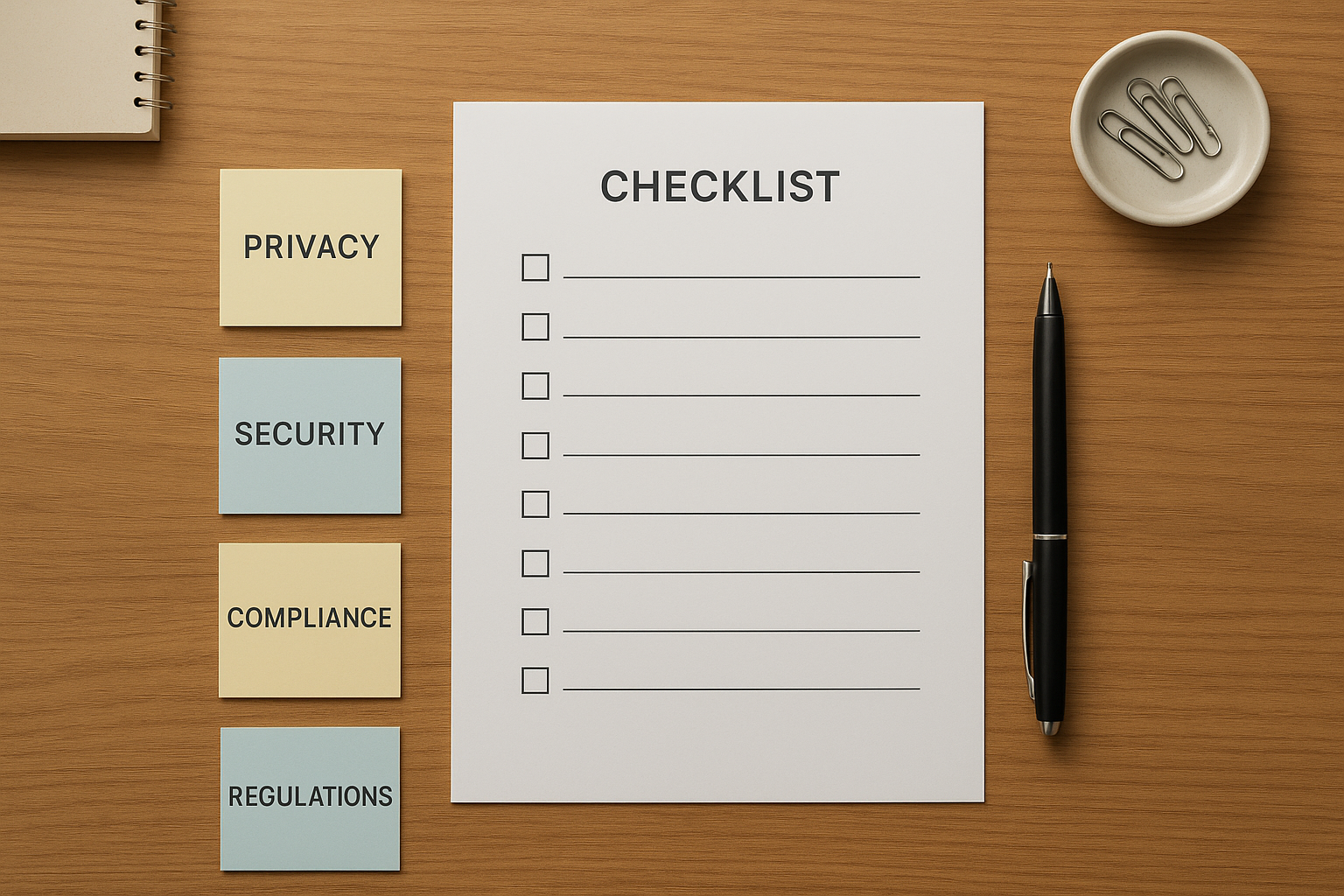
A complete HR policy manual template should cover conduct, leave, safety, and offboarding.
How to Build Your HR Policy Manual Template in 6 Steps
Building a usable policy manual does not have to take months. Follow this sequence to move from blank page to finished document.
- Audit your current practices. Start by writing down how things actually work today, including unwritten rules managers already enforce, so the manual reflects reality instead of guesswork.
- Select a base template. Choose an HR policy manual template that matches your industry and company size, then remove any sections that do not apply to your business model.
- Customize for compliance. Update every policy to reflect your state and local employment laws, since requirements around leave, wages, and safety vary significantly by location.
- Align policies with culture. Adjust tone and specific rules, such as dress code or remote work, so the manual sounds like your company rather than a generic legal document.
- Get legal and leadership review. Have an employment attorney or HR advisor review the draft before rollout to catch outdated language or missing required disclosures.
- Distribute and collect acknowledgment. Share the manual with every employee, require a signed acknowledgment form, and store it in each personnel file for future reference.
Furthermore, if building this internally feels overwhelming, Soteria HR’s article on how to develop HR policies offers a more detailed walkthrough of this same process, including sample language for tricky sections.
Common Mistakes to Avoid During Policy Rollout
Even well-intentioned companies stumble when rolling out a new policy manual. In particular, these mistakes show up again and again:
- Copying a template word-for-word. Generic language that ignores state-specific leave laws or industry regulations can create more risk than having no policy at all.
- Never updating the document. Employment law changes frequently, so a manual written three years ago may already be out of compliance.
- Skipping employee acknowledgment. Without a signed form, it is difficult to prove employees received and understood the policies if a dispute arises.
- Writing in dense legal jargon. If employees cannot understand a policy, they cannot follow it, and confusion often leads to inconsistent enforcement.
As a result, many companies choose to review their manual on a regular schedule rather than treating it as a one-time project. Soteria HR’s guide on updating HR policies and procedures outlines a practical review cadence that keeps documentation current without becoming a full-time job.

Regularly reviewing your HR policy manual template with leadership keeps it accurate and enforceable.
Keeping Your Employee Handbook Compliant and Current
A policy manual is never really finished. Specifically, employment law shifts every year at the federal, state, and local level, which means a document that was compliant in 2022 may already have gaps today. Therefore, most HR professionals recommend a full policy review at least once a year, with smaller updates whenever a relevant law changes.
Beyond legal review, it helps to track how policies perform in practice. For instance, if managers keep asking the same clarifying question about a remote work policy, that is usually a sign the wording needs to be clearer, not that employees are misreading it. Similarly, exit interview feedback can reveal which policies employees find confusing or unfair.
Companies without in-house HR leadership often lean on outside partners for this ongoing maintenance. Soteria HR’s approach to HR risk management strategies focuses on exactly this kind of proactive monitoring, so small and mid-sized businesses are not caught off guard by a policy gap. You can also visit Soteria HR directly to see how an outsourced HR partner keeps growing companies compliant without adding full-time headcount.
Frequently Asked Questions About HR Policy Manuals
What is an HR policy manual template?
An HR policy manual template is a pre-structured document that lists the standard workplace policies most businesses need, such as attendance, conduct, and safety rules. Companies customize the template with their own procedures, tone, and applicable state and federal requirements.
How is an HR policy manual different from an employee handbook?
A policy manual typically focuses on formal rules and compliance language, while an employee handbook often adds culture-focused content like mission statements and perks. In practice, many companies combine both into a single document.
Why does my small business need an HR policy manual template?
Without written policies, managers tend to enforce rules inconsistently, which increases the risk of discrimination claims and employee disputes. A documented manual gives everyone, leadership and staff alike, a clear and consistent reference point.
How long does it take to create an HR policy manual?
Most companies can adapt a solid template into a customized manual within two to four weeks, depending on how many policies need legal review. Building one entirely from scratch, however, can take several months.
What should be included in an HR policy manual template?
At minimum, include sections on employment basics, code of conduct, leave and attendance, compensation, health and safety, technology use, discipline, and termination procedures. Industry-specific policies, such as safety protocols for manufacturing, should be added as needed.
How much does it cost to develop a custom HR policy manual?
Costs vary widely, from free generic templates to several thousand dollars for a fully customized manual reviewed by an employment attorney. Many growing companies find that partnering with an outsourced HR provider offers a more cost-effective middle ground.
What are common mistakes companies make with HR policy manuals?
The most frequent mistakes are copying a generic template without customizing for state law, failing to update the manual over time, and skipping signed employee acknowledgment forms. Each of these gaps can weaken the manual’s legal protection.
How often should we update our HR policy manual template?
Most HR professionals recommend a full review at least once a year, plus smaller updates whenever a relevant employment law changes. Waiting longer than a year often means the manual falls behind new regulations.
Can I use a free HR policy manual template, or do I need a custom one?
A free template can be a reasonable starting point, but it must be customized for your state, industry, and actual practices before use. Relying on unedited generic language can create more legal exposure than having no written policy at all.
What legal risks come from not having an HR policy manual?
Without documented policies, businesses face a higher risk of wage and hour disputes, discrimination claims, and inconsistent disciplinary action that can be challenged in court. Written policies give employers a defensible record of fair, consistent treatment.
Who should be responsible for maintaining the HR policy manual?
Ideally, an HR leader or outsourced HR partner owns the manual, with input from legal counsel and department managers. In smaller companies, this responsibility often falls to a founder, office manager, or operations lead until dedicated HR support is in place.
What’s the best way to roll out a new HR policy manual to employees?
Introduce the manual in a team meeting or onboarding session, explain the reasoning behind key policies, and require every employee to sign an acknowledgment form. This creates both understanding and a paper trail for future reference.
Does an HR policy manual need to be state-specific?
Yes, because employment laws around leave, wages, and termination vary significantly by state and even by city. A manual built for a national or generic audience must be reviewed against local requirements before it is distributed to employees.
Final Thoughts on Getting Started
Ultimately, a well-built HR policy manual template gives growing companies the structure they need without forcing HR leaders to start from a blank page. It protects the business legally, gives employees clarity, and frees up leadership to focus on growth instead of putting out fires. In addition, treating the manual as a living document, reviewed yearly and updated as laws change, keeps that protection intact long after the first draft is finished. If your team needs help customizing an HR policy manual template to fit your exact stage of growth, Soteria HR’s outsourced HR experts are ready to help you build one that actually works.