Is HR considered part of administration or a separate function? For most growing businesses, the answer is both — human resources (HR) administration, meaning the recordkeeping, compliance, and paperwork side of employment, is a necessary subset of HR, but HR as a whole operates as its own strategic function. Leaders often use “HR” and “administration” interchangeably, yet the two cover different responsibilities. Understanding this distinction helps founders, CEOs, and operations leaders decide what to build in-house, what to outsource, and how to grow a people function that actually supports the business as headcount increases.
Key Takeaways
- ✓HR administration is the tactical, paperwork-driven subset of human resources — not the whole of it.
- ✓Strategic HR includes workforce planning, culture, recruiting, and performance — functions that go well beyond administration.
- ✓Small businesses often merge the two roles out of necessity, which can create compliance gaps as they grow.
- ✓Companies in roughly the 10–250 employee range typically benefit most from separating administrative and strategic HR work.
- ✓Outsourced HR administration and ASO support let leaders keep strategic decisions in-house while the administrative burden moves elsewhere — without co-employment.
What Is HR Administration, and Where Does It Fit?
HR administration is the operational backbone of human resources. Specifically, it covers tasks like maintaining employee records, processing onboarding and offboarding paperwork, tracking leave balances, and coordinating payroll with outside providers. In addition, it includes compliance documentation — the forms, policies, and recordkeeping required under federal and state employment law.
Because these tasks are repeatable and process-driven, many companies group them under the general “administration” umbrella alongside accounting, facilities, and office management. However, that framing can undersell what HR administration actually does. For example, a leave-of-absence request is not just paperwork; it touches the Family and Medical Leave Act (FMLA) and payroll calculations at the same time. According to the U.S. Department of Labor, covered employers must track eligibility, notice requirements, and job-restoration obligations carefully. As a result, HR administration requires specialized knowledge even though it sits closer to “paperwork” than to “strategy.”
Therefore, while HR administration shares some DNA with general business administration, it is governed by employment-specific rules that general administrative staff rarely need to master. That distinction matters when deciding who should own these tasks as a company grows. Readers exploring this topic further may find it useful to review how HR admin is defined in practice, since the terminology varies across organizations.
Is HR Considered Part of Administration or a Separate Function?
In short, HR is not simply a branch of general administration. It is its own function that happens to include an administrative component.
Most HR professionals and employment-law resources treat human resources as a distinct discipline that includes administrative duties, rather than as a line item under general “administration.” The Society for Human Resource Management (SHRM), the largest professional HR association, describes HR as encompassing recruiting, compensation, employee relations, compliance, and workforce planning — not merely recordkeeping. Similarly, the Equal Employment Opportunity Commission (EEOC) assigns HR departments direct responsibility for anti-discrimination compliance, a legal obligation that goes well beyond filing paperwork.
That said, confusion is understandable. In smaller companies, one person often juggles HR administration, office administration, and sometimes finance tasks at once. Consequently, the roles blend together on an org chart even though the underlying responsibilities are legally and functionally distinct. For a deeper look at how administrative HR work is typically scoped, see this explanation of administration and HR.
Above all, the practical takeaway is this: administration is a category of tasks, while HR is a category of responsibility. HR administration lives inside HR, not the other way around.
Why the Line Between HR and Administration Gets Blurry
Despite the conceptual distinction, plenty of job titles and org charts blur HR and administration together. Small businesses, in particular, often hire one “HR and Office Administrator” to handle everything from ordering supplies to processing new-hire paperwork. In fact, this is one of the most common early-growth staffing patterns.
Furthermore, payroll and accounting platforms frequently bundle HR features — like time tracking and benefits enrollment — into the same system as general bookkeeping. This bundling reinforces the perception that HR is simply a subset of back-office administration. However, as headcount grows past roughly 15 to 20 employees, the administrative load typically outpaces what a generalist can manage safely.
In addition, compliance risk increases with every new employee. For instance, California employers face state-specific requirements through the California Civil Rights Department that general administrative staff rarely track proactively. For context on how HR administrators define their own scope, this breakdown of the HR administrator role, duties, and skills is a useful reference.
As a result, many leaders eventually separate the two functions — not because HR “graduates” out of administration, but because the compliance and strategic stakes grow too large for a blended role to manage alone.
“HR administration keeps the lights on. Strategic HR decides where the business is going. Growing companies need both — and neither should be an afterthought.” — Soteria HR
How Growing Companies Can Structure Both HR Functions
Separating HR administration from strategic HR does not require a large internal team. Instead, it requires a deliberate structure. The steps below outline how many growing organizations approach the transition.
- Audit current HR tasks and sort them. Start by listing every HR-related task currently performed, then classify each one as administrative (recordkeeping, filing, data entry) or strategic (hiring decisions, culture initiatives, performance management) so leadership can see where time is actually going.
- Assign clear ownership for administrative tasks. Designate one person, team, or outsourced partner as the accountable owner for administrative HR work, including recordkeeping, leave tracking, and benefits coordination, so nothing falls through the cracks during busy periods.
- Protect time for strategic HR work. Block dedicated time or budget for strategic activities like workforce planning, recruiting strategy, and manager training, since these tasks tend to get crowded out by daily administrative demands if left unscheduled.
- Integrate the two functions through shared systems. Use shared HR workflows, checklists, or software so that administrative data, such as new hires or terminations, automatically feeds into strategic planning, reducing duplicate work and miscommunication between functions.
- Review the structure annually as headcount changes. Revisit the division of labor at least once a year, because the right split for a 15-person company rarely matches the right split for a 75-person company, especially as compliance obligations expand.
HR Administration vs. Strategic HR: A Side-by-Side Comparison
The table below summarizes the core differences in plain terms.
| Aspect | HR Administration | Strategic HR Function |
|---|---|---|
| Primary focus | Recordkeeping, compliance paperwork, transactions | Workforce planning, culture, performance, retention |
| Typical tasks | Onboarding paperwork, leave tracking, payroll coordination, benefits enrollment | Recruiting strategy, manager coaching, policy design, org planning |
| Time horizon | Day-to-day and week-to-week | Quarterly and annual |
| Common owner | HR administrator, office manager, or outsourced HR team | HR director, consultant, or executive leadership |
| Risk if neglected | Compliance penalties, missed deadlines, payroll errors | Turnover, weak culture, poor hiring outcomes |
When to Bring In Outsourced HR Support
At some point, many leaders realize that building a full internal HR department is not the most efficient path — particularly for organizations between roughly 10 and 250 employees. In these cases, outsourced HR administration and consulting can cover both the tactical and strategic sides without the cost of a large internal team.
For example, Soteria HR provides hands-on outsourced HR administration, HR consulting, and benefits administration for growing small and mid-sized employers in Los Angeles, Orange County, and nationwide. Importantly, Soteria’s Administrative Services Organization (ASO) option delivers tailored HR support without creating a co-employment relationship — clients remain the employer and keep responsibility for employment decisions. This structure differs from arrangements that shift employer-of-record responsibilities elsewhere.
In particular, outsourced partners can absorb the repetitive administrative load — benefits enrollments, leave coordination, payroll coordination — while leaving strategic decisions, like who to hire or how to structure compensation, with company leadership. As a result, internal teams gain bandwidth for higher-value work.
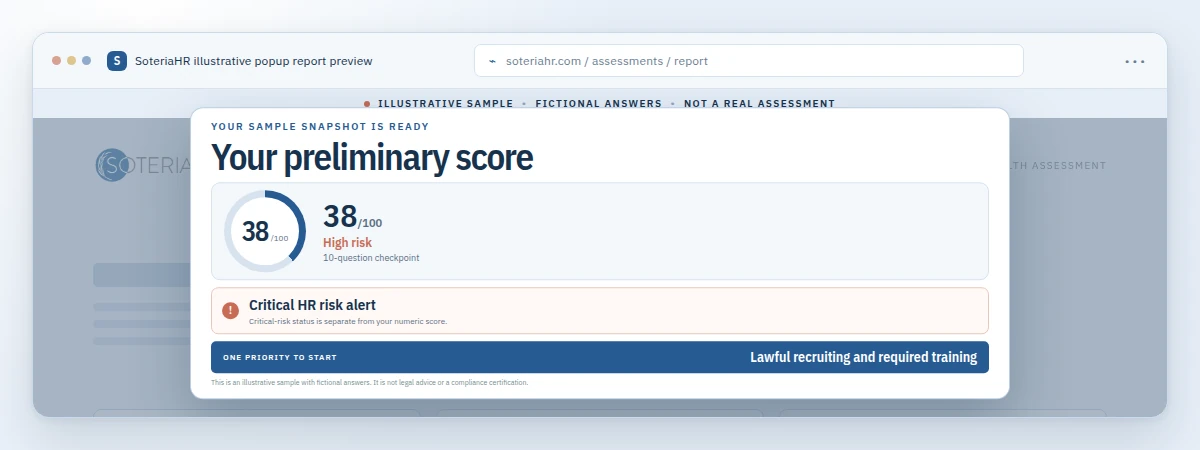
Before committing to a structure, it often helps to get a clear picture of current gaps. The free HR Health Assessment at soteriahr.ai offers a short 10-question Quick HR Check (about two minutes) or a more detailed 40-question Complete HR Health Assessment (about 10 to 12 minutes) to help identify priorities. Results are self-reported and preliminary, not a certification of compliance or a substitute for a professional legal audit. For leaders ready to discuss results, Soteria HR’s team is available to talk to an HR expert at (800) 399-2458.
For a more complete overview of how HR administration is typically defined across industries, this comprehensive guide for leaders is a useful next step, and this deeper explainer on human resource administration meaning adds further context.
Frequently Asked Questions About HR Administration and Strategic HR
Is HR considered part of administration or a separate function?
HR is best understood as its own function that includes an administrative component, rather than a subset of general business administration. Human resources covers compliance, recruiting, culture, and performance in addition to the recordkeeping work typically labeled “administration.”
What is HR administration?
HR administration refers to the transactional, compliance-driven tasks within human resources, such as maintaining personnel files, processing onboarding paperwork, and coordinating payroll and benefits enrollments. It is the operational layer that supports broader HR strategy.
How is HR different from human resources management?
Human resources management typically refers to the broader discipline of overseeing people strategy, including hiring, development, and retention, while HR administration focuses on the paperwork and compliance tasks underneath it. In practice, most HR departments perform both, though larger organizations often split the responsibilities between separate roles.
Why do small businesses combine HR and administrative roles?
Smaller companies often lack the headcount to justify a dedicated HR specialist, so one employee handles both administrative tasks and HR duties out of necessity. This approach works initially, but it tends to create coverage gaps as the business grows and compliance requirements expand.
How many employees before a business needs a dedicated HR function?
There is no fixed legal threshold, but administrative and compliance demands often outpace a generalist’s capacity somewhere between 15 and 50 employees. Soteria HR prioritizes employers in the 10-to-250-employee range, where dedicated HR support typically becomes valuable, though this is a guideline rather than a strict cutoff.
What does an HR administrator do day to day?
An HR administrator typically manages employee records, processes new hires and terminations, tracks leave requests, and coordinates benefits enrollments and payroll information. The role is detail-heavy and compliance-focused rather than strategic.
How much does outsourced HR administration cost?
Pricing for outsourced HR administration varies depending on company size, scope of services, and whether benefits administration or consulting is included. Because pricing is engagement-specific, the most accurate figures come from a direct consultation rather than a published rate.
How long does it take to separate HR and administrative duties?
Most organizations can reassign administrative HR tasks within a few weeks once ownership is decided, though fully building out a strategic HR function often takes several months. The timeline depends on whether the work moves in-house, to an outsourced partner, or to a hybrid model.
What are common mistakes companies make when structuring HR?
A frequent mistake is treating HR purely as administrative overhead, which causes strategic work like retention planning and manager training to get neglected. Another common error is waiting until a compliance issue arises before clarifying who owns which HR responsibilities.
What is the difference between an ASO and a PEO?
An Administrative Services Organization (ASO) provides tailored HR support while the client remains the sole employer, whereas a Professional Employer Organization (PEO) typically establishes a co-employment relationship. Soteria HR’s ASO option is designed so clients keep full responsibility for and control over employment decisions.
What are best practices for dividing HR tasks as a company grows?
Best practices include auditing current HR tasks, assigning clear administrative ownership, protecting time for strategic planning, and reviewing the structure annually as headcount changes. Many growing companies also use outsourced HR partners to handle administrative volume while leadership focuses on strategy.
Does outsourcing HR administration mean losing control over employment decisions?
No. Under an ASO arrangement, the client organization remains the legal employer and keeps responsibility for employment decisions and applicable obligations, while the outsourced partner handles administrative support. This differs from arrangements that shift employer-of-record responsibilities elsewhere.
What is the free HR Health Assessment, and how does it help?
The free HR Health Assessment at soteriahr.ai offers a short Quick HR Check or a more detailed Complete assessment to help identify potential HR gaps and priorities. Results are self-reported and preliminary, intended as a starting point for conversation rather than a compliance certification.
Ultimately, whether HR is considered part of administration or a separate function comes down to how a company defines its structure — but the underlying responsibilities are distinct either way. HR administration handles the day-to-day paperwork and compliance tasks, while strategic HR covers hiring, culture, and workforce planning that keep a growing business on track. As headcount increases, most organizations find it worthwhile to separate the two, whether through a dedicated internal hire or an outsourced partner. Soteria HR works alongside founders, CEOs, and operations leaders across Los Angeles, Orange County, and nationwide to provide HR administration, consulting, and benefits administration through its ASO model — without co-employment. To talk through where your organization currently stands, call (800) 399-2458, submit a consultation request, or start with the free HR Health Assessment at soteriahr.ai.