Scalable HR solutions give growing companies the flexibility to add structure, support, and compliance coverage as headcount increases, without forcing a founder or operations leader to build an entire HR department overnight. For employers in Los Angeles, Orange County, and beyond, the right mix of HR administration, consulting, and benefits support can mean the difference between chaotic growth and sustainable growth. This guide explains what scalable HR solutions look like in practice, how to evaluate your options, and when it makes sense to bring in an outside HR partner.
Quick answer: Scalable HR solutions are HR services and systems — administration, consulting, benefits, and payroll coordination — that expand or contract to match a company’s headcount and complexity, so HR support never lags behind growth.
What Are Scalable HR Solutions?
Scalable HR solutions are HR services and systems — administration, consulting, benefits, and payroll coordination — that expand or contract to match a company’s headcount and complexity. Instead of locking an organization into rigid staffing or software commitments, these solutions flex as a team grows from 15 employees to 150, or even contracts during a slower season.
For example, a company with 20 employees might need help with onboarding, basic policy documents, and benefits enrollment. That same company at 100 employees typically needs structured leave tracking, layered approval workflows, and deeper compliance oversight. Consequently, scalable HR solutions are less about a single tool and more about a flexible relationship that adjusts scope as needs change.
Why Growing Companies Need Flexible HR Support
Growth exposes HR gaps quickly. A founder who manages HR personally during the first 15 hires often struggles once the team doubles. As a result, policies become inconsistent and compliance risk increases.
Specifically, employment law thresholds tighten as headcount grows. For instance, the U.S. Equal Employment Opportunity Commission confirms that Title VII of the Civil Rights Act applies once an employer reaches 15 employees, while other federal and California requirements phase in at different counts. Therefore, HR support that can be added in layers helps a company stay ahead of these thresholds rather than discovering a gap after a problem surfaces.
In addition, flexible HR support helps leadership avoid two common traps: under-investing in HR until a costly mistake forces action, or over-investing in a large internal department before the company is ready. For practical guidance on timing this transition, see this overview of how HR operations should scale as your business grows.

Discussing scalable HR solutions early helps growing teams avoid compliance surprises later.
Signs Your Current HR Setup Can’t Keep Up
Several warning signs suggest an organization has outgrown its current HR setup:
- Onboarding paperwork is inconsistent across departments.
- Managers answer benefits questions instead of a dedicated resource.
- Leave requests and payroll coordination happen in spreadsheets with manual updates.
- Compliance deadlines, such as ACA reporting or handbook updates, get missed or rushed.
- HR tasks pile up because one person wears too many hats.
If several of these sound familiar, it may be time to explore which HR administration services are essential when scaling a growing team.
How to Build Scalable HR Systems: A Step-by-Step Process
Building HR solutions that scale does not have to happen all at once. Instead, most growing companies follow a predictable sequence:
- Audit current HR tasks and gaps. Review every HR-related task performed today, whether handled by a founder, office manager, or informal process, and note where delays or errors occur most often.
- Prioritize compliance-critical items first. Address wage and hour rules, required postings, and benefits deadlines before investing in nice-to-have programs, since missed compliance items carry the highest immediate risk.
- Choose the right support model. Decide whether an internal hire, a part-time consultant, or an outsourced HR partner such as an Administrative Services Organization fits the company’s size, budget, and growth timeline.
- Standardize documentation and workflows. Build consistent onboarding checklists, offer letters, and policy documents so HR processes work the same way regardless of who is handling them that week.
- Revisit the plan every 25 to 50 employees. Schedule a recurring review of HR scope as headcount grows, since the needs of a 50-person company differ meaningfully from the needs of a 150-person company.

A clear, step-by-step process makes it easier to add HR structure without overwhelming a growing team.
In-House HR Team vs. Outsourced HR Partner
Many growing companies ask whether to hire an internal HR manager or work with an outsourced partner. Both paths can work, but they fit different situations.
An in-house hire makes sense when HR needs are substantial enough to justify a full-time salary and when company culture calls for a dedicated, on-site presence. However, a single HR hire can quickly become overwhelmed once responsibilities span recruiting, compliance, benefits, and employee relations all at once.
In contrast, an outsourced HR partnership — including Administrative Services Organization (ASO) support — provides access to a broader team of specialists without the cost of multiple full-time salaries. Importantly, under an ASO model the client remains the employer of record and retains responsibility for employment decisions; the HR partner provides tailored administrative and advisory support rather than co-employment. This structure differs from a Professional Employer Organization (PEO) arrangement, so it is worth confirming which model a given provider offers.
For a closer look at which services typically make the most sense for growing teams, this comparison of HR and admin services for scaling small teams breaks down the options in more detail. You can also review wage and hour basics directly from the U.S. Department of Labor and benefits-related tax rules from the IRS before finalizing a model.

Consistent documentation is one of the simplest ways to make HR solutions that scale without added chaos.
How Soteria HR Delivers Scalable HR Solutions
Soteria HR, based in Pasadena, California, provides hands-on outsourced HR support for employers in Los Angeles, Orange County, and across the country. Rather than offering a one-size-fits-all package, Soteria builds scalable HR solutions around each client’s current headcount, industry, and internal capacity.
Core services include HR administration, HR consulting, and benefits administration, with payroll coordination layered in where helpful. The ASO option is designed for companies that want dependable HR infrastructure without restructuring their employment relationship. Whether a business has no formal HR department yet or an internal HR team that needs extra bandwidth, support can expand as headcount and complexity increase.
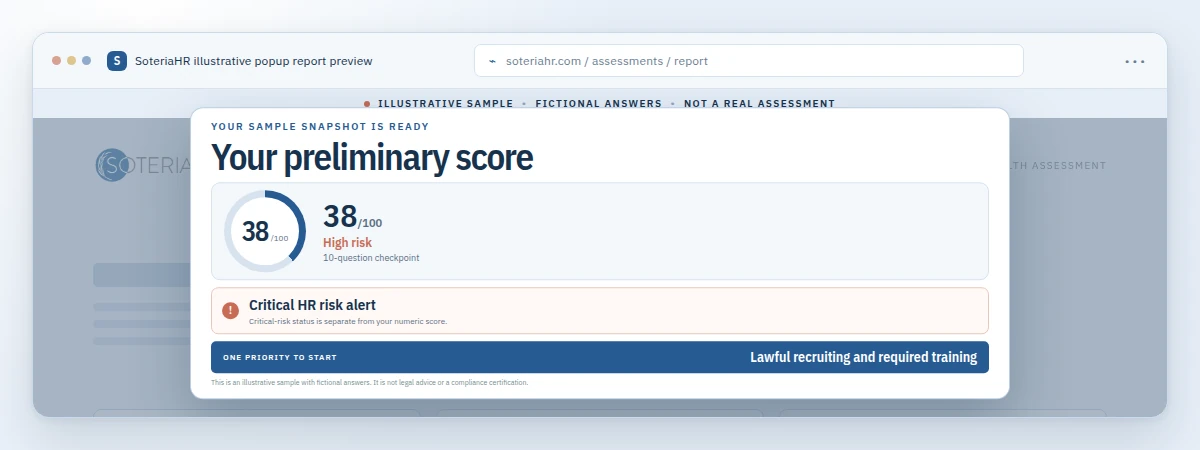
Organizations that want a starting point before a full conversation can use the free HR Health Assessment at soteriahr.ai, which introduces potential gaps and priorities in a short quiz. Results are self-reported and preliminary — not a certification of compliance — but they offer a useful baseline for a more detailed discussion. From there, leaders can talk to an HR expert by calling (800) 399-2458 or submitting a consultation request.
Not sure which scalable HR solutions fit your team?
For additional guidance between consultations, this roundup of practical HR resources for growing companies offers templates and checklists that complement a scalable HR strategy.
Frequently Asked Questions About Scalable HR Solutions
What are scalable HR solutions?
Scalable HR solutions are HR services — administration, consulting, benefits, and payroll coordination — designed to expand or contract as a company’s headcount and complexity change. Instead of a fixed package, the scope adjusts as the organization grows.
How do scalable HR solutions work for small businesses?
For small businesses, scalable HR solutions typically start with core administration and compliance support, then add services like benefits administration as headcount increases. Support is added in layers rather than purchased all at once.
Why do growing companies need scalable HR support?
Growing companies need scalable HR support because compliance obligations and employee expectations increase at different headcount thresholds. Without flexible support, HR tasks often become rushed, inconsistent, or missed entirely.
What is the difference between scalable HR solutions and a traditional PEO?
Scalable HR solutions delivered through an ASO let the client remain the employer of record, while a PEO typically involves co-employment. The right fit depends on how much control a company wants to retain.
How much do scalable HR solutions typically cost?
Costs vary based on company size, services included, and whether support is ongoing or project-based. Most providers price around a combination of per-employee fees and service scope, so a consultation is the most accurate way to get a quote.
How long does it take to set up scalable HR solutions?
Basic HR administration support can often begin within a few weeks, while fully integrated benefits administration and payroll coordination may take one to two months to transition smoothly. Timelines depend on current systems and data readiness.
What are common mistakes companies make when scaling HR?
Common mistakes include waiting until a compliance problem forces action, assigning HR duties to someone without HR training, and failing to document policies consistently. These gaps tend to grow more costly as headcount increases.
What HR tasks should be addressed first when scaling?
Compliance-critical tasks, such as required postings, wage and hour practices, and benefits deadlines, should be addressed first. After that, companies can focus on documentation, onboarding consistency, and manager training.
Can scalable HR solutions work alongside an existing internal HR team?
Yes. Scalable HR solutions are often used to extend the bandwidth of an existing internal HR team rather than replace it, particularly during hiring surges or when specialized expertise is needed temporarily.
What size company benefits most from scalable HR solutions?
Employers with roughly 10 to 250 employees are a common fit for scalable HR solutions, since they are large enough to need structured HR support but often not large enough to justify a full internal department. This is a general guideline rather than a strict cutoff.
What is an ASO and how does it support scalable HR solutions?
An Administrative Services Organization (ASO) provides outsourced HR administration, consulting, and benefits support without co-employment, so the client remains the legal employer. This structure allows scalable HR solutions to expand without changing who holds employment responsibilities.
How can I tell if my company needs scalable HR solutions now?
Signs include inconsistent onboarding, missed compliance deadlines, managers spending excessive time on HR questions, and no clear owner for benefits or policy updates. If several of these apply, it is a reasonable time to start a conversation.
What is the best way to start building scalable HR solutions?
The best starting point is an honest audit of current HR tasks and gaps, followed by prioritizing compliance-critical items. From there, a consultation with an HR partner can clarify which services should be added first.
Final Thoughts
In the end, scalable HR solutions give growing organizations a way to add HR structure exactly when it’s needed, rather than all at once or too late. Whether a company handles HR internally, through an outsourced partner, or some mix of both, the goal stays the same: support that grows with the team instead of holding it back. Leaders who want a clearer picture of where their HR setup stands today can start with the free HR Health Assessment at soteriahr.ai, then talk to an HR expert at (800) 399-2458 to discuss next steps.