A staff development programme is the structured plan companies use to grow employee skills, close performance gaps, and prepare their teams for what’s next. For small and mid-sized businesses, however, building one that actually works can feel overwhelming when there is no dedicated HR department leading the effort. This guide breaks down what a strong programme includes, how to build one step by step, and how to avoid the mistakes that stall momentum.
What Is a Staff Development Programme?
A staff development programme is a structured, ongoing plan that helps employees build skills, close performance gaps, and prepare for future roles within an organization. It typically combines training, coaching, mentoring, and career pathing into one coordinated strategy rather than a series of disconnected training events.
Unlike a single workshop or onboarding checklist, this kind of programme is continuous. Consequently, it evolves alongside the business, the team’s skill gaps, and shifting industry demands. According to Wikipedia’s overview of training and development, effective programmes blend formal instruction with on-the-job experience—an approach that tends to produce longer-lasting results than one-off seminars.
For growing companies specifically, this matters because roles rarely stay static. As a result, the skills that got someone hired at 15 employees often aren’t the skills needed to lead a team of 50.

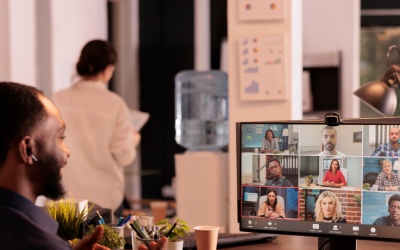
A well-run staff development programme mixes group training with hands-on coaching.
Why an Employee Development Strategy Matters for Growing Companies
Turnover is expensive, and it only gets worse when employees feel stuck. In fact, LinkedIn’s Workplace Learning Report has repeatedly found that a majority of employees would stay at a company longer if it simply invested more in their learning and growth. That single statistic explains why an intentional employee development strategy has become a retention tool, not just a training checkbox.
Beyond retention, a thoughtful strategy also reduces compliance risk. For example, the U.S. Department of Labor’s Employment and Training Administration notes that structured workforce development supports both business performance and worker protections—two goals that often go hand in hand for smaller employers with limited HR bandwidth.
In short, growth-minded leaders who treat development as strategy—not an afterthought—tend to build stronger, more stable teams. Soteria HR’s guide to employee development strategies breaks this down in more detail for leaders ready to formalize their approach.
Core Components of Effective Employee Development Services
Not every programme needs to be elaborate. However, the strongest ones tend to share a few common ingredients. Specifically, most effective employee development services include:
- Skills assessments that identify current strengths and gaps for each role.
- Individualized development plans tied to both employee goals and business needs.
- Mentoring and coaching relationships that reinforce formal training.
- Clear career pathing so employees can see what growth actually looks like.
- Regular feedback loops between managers and employees to track progress.
How to Build a Staff Development Programme in 6 Steps
Building a programme from scratch can feel daunting, particularly without in-house HR expertise. Below is a practical sequence that works well for organizations between 10 and 250 employees.
- Assess current skills and gaps. Evaluate what each employee already does well against what the role—or a future role—actually requires, using surveys and manager input.
- Define goals tied to business strategy. Connect development goals to real priorities, such as reducing turnover in a specific department.
- Design tailored development paths. Combine courses, mentoring, and stretch projects into individual plans, similar to the approach outlined in Soteria’s professional development for staff framework.
- Choose delivery methods. Select a realistic mix of online learning, workshops, and shadowing that fits a busy small-business schedule.
- Assign accountability and coaching support. Give managers clear ownership of regular check-ins, since consistent coaching is what makes a plan stick.
- Measure results and refine the programme. Track retention, promotions, and skill growth quarterly, then adjust based on what the data shows.

Ongoing coaching conversations reinforce the goals of a staff development programme long after formal training ends.
Common Mistakes to Avoid With Employee Skill Development
Even well-intentioned programmes can fall flat. Most commonly, companies treat employee skill development as a one-time event instead of an ongoing process. Consequently, momentum fades within a few months.
Another frequent misstep is skipping manager involvement entirely. Even the best training course loses its impact without a manager reinforcing it through regular conversation. Similarly, some organizations build plans that look great on paper but never tie back to actual business goals—which makes them easy to deprioritize the moment things get busy.
Finally, according to SHRM, organizations that fail to measure development outcomes often struggle to justify continued investment—so tracking progress from the start is essential, not optional.
How Soteria HR Supports Your Staff Development Programme
Soteria HR works with growth-minded small and mid-sized businesses—typically 10 to 250 employees—that need dedicated HR leadership without the overhead of a full internal department. Whether you’re building your first employee development plan or refining an existing one, our team helps you design and roll out a programme that fits your budget and culture.
In particular, our approach to supporting professional development in your team combines custom HR playbooks, compliance guardrails, and hands-on coaching support—so leaders aren’t left guessing about what comes next. Learn more at soteriahr.com.
Above all, we believe HR support should feel like a partnership, not paperwork. That philosophy shapes every plan we build, including the staff development programmes we design alongside our clients.
Frequently Asked Questions About Staff Development Programme
What is a staff development programme?
A staff development programme is a structured, ongoing plan that helps employees build skills, close performance gaps, and prepare for future roles. It combines training, coaching, and career pathing into one coordinated strategy.
Why do small businesses need a staff development programme?
Small businesses need a staff development programme because it improves retention, closes skill gaps, and prepares employees for larger roles as the company grows. Without one, businesses often lose talent to competitors offering clearer growth paths.
How much does an employee development programme cost?
Costs vary widely, ranging from a few hundred dollars per employee for online courses to several thousand for structured mentoring and leadership tracks. Outsourced HR support can help tailor a plan that fits your budget.
How long does it take to build a staff development programme?
Most companies can design a basic programme in 4 to 8 weeks, including skills assessment and goal setting. Full rollout with training materials typically takes an additional one to three months.
What is the difference between training and a staff development programme?
Training refers to a single event focused on a specific skill, while a programme is an ongoing strategy combining multiple methods, coaching, and career planning. This creates lasting growth rather than one-time knowledge transfer.
What are common mistakes companies make with employee development?
Common mistakes include treating development as a one-time event, failing to align it with business goals, and skipping manager involvement. Not tracking progress after training ends also weakens results significantly.
How do you measure the success of a staff development programme?
Success is measured through retention rates, internal promotion rates, and performance improvements tied to specific skill goals. Employee feedback surveys also help gauge whether the programme feels relevant.
Who should be responsible for staff development at a small company?
Ideally, a dedicated HR leader or outsourced HR partner owns the programme, with direct managers supporting day-to-day coaching. When no HR department exists, outsourced HR consulting fills that leadership gap.
What methods work best for employee skill development?
Blended approaches combining online courses, hands-on mentoring, and stretch assignments tend to work best. Mixing methods keeps engagement high across different learning styles.
Can a staff development programme reduce employee turnover?
Yes, a staff development programme can meaningfully reduce turnover because employees who see a clear growth path are more likely to stay. Investing in visible career development signals long-term commitment to the team.
Does a staff development programme help with compliance risk?
Indirectly, yes. A well-run programme includes policy and compliance training that reduces legal exposure, and it often surfaces performance issues earlier, before they escalate.
What should be included in an employee development plan?
An employee development plan should include a skills assessment, specific growth goals, a timeline, chosen learning methods, and regular check-ins with a manager. Tying goals to business needs keeps the plan practical.
How often should a staff development programme be updated?
Most companies review and refresh their programme annually, with lighter check-ins each quarter. Faster-growing organizations may need more frequent updates as roles and priorities shift.
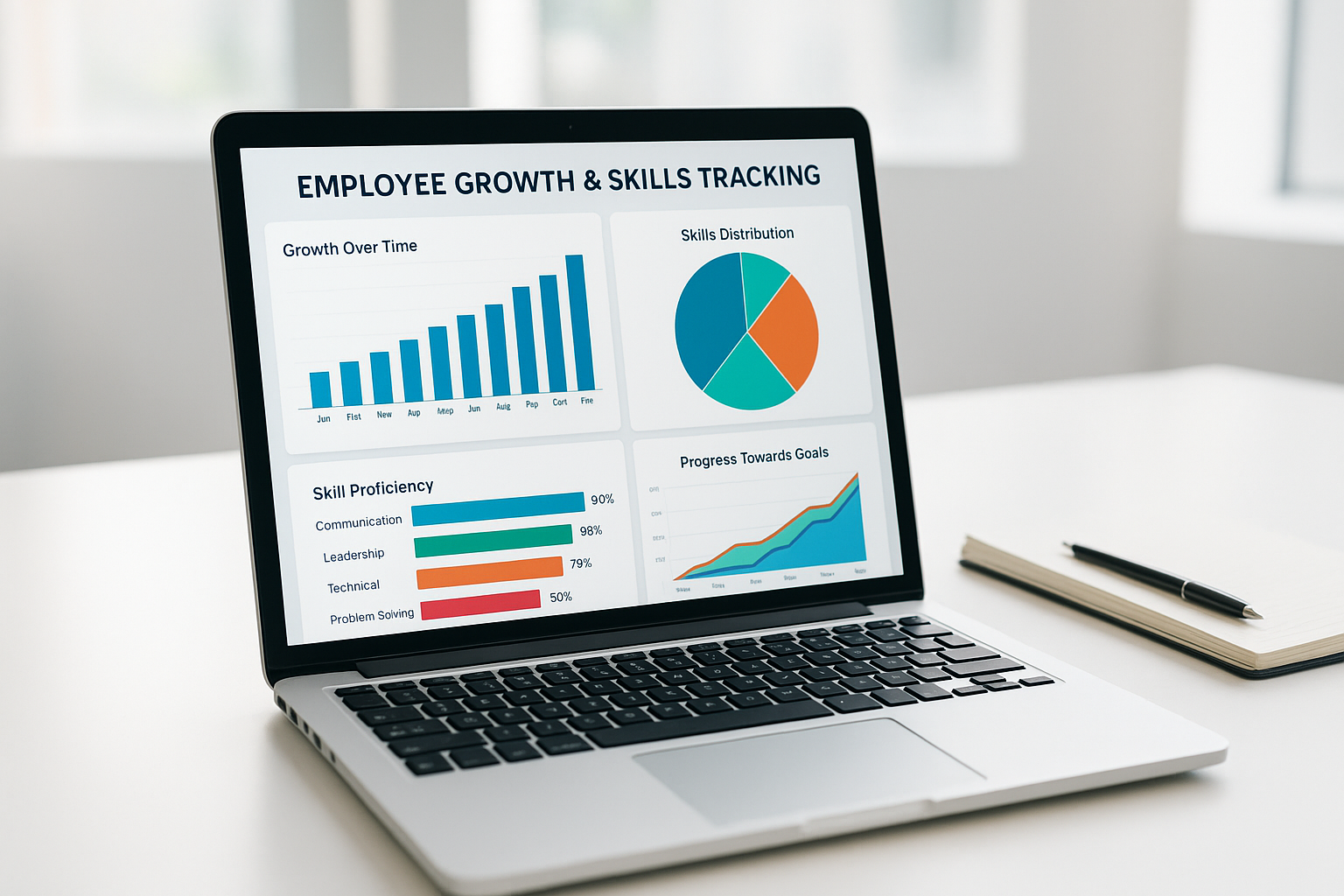
Tracking progress on a dashboard helps leaders see whether their staff development programme is actually working.
Final Thoughts on Building Your Staff Development Programme
A well-built staff development programme does more than teach new skills—it protects retention, strengthens performance, and prepares your team for whatever growth comes next. Therefore, the companies that treat it as an ongoing strategy, rather than a one-time event, consistently see stronger results. If you’re ready to build or refine your programme but don’t have the internal bandwidth to lead it, Soteria HR can help design a plan that fits your team, your budget, and your goals.