The benefits of partnering with a third party HR provider include a lighter administrative workload, steadier compliance support, and access to specialized expertise that most growing companies struggle to hire for internally. In plain terms, the benefits of partnering with a third party HR provider are the ability to offload day-to-day HR administration, benefits administration, and policy work to professionals who handle it full time. For founders, CEOs, and operations leaders juggling growth, this kind of outsourced HR support can mean fewer compliance surprises and more hours spent on the business itself.
Key Takeaways
- Third-party HR providers reduce the daily administrative burden of records, onboarding, and policy management.
- Outsourced HR support often lowers compliance risk tied to leave, wage, and benefits rules.
- Costs become more predictable than building and staffing a full internal HR department.
- An ASO model lets employers stay the legal employer while gaining dedicated HR support, unlike co-employment arrangements.
- The right HR outsourcing partner scales with the business, whether it has 10 employees or 250.
What Is a Third Party HR Provider?
A third party HR provider is an outside firm that manages or supports human resources tasks—such as onboarding, benefits administration, and policy enforcement—on behalf of an employer. Unlike a staffing agency, this provider typically does not supply workers; instead, it supplies expertise and systems. As a result, the client company stays in charge of hiring, firing, and day-to-day management decisions.
Two common models exist in this space. One is a Professional Employer Organization (PEO), which enters a co-employment relationship and becomes a shared employer of record for tax and insurance purposes. The other is an Administrative Services Organization, or ASO, which delivers tailored HR support without co-employment. In the ASO model, the client remains the sole employer and retains responsibility for employment decisions and applicable legal obligations, according to the U.S. Department of Labor, which oversees many of the workplace rules these providers help employers navigate. For a closer look at how this model works in practice, see this guide on what growing businesses need to know about third-party HR.
The Core Benefits of Partnering With a Third Party HR Provider
Beyond the basic definition, the real value shows up in day-to-day operations. Specifically, most employers notice changes in three areas: compliance, expertise, and cost structure. Each is worth examining on its own.
Reduced Compliance Risk and Administrative Burden
Employment rules change often, and tracking them in-house takes time most leaders do not have. However, a third party HR provider typically monitors federal and state updates—such as those from the Equal Employment Opportunity Commission—as part of routine service. In addition, providers often handle employee records, leave coordination, and unemployment claim support, which reduces the chance that a deadline or document gets missed. Consequently, internal leaders spend less time firefighting paperwork and more time on strategy.
Access to HR Expertise Without Building a Full Department
Hiring a full HR department—recruiter, generalist, benefits specialist, and compliance lead—is expensive for a company with 10 to 250 employees. In contrast, an outsourced HR support arrangement gives the same company access to that range of expertise at a fraction of the cost. For example, a consultant can help a leadership team turn a vague priority like “fix our performance reviews” into a workable, documented process. The Society for Human Resource Management has long noted that smaller employers often lack dedicated HR staff entirely, which is exactly the gap this kind of partnership fills.
More Predictable Costs Than an In-House HR Team
Salaries, benefits, software, and training for an internal HR team add up quickly, and those costs rarely shrink once set. Therefore, many growing businesses prefer a scalable outsourced arrangement where support flexes with headcount. Notably, the U.S. Bureau of Labor Statistics has reported that there are well over 700,000 human resources specialists employed across the country, underscoring just how specialized—and costly to staff internally—this function has become. If you are still weighing the decision, this breakdown of whether HR outsourcing is right for your business walks through the trade-offs in more detail.
How Outsourced HR Support Differs From a PEO Arrangement
The distinction matters because it changes who legally employs the staff. Under a PEO, the provider becomes a co-employer, which affects how payroll taxes, workers’ compensation, and benefits plans are structured. Under an ASO, by contrast, the client company remains the sole employer of record, and the provider simply delivers customized HR support—administration, consulting, and benefits coordination—without taking on co-employment status.
As a result, ASO clients generally keep more direct control over employment decisions, benefit plan choices, and company culture, while still gaining dedicated HR expertise. Soteria HR, based in Pasadena, California, operates through this ASO model for employers across Los Angeles, Orange County, and nationwide, pairing HR administration, consulting, and benefits administration with payroll coordination support. Because the client stays the employer, applicable legal obligations remain with the client, so understanding the scope of any agreement in advance is essential.
Is Working With an HR Outsourcing Partner Right for Your Business?
In short, it is most often right for companies that lack a full internal HR department, are growing past the point where one generalist can keep up, or want to strengthen an existing team with specialized backup. Signs typically include missed deadlines on leave requests, inconsistent onboarding, or leadership spending hours each week on administrative HR tasks instead of growth priorities.
If any of that sounds familiar, it helps to start with a structured self-check rather than guessing. This guide on how to know if your growing business needs a dedicated HR partner walks through common warning signs in more depth, and this complete guide to hiring an external HR partner covers cost and scope considerations for growing teams.
Steps to Transition to a Third-Party HR Provider
Moving from fully in-house HR to an outsourced model works best as a structured process rather than a sudden switch. The following steps outline a typical path.
- Audit current HR gaps. Review hiring, onboarding, payroll coordination, and compliance tasks to identify where your team lacks the time, tools, or specialized knowledge to manage them consistently.
- Define the scope of support needed. Decide whether you need full HR administration, targeted consulting, benefits administration, or an ongoing ASO partnership that covers several functions together.
- Compare outsourced HR models. Weigh an administrative services organization against a professional employer organization, paying close attention to who remains the legal employer of record under each option.
- Select a partner and set a transition timeline. Choose a provider experienced with companies your size, then map out which responsibilities shift first so staff and operations experience minimal disruption.
“We’ve got your back—so you can focus on growth.” — Soteria HR
In-House HR vs. Third-Party HR vs. ASO: A Quick Comparison
Seeing the options side by side often makes the decision clearer. The table below compares three common approaches to managing HR as a company grows.
| Factor | Fully In-House HR | ASO (e.g., Soteria HR) | PEO (Co-Employment) |
|---|---|---|---|
| Legal employer | Client company | Client company (no co-employment) | Shared between PEO and client |
| Staffing cost | Full salaries, benefits, tools | Scaled service fee | Per-employee or bundled fee |
| Control over benefits | Full control | Client retains control, with support | Often tied to PEO’s master plans |
| Best fit | Large employers with dedicated budget | 10–250 employee companies wanting flexibility | Employers comfortable with co-employment |
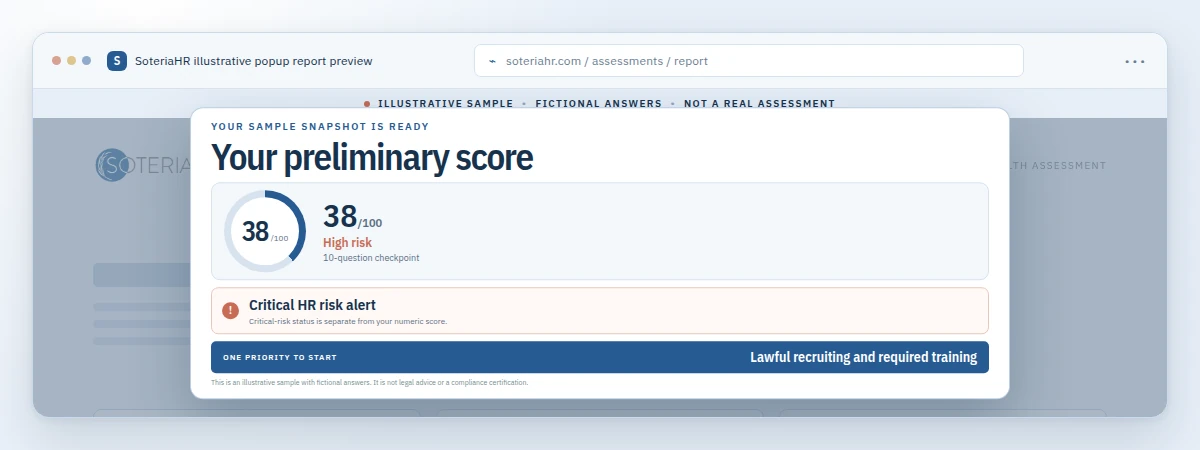
Ultimately, the right fit depends on growth stage, budget, and how much control leadership wants to retain. For a broader overview of how to evaluate resources in this space, this guide to picking the right HR resource is a useful starting point, and the free HR Health Assessment at soteriahr.ai can surface specific gaps worth discussing with a provider. Results from the assessment are self-reported and preliminary, not a certification of compliance.
Frequently Asked Questions About the Benefits of Partnering With a Third Party HR Provider
What are the benefits of partnering with a third party HR provider?
The main benefits of partnering with a third party HR provider are reduced administrative workload, lower compliance risk, and access to HR expertise without hiring a full department. Many employers also gain more predictable monthly costs compared to building that capability in-house.
How does outsourced HR support reduce compliance risk?
Outsourced HR support reduces compliance risk by monitoring regulatory changes and managing documentation, deadlines, and employee records consistently. This lowers the odds that a leave request, policy update, or filing deadline gets missed during a busy growth period.
How much does it cost to outsource HR functions?
Costs vary based on company size, scope of services, and whether support is administration-only, consulting-only, or a combined ASO partnership. Because pricing depends on these factors, it is best confirmed directly with a provider during a consultation.
What is the difference between an ASO and a PEO?
An ASO delivers HR support while the client company remains the sole legal employer, whereas a PEO enters a co-employment relationship and becomes a shared employer of record. This distinction affects payroll, benefits, and who holds specific legal obligations.
How long does it take to transition to a third-party HR provider?
Transition timelines vary with company size and how many HR functions are being handed over at once. A phased rollout, starting with the highest-priority gaps, generally reduces disruption to staff and daily operations.
What is a common mistake when choosing an HR outsourcing partner?
A common mistake is choosing a provider based on price alone without clarifying scope, response times, and whether the arrangement involves co-employment. This often leads to gaps in coverage or unexpected limits on support later.
What should a growing business look for in an HR outsourcing partner?
A growing business should look for a provider with experience at a similar headcount, clear scope of services, and flexibility to add support like benefits administration or consulting as needs change. Transparent pricing and responsive communication also matter.
Why do small and mid-sized employers outsource HR instead of hiring in-house?
Many small and mid-sized employers outsource HR because hiring a full internal team is costly relative to their headcount. In addition, outsourcing provides access to broader expertise than a single generalist hire could offer.
Does a third party HR provider replace my internal HR team?
Not necessarily. Many providers support existing internal HR staff rather than replace them, adding specialized backup for areas like benefits administration or compliance tracking while the internal team keeps day-to-day relationships.
Does partnering with Soteria HR create a co-employment relationship?
No. Soteria HR’s ASO option provides tailored HR support without co-employment, so the client remains the employer and keeps responsibility for employment decisions and applicable legal obligations.
What size business benefits most from outsourced HR support?
Companies with roughly 10 to 250 employees are a priority segment for outsourced HR support, since they often outgrow a single generalist but are not yet ready to staff a full department. This is a general guideline, not a strict eligibility rule.
Can a third party HR provider help manage benefits enrollment?
Yes. Benefits administration support typically covers enrollments, terminations, carrier coordination, and employee communications, along with assistance with applicable ACA, COBRA, Section 125, and Form 5500 requirements where relevant to the plan.
How do I start a conversation with an HR outsourcing partner?
The simplest first step is a consultation call to discuss current HR gaps and priorities. You can call (800) 399-2458, submit a consultation request to talk to an HR expert, or complete the free HR Health Assessment at soteriahr.ai beforehand to guide the conversation.
In the end, the benefits of partnering with a third party HR provider come down to time, risk, and expertise. A growing company gains steadier compliance support, predictable costs, and specialized HR knowledge, all without the expense of building a full internal department. Whether that looks like an ASO relationship that keeps the client as sole employer, targeted consulting, or benefits administration support, the right fit depends on company size, internal capacity, and growth plans. Soteria HR, based in Pasadena and serving employers across Los Angeles, Orange County, and nationwide, offers this kind of hands-on support. Call (800) 399-2458, submit a consultation request to talk to an HR expert, or start with the free HR Health Assessment at soteriahr.ai to identify priorities before that conversation.