Top HR consulting firms for companies under 250 employees are organizations that combine HR administration, strategic consulting, and benefits support scaled specifically to a mid-sized workforce, rather than enterprise programs built for thousands of employees. For an employer with roughly 10 to 250 people on staff, the right partner typically offers hands-on, flexible support instead of a rigid, one-size-fits-all package. In particular, growing companies need a firm that can handle daily HR administration while also advising on compliance, culture, and workforce planning. This guide examines what separates strong top HR consulting firms for companies under 250 employees from the rest, and where employers should start looking.
Key Takeaways
- Companies under 250 employees generally choose among three models: national HR consultancies, boutique regional firms, and outsourced HR/ASO providers.
- An ASO (Administrative Services Organization) provides tailored HR support without co-employment; the client company remains the legal employer.
- According to the U.S. Small Business Administration, firms with fewer than 500 employees make up more than 99% of U.S. employer businesses, so this is a well-served but highly varied market.
- The best fit depends on existing internal HR capacity, budget, and whether the organization needs daily administration, strategic guidance, or both.
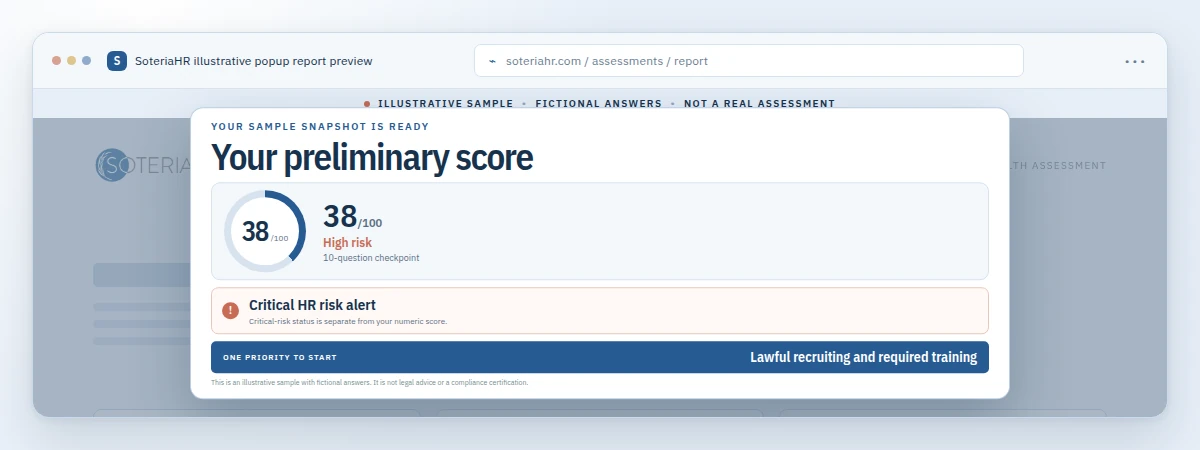
- A free HR Health Assessment can help leaders identify gaps before committing to a consulting engagement.
What Is HR Consulting, and Why Does Firm Size Matter?
HR consulting is advisory and hands-on support for hiring, compliance, benefits, and employee relations, delivered by professionals outside a company’s internal team. For companies under 250 employees, firm size matters because large national consultancies often build programs for enterprise clients with dedicated internal HR departments, while smaller firms and outsourced HR providers tailor support to the pace and budget of a growing organization.
As a result, a 40-employee company shopping for the same consultant as a 4,000-employee enterprise may end up paying for a layer of bureaucracy it doesn’t need. In particular, growing employers often lack a full-time HR department, so they need a partner who can step into daily administration, not just quarterly strategy sessions. Research cited by the Society for Human Resource Management suggests most organizations maintain roughly one to one-and-a-half HR staff per 100 employees, which means a 150-person company might operate with fewer than two dedicated HR staff internally. Consequently, outsourced support often fills that gap more affordably than a series of new hires.
In contrast, companies that already have a capable internal HR team may only need supplemental consulting for specific projects, such as a handbook refresh or a benefits renewal. For a closer look at how this plays out across providers, see our deeper comparison of HR consulting firms serving growing employers.
Key Factors to Evaluate in HR Consulting Firms for Growing Companies
Choosing among HR consulting firms requires more than comparing price sheets. Specifically, leaders should weigh scope, flexibility, and how deeply the firm understands regulations in the employer’s jurisdiction.
- Scope of services: Does the firm handle daily HR administration, strategic consulting, benefits administration, or all three?
- Employment relationship: Does the model keep the client as the employer of record, or does it introduce co-employment?
- Flexibility to scale: Can the engagement grow as headcount moves from 25 to 150 employees, without a disruptive re-contracting process?
- Compliance depth: Does the firm track federal rules through sources such as the U.S. Department of Labor as well as state-specific requirements?
- Responsiveness: Is there a named point of contact, or does every request route through a general queue?
Above all, the strongest fit is the firm that matches an organization’s actual pace of growth, not an idealized version of it. Leaders exploring this question in more depth may find it useful to review what makes HR consulting services for small businesses genuinely effective versus simply well-marketed.
Top HR Consulting Firms for Companies Under 250 Employees: Three Models to Compare
Most employers researching top HR consulting firms for companies under 250 employees end up comparing three distinct models rather than a single list of brand names. Each model solves a different problem, so the “best” option genuinely depends on context.
National HR consultancies typically serve large enterprises and offer broad bench strength, but their pricing and processes are often built for companies with existing HR departments. Boutique regional firms, meanwhile, tend to specialize in a narrower set of services, such as compliance audits or executive compensation, which works well for a single project but less well for ongoing administration. Outsourced HR providers, including ASO-based partners such as Soteria HR, blend day-to-day HR administration with consulting and benefits support, which is often the closest fit for a company without a full internal HR team.
Soteria HR, based in Pasadena, California, works with employers across Los Angeles, Orange County, and nationwide, with a priority focus on organizations in the 10 to 250 employee range. Its services center on HR administration, HR consulting, and benefits administration, with payroll coordination as a complementary piece rather than a standalone offering. Readers based in California may also want to review the specifics of HR consulting support in California before comparing regional and national options.
“We’ve got your back—so you can focus on growth.” — Soteria HR’s guiding approach to outsourced HR partnerships
How an ASO Differs From a PEO or a Traditional Consulting Engagement
An ASO, or Administrative Services Organization, is a model where an outside firm provides HR support while the client company remains the legal employer, retaining full responsibility for employment decisions and applicable obligations. This differs from a Professional Employer Organization (PEO), which typically establishes a co-employment arrangement. Neither model is inherently better; however, they solve different concerns, and employers should confirm which structure a prospective firm actually offers before signing anything.
The table below compares common HR support models side by side so leaders can see where each one fits relative to an internal hire.
| Model | Employment Relationship | Typical Scope | Best Fit |
|---|---|---|---|
| Internal HR hire | Client is sole employer | Full-time, in-house | Companies with budget for dedicated headcount |
| PEO | Co-employment | Payroll, benefits, HR bundled | Employers wanting a bundled, co-employed structure |
| Traditional HR consulting firm | Client is sole employer | Project-based advice | One-off projects, audits, or policy work |
| ASO / outsourced HR (e.g., Soteria HR) | Client is sole employer | Ongoing administration, consulting, benefits | Growing companies without a full HR department |
How Soteria HR Supports Companies Without a Full HR Department
Soteria HR focuses on employers who either have no internal HR department or have a lean HR team that needs reinforcement. Its core offerings are HR administration, HR consulting, and benefits administration, delivered through support that is customized to each organization rather than sold as a fixed package.
On the administration side, this typically includes employee records, onboarding and offboarding, policy management, leave coordination, unemployment support, and payroll coordination with the client’s existing payroll provider. On the consulting side, Soteria’s professionals advise on employee relations, workforce planning, recruiting practices, performance management, and HR systems, which helps leaders translate priorities into workable, repeatable processes. In addition, benefits administration support covers enrollments, terminations, carrier coordination, and applicable ACA, COBRA, Section 125, and plan-document considerations, with scope confirmed case by case.
Crucially, Soteria’s ASO model means the client remains the employer and keeps responsibility for employment decisions, while Soteria provides the tailored HR infrastructure behind the scenes. For employers near Los Angeles or Orange County weighing local options, HR consulting services near you can be a useful starting comparison point. Leaders can call (800) 399-2458 or submit a consultation request to talk to an HR expert directly through Soteria HR’s website.
How to Choose the Right HR Consulting Partner: A Step-by-Step Process
Selecting among HR consulting partners goes faster when leaders follow a structured process rather than comparing firms on price alone. The steps below reflect how most employers under 250 employees move from uncertainty to a signed engagement.
- Audit current HR gaps. Before contacting any firm, map out which HR functions are handled internally, which are missing entirely, and which feel inconsistent, since a free tool such as the HR Health Assessment at soteriahr.ai can surface likely priorities in about two to twelve minutes.
- Clarify the employment model. Ask every candidate firm directly whether the arrangement is an ASO, a PEO, or a project-based consulting contract, because this determines who legally remains the employer of record.
- Request a detailed scope and sample deliverables. A credible firm should be able to describe exactly what administration, consulting, and benefits support will look like month to month, not just in broad marketing language.
- Check jurisdictional compliance experience. Confirm the firm actively tracks requirements from sources such as the Department of Labor, the EEOC, and relevant state agencies for every location where employees work.
- Start with a defined initial engagement. Rather than committing to a multi-year contract immediately, negotiate a clear initial period with measurable milestones so both sides can confirm fit before scaling the relationship further.
Frequently Asked Questions
What are the top HR consulting firms for companies under 250 employees?
Top HR consulting firms for companies under 250 employees generally fall into national consultancies, boutique regional firms, and outsourced HR or ASO providers such as Soteria HR. The strongest fit typically depends on whether the company needs daily administration, strategic advice, or both.
How much does HR consulting cost for a small or mid-sized company?
Pricing varies widely based on scope, headcount, and whether services are project-based or ongoing. Employers should request a detailed proposal tied to their specific headcount and service needs rather than relying on generic published rates.
What is the difference between an ASO and a PEO?
An ASO provides HR administration and consulting while the client remains the sole legal employer. A PEO, in contrast, typically establishes a co-employment relationship between the client and the provider.
How do I know if my company needs an HR consulting firm instead of an internal hire?
If HR tasks are inconsistent, compliance feels uncertain, or the company lacks budget for a full-time HR department, outsourced consulting often fills the gap more affordably. However, companies with steady, high-volume HR needs may eventually benefit from a hybrid of internal staff plus outside support.
Can HR consulting firms handle payroll directly?
Many HR consulting firms coordinate with existing payroll providers rather than processing payroll themselves. For example, Soteria HR offers payroll coordination that complements its HR administration, consulting, and benefits services, with exact processing and filing responsibilities confirmed in scope.
What company size benefits most from outsourced HR support?
Employers with roughly 10 to 250 employees are a common priority segment, since they are often large enough to have real HR complexity but too lean to justify a full internal department. That said, this is a general guideline rather than a strict eligibility cutoff.
How long does onboarding with an HR consulting firm usually take?
Onboarding timelines depend on the complexity of existing HR systems and the scope of the engagement. In particular, firms that start with a defined assessment phase, such as a consultation call, can often move faster than firms requiring a lengthy procurement process.
What mistakes do growing companies make when choosing an HR partner?
A common mistake is choosing a firm based solely on price without confirming the employment model or compliance depth. Another frequent error is signing a long-term contract before completing a pilot period to verify responsiveness and fit.
Do HR consulting firms replace an internal HR team entirely?
Not necessarily. Many firms, including Soteria HR, support both companies without any internal HR department and organizations that already have an HR team but need added capacity or specialized guidance.
What services should a complete HR consulting partnership include?
A well-rounded partnership typically covers HR administration, strategic consulting, and benefits administration, with payroll coordination and training as supporting pieces. Consequently, employers should ask whether a firm’s “full-service” claim actually includes all three core areas.
How is HR consulting different from HR software?
HR software automates tasks like time tracking or document storage, while HR consulting provides human judgment, compliance review, and strategic advice. Many growing companies ultimately use both together rather than choosing one over the other.
What should I ask before hiring an HR consulting firm?
Ask about the employment model, named points of contact, compliance coverage across every state where employees work, and what a typical month of support looks like in practice. Above all, request references or sample scopes rather than relying on general marketing claims.
Is a free HR health assessment worth completing before hiring a consultant?
Yes, a brief self-assessment can help leaders enter conversations with a clearer sense of priorities. It is worth noting that results are self-reported and preliminary, not a certification of compliance or a substitute for a professional legal audit.
In summary, the top HR consulting firms for companies under 250 employees are not defined by a single ranking but by fit: national consultancies, boutique firms, and outsourced HR providers each solve different problems. For most growing organizations without a full internal HR department, an ASO-style partner that blends administration, consulting, and benefits support, such as Soteria HR, often provides the most practical balance of flexibility and depth. Therefore, the most useful next step is a direct conversation, whether that starts with a quick self-assessment at soteriahr.ai or a call to (800) 399-2458 to talk through specific priorities with an HR expert. For further reading on related terminology, see this overview of what HR consulting actually means for SMBs.