“What daily HR administration tasks can I outsource for my SMB?” is a question many founders and operations leaders ask once hiring, payroll, and compliance paperwork start piling up faster than anyone can keep track of. Daily HR administration is the ongoing, process-driven work of managing employee records, benefits, leave, and compliance documentation that keeps a workforce running smoothly. For most small and mid-sized businesses, tasks such as onboarding paperwork, payroll coordination, benefits enrollment, leave tracking, and employee recordkeeping can be outsourced to an experienced HR partner. As a result, leadership can spend less time on paperwork and more time on growth.
Key Takeaways
- Most daily HR administration tasks — onboarding, benefits enrollment, leave tracking, and recordkeeping — can be outsourced without giving up employer status.
- Outsourced HR administration works alongside internal teams or replaces the need to build one from scratch.
- An Administrative Services Organization (ASO) model lets a business stay the legal employer while an HR partner handles the administrative workload.
- Payroll coordination, benefits compliance (ACA, COBRA, Section 125), and unemployment claims are among the most time-consuming tasks to delegate.
- A free HR Health Assessment can help identify which tasks are the best starting point for your organization.
What Daily HR Administration Tasks Can I Outsource for My SMB?
In short, you can outsource nearly any recurring, process-driven HR task: employee records management, onboarding and offboarding paperwork, leave and time-off coordination, payroll coordination, benefits administration, and unemployment claims support. These tasks follow repeatable workflows, which is exactly why they transfer well to an outsourced HR partner. However, strategic decisions — like who to hire, fire, or discipline — remain the employer’s responsibility and are not outsourced.
For example, a 15-person logistics company might outsource payroll coordination and benefits enrollment while keeping performance reviews in-house. Similarly, a 90-employee clinic might hand off leave tracking and unemployment claims to an HR partner while its internal office manager still handles scheduling. In other words, outsourcing is not all-or-nothing — it is a spectrum that can be tailored to your organization’s size and internal capacity.
Core Daily HR Tasks Growing SMBs Hand Off
Below are the most common daily administration tasks that growing employers choose to outsource. For a broader look at which functions best fit growing teams, see which HR and admin services best support growing SMBs.
Employee Records and Documentation
Maintaining accurate personnel files, I-9 forms, and signed policy acknowledgments is tedious but legally important. An outsourced partner organizes and maintains these records consistently, which reduces the risk of gaps surfacing during an audit or employee dispute.
Onboarding and Offboarding
New-hire paperwork, benefits elections, system access, and exit documentation all follow predictable steps. Consequently, these are among the easiest tasks to transfer, since an outsourced team can run the same checklist for every employee without missing a step.
Leave and Time-Off Coordination
Tracking FMLA, state-specific leave, PTO accruals, and return-to-work logistics requires attention to deadlines and eligibility rules. An outsourced HR administrator can monitor these timelines daily, which helps prevent missed notices or inconsistent handling across employees.
Payroll Coordination
While a third-party processor typically handles the actual pay run, someone still has to reconcile timekeeping data, new-hire setup, and deduction changes. An outsourced HR team can manage that coordination between your systems and payroll provider, improving accuracy and reducing back-and-forth.
Benefits Administration Support
Enrollments, terminations, carrier coordination, and employee communications all take ongoing attention. In particular, compliance-adjacent requirements such as ACA reporting, COBRA notices, Section 125 cafeteria plans, and Form 5500 filings (where applicable) benefit from a dedicated administrator who tracks deadlines set by the Internal Revenue Service and the U.S. Department of Labor.
Policy and Handbook Administration
Updating handbooks, distributing policies, and collecting acknowledgment signatures is repetitive work that still requires accuracy. Outsourcing this task ensures policies stay current as laws change, rather than sitting untouched for years.
Unemployment Claims Support
Responding to unemployment claims correctly and on time affects your tax rate and legal standing. An outsourced HR partner can manage documentation and deadlines on your behalf, which is especially useful for employers without a dedicated HR staffer to monitor every notice.
Why Growing SMBs Outsource Everyday HR Work
According to the U.S. Bureau of Labor Statistics, HR compliance and administrative demands scale faster than headcount in businesses crossing the 20 to 50 employee range, which is precisely when internal bandwidth starts to strain. Above all, outsourcing exists to solve a bandwidth problem, not just a cost problem. Founders and operations leaders are often the default “HR department” in a growing company, and that arrangement rarely scales well past a certain size.
Furthermore, outsourcing daily HR administration reduces the risk of inconsistent handling across employees. For instance, when one person juggles hiring, benefits, and payroll questions alongside their regular job, small errors compound over time. In contrast, a dedicated HR partner applies the same process every time, which supports more consistent recordkeeping and compliance tracking. To see how this plays out in practice, review the key advantages of outsourced HR administration for growing businesses.
Equally important, outsourcing does not mean losing control. Under an ASO (Administrative Services Organization) arrangement, the client remains the legal employer and retains responsibility for employment decisions and applicable obligations, while the HR partner delivers tailored administrative support. This distinguishes ASO support from a co-employment or PEO model, where the provider becomes a joint employer of record.
How to Outsource HR Administration Tasks in 5 Steps
Transitioning daily HR tasks to an outsourced partner works best as a structured process rather than a sudden handoff. The following steps outline a practical approach that works for most growing organizations. For a deeper walkthrough, see this guide to outsourcing human resource activities.
- Audit current HR tasks. List every recurring HR task your team currently performs, including onboarding paperwork, leave tracking, benefits enrollment, and payroll coordination, so you can see the full workload clearly.
- Identify the highest-friction tasks first. Prioritize the tasks that consume the most time, create the most risk, or get delayed most often, since these typically deliver the fastest relief once outsourced.
- Choose an outsourcing model that fits. Decide whether you need full HR administration support, an ongoing ASO partnership, or targeted consulting, based on your internal staffing and growth plans.
- Transfer records and set up workflows. Share employee files, current policies, and benefits documentation with your HR partner so they can establish consistent, repeatable processes from day one.
- Review performance and expand scope gradually. After the first few months, evaluate what is working and consider expanding the relationship to cover additional tasks like training or policy updates as your needs grow.
“Outsourcing daily HR administration isn’t about handing off responsibility — it’s about giving leadership back the time to focus on the business, while the paperwork still gets done correctly and on time.”
Daily HR Tasks to Keep In-House vs. Outsource
Not every HR function should move outside the organization. Specifically, decisions that carry legal or cultural weight usually stay with leadership, while repetitive administrative work is the best candidate for outsourcing.
| HR Function | Typically Outsourced | Typically Kept In-House |
|---|---|---|
| Employee recordkeeping | Yes | — |
| Onboarding/offboarding paperwork | Yes | — |
| Benefits enrollment & compliance | Yes | — |
| Payroll coordination | Yes | — |
| Hiring and termination decisions | — | Yes |
| Company culture and leadership decisions | — | Yes |
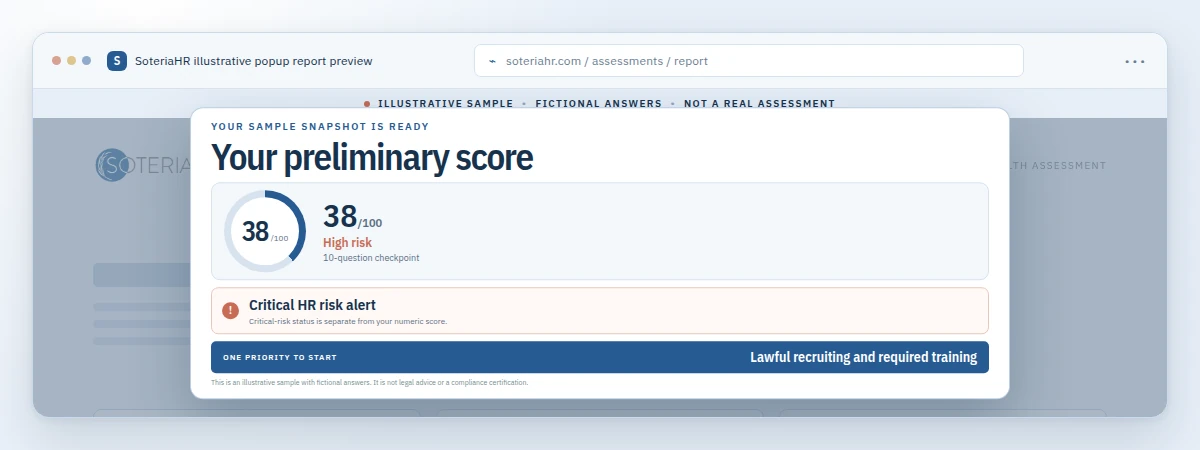
If you are unsure where your organization falls on this spectrum, a free HR Health Assessment can surface likely gaps in about 2 to 12 minutes, depending on whether you take the Quick HR Check or the Complete HR Health Assessment. Results are self-reported and preliminary, not a certification of compliance. For pricing context on outsourced support, visit HR outsourcing pricing.
Frequently Asked Questions About Outsourcing Daily HR Administration Tasks
What daily HR administration tasks can I outsource for my SMB?
When business owners ask, “What daily HR administration tasks can I outsource for my SMB?” they usually mean recurring, process-driven work such as onboarding, benefits enrollment, leave tracking, payroll coordination, and employee recordkeeping. Strategic decisions like hiring and discipline typically remain in-house.
How much does outsourced HR administration typically cost for a small business?
Costs vary based on employee count, scope, and service model, so there is no single flat rate. Generally, pricing is structured as a monthly or per-employee fee tied to the specific services included, which is why reviewing a detailed pricing breakdown is more useful than a generic average.
What is the difference between HR administration and HR consulting?
HR administration covers the recurring daily tasks like recordkeeping, benefits, and payroll coordination. In contrast, HR consulting focuses on strategic advice around workforce planning, culture, recruiting practices, and performance systems.
Why do growing SMBs outsource payroll coordination instead of managing it internally?
Payroll coordination involves reconciling timekeeping, deductions, and new-hire data across multiple systems, which becomes error-prone as headcount grows. Consequently, outsourcing this coordination reduces mistakes and frees internal staff for higher-value work.
How long does it take to transition daily HR tasks to an outsourced provider?
Most transitions take a few weeks to complete, depending on how many records need to be transferred and how many systems are involved. Simple tasks like benefits enrollment can often start sooner than complex items like historical recordkeeping cleanup.
What is an ASO, and how is it different from a PEO?
An Administrative Services Organization (ASO) provides tailored HR administration support while the client remains the sole legal employer. A PEO, by contrast, typically establishes a co-employment relationship, which shifts certain employer responsibilities to the provider.
Can I outsource only part of my HR administration, or does it have to be all-or-nothing?
You can outsource specific tasks, such as benefits enrollment or leave tracking, while keeping other functions in-house. Many SMBs start small and expand the relationship once they see consistent results.
What common mistakes do SMBs make when outsourcing HR tasks?
A frequent mistake is outsourcing without first auditing current processes, which carries disorganized records into the new relationship. Another common error is assuming outsourcing removes all employer responsibility, when in fact the employer still retains obligations under applicable law.
Which HR tasks should never be outsourced?
Final hiring, termination, and discipline decisions should stay with company leadership, since they carry legal and cultural weight. Likewise, shaping company values and leadership direction remains an internal responsibility.
How does outsourcing HR administration affect compliance with federal and state laws?
A knowledgeable HR partner tracks deadlines and requirements set by agencies such as the Equal Employment Opportunity Commission and relevant state agencies, which can reduce missed filings. However, the employer remains responsible for ensuring overall compliance, so outsourcing should supplement, not replace, employer awareness.
What should I look for when choosing an outsourced HR administration provider?
Look for a provider with experience serving businesses similar in size to yours, clear service scope, and transparent pricing. In addition, ask how they handle recordkeeping, communication, and escalation when issues arise.
Does outsourcing daily HR tasks mean giving up control over employment decisions?
No. Under an ASO arrangement, the client remains the employer of record and keeps authority over employment decisions. The outsourced partner handles administrative execution, not employer-level decision-making.
Ready to see which daily HR tasks make sense to outsource for your organization? Talk to an HR Expert at Soteria HR.
In summary, the daily HR administration tasks you can outsource for your SMB span recordkeeping, onboarding, leave coordination, payroll coordination, benefits administration, and unemployment claims support — the repeatable, process-driven work that scales poorly when handled by a single internal person. Strategic decisions about hiring, culture, and discipline should stay with leadership. Therefore, the right approach is rarely all-or-nothing; instead, it means identifying the highest-friction tasks first and expanding the outsourced relationship as your organization grows. Whether you start with a free HR Health Assessment or a direct consultation, understanding which daily HR tasks to outsource is the first step toward giving your team back the time to focus on growth, which is exactly the partnership Soteria HR aims to provide.