What employee benefits am I legally required to offer in my small business? At the federal level, most employers must handle Social Security and Medicare contributions, carry workers’ compensation coverage, and pay into unemployment insurance, while larger employers also face rules under the Family and Medical Leave Act (FMLA) and the Affordable Care Act (ACA). However, the exact list depends heavily on your state, your headcount, and how your business is structured. In California, for example, state disability insurance and paid sick leave stack on top of the federal baseline, so a quick checklist from a national blog post will not cover everything you owe employees.
Key Takeaways
- Federal law requires Social Security, Medicare, workers’ compensation, and unemployment insurance from nearly every employer, regardless of size.
- The ACA employer mandate and FMLA unpaid leave only apply once you cross specific headcount thresholds — usually 50 employees.
- California adds its own mandates, including paid sick leave, State Disability Insurance (SDI), and CalSavers retirement enrollment.
- Health insurance, 401(k) plans, and paid time off are not federally required for most small employers, but they strongly influence hiring and retention.
- Because rules change by state and headcount, many growing employers partner with an outsourced HR consulting team to stay compliant.
What Employee Benefits Am I Legally Required to Offer in My Small Business?
Legally required employee benefits are the benefits mandated by federal and, in many cases, state law — they are not optional perks you can skip to save money. For almost every employer with at least one employee, that baseline includes Social Security and Medicare contributions (often called FICA, short for the Federal Insurance Contributions Act), workers’ compensation insurance, and unemployment insurance.
Beyond that core list, additional obligations kick in once you hit certain headcount thresholds. For example, the FMLA generally applies to employers with 50 or more employees within a 75-mile radius, while the ACA employer mandate applies once you reach 50 full-time equivalent (FTE) employees. In contrast, states like California layer on their own requirements — such as paid sick leave and disability insurance — that apply to nearly all employers, regardless of size. Therefore, the honest answer to “what am I required to offer” depends on where you operate and how many people you employ. For a broader look at how these pieces fit together, see our guide on the main types of employee benefits small employers manage.
Federal Benefits Required by Law for Most Employers
Five federal obligations make up the backbone of mandatory employee benefits in the United States. First, every employer must withhold and match Social Security and Medicare taxes under FICA. Second, workers’ compensation insurance is required in virtually every state once you have employees, protecting workers who are injured on the job. Third, unemployment insurance — funded through federal (FUTA) and state (SUTA) payroll taxes — provides temporary income to workers who lose their jobs.
Fourth, the FMLA entitles eligible employees at covered employers to up to 12 weeks of unpaid, job-protected leave for qualifying family or medical reasons, according to the U.S. Department of Labor. Fifth, the ACA’s employer shared responsibility provision requires applicable large employers (50+ FTEs) to offer affordable, minimum-value health coverage or face a potential penalty, as explained by the IRS. Notably, employee benefits are not a minor line item: according to the U.S. Bureau of Labor Statistics, benefits make up nearly 30% of total employee compensation costs nationally, which is why getting the required pieces right matters for your budget as much as your compliance.
State-Mandated Employee Benefits That Add to the List
Federal law sets the floor, not the ceiling. Specifically, California — where Soteria HR is based — imposes several additional mandates that employers across Los Angeles, Orange County, and the rest of the state must follow. For instance, the state’s Healthy Workplaces, Healthy Families Act requires nearly all employers to provide paid sick leave, as detailed by the California Department of Industrial Relations.
Additionally, California requires State Disability Insurance (SDI), a payroll-deducted program administered through the California Employment Development Department, which provides partial wage replacement for non-work-related illness or injury. Furthermore, if your business does not already offer a qualified retirement plan, state law generally requires you to register for CalSavers, the state-facilitated retirement savings program. Because other states have different rules — some require paid family leave, others do not — employers operating outside California, or with remote employees in multiple states, should confirm obligations state by state rather than assuming federal rules are the whole picture.
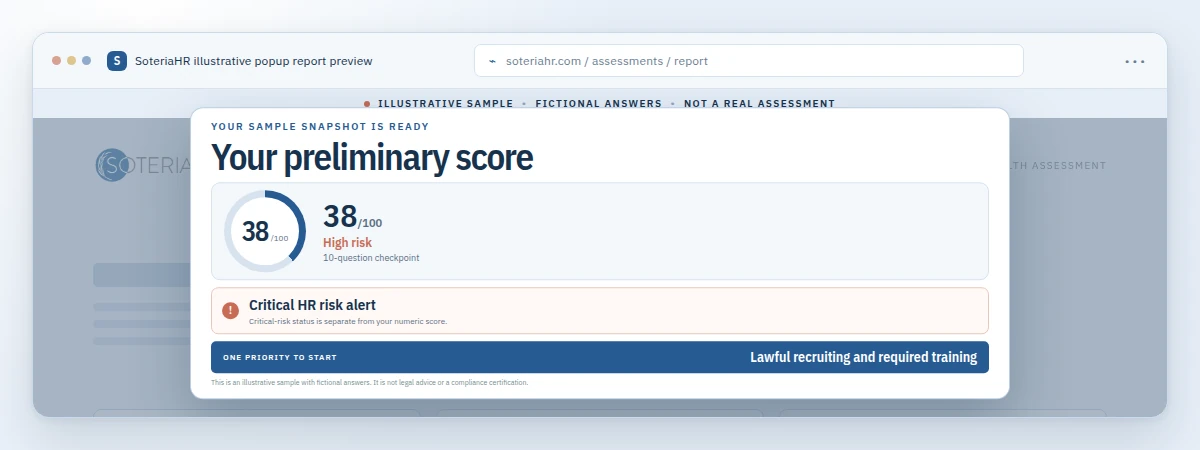
Not sure where your business stands on required and optional benefits? The free HR Health Assessment flags gaps in about two to twelve minutes, depending on whether you take the Quick HR Check or the Complete HR Health Assessment.
Benefits That Aren’t Required But Strongly Expected
Not every valuable benefit is a legal requirement. Health insurance, for example, is not federally mandated for employers under 50 FTEs, yet most job candidates now expect it. Similarly, a 401(k) or other retirement plan beyond the state-mandated CalSavers option is optional, but it remains one of the strongest tools for retaining experienced employees.
Paid vacation, parental leave beyond FMLA’s unpaid minimum, flexible or remote work arrangements, and wellness stipends also fall into this voluntary category. Above all, these optional benefits are often what separates a competitive offer from an average one, especially in tight labor markets. Our breakdown of employer-paid benefits worth considering covers how to prioritize these additions on a limited budget, and our guide on how benefits help small companies attract talent walks through the recruiting impact in more detail.
How to Build a Legally Compliant Benefits Program in 5 Steps
Building a benefits program that satisfies both required and optional pieces does not have to be overwhelming. Instead, a structured process keeps you from missing an obligation while still leaving room for benefits that help you compete for talent.
- Determine your legal obligations. Map out your employee headcount, states of operation, and any remote workers, then identify which federal and state thresholds — such as 50 FTEs for the ACA — apply to your business.
- Audit your current benefits. Compare what you currently offer against the federal and state mandates identified in step one to find gaps before a regulator or employee claim finds them for you.
- Budget for required and optional benefits together. Build a combined budget that covers mandatory costs like workers’ compensation and unemployment insurance alongside optional additions like health coverage or retirement matching.
- Document everything in an employee handbook. Put your leave policies, sick time accrual, and benefits eligibility rules in writing so employees and managers can reference consistent, up-to-date information.
- Partner with an HR or benefits expert for ongoing maintenance. Because thresholds and state laws change over time, schedule a periodic review with an HR consulting partner to keep your program compliant as your headcount grows.
Consequently, employers who follow this sequence usually catch gaps — like a missed CalSavers deadline or an outdated sick leave accrual rate — long before they become costly. For a step-by-step walkthrough specific to rolling out new benefits, see our guide on how to offer employee benefits the right way.
“Benefits compliance isn’t a one-time checklist — it’s an ongoing commitment that shifts as your headcount, your states of operation, and the law itself evolve.” — Soteria HR
Common Mistakes Small Employers Make With Required Benefits
Even well-intentioned employers slip up on mandatory benefits. For example, misclassifying workers as independent contractors to sidestep benefit obligations is a frequent and costly error, since the Department of Labor and state agencies actively audit worker classification. Similarly, employers with remote staff in multiple states often overlook that each state’s paid sick leave and disability rules may apply separately to those employees.
In addition, miscounting full-time equivalent employees — and therefore missing the 50-FTE ACA threshold — is a mistake that can trigger penalties well after the fact. Finally, many small employers fail to update their handbook when state laws change, leaving outdated sick leave accrual rates or leave policies in place. The EEOC and state civil rights agencies also expect benefit administration to be applied consistently, so uneven enforcement of your own written policy can create separate legal exposure.
Quick Comparison: Federal vs. California-Specific Requirements
| Benefit | Required By | Typical Threshold | Source |
|---|---|---|---|
| Social Security & Medicare (FICA) | Federal | All employers | IRS |
| Workers’ Compensation | State (CA) | All employers with employees | CA DIR |
| Unemployment Insurance | Federal & State | All employers | DOL |
| State Disability Insurance | California | All employees (payroll deduction) | CA EDD |
| Paid Sick Leave | California | Nearly all employers | CA DIR |
| FMLA Unpaid Leave | Federal | 50+ employees | DOL |
| ACA Employer Mandate | Federal | 50+ FTEs | IRS |
| CalSavers Retirement | California | 1+ employees without a plan | CalSavers |
This table is a general-information overview, not a complete compliance audit. Verify current thresholds, deadlines, and exceptions with the official sources linked above, or with an HR consulting partner, before making coverage decisions.
Frequently Asked Questions
What employee benefits am I legally required to offer in my small business?
At minimum, nearly every employer must handle Social Security and Medicare contributions, workers’ compensation insurance, and unemployment insurance. Additional federal rules, like the FMLA and the ACA employer mandate, apply once you reach 50 employees, while states such as California add paid sick leave and disability insurance on top.
What happens if I don’t offer legally required benefits?
Skipping required benefits can expose you to back payments, penalties, and interest from federal or state agencies, as well as potential employee claims. In serious cases, repeated violations can trigger audits or legal action from agencies like the DOL or California’s labor enforcement bodies.
Do small businesses have to offer health insurance?
No, employers with fewer than 50 full-time equivalent employees are not federally required to offer health insurance. However, many small businesses choose to offer it anyway because it strongly influences hiring and retention.
How many employees trigger the ACA employer mandate?
The ACA employer shared responsibility provision generally applies once a business reaches 50 full-time equivalent employees. Below that threshold, offering health coverage remains optional under federal law, though state rules can still apply.
Is paid sick leave required in California?
Yes, California’s Healthy Workplaces, Healthy Families Act requires nearly all employers to provide paid sick leave to employees who work 30 or more days within a year. Accrual rates and usage caps can vary, so confirm current figures with the state before setting your policy.
What is the difference between required and voluntary employee benefits?
Required benefits, like workers’ compensation and unemployment insurance, are legal obligations with penalties for non-compliance. Voluntary benefits, such as health insurance for small employers or a 401(k) match, are offered at the employer’s discretion to attract and retain talent.
How much do employee benefits typically cost per employee?
According to the Bureau of Labor Statistics, benefits make up roughly 30% of total compensation costs nationally, though the exact figure varies by industry, state, and the mix of required versus optional benefits you offer.
Do part-time employees get legally required benefits?
Part-time employees are generally still covered by core requirements like workers’ compensation and, in California, paid sick leave once hour or tenure thresholds are met. However, part-time status can affect eligibility for benefits like FMLA leave or ACA coverage, which often require full-time or FTE-equivalent hours.
What is FMLA and who qualifies?
The Family and Medical Leave Act (FMLA) provides eligible employees up to 12 weeks of unpaid, job-protected leave for qualifying family or medical reasons. It generally applies to employers with 50 or more employees within a 75-mile radius, and employees typically need at least 12 months of tenure to qualify.
Do I need workers’ compensation insurance for one employee?
In California, nearly every employer with at least one employee must carry workers’ compensation insurance, regardless of whether that employee is full-time, part-time, or seasonal. Rules differ by state, so confirm your specific obligation with your state’s labor agency.
What is CalSavers and is it mandatory?
CalSavers is California’s state-facilitated retirement savings program for employees whose employer does not offer a qualified retirement plan. Eligible employers generally must register for CalSavers or offer their own plan, so check current deadlines with the program directly.
How can an HR consultant help with benefits compliance?
An HR consultant can audit your current benefits against federal and state requirements, flag gaps before they become penalties, and help you budget for optional benefits that support recruiting. This ongoing support is especially useful as headcount grows and new thresholds start to apply.
What’s the best way to budget for employee benefits as a small business?
Start by calculating the cost of required benefits, such as workers’ compensation and unemployment insurance, then layer in optional benefits based on what your target hires value most. Reviewing this budget annually helps you adjust as headcount and state obligations change.
Are remote employees subject to different benefit laws?
Yes, remote employees are generally covered by the labor laws of the state where they physically work, not where your company is headquartered. As a result, a single remote hire in a new state can introduce an entirely separate set of required benefits.
How often do benefit laws change?
Benefit laws change more often than most employers expect, particularly at the state level, where sick leave accrual rates, disability insurance rates, and retirement program rules are updated periodically. For that reason, an annual compliance review is a reasonable baseline for most small businesses.
In short, the question of what employee benefits am I legally required to offer in my small business comes down to three factors: federal law, your state’s specific add-ons, and your current headcount. Federal minimums like Social Security, Medicare, workers’ compensation, and unemployment insurance apply almost universally, while thresholds for FMLA and the ACA employer mandate only kick in at 50 employees. Meanwhile, California employers carry extra obligations around paid sick leave, disability insurance, and CalSavers retirement enrollment. Because these rules shift as your business grows or adds remote employees in new states, it is worth having a dedicated HR partner review your program at least once a year. If you would like a second set of eyes on your current benefits setup, call (800) 399-2458 or talk to an HR expert at Soteria HR — we’ve got your back, so you can focus on growth.