
Employee relation HR is the practice of managing the relationship between a company and its workforce—covering everything from day-to-day communication to conflict resolution and policy enforcement. For growing small and mid-sized businesses, getting this right can mean the difference between a thriving culture and constant turnover headaches. In this guide, we’ll break down what it really means, why it matters more as your team scales, and the practical steps you can take to build trust, reduce risk, and keep great people around.
What Is Employee Relation HR?
Direct answer: Employee relation HR is the HR function focused on managing the relationship between an employer and its employees—handling communication, conflict resolution, discipline, and engagement to keep the workplace fair, productive, and legally sound.
In practice, this function sits inside the broader HR umbrella, but it’s distinct from payroll or benefits administration. Instead, it’s the layer that deals with people problems directly: the disagreement between two coworkers, the manager who needs coaching on feedback, or the policy question that could turn into a formal complaint. According to the Society for Human Resource Management (SHRM), organizations that invest in this area tend to see measurably lower turnover and fewer costly disputes.
If you’re still fuzzy on the basics, our detailed breakdown of what is employee relations walks through the core definitions in more depth. Similarly, the role of HR in employee relations explains how this function typically fits into a company’s org chart.

Open, consistent conversations are the foundation of strong employee relation HR practices.
Why Employee Relations Matters for Growing Businesses
As a company grows past 15 or 20 employees, informal “we’ll figure it out” management stops working. Suddenly, one manager’s decision affects five teams, not two, and a small miscommunication can snowball fast. Consequently, businesses without a plan for handling these moments often end up firefighting instead of building.
The financial stakes are real, too. SHRM has reported that replacing a single employee can cost anywhere from half to twice their annual salary once you factor in lost productivity, recruiting, and onboarding. In particular, unresolved conflict and inconsistent policy enforcement are two of the biggest drivers of that turnover.
For leaders wearing multiple hats—CEOs, office managers, and operations directors alike—this is exactly where things get overwhelming. Above all, a proactive approach beats a reactive one. Our guide on how to improve employee relations offers a more detailed roadmap for teams starting from scratch.
Core Components of an Effective Employee Relations Strategy
A solid employee relations strategy isn’t one thing—it’s a set of connected practices that reinforce each other. Below are the pieces that tend to matter most for growing teams.
Clear, Two-Way Communication
Employees need to know how to raise concerns, and managers need structured ways to check in. Without this, small frustrations quietly build until they boil over.
Consistent Policy Enforcement
Rules only work if they’re applied the same way every time. Otherwise, inconsistency breeds resentment and, in some cases, legal risk under laws enforced by agencies like the U.S. Equal Employment Opportunity Commission.
Fair Conflict Resolution
Every workplace has disagreements. What matters is having a documented, neutral process for working through them rather than handling each case differently.
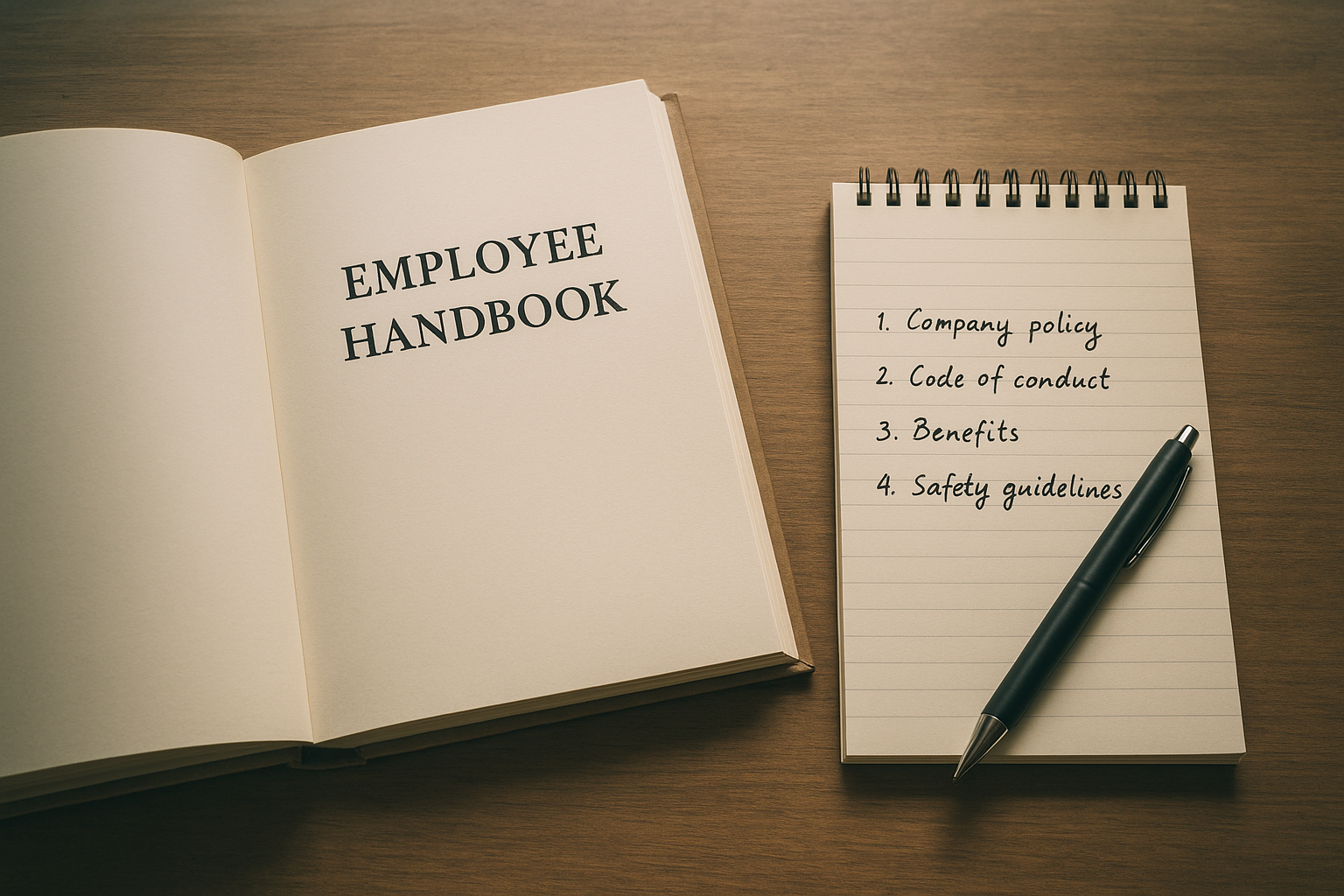
Clear, updated policies give employee relation HR practices a solid foundation.
5 Steps to Strengthen Employee Relation HR at Your Company
Building this out doesn’t have to feel overwhelming. Here’s a straightforward sequence most growing companies can follow.
- Audit your current practices. Review existing policies, past complaints, and turnover data to spot patterns and recurring issues before they escalate into bigger, costlier problems.
- Build clear communication channels. Establish regular check-ins, feedback loops, and an open-door culture so employees feel heard well before frustration has a chance to build.
- Update your handbook and policies. Make sure documentation reflects current labor laws and clearly outlines expectations, discipline procedures, and reporting processes for every employee.
- Train managers on conflict resolution. Equip frontline leaders with practical skills to address workplace tension early, fairly, and consistently across every department.
- Partner with an HR expert. Bring in dedicated employee relations expertise, in-house or outsourced, to monitor compliance and catch problems before they cost you money.
For a deeper dive into applying these steps day to day, our employee relations best practices resource expands on each one with real examples.
Common Mistakes That Undermine Employee Relations Management
Even well-meaning leaders slip up here. For instance, letting a manager handle a complaint informally, without documentation, is one of the fastest ways to create legal exposure down the line.
Similarly, applying policy differently from one employee to the next—even unintentionally—signals unfairness and invites disputes. In contrast, companies that document consistently and train their managers tend to catch small issues long before they become expensive ones, whether that’s turnover, a formal complaint, or worse, litigation referenced by guidance from the U.S. Department of Labor.
Another frequent misstep is treating employee relations as purely reactive—something you deal with only after a problem surfaces. Instead, the strongest programs are proactive, catching friction points during onboarding, performance reviews, and regular check-ins.
How Soteria HR Supports Employee Relations Management
This is exactly the gap Soteria HR was built to fill. Rather than a bloated, cookie-cutter HR firm, Soteria HR acts as an embedded partner for growth-minded companies with 10 to 250 employees—handling everything from custom HR playbooks and handbook updates to hands-on conflict resolution support.
Specifically, Soteria HR’s proactive HR leadership approach means issues get flagged and addressed before they escalate into legal or cultural headaches. As a result, founders, COOs, and office managers who wear too many hats finally get a partner who knows their business and gets ahead of problems. You can learn more directly at Soteria HR.
Whether the need is recruiting support, benefits management, or ongoing compliance monitoring, this kind of outsourced structure gives growing teams the stability of a full HR department without the overhead of building one from scratch.
Employee Relation HR Best Practices You Can Start Today
You don’t need a massive overhaul to start improving things this week. Therefore, here are a few practical moves worth making right away:
- Schedule regular one-on-ones between managers and direct reports, even just 15 minutes.
- Document every formal complaint or disciplinary conversation, no matter how minor it seems.
- Review your employee handbook annually against current labor law changes.
- Give managers a simple escalation path for issues above their comfort level.
For employees themselves, understanding their own rights and resources matters too. Our HR advice for employees page covers practical tips from the other side of the table, which can be a useful resource to share internally.
Frequently Asked Questions About Employee Relation HR
What is employee relation HR?
Employee relation HR is the function within human resources that manages the relationship between an organization and its employees, covering communication, conflict resolution, and policy compliance. It aims to build trust and keep the workplace fair and productive.
Why is employee relations important for small and mid-sized businesses?
Strong employee relations reduce turnover, prevent legal disputes, and create a workplace culture that attracts top talent. For growing companies without a dedicated HR department, it’s often the difference between scaling smoothly and hitting costly roadblocks.
How does employee relation HR differ from human resources as a whole?
Human resources covers broad functions like payroll, benefits, and recruiting, while employee relations focuses specifically on the day-to-day relationship between employer and employee. It’s one critical piece of the larger HR puzzle.
What does an employee relations specialist actually do?
An employee relations specialist investigates complaints, mediates workplace conflicts, and advises managers on consistent, legally sound policy application. They act as a neutral party protecting both the employee and the company.
How much does outsourced employee relations support typically cost?
Costs vary by company size and scope, but outsourced HR support is generally far less expensive than hiring a full-time in-house HR leader. Many growing businesses pay a predictable monthly fee that scales with headcount.
How long does it take to improve employee relations at a company?
Meaningful improvement often shows within 60 to 90 days once clear communication channels and updated policies are in place. Lasting culture change, however, is an ongoing process rather than a one-time fix.
What are the most common employee relations mistakes companies make?
Common mistakes include inconsistent policy enforcement, ignoring early warning signs of conflict, and poor documentation of performance issues. These gaps often lead to costly legal exposure and unwanted turnover.
What are employee relations best practices for growing teams?
Best practices include maintaining an updated employee handbook, training managers in conflict resolution, and creating structured feedback channels. Consistency and transparency across the employee lifecycle matter most.
How can HR handle workplace conflict effectively?
Effective conflict resolution starts with listening to both sides, documenting the issue, and applying company policy consistently and fairly. Addressing tension early prevents small disagreements from escalating into formal complaints.
What is the difference between employee relations and employee engagement?
Employee relations focuses on managing conflict, compliance, and the employer-employee relationship, while employee engagement measures how motivated and connected employees feel. The two are related, but one centers on structure and fairness, the other on morale.
Who should manage employee relations in a small business?
In smaller companies, employee relations is often managed by an owner, office manager, or outsourced HR partner rather than a dedicated specialist. As the team grows, many businesses bring in strategic HR consulting to keep pace with complexity.
When should a company invest in dedicated employee relations support?
Companies should consider dedicated support once they reach around 15 to 20 employees, or sooner if facing recurring conflict or compliance concerns. Waiting too long often means addressing problems reactively instead of preventing them.
Final Thoughts on Employee Relation HR
In the end, employee relation HR isn’t red tape—it’s the structure that protects your people and your business at the same time. Growing companies that invest in clear communication, consistent policy, and proactive conflict resolution consistently see lower turnover and fewer legal headaches.
Above all, you don’t have to build this alone. Whether you’re ready for a full employee relations strategy or just need help updating your handbook, resources like the general overview of employee relations on Wikipedia and a trusted HR partner can help you get there faster and with far less stress.