HR leadership for growing companies is the practice of building proactive, structured human resources support that scales alongside headcount, risk, and operational complexity. As a result, founders who treat HR as a strategic function—rather than an afterthought—tend to avoid the compliance gaps and turnover costs that often accompany rapid growth. Soteria HR works with employers in exactly this position every day.
Direct Answer
HR leadership for growing companies means pairing day-to-day HR administration with forward-looking strategy—workforce planning, policy design, and compliance oversight—so that structure keeps pace with headcount instead of lagging behind it.
What Is HR Leadership for Growing Companies?
HR leadership for growing companies is the function responsible for translating business goals into workable people processes. Specifically, it covers policy design, compliance monitoring, employee relations guidance, and workforce planning as an organization adds staff, locations, or complexity.
In contrast to pure HR administration—processing paperwork, tracking leave, maintaining files—HR leadership looks ahead. It asks whether current practices will hold up at double the headcount, and whether leadership has the documentation needed if a dispute or audit arises. For a deeper look at this distinction, Soteria HR’s guide on what HR leadership actually involves breaks down the core responsibilities further.

Strong HR leadership for growing companies starts with aligning workforce plans to business goals.
Why HR Leadership Matters During Growth Phases
Growth exposes gaps that stayed hidden when a team was small. For example, verbal agreements about pay or time off become unworkable once five employees become fifty. Similarly, legal obligations change at specific headcount thresholds—Title VII and the ADA apply once an employer reaches 15 employees, according to the U.S. Equal Employment Opportunity Commission, while the FMLA generally applies at 50 employees per the U.S. Department of Labor.
Consequently, companies that scale without updating HR structure often discover compliance issues only after a claim or audit. Therefore, proactive HR leadership functions as insurance against exactly that kind of surprise. The Society for Human Resource Management has repeatedly noted that organizations with structured HR practices report fewer disputes and smoother onboarding at scale, reinforcing why leadership attention matters early rather than late.
Signs Your Company Needs Stronger HR Leadership
Several warning signs tend to appear before a crisis does. Recognizing them early makes it far easier to course-correct.
- Policies exist only in a founder’s memory, not in writing.
- Managers handle performance issues inconsistently across teams.
- Benefits enrollment or leave tracking causes recurring confusion.
- Hiring has outpaced onboarding structure and documentation.
If any of these feel familiar, it may be worth reviewing Soteria HR’s resource on supporting a growing team effectively, which walks through practical next steps.
Core Responsibilities of Proactive HR Leadership
Proactive HR leadership generally covers four connected areas. First, workforce planning—forecasting hiring needs against revenue and operational goals. Second, compliance oversight, which includes monitoring thresholds tied to federal and state employment law. Third, employee relations, meaning consistent, fair handling of performance and conduct issues. Fourth, benefits strategy, ensuring enrollment, carrier coordination, and plan-document requirements stay current.
Importantly, these responsibilities do not require a large internal department. Many growing organizations handle them through a combination of internal ownership and outside expertise, which is exactly where consulting support tends to add the most value. Soteria HR’s complete overview of proactive HR leadership for growing organizations expands on each of these pillars in more detail.
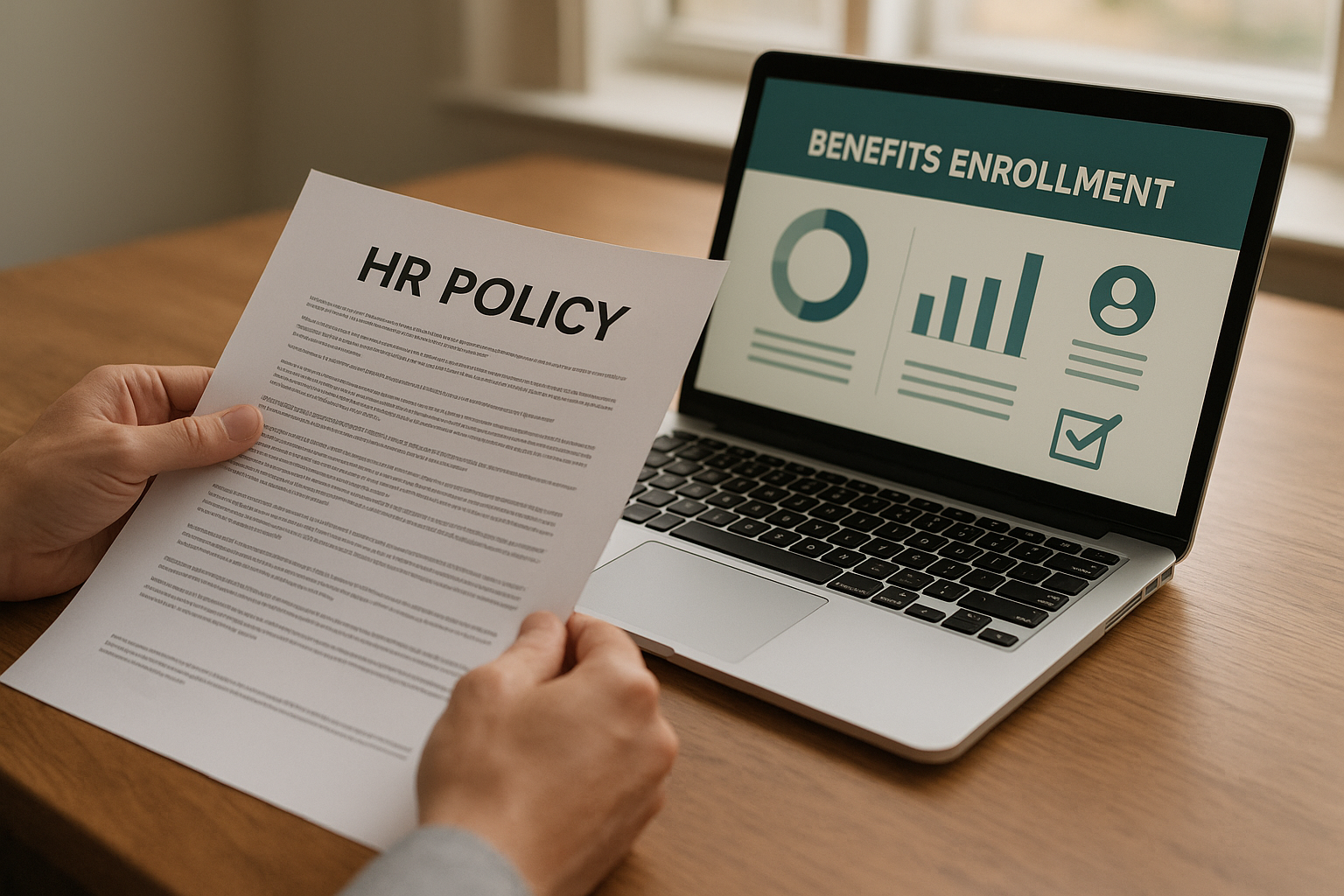
Documented policies and benefits oversight are core pieces of HR leadership for growing companies.
How to Build HR Leadership as You Scale
Building HR leadership does not have to mean hiring an entire department overnight. Instead, most growing companies follow a sequence similar to this one.
- Assess current HR gaps. Review policies, documentation, and compliance practices to find where informal habits create risk.
- Clarify ownership and decision rights. Decide who owns HR decisions—an internal hire, a manager, or an outsourced partner.
- Document core policies and processes. Put onboarding, leave, performance, and pay practices in writing.
- Build workforce planning into leadership meetings. Treat staffing and compliance deadlines as recurring agenda items.
- Bring in experienced HR support where gaps remain. Engage a consultant or ASO partner to fill specialized needs.
Notably, this sequence works whether a company has ten employees or two hundred. The scale of each step simply adjusts to match the organization’s size and complexity.
HR Leadership vs. Traditional HR Administration
It helps to be precise about terms. HR administration refers to transactional tasks: processing new hires, maintaining personnel files, tracking leave balances, and coordinating payroll inputs. HR leadership, meanwhile, sits a level above—deciding what those processes should be and why.
In practice, growing companies need both. Administration keeps daily operations running smoothly, while leadership ensures those operations align with where the business is headed. Soteria HR’s guide on which HR and admin services best support growing SMBs explains how the two functions typically divide in practice.
Choosing the Right HR Partner for Growing Organizations
Not every growing company needs a full internal HR department. Many instead choose outsourced support, an HR consultant, or an Administrative Services Organization (ASO)—a model that provides tailored HR guidance while the client remains the legal employer, avoiding co-employment. Soteria HR, based in Pasadena, California, serves employers across Los Angeles, Orange County, and nationwide through HR administration, consulting, benefits administration, and ASO support, with payroll coordination available alongside the broader relationship.
Before committing to a structure, it is worth reviewing which services fit your current growth stage. Soteria HR’s overview of HR services to consider during growth phases is a useful starting point, as is the company’s own main site for a full services overview.

Talking to an HR expert early often prevents larger HR leadership problems later.
Where to Start If You Are Unsure
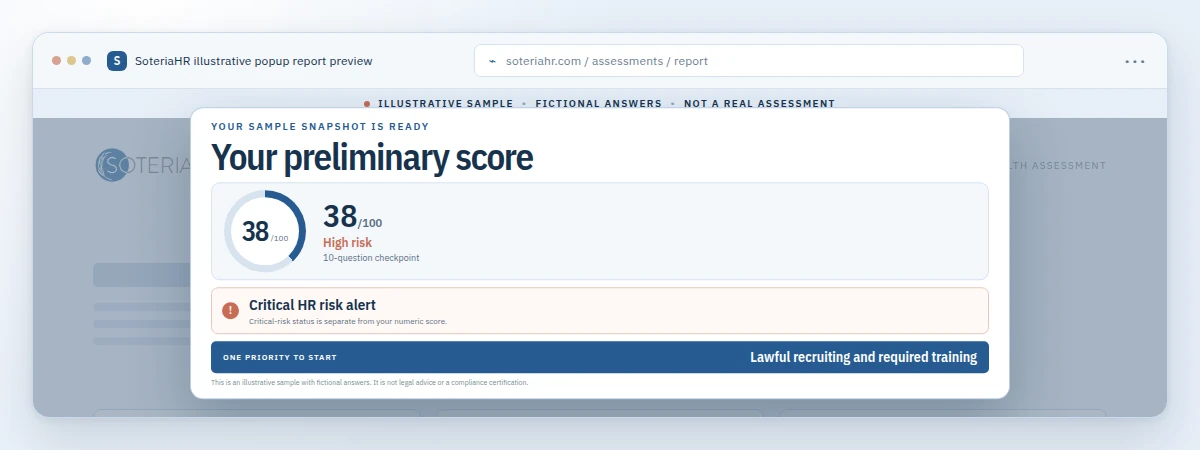
If none of this feels clear yet, that is a normal starting point. Many founders and operations leaders simply have not had time to step back and evaluate HR structure while running a growing business. A free, self-reported HR Health Assessment at soteriahr.ai offers a quick way to surface likely gaps, whether through the shorter Quick HR Check or the more detailed Complete assessment. Results are preliminary, not a compliance certification, but they often clarify what to prioritize next.
After that, a direct conversation tends to be the most efficient next step. Soteria HR’s promise is straightforward: we’ve got your back, so leadership can focus on growth instead of HR guesswork.
Frequently Asked Questions About HR Leadership for Growing Companies
What is HR leadership for growing companies?
HR leadership for growing companies is the practice of building proactive, structured human resources support that scales with headcount, risk, and complexity. It goes beyond basic administration to include workforce planning, compliance oversight, and culture-building.
How does HR leadership differ from HR administration?
HR administration handles day-to-day transactions like onboarding paperwork and leave tracking, while HR leadership sets strategy, anticipates risk, and guides decisions before problems occur. Growing companies typically need both working together.
Why do growing companies need HR leadership?
As headcount increases, companies cross legal thresholds for laws like the FMLA and ACA, and informal practices stop scaling. HR leadership helps founders stay compliant, retain talent, and avoid costly missteps during rapid growth.
When should a growing company hire its first HR leader?
Many organizations benefit from dedicated HR leadership once they approach 15 to 50 employees, since several federal employment laws begin applying in that range. However, companies with complex benefits or multi-state teams may need support earlier.
How much does outsourced HR leadership cost?
Outsourced HR leadership costs vary based on company size, service scope, and whether support includes benefits administration or payroll coordination. Most providers price engagements around the specific services selected rather than a flat industry rate.
What are common HR leadership mistakes growing companies make?
Common mistakes include delaying formal policies, relying on verbal agreements for pay and leave, and treating HR as purely administrative rather than strategic. These gaps often surface during audits, disputes, or rapid hiring.
How long does it take to build an effective HR leadership structure?
Building a workable HR leadership structure typically takes a few months, starting with an assessment of current gaps and ending with documented policies and processes. Timelines depend on company size and how many systems already exist.
What does an HR consultant do differently than an HR manager?
An HR consultant typically brings outside expertise across multiple industries and focuses on strategy, compliance review, and process design. An internal HR manager focuses on daily execution within one organization.
Can a small company outsource HR leadership instead of hiring in-house?
Yes, many small and mid-sized companies outsource HR leadership through consulting or ASO arrangements rather than hiring a full internal team. This approach provides experienced guidance while the client remains the employer of record.
What HR leadership skills matter most during rapid growth?
During rapid growth, the most valuable HR leadership skills are workforce planning, clear policy communication, and early risk identification. Leaders who can translate business priorities into workable HR processes keep growth on track.
How does an ASO support HR leadership without co-employment?
An Administrative Services Organization, or ASO, provides tailored HR support and guidance while the client company remains the legal employer. This differs from a PEO model and lets growing companies access HR leadership without sharing employment responsibility.
What is the first step to improving HR leadership at a growing company?
The first step is usually an honest assessment of current HR gaps, covering compliance, documentation, and workforce planning. From there, leaders can prioritize fixes and decide whether to build internally or bring in outside support.
Ready to talk through your situation? Call (800) 399-2458 to speak with an HR expert, or submit a consultation request to start the conversation.
Final Thoughts
Ultimately, HR leadership for growing companies is not about adding bureaucracy—it is about making sure structure keeps pace with growth instead of trailing behind it. Companies that invest in workforce planning, clear policies, and compliance awareness early tend to avoid the costly surprises that catch up with those who wait. Whether that means building an internal function or partnering with an outside team, the goal stays the same: support that grows with the organization. Soteria HR works with founders, CEOs, and operations leaders across Los Angeles, Orange County, and nationwide to build exactly that kind of HR leadership, so leadership teams can stay focused on growth with confidence.