Human resources policies examples can help you see what good workplace rules look like before you write your own. Whether you are building an employee handbook from scratch or refreshing outdated rules, reviewing real examples shows you how other employers structure attendance, conduct, and benefits policies. This guide walks through practical HR policy examples, explains why they matter, and offers a step-by-step process for creating your own. For growing companies without a dedicated HR department, having clear policies is not optional—it is protection against costly disputes and confusion.
Quick answer: Human resources policies examples are sample workplace rules covering attendance, conduct, leave, pay, safety, and technology use. Employers use them as a starting framework, then customize the language to match their own size, industry, and state requirements.
What Are Human Resources Policies?
Human resources policies are written rules that define how an organization expects employees and managers to behave, and how the company will respond to common workplace situations. In other words, HR policies are the foundation that turns a founder’s informal expectations into something consistent and defensible. Without them, two employees who break the same rule might receive very different treatment, which creates fairness problems and legal exposure.
Because policies set expectations before a problem happens, they protect both the employer and the workforce. Consequently, even small companies with fewer than ten employees benefit from putting a handful of core policies in writing early.
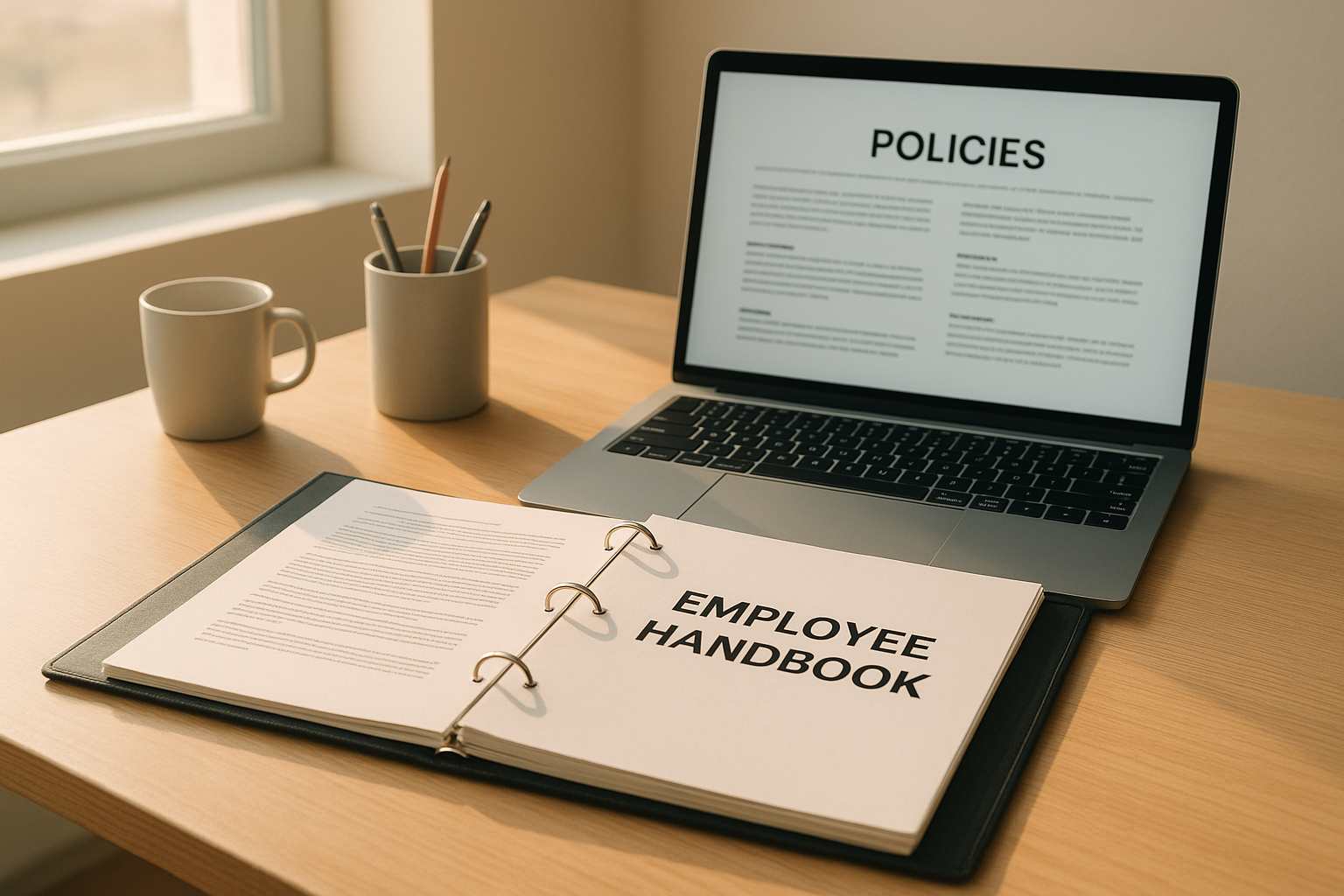
Reviewing human resources policies examples side by side with your current handbook highlights gaps quickly.
Why Human Resources Policies Examples Matter for Growing Businesses
As a company moves past 10, 50, or 250 employees, informal management style stops working. Specifically, managers across different departments start making inconsistent decisions about attendance, discipline, and leave requests unless policies spell out the rules. As a result, inconsistent enforcement becomes one of the most common sources of employee complaints and legal claims.
Furthermore, reviewing established human resources policies examples helps leadership avoid writing vague language that later causes confusion. For instance, a policy that says managers “may” approve remote work creates more disputes than one that lists specific eligibility criteria. In contrast, a detailed, example-based policy gives managers a clear standard to apply consistently.
According to the Society for Human Resource Management, organizations with clearly documented policies report fewer internal disputes and faster onboarding, because new hires understand expectations from day one. For a deeper look at what belongs in a complete manual, see this breakdown of what every HR manual should include.
Core HR Policy Examples Every Employer Should Have
Most complete handbooks build around a handful of categories. Below are human resources policies examples organized by the situations they address most often.
Attendance and Leave Policies
An attendance policy typically defines work hours, tardiness expectations, and the process for requesting planned absences. A leave policy, meanwhile, explains eligibility for sick time, vacation, bereavement, and legally protected leave such as family and medical leave.
Conduct and Workplace Behavior Policies
Conduct policies cover dress code, professional behavior, anti-harassment standards, and progressive discipline steps. Because harassment claims carry significant legal risk, this policy should align with current EEOC guidance and any applicable state training requirements.
Compensation and Benefits Policies
This category explains pay schedules, overtime eligibility, and how employees enroll in or change benefits. Benefits policies often reference ACA, COBRA, and Section 125 plan rules, so language should match the carrier’s actual plan documents rather than generic templates.
Safety and Technology Use Policies
Safety policies outline incident reporting and workplace hazard procedures, often guided by standards from the U.S. Department of Labor. Technology policies, meanwhile, cover acceptable device use, data security expectations, and remote work equipment rules. Together, these full policy categories form the backbone most businesses model when searching for HR policies and procedures examples to adapt.
How to Develop Effective HR Policies
Writing a policy is not simply copying a template. Instead, effective policies follow a deliberate process that connects legal requirements to day-to-day operations.
- Audit existing policies and gaps. Review your current handbook and informal practices to identify what is missing or outdated.
- Research applicable requirements. Confirm which policies are legally required for your state and headcount using current federal and state guidance.
- Draft in plain language. Write each rule so an employee without an HR background understands exactly what is expected.
- Review with leadership and counsel. Confirm the written policy matches actual practice before publishing it company-wide.
- Roll out with manager training. Distribute the handbook, collect signed acknowledgments, and train managers to apply policies consistently.
For a more detailed walkthrough of this process, this guide on how to develop HR policies step by step covers additional drafting considerations.

Collaborative review helps ensure new policies match day-to-day realities, not just legal templates.
Common Mistakes When Writing HR Policies
Even well-intentioned employers make avoidable errors. For example, many businesses copy a generic template without adjusting it to their state’s leave or wage laws. Others write policies once and never revisit them, which becomes risky as regulations change almost every year.
In addition, inconsistent enforcement undermines even a well-written policy. If one manager enforces a rule strictly while another ignores it, the policy itself becomes evidence of unequal treatment rather than protection. Therefore, manager training matters as much as the written word.
Updating HR Policies and Procedures as Your Business Grows
Policies that worked for a 15-person team often need revision once headcount reaches 50 or 100 employees, because new legal thresholds and operational needs kick in. Specifically, benefits requirements, leave entitlements, and reporting obligations frequently change at different employee-count milestones.
Consequently, a yearly policy review should be standard practice, not an afterthought. This resource on updating HR policies and procedures outlines a practical review cadence, while this companion piece on HR best practices for workforce development connects policy updates to broader workforce planning.
How Soteria HR Supports Policy Development
Soteria HR provides hands-on outsourced HR services for growing organizations in Los Angeles, Orange County, and nationwide. Rather than handing clients a generic template, Soteria’s HR consultants help draft, review, and roll out policies tailored to each organization’s size, industry, and risk profile.
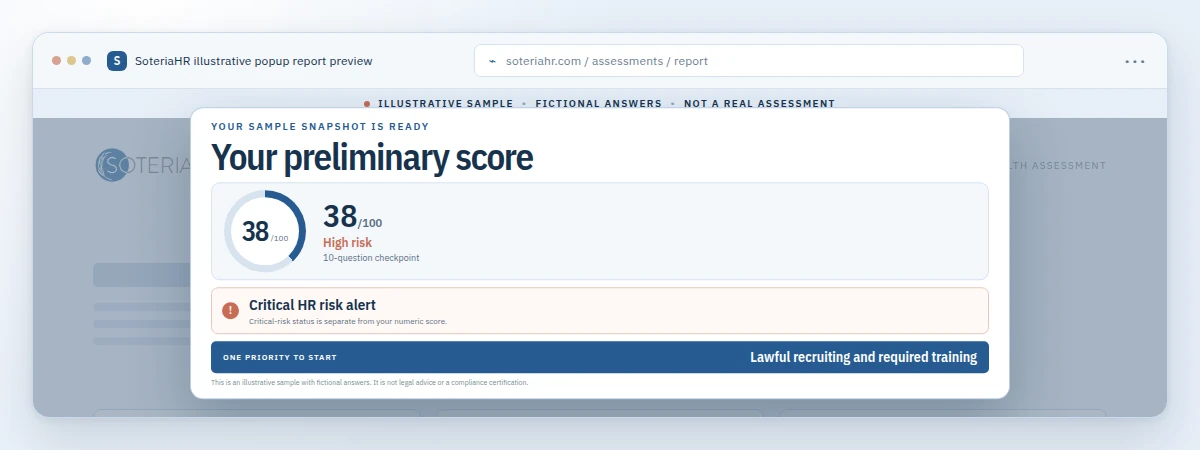
Through its Administrative Services Organization (ASO) option, Soteria delivers this support without co-employment—clients remain the employer and keep responsibility for employment decisions. For businesses unsure where their policies stand today, the free HR Health Assessment offers a quick starting point before a deeper conversation. You can also visit Soteria HR directly to learn more about ongoing HR consulting relationships.
As the saying goes at Soteria, “We’ve got your back—so you can focus on growth.” To talk through your current policies with an HR expert, call (800) 399-2458 or submit a consultation request.

Talking through real human resources policies examples with a consultant often reveals gaps leadership did not know existed.
Frequently Asked Questions
What are human resources policies examples?
Human resources policies examples are sample workplace rules—such as attendance, conduct, leave, and benefits policies—that show employers how to structure their own employee handbook. Reviewing examples helps businesses write clear, consistent policies instead of starting from a blank page.
How many HR policies does a small business need?
Most small businesses need between 10 and 20 core HR policies covering attendance, conduct, leave, pay, safety, and technology use. The exact number depends on state requirements, industry risk, and company size.
Why do human resources policies examples matter for compliance?
They matter because they reveal how other employers address legal requirements like anti-harassment training, leave entitlements, and wage rules. Using well-structured examples as a starting point reduces the risk of gaps that could lead to disputes or penalties.
What is the difference between HR policies and HR procedures?
A policy states the rule or expectation, while a procedure explains the step-by-step process for carrying it out. For example, a leave policy states eligibility, while the procedure explains how an employee requests time off.
How often should HR policies be updated?
HR policies should be reviewed at least once a year and updated whenever employment laws change or the business reaches a new headcount threshold. Many employers also update policies after a significant incident or leadership change.
How much does it cost to develop HR policies?
Costs vary based on whether a business writes policies internally, hires an attorney, or works with an outsourced HR provider. Ongoing HR consulting relationships often bundle policy development with broader administrative support, which can be more cost-effective than one-off legal drafting.
What are the most common HR policy mistakes employers make?
Common mistakes include copying generic templates without customizing them, failing to update policies after law changes, and writing rules that managers don’t consistently enforce. Inconsistent enforcement is often more legally risky than having no policy at all.
What should an employee handbook include?
An employee handbook should include attendance expectations, conduct standards, leave policies, compensation and benefits information, safety guidelines, and technology use rules. It should also include an acknowledgment page confirming the employee received and understood the policies.
Are HR policies legally required?
Some policies, such as anti-harassment and leave notices, are required under federal or state law depending on company size and location. Other policies are not legally mandated but are strongly recommended to set clear expectations and reduce liability.
How long does it take to create a complete HR policy manual?
A complete HR policy manual typically takes four to eight weeks to draft, review, and finalize when working with an HR consultant. Timelines depend on company complexity, the number of locations, and how quickly leadership reviews drafts.
What’s the difference between an HR policy and an ASO service?
An HR policy is a written rule governing workplace conduct, while an Administrative Services Organization (ASO) is a support model where a provider delivers HR administration without becoming a co-employer. The client remains the employer of record and retains responsibility for employment decisions.
How can outsourced HR help with policy development?
Outsourced HR providers help by drafting customized policies, keeping language current with regulatory changes, and training managers on consistent enforcement. This frees leadership to focus on operations instead of chasing compliance updates.
Conclusion
Reviewing human resources policies examples gives growing businesses a practical starting point for building fair, legally sound workplace rules. From attendance and conduct to benefits and safety, each policy category plays a role in reducing disputes and setting clear expectations. However, examples alone are not enough—policies need regular updates, manager training, and consistent enforcement to actually protect the organization.
If your current handbook feels outdated or incomplete, Soteria HR can help you turn these human resources policies examples into a customized manual that fits your team. Call (800) 399-2458, submit a consultation request, or start with the free HR Health Assessment to see where your policies stand today.