HR consulting for tech companies helps founders and leadership teams build the people practices that keep pace with rapid growth, funding rounds, and remote hiring. Unlike many traditional industries, technology companies often scale fast with lean teams and no dedicated HR department. As a result, questions about compliance, equity, and retention tend to pile up quickly. This guide explains what HR consulting for tech companies actually covers, why it matters at different growth stages, and how to decide between building an internal HR function or partnering with outside experts.
Quick answer: HR consulting for tech companies is specialized outside guidance on hiring, compliance, benefits, and culture, tailored to the fast growth and remote-first structure common in technology organizations. Most tech leaders start with an honest look at current gaps before deciding between an in-house hire or an outsourced partner such as Soteria HR.
What Is HR Consulting for Tech Companies?
HR consulting for tech companies is a service where outside HR professionals advise technology businesses on policies, compliance, hiring, and employee relations without becoming the employer of record. Consultants typically review existing practices, flag gaps, and build out the processes a growing engineering or product team needs.
Specifically, this can include employee handbooks, offer letter templates, performance review systems, and leave policies designed for distributed teams. In addition, consultants often help interpret wage and hour rules that affect exempt engineers, contractors, and remote staff working across several states.
For many startups, HR consulting begins as project-based support, such as building a handbook before a funding round’s due diligence. However, as headcount grows past 20 or 50 employees, support often shifts into ongoing HR administration or an ASO relationship. This progression mirrors the broader human resources consulting meaning for small and mid-sized businesses, though technology companies face unique pressure around rapid scaling and multi-state remote work.

HR consulting for tech companies often starts with a close review of existing hiring and compliance documents.
Why Tech Companies Need Specialized HR Support
Why does HR look different inside a technology company? For starters, tech employers often hire across multiple states or countries within months, which creates wage, tax, and benefits complexity that most industries don’t face at the same pace. According to the U.S. Bureau of Labor Statistics, employment in computer and information technology occupations is projected to grow much faster than the average for all occupations in the coming years. That demand fuels intense competition for talent, which raises the stakes on hiring practices and retention strategy.
Furthermore, many tech companies operate with flat structures and no full-time HR leader until they cross 50 or 100 employees. As a result, important tasks, like classifying contractors correctly under the Fair Labor Standards Act, often fall to a founder or finance lead who has other priorities.
In contrast, companies with dedicated tech company HR consulting support typically close these gaps proactively. For example, a closer look at which HR services are best for tech companies often reveals that compliance review deserves just as much attention as onboarding.
Where HR Consulting Helps Tech Companies Most
HR consulting for technology companies tends to concentrate effort in four practical areas. Each one carries real risk if it’s left unmanaged while a company scales.
Hiring and Scaling Teams
Scaling a technology team quickly raises the risk of inconsistent interviews, inequitable offers, and slow onboarding. HR consulting typically starts here, building structured scorecards, job leveling, and onboarding checklists that keep pace with multiple open roles. Consequently, hiring managers spend less time improvising and more time closing qualified candidates.
Compliance and Risk Management
Remote and distributed hiring means tech companies often owe compliance attention in several states at once, covering wage notices, paid sick leave, and final pay rules. Similarly, correctly classifying exempt engineers and 1099 contractors protects against costly misclassification claims. An HR consultant reviews these details regularly, rather than waiting for an audit to force the issue.
Culture, Performance, and Retention
Above all, culture and retention shape whether a scaling startup keeps its best engineers through the next funding stage. HR consulting for technology companies often includes performance review design, manager training, and structured feedback loops that reduce turnover. In particular, documented expectations protect both the employee and the company if a termination is later questioned.
Benefits and Compensation Design
Benefits packages at tech companies frequently include equity, flexible PTO, and remote work stipends alongside traditional health coverage. Therefore, benefits administration support helps leaders communicate these offerings clearly and track obligations such as ACA reporting and COBRA notices. As a result, employees understand their total compensation and the company reduces administrative errors.
How to Build an HR Strategy for a Growing Tech Company
Building an HR strategy for a growing tech company does not need to happen all at once. Instead, most leaders find it easier to work through a short sequence of steps, starting with an honest assessment of current gaps.
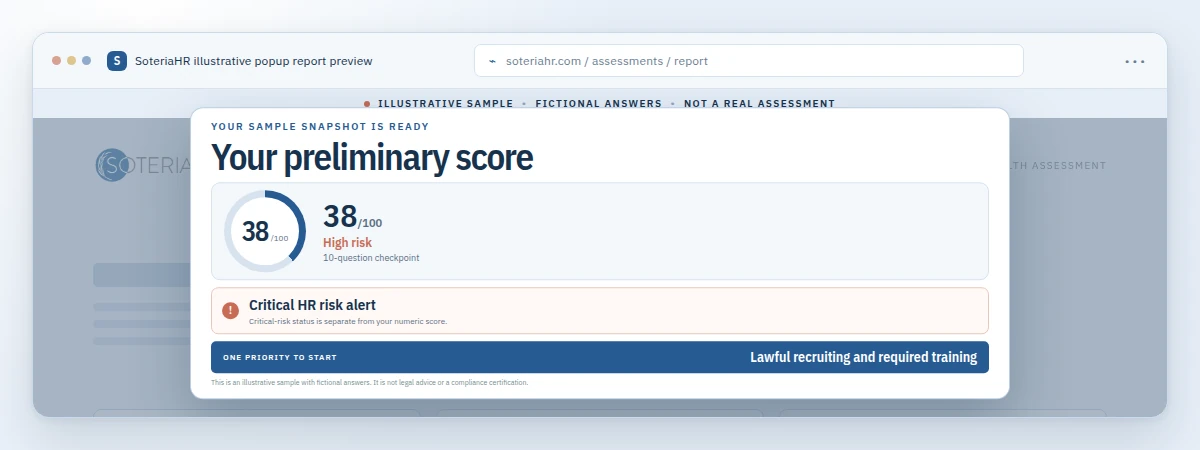
- Assess current HR gaps. Review hiring, compliance, benefits, and documentation against your current headcount and growth plans; a short tool such as the free HR Health Assessment can surface priorities within about ten minutes.
- Document core policies. Create or update an employee handbook, offer letter templates, and leave policies that reflect every state where you employ staff, since remote hiring often outpaces policy updates.
- Clarify classification and pay practices. Confirm which roles qualify as exempt under wage and hour law, and review contractor agreements so engineering and support staff are classified correctly from the start.
- Standardize hiring and onboarding. Build interview scorecards, structured offer processes, and a consistent onboarding checklist so every new hire gets the same foundation, regardless of which manager is hiring.
- Choose the right level of ongoing support. Decide whether an internal HR hire, a part-time consultant, or an ongoing ASO partnership best matches your headcount, budget, and growth timeline.

A short gap assessment is often the first practical step in building an HR strategy for a growing company.
Outsourced HR Consulting for Tech Startups vs. an In-House Team
Many founders eventually face a choice between hiring an internal HR leader and working with outsourced HR consulting for tech startups. Neither option is universally right; the better fit depends on headcount, complexity, and budget.
An internal hire offers daily availability and deep company knowledge. However, a single HR hire at a 30-person startup often struggles to cover compliance, benefits, and culture work at the same time. In contrast, an outsourced relationship brings a broader team of specialists, which is often more cost-effective below roughly 100 to 150 employees.
Notably, this comparison isn’t unique to tech. A look at how HR consulting helps a manufacturing company shows similar tradeoffs around compliance complexity and leadership bandwidth, even though the industries look different day to day. Likewise, the resource management consulting principles that strengthen any team apply directly to engineering and product organizations working through rapid growth.
Signs Your Tech Company Needs HR Consulting Now
How do you know it’s time to bring in outside help? A few patterns tend to show up consistently among growing technology companies.
- Hiring has outpaced your documented policies and offer process.
- Remote employees are spread across several states without updated handbooks.
- Turnover has increased, but exit interviews aren’t capturing why.
- Leadership is unsure which roles are correctly classified as exempt.
- Benefits enrollment or COBRA notices have been missed or delayed.
If two or more of these sound familiar, the specialized HR resources available for industries like tech and manufacturing can offer a useful starting point for comparing what’s standard versus what needs immediate attention.

Consistent feedback conversations are one sign that a growing company’s HR foundation is holding up well.
How Soteria HR Supports Growing Tech Companies
Soteria HR provides hands-on outsourced HR support for growing organizations, including technology companies without a full internal HR department. Based in Pasadena, California, the team works with employers across Los Angeles, Orange County, and nationwide, with a focus on organizations with roughly 10 to 250 employees.
Core support includes HR administration, HR consulting, and benefits administration, plus an ASO option that delivers tailored HR support without co-employment; clients remain the employer and keep responsibility for employment decisions. Payroll coordination complements the broader relationship, helping information flow smoothly between your systems and your provider.
If your engineering, product, or operations team has grown faster than your HR foundation, it may help to talk to an HR expert about where to start. You can call (800) 399-2458, submit a consultation request, or review Soteria’s full approach at soteriahr.com before your next hiring push.
Frequently Asked Questions About HR Consulting for Tech Companies
What is HR consulting for tech companies?
HR consulting for tech companies is outside guidance on hiring, compliance, benefits, and employee relations, tailored to the fast growth and distributed teams common in technology organizations. It typically includes policy development, compliance review, and ongoing administrative support as headcount grows.
How is HR for tech companies different from other industries?
Tech companies often hire remotely across many states within months, add equity-based compensation, and grow headcount faster than most industries. This creates compliance and classification questions that need attention earlier than a typical small business might face.
When should a startup hire its first HR person or consultant?
Many startups bring in HR support somewhere between 15 and 30 employees, once a founder can no longer manage hiring, policies, and compliance alongside their core role. Earlier support can also help if remote hiring spans multiple states.
What does an HR consultant actually do day to day?
An HR consultant typically reviews handbooks, offer letters, and leave policies, audits worker classifications, and helps managers handle performance and employee relations issues. The scope is usually tailored to what a specific company needs at its current size.
How much does HR consulting cost for a small tech company?
Cost varies widely based on scope, ranging from a one-time handbook project to an ongoing monthly retainer or ASO relationship. A consultation is usually the fastest way to get pricing specific to your headcount and priorities.
Can HR consulting help with remote and multi-state hiring?
Yes, this is one of the most common reasons tech companies seek HR consulting. Consultants help track wage notice requirements, leave laws, and benefits rules that differ from state to state.
What’s the difference between HR consulting and an ASO?
HR consulting is often project-based advice, such as building a handbook or reviewing compliance once. An ASO, or Administrative Services Organization, provides ongoing HR administration without co-employment, while the client remains the employer of record.
Do tech startups need an employee handbook before their first hire?
It’s generally a good idea to have basic policies in place even with a handful of employees. A simple, accurate handbook early on is easier to maintain than building one later under pressure.
How long does it take to fix HR gaps at a growing tech company?
Timelines depend on how many gaps exist and their complexity, but an initial assessment can often be completed in about ten to twelve minutes. Addressing priority issues, such as classification or missing policies, usually takes a few weeks of focused work.
What are common HR mistakes tech startups make?
Frequent mistakes include misclassifying contractors, giving inconsistent offer terms, and failing to update policies as remote hiring expands into new states. These gaps often surface during due diligence or an employee complaint.
Is outsourced HR consulting right for a 20-person tech company?
For many companies at this size, outsourced HR consulting for tech companies is more cost-effective than a full-time HR hire, since it provides broader expertise without a single full salary. It also scales more easily as headcount changes.
How can a tech company start improving its HR practices today?
A practical first step is completing a short HR gap assessment to see where policies, compliance, or benefits need attention. From there, a conversation with an HR expert can help prioritize what to fix first.
In short, HR consulting for tech companies gives fast-growing technology organizations the structure, compliance protection, and culture support that often get skipped during rapid hiring. Whether you handle this in-house or bring in an outside partner, addressing gaps early is almost always less costly than fixing them after a complaint or audit. If you’re ready to see where your organization stands, consider starting with Soteria HR’s free HR Health Assessment at soteriahr.ai, or call (800) 399-2458 to talk with an HR expert about a plan that fits your growth stage.