Sustainable workforce practices help growing companies retain skilled employees, control costs, and build a culture that holds up under pressure. For founders, CEOs, and HR leaders managing rapid growth, these practices matter because turnover, burnout, and compliance gaps can quietly drain resources. In this guide, we will break down what sustainable workforce practices actually mean, why they matter, and how to put them into action with practical, HR-backed steps.
Quick answer: Sustainable workforce practices are HR and management approaches that support employee wellbeing, fair compensation, manageable workloads, and compliant administration over the long term. The goal is a workforce that remains productive and loyal as the business grows, rather than one that burns out or churns through staff.
What Are Sustainable Workforce Practices?
Sustainable workforce practices are HR and management approaches designed to support employees’ wellbeing, growth, and productivity over the long term rather than producing short-term wins that lead to burnout or turnover. They include fair compensation, manageable workloads, clear career paths, and compliant HR administration that keeps the organization stable as it scales. In short, sustainability in this context means building systems that work for both people and the business for years, not just this quarter.
However, sustainable workforce practices are not a single program or policy. Instead, they are an ongoing commitment woven into hiring, compensation, benefits, compliance, and daily management decisions. Specifically, they touch everything from how a company writes its employee handbook to how managers deliver feedback.

Building sustainable workforce practices starts with open collaboration between leadership and staff.
Why Workforce Sustainability Matters for Growing Businesses
As a company grows past its first 10 to 50 employees, informal HR habits that once worked usually stop scaling. Therefore, leaders need structured, repeatable processes instead of ad hoc decisions. Without them, inconsistent treatment of employees can lead to complaints, compliance risk, and costly turnover.
The Society for Human Resource Management (SHRM), a widely cited industry research organization, has long estimated that replacing an employee can cost the equivalent of six to nine months of that employee’s salary when recruiting, onboarding, and lost productivity are factored in. As a result, even a modest improvement in retention can produce a meaningful return. For a deeper look at the connection between turnover and cost, see our guide on reducing staff turnover.
In addition, sustainable practices support productivity. Teams that are not constantly retraining new hires or covering for burned-out colleagues tend to move faster. Our article on how HR can elevate workplace productivity explores this connection in more detail.
Core Components of a Sustainable HR Strategy
A sustainable HR strategy typically rests on four pillars. Each pillar reinforces the others, so gaps in one area tend to show up as problems elsewhere.
Fair Compensation and Benefits
Pay and benefits that lag the market are one of the most common reasons employees leave. For that reason, periodic benchmarking and clear communication about benefits enrollment, eligibility, and coverage help employees feel valued rather than guessing about their total compensation.
Manageable Workloads and Flexibility
Consistently overloaded teams burn out, even when pay is competitive. Consequently, reviewing staffing ratios and offering reasonable scheduling flexibility, where the role allows, protects both performance and retention.
Compliance and Risk Management
Federal agencies such as the U.S. Department of Labor and the Equal Employment Opportunity Commission (EEOC) enforce wage, hour, and anti-discrimination rules that apply regardless of company size thresholds in many cases. Staying current on these requirements, including applicable state rules, reduces legal exposure as headcount grows.
Culture and Communication
Finally, culture holds the other pillars together. Clear, two-way communication between managers and staff builds trust and surfaces problems early. Our guide on building and sustaining a positive workplace culture offers practical steps for this pillar specifically.
| Pillar | Primary Focus | Example Action |
|---|---|---|
| Compensation and Benefits | Fairness and transparency | Annual pay and benefits benchmarking |
| Workload and Flexibility | Preventing burnout | Reviewing staffing ratios quarterly |
| Compliance | Reducing legal risk | Updating handbooks to current law |
| Culture and Communication | Building trust | Regular manager-employee check-ins |
How to Build Sustainable Workforce Practices in Your Organization
Building sustainable workforce practices does not require an overnight overhaul. Instead, most employers make steady progress by following a clear sequence.
- Audit current HR practices. Review existing policies, employee records, and compliance documentation to identify gaps in onboarding, leave administration, and recordkeeping before making changes.
- Establish fair compensation and benefits. Benchmark pay against market data and review benefits offerings so employees feel fairly compensated, which directly supports long-term retention and morale.
- Build manageable workloads. Evaluate staffing levels and workload distribution across teams to prevent burnout, since overworked employees are significantly more likely to leave within a year.
- Strengthen compliance and documentation. Update employee handbooks, leave policies, and training records to reflect current federal and state requirements, reducing legal exposure as the company grows.
- Invest in communication and culture. Train managers on feedback and conflict resolution while creating regular channels for employee input, which strengthens trust and workplace culture over time.
- Monitor and adjust with data. Track turnover, engagement, and compliance metrics quarterly, then adjust policies and practices based on what the data actually shows.
For a broader framework on turning these steps into day-to-day operations, see our article on optimizing workforce HR best practices.

Reviewing current policies is often the first practical step toward sustainable workforce practices.
Common Mistakes That Undermine Long-Term Workforce Stability
Even well-intentioned employers stumble in predictable ways. For example, some treat HR purely as paperwork processing rather than a strategic function tied to retention and risk management. Others skip manager training entirely, which leaves frontline leaders unprepared to handle conflict or feedback conversations.
In contrast, companies that revisit compensation, workload, and policy consistency on a regular schedule tend to catch small problems before they become expensive ones. Similarly, failing to document decisions consistently can create compliance exposure that surfaces months or years later during an audit or dispute. Our guide on HR strategies that help small businesses build a positive culture covers several of these pitfalls in more depth.
Measuring the Impact of Sustainable Workforce Practices
Above all, sustainable workforce practices should be measurable, not just aspirational. Common indicators include voluntary turnover rate, average time-to-fill for open roles, employee satisfaction survey scores, and the number of compliance incidents or complaints logged per quarter.
Tracking these metrics over several quarters, rather than a single month, gives a more accurate picture of whether changes are working. Furthermore, comparing metrics before and after specific policy updates, such as a new onboarding process or revised benefits package, helps leaders see which investments actually move the needle.
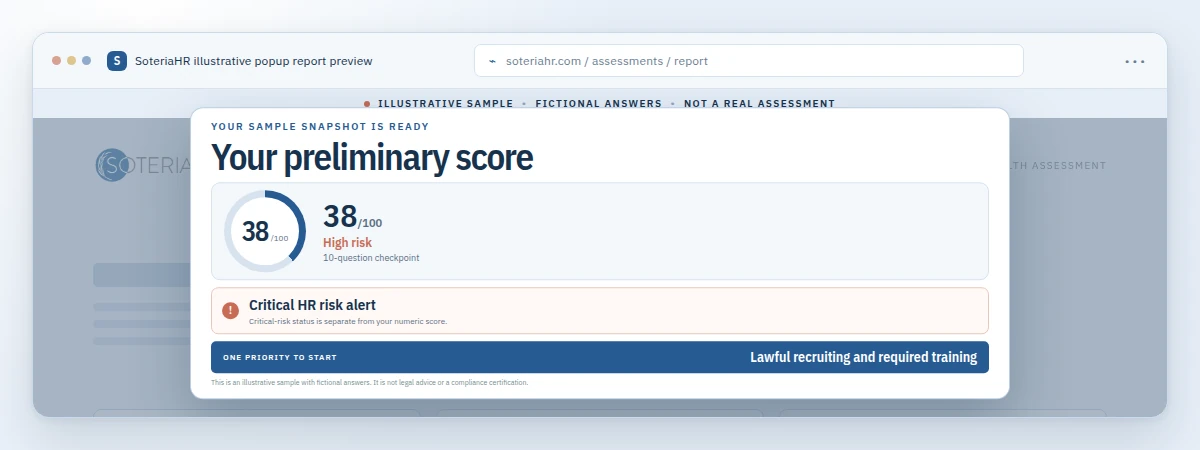
Need a starting point? Soteria HR’s free HR Health Assessment offers a quick 10-question check or a more detailed 40-question review to highlight gaps in your current workforce practices. Results are self-reported and preliminary, not a compliance certification, but they can guide a focused conversation with an HR professional. Visit soteriahr.ai to begin.

Regular feedback conversations support sustainable workforce practices by catching issues early.
Frequently Asked Questions About Sustainable Workforce Practices
What are sustainable workforce practices?
Sustainable workforce practices are HR approaches that support employees’ wellbeing, growth, and productivity over the long term instead of chasing short-term fixes. They typically include fair pay, manageable workloads, compliant policies, and consistent communication.
How do sustainable workforce practices reduce turnover?
Sustainable workforce practices reduce turnover by addressing the root causes of employee exits, such as unclear expectations, burnout, and inconsistent policies. When employees feel supported and fairly treated, they are more likely to stay and grow with the organization.
Why do growing businesses need sustainable HR strategies?
Growing businesses need sustainable HR strategies because rapid hiring without structure often creates compliance gaps and inconsistent employee experiences. A scalable HR foundation helps leaders manage growth without constant firefighting.
What is the difference between sustainable workforce practices and traditional HR management?
Traditional HR management often focuses on reactive, transactional tasks like processing paperwork. Sustainable workforce practices take a longer view, aligning policies, benefits, and culture with the organization’s future growth and employee retention goals.
How much does it cost to implement sustainable workforce practices?
Costs vary widely depending on company size, current HR infrastructure, and whether the work is handled internally or through an outsourced partner. Many employers find that the cost of proactive HR support is lower than the cost of repeated turnover and compliance corrections.
How long does it take to see results from sustainable workforce practices?
Some improvements, like clearer policies and faster onboarding, can show results within a few months. Deeper outcomes, such as lower turnover and stronger engagement, usually take two to four quarters of consistent effort to become measurable.
What are common mistakes companies make with workforce sustainability?
Common mistakes include treating HR as purely administrative, ignoring manager training, and failing to review compensation or workload regularly. These gaps often surface as turnover spikes or compliance complaints later.
What HR policies support sustainable workforce practices?
Policies that support sustainability include clear employee handbooks, consistent leave administration, documented performance expectations, and regular benefits reviews. These policies create predictability for both employees and management.
How can small businesses without an HR department adopt sustainable workforce practices?
Small businesses without an internal HR department can adopt sustainable workforce practices by partnering with an outsourced HR provider for administration, compliance, and benefits support. This gives leaders professional guidance without the cost of building a full internal team.
Does outsourcing HR help with sustainable workforce practices?
Outsourcing HR can help because it brings structured processes, compliance knowledge, and consistent policy administration to organizations that lack internal HR capacity. An Administrative Services Organization (ASO) arrangement, for example, provides this support while the client remains the employer of record, keeping accountability clear.
What role does employee benefits play in sustainable workforce practices?
Benefits play a central role because competitive, well-administered benefits directly influence whether employees choose to stay. Clear communication about enrollment, eligibility, and coverage also reduces confusion and administrative errors.
How do you measure the success of sustainable workforce practices?
Success can be measured through metrics like turnover rate, time-to-fill open roles, employee satisfaction scores, and compliance incident counts. Tracking these numbers over several quarters shows whether workforce practices are actually improving.
Final Thoughts
Sustainable workforce practices are not a one-time project; they are an ongoing commitment to fair pay, manageable workloads, solid compliance, and open communication. Consequently, the employers who treat these practices as a continuous process, rather than a checklist, tend to see steadier retention and fewer compliance surprises over time. Whether you are formalizing HR for the first time or refining an existing team’s approach, small, consistent improvements compound into real stability.
If you are ready to see where your organization stands, Soteria HR can help. As a Pasadena-based outsourced HR provider serving Los Angeles, Orange County, and employers nationwide, Soteria HR offers hands-on HR administration, consulting, benefits administration, and ASO support tailored to organizations without a full internal HR department, as well as teams that already have one. Talk to an HR expert by calling (800) 399-2458 or submitting a consultation request, and build sustainable workforce practices with a partner who, true to Soteria’s promise, has your back so you can focus on growth.