
HR support for startups is the hands-on guidance, policies, and administrative help that early-stage companies rely on to hire, pay, and manage employees properly from day one. Without it, founders often find themselves making employment decisions on instinct instead of informed practice, which can lead to costly missteps. As a company moves from its first hire to its first twenty employees, the stakes around classification, pay, and documentation grow quickly.
Quick answer: Startups generally need HR support that covers core administration, basic compliance, payroll coordination, and benefits once the team grows past a handful of employees. The right level of support depends on headcount, industry, and whether anyone internally already owns HR tasks.
What Is HR Support for Startups?
In short, HR support for startups covers the day-to-day and strategic work needed to manage a workforce legally and fairly. This includes maintaining employee records, coordinating onboarding and offboarding, keeping policies current, and tracking leave requests accurately.
For example, a 15-person software startup may need someone to handle new-hire paperwork, update its handbook, and answer questions about paid time off. In contrast, a 60-person company might also need help with performance processes and benefits renewals. Consequently, the scope of support should match the company’s actual stage rather than a generic template.

Founders and team leads reviewing HR priorities together as the company grows.
Why Startups Need HR Help Earlier Than They Expect
Many founders assume HR can wait until the company hits a certain size. However, employment laws apply from the very first hire, regardless of company size. The U.S. Department of Labor enforces wage and hour rules that apply to employers of nearly any size, and the EEOC oversees anti-discrimination protections that can apply once a company reaches a modest employee count.
In addition, according to the U.S. Small Business Administration, small businesses with fewer than 500 employees make up the vast majority of U.S. employers, meaning most startups fall squarely into categories where these rules already apply. As a result, waiting until a crisis forces the issue usually costs more than building support early. Our guide on HR strategies that work best for startups walks through how founders can sequence this work sensibly.
Common HR Challenges for Early-Stage Companies
Startups frequently struggle with worker classification, inconsistent policies, and informal pay practices that were never written down. Similarly, leave tracking and benefits communication often fall through the cracks when no one owns them full time. These gaps rarely cause problems immediately, but they tend to surface during a termination, an audit, or rapid hiring.
Core Components of HR Support for Growing Startups
Effective HR support for growing startups generally includes a few consistent building blocks, even as the specific mix shifts with company size. First, HR administration covers records, onboarding, and policy upkeep. Second, HR consulting addresses workforce planning, culture, and performance questions that come up as teams scale. Third, benefits administration manages enrollments, carrier coordination, and applicable requirements such as COBRA notices.
Payroll coordination often complements this work, since pay accuracy depends on clean HR data. For a broader look at how these pieces fit together, see what HR support for business is and why it matters.
In-House vs. Outsourced vs. ASO Support
Startups typically choose among three paths, and each one suits a different stage of growth.
| Model | Best Fit | Trade-Off |
|---|---|---|
| In-house HR hire | Larger, stable teams | Higher fixed cost, slower to scale down |
| Project-based consulting | Specific, time-limited needs | Not built for ongoing administration |
| ASO partnership | Growing teams needing ongoing support | Requires a collaborative relationship |
With an ASO, the startup remains the employer of record and keeps responsibility for employment decisions and related obligations, while gaining tailored administrative support. This differs from a PEO arrangement that involves co-employment.

Reviewing policy documents is often the first practical step in setting up HR support for startups.
How to Build HR Support for Your Startup
Building dependable HR support does not require a large budget upfront. Instead, it works best as a sequence of practical steps that match the company’s current size.
- Assess current HR gaps and risks. Review existing employment records, worker classifications, and policies to identify missing documentation or compliance risks before expanding further.
- Put core compliance documents in place. Create or update an employee handbook, offer letter templates, and required workplace postings for a consistent foundation.
- Set up payroll and benefits workflows. Coordinate payroll processing with benefits enrollment so pay, deductions, and carrier details stay accurate.
- Choose a support model that fits your stage. Decide whether in-house HR, consulting, or an ASO relationship best matches your headcount and budget.
- Partner with an HR expert and review regularly. Schedule periodic check-ins to catch new requirements as the company adds employees or enters new states.
For more on sequencing these decisions, our article on choosing the right HR services for startups breaks down what to prioritize first.
Choosing the Right HR Partner for a Startup
Not every HR provider fits every startup. Therefore, it helps to ask how a provider customizes its approach rather than applying a single package to every client. A good partner should be able to explain how support grows alongside the company, from basic administration to more involved benefits and training work.
Soteria HR, based in Pasadena, California, works with employers across Los Angeles, Orange County, and nationwide, with a particular focus on organizations in the 10 to 250 employee range. The team provides HR administration, HR consulting, and benefits administration, along with an ASO option for companies that want tailored support without co-employment. Founders can start with a free HR Health Assessment to see where gaps might exist before a deeper conversation.
For additional context on finding support quickly as needs change, see how to find the right HR support fast, and for broader resource lists, visit practical HR resources for growing companies.
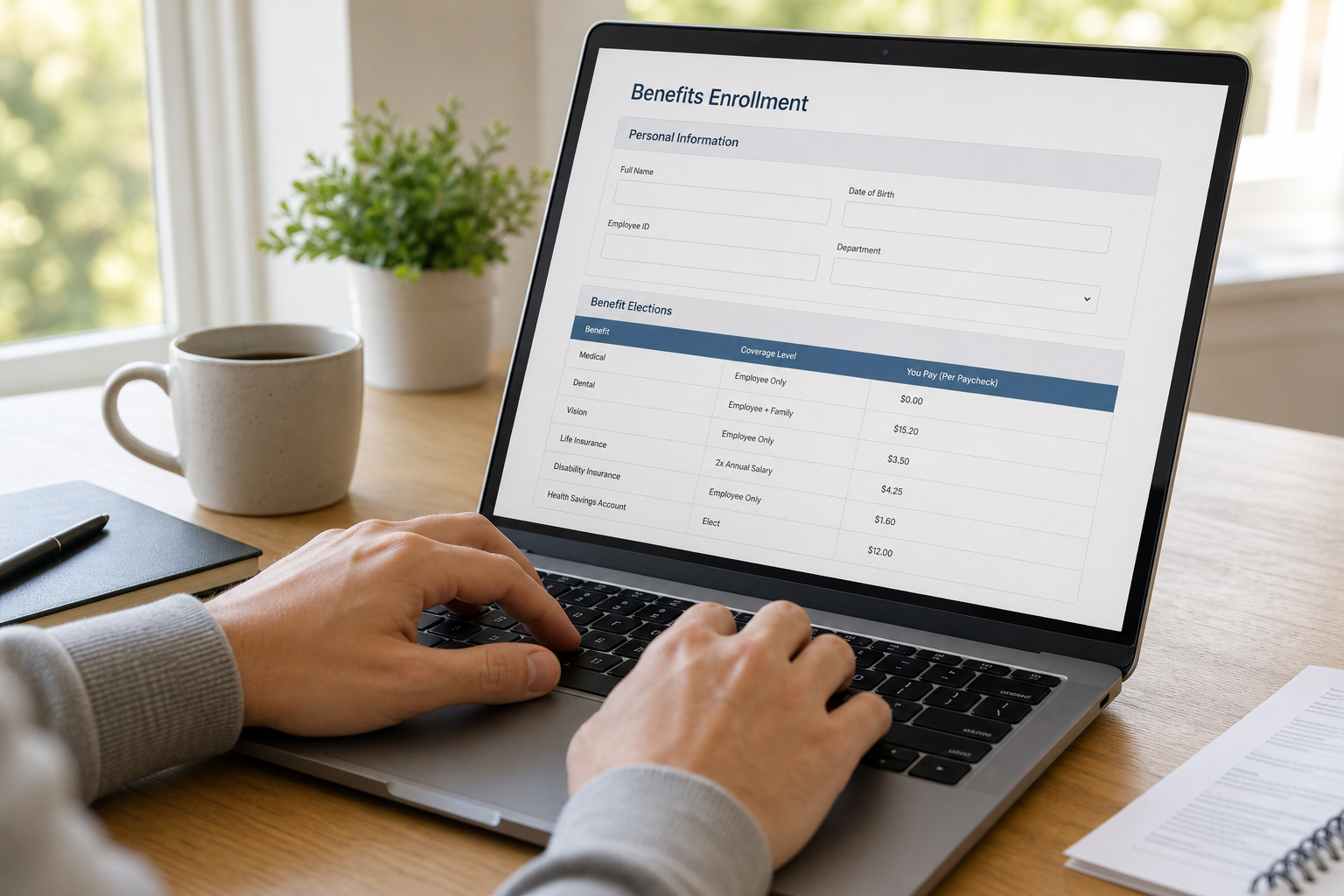
Benefits administration is one of the practical tasks included in ongoing HR support.
When Should a Startup Bring in Outside HR Help?
There is no single headcount that triggers the need for outside help. However, common signals include a founder spending several hours a week on HR tasks, confusion about exempt versus non-exempt classifications, or an upcoming expansion into a new state. In particular, hiring across state lines often introduces new compliance requirements that a startup has not dealt with before.
If any of these signals sound familiar, a short consultation can clarify what is actually needed before committing to a long-term arrangement. Reaching out early tends to be far less disruptive than fixing a problem after it has already affected an employee or a filing deadline.
Frequently Asked Questions About HR Support for Startups
What is HR support for startups?
HR support for startups is the guidance, policies, and administrative help that early-stage companies use to hire, pay, and manage employees properly. It typically covers onboarding, recordkeeping, compliance basics, and benefits coordination.
When should a startup get HR support?
Most startups benefit from HR support as soon as they make their first hire, since employment laws apply immediately. Waiting until problems appear often costs more time and money than setting up support early.
How much does outsourced HR support cost for a startup?
Costs vary based on headcount, services needed, and how customized the engagement is, so there is no single flat rate. A consultation is the most reliable way to get pricing that matches your startup’s actual scope.
What is the difference between an HR consultant and an ASO for a startup?
An HR consultant advises on specific issues or projects, while an Administrative Services Organization, or ASO, provides ongoing, hands-on HR administration without co-employment. With an ASO, the startup remains the employer of record and keeps responsibility for employment decisions.
Does a startup need an employee handbook?
Yes, an employee handbook helps a startup set clear expectations and apply policies consistently, which reduces disputes. Even small teams benefit from written policies on leave, conduct, and pay practices.
Can a small startup outsource payroll and HR together?
Yes, many startups coordinate payroll alongside broader HR administration so records, benefits, and pay stay aligned. This reduces duplicate data entry and catches mismatches between HR and payroll systems.
What HR compliance mistakes do startups commonly make?
Common mistakes include misclassifying workers, skipping required postings, and failing to track leave accurately. These issues often go unnoticed until an audit, complaint, or termination brings them to light.
How does benefits administration work for a startup?
Benefits administration for a startup covers plan enrollment, terminations, carrier coordination, and employee communication. It also includes support for applicable requirements such as COBRA notices and plan documentation where they apply.
Is ASO the same as a PEO?
No, an ASO and a PEO are not the same, even though both provide outsourced HR support. A PEO typically involves co-employment, while an ASO lets the startup remain the sole employer while still receiving tailored HR support.
How long does it take to set up HR support for a new company?
Basic HR support, such as core policies and payroll coordination, can often be set up within a few weeks. A more complete setup, including benefits and training programs, may take one to two months depending on complexity.
What HR support do startups need before their first hire?
Before the first hire, a startup generally needs an employment classification review, a basic offer letter template, and a plan for payroll setup. Registering for required state and federal employer accounts is also essential at this stage.
How do I choose the right HR partner for my startup?
Look for a partner that customizes support to your size and industry rather than offering a one-size-fits-all package. Ask about their experience with companies your size, their response times, and how they handle compliance updates.
Key Takeaways
Ultimately, HR support for startups is not a luxury reserved for later-stage companies; it is a practical safeguard that protects founders and employees from day one. Whether a company needs basic administration, deeper consulting, or an ongoing ASO relationship, the right support should scale alongside the team rather than get bolted on after a problem appears. Soteria HR’s promise is simple: we’ve got your back, so founders can focus on growth instead of paperwork.
If you are unsure where your startup stands, the free HR Health Assessment offers a quick, self-reported starting point. For a more detailed conversation about HR support for startups tailored to your team, call (800) 399-2458 or talk to an HR expert at Soteria HR today.