Strategic HR for mid-sized companies means treating people operations as a growth lever instead of a stack of paperwork. Once an organization crosses roughly 10 to 250 employees, however, the old habit of handling HR reactively starts to create real risk. Growing companies need structured policies, consistent compliance practices, and a plan for scaling culture alongside headcount. This guide explains what strategic HR looks like at this stage, why it matters, and how to build it, whether in-house or through an experienced outsourced partner.
Strategic HR for mid-sized companies is the proactive management of hiring, compliance, benefits, and workforce planning so HR supports business goals instead of only reacting to problems. For companies with roughly 10 to 250 employees, this typically combines internal leadership with outsourced expertise to cover gaps without the cost of a full in-house department.
What Is Strategic HR for Mid-Sized Companies?
Strategic HR for mid-sized companies is the shift from transactional paperwork to a deliberate plan for people, policy, and compliance. Instead of reacting to each hire, complaint, or benefits question as it arises, leadership builds systems that anticipate growth before it creates pressure. This typically blends three functions: HR administration (day-to-day records and onboarding), HR consulting (workforce planning and employee relations), and benefits administration (enrollment, carrier coordination, and plan compliance).
Specifically, strategic HR asks a different set of questions than administrative HR alone. Instead of only asking “is this file complete,” it asks “does our current policy support where we want this company to be in two years.” As a result, decisions about hiring, pay structure, and benefits get made with the company’s trajectory in mind, not just this week’s to-do list.

Structured planning conversations are the starting point for strategic HR for mid-sized companies.
Why Growing Organizations Need a Strategic HR Partner
Companies that grow past roughly 50 or 100 employees often discover that informal HR practices, a shared spreadsheet, a founder handling complaints personally, start breaking down. In contrast, companies with structured HR tend to catch compliance issues earlier and resolve them before they escalate. According to the Society for Human Resource Management (SHRM), the average cost-per-hire now exceeds $4,700, and replacing a salaried employee can cost the equivalent of six to nine months of that role’s pay once lost productivity and training are included.
Therefore, the financial case for strategic HR is not abstract. Every unfilled role, every mishandled leave request, and every outdated policy carries a measurable cost. A strategic HR partner helps mid-sized companies reduce that cost by building consistent practices before problems multiply.
Signs Your Company Has Outgrown Basic HR Support
- Policies exist only informally, or in a founder’s memory, rather than in a written handbook.
- Turnover has increased, but nobody is tracking why employees are leaving.
- Benefits enrollment is handled manually, with no consistent compliance review.
- Leadership feels uncertain about wage, leave, or classification requirements.
- One person is responsible for HR alongside several other full-time duties.
Core Components of a Strategic HR Function
A mature strategic HR function usually rests on four pillars. First, HR administration covers daily operations: employee records, onboarding, offboarding, leave coordination, and payroll coordination. Second, HR consulting translates leadership priorities, recruiting improvements, performance expectations, culture goals, into workable processes. Third, benefits administration manages enrollments, terminations, carrier coordination, and compliance areas such as ACA, COBRA, and Section 125 plans. Finally, training and development keeps managers and employees aligned on expectations, feedback practices, and harassment-prevention requirements.
Notably, these pillars work best together rather than in isolation. For example, a strong benefits program loses value if onboarding does not explain it clearly, and a good performance process falls apart without consistent documentation. This is why many companies pursuing strategic HR consulting for growing SMBs look for a partner that can cover administration, consulting, and benefits together rather than piecemeal.
How to Build Strategic HR Support in 5 Steps
Building a strategic HR function does not require starting from scratch all at once. Instead, most mid-sized companies move through the following sequence.
- Audit current HR practices. Review existing policies, employee files, and compliance documentation to identify gaps in recordkeeping, leave management, and applicable federal or state requirements.
- Define workforce planning priorities. Work with leadership to connect hiring plans, turnover goals, and culture priorities to the company’s broader growth strategy for the next 12 to 24 months.
- Choose a delivery model. Decide whether HR support will come from an internal hire, an outsourced ASO partner, or a hybrid model that blends internal leadership with external specialists.
- Implement consistent policies and benefits administration. Standardize employee handbooks, onboarding steps, and benefits enrollment processes so every manager and employee follows the same documented procedures.
- Review metrics and adjust regularly. Track turnover, time-to-hire, and compliance resolution metrics each quarter, then adjust policies or staffing as the organization continues to grow and change.

Each step in building strategic HR support should be documented, not left to memory.
Outsourced HR vs. In-House: Choosing the Right Model
Mid-sized companies generally choose between three models: a fully internal HR team, a fully outsourced relationship, or a hybrid approach. In-house teams offer full-time presence but often lack specialized expertise in benefits compliance or workforce planning. Outsourced support, including an ASO model, provides tailored HR support without co-employment, meaning the client company remains the employer of record and retains responsibility for employment decisions.
| Model | Best For | Trade-off |
|---|---|---|
| Fully in-house | Companies needing daily on-site presence | Higher fixed cost, narrower specialty coverage |
| Outsourced / ASO | Companies without a full HR department | Less day-to-day on-site presence |
| Hybrid | Companies with an existing HR team needing specialty support | Requires coordination between internal and external teams |
In practice, many growing employers find a hybrid approach works well: an internal generalist manages daily relationships while an outsourced partner handles benefits compliance, policy updates, and workforce planning. This is explored further in our guide to outsourced HR partners for mid-sized companies.
What Does Strategic HR Cost for Mid-Sized Businesses?
Cost depends heavily on scope. Some companies only need benefits administration support, while others want full HR administration plus consulting. Because pricing varies by employee count and service mix, it is reasonable to request a custom quote rather than rely on a flat industry average. However, companies should weigh that cost against the SHRM-cited expense of turnover and mis-hires described earlier, since prevention is almost always less expensive than correction.
Getting Started with a Strategic HR Partner
Choosing a partner starts with an honest look at current gaps. Soteria HR, based in Pasadena, California, serves employers in Los Angeles, Orange County, and nationwide with HR administration, HR consulting, and benefits administration, delivered through customized support that grows with the organization. The ASO option provides tailored HR support without co-employment, and payroll coordination complements the broader relationship. This approach supports companies without a full HR department as well as organizations with an existing internal team that needs specialized backup.
For related reading, see how employee relations shape HR decisions for growing companies, how to evaluate strategic HR consulting services for SMBs, and practical tips for finding the right HR support quickly. Employers should also verify current requirements directly through sources such as the U.S. Department of Labor and the EEOC before finalizing policy changes.

A strong HR partnership starts with a clear conversation about priorities and gaps.
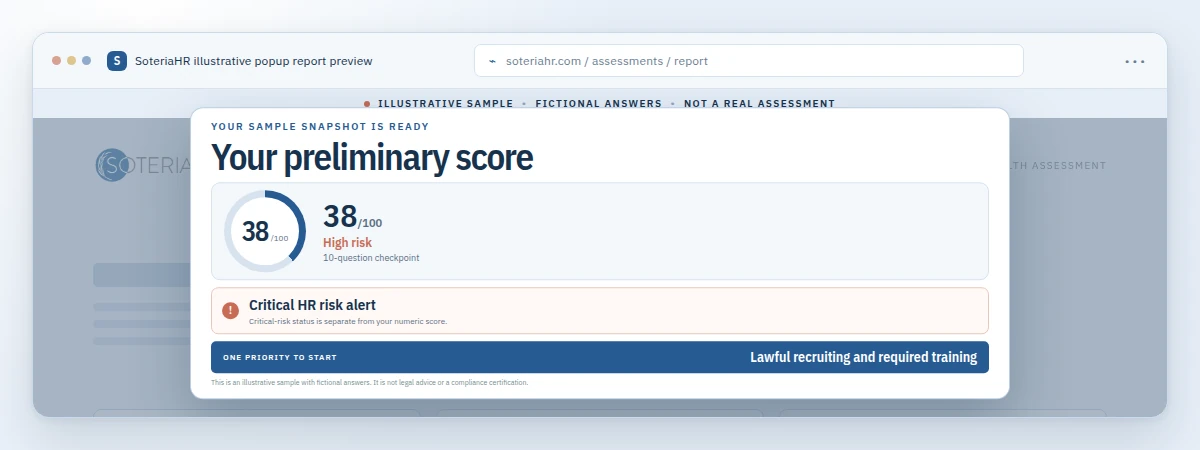
If leadership is unsure where to start, a free HR Health Assessment at soteriahr.ai can help surface priorities before a deeper conversation. Results are self-reported and preliminary, not a certification of compliance, but they often clarify where to focus first. From there, companies can talk with an HR expert at Soteria HR or call (800) 399-2458 to discuss next steps.
Frequently Asked Questions About Strategic HR for Growing Companies
What is strategic HR for mid-sized companies?
Strategic HR for mid-sized companies is the practice of aligning people policies, compliance, and workforce planning with business goals rather than handling HR issue by issue. It combines administration, consulting, and benefits support so HR becomes a growth tool instead of a bottleneck.
How does strategic HR differ from basic HR administration?
Basic HR administration handles day-to-day paperwork like onboarding and recordkeeping, while strategic HR connects those tasks to long-term workforce planning and company goals. Strategic HR looks ahead; administrative HR reacts to what is already happening.
Why do mid-sized companies need a strategic HR partner?
Companies between roughly 10 and 250 employees often outgrow informal HR practices but are not yet large enough for a full internal department. A strategic HR partner fills that gap with compliance support, consistent policy, and planning expertise.
How much does strategic HR support typically cost?
Cost varies widely based on company size, scope of services, and whether support is delivered through consulting, administration, or an ASO model. Most providers price based on employee count and the specific mix of services requested, so it is best to request a custom quote.
How long does it take to build a strategic HR function?
A basic framework of policies and compliance documentation can often be in place within 60 to 90 days. However, a fully mature strategic HR function, including workforce planning and leadership development, typically takes six to twelve months to establish.
What are common mistakes mid-sized companies make with HR?
Common mistakes include relying on outdated templates, delaying compliance updates, and treating HR as purely administrative rather than strategic. Many companies also wait until a crisis, such as a complaint or audit, before investing in structured HR support.
What services are typically included in strategic HR consulting?
Strategic HR consulting commonly includes workforce planning, employee relations guidance, performance management design, culture initiatives, and recruiting process improvement. Many engagements also cover HR administration and benefits administration as supporting services.
How does outsourced HR differ from building an in-house team?
Outsourced HR gives companies access to a broader team of specialists without the cost of multiple full-time hires, while an in-house team offers full-time presence but typically covers fewer specialties. Many mid-sized companies use a hybrid model that blends both.
What is an ASO, and how does it support strategic HR?
An ASO, or Administrative Services Organization, provides tailored HR support such as administration, benefits coordination, and compliance guidance without co-employment. The client company remains the employer of record and retains responsibility for employment decisions.
When should a company bring in a strategic HR consultant?
Companies should consider strategic HR support when headcount grows past what one generalist can manage, when turnover rises, or when compliance requirements start to feel unclear. Waiting until a legal issue arises is usually more costly than planning ahead.
What are best practices for scaling HR as a company grows?
Best practices include documenting policies early, auditing compliance regularly, and choosing a flexible support model that can expand with headcount. Companies should also track basic workforce metrics so HR decisions are based on data rather than guesswork.
Can a company with an existing HR team still benefit from strategic HR support?
Yes, many internal HR teams use outsourced strategic HR support to cover specialized areas like benefits compliance or workforce planning. This allows the internal team to focus on culture and day-to-day employee relations while specialists handle complex compliance work.
What role does benefits administration play in strategic HR?
Benefits administration supports strategic HR by managing enrollments, carrier coordination, and compliance areas such as COBRA and Section 125 plans. Well-managed benefits also directly affect retention, making them a core part of any workforce planning strategy.
How do you measure whether strategic HR initiatives are working?
Common measures include turnover rate, time-to-hire, employee engagement scores, and the number of compliance issues resolved proactively versus reactively. Tracking these metrics over time shows whether HR investments are translating into business results.
Is strategic HR only relevant for large organizations?
No, strategic HR is especially valuable for mid-sized companies that are scaling quickly but do not yet have enterprise-level resources. In fact, this is often the stage where structured HR planning has the biggest impact on growth and risk reduction.
Ready to put strategic HR for mid-sized companies into practice?
Call (800) 399-2458 or talk to an HR expert at Soteria HR to discuss a plan tailored to your organization.
In summary, strategic HR for mid-sized companies is less about adding more paperwork and more about building a structure that supports growth instead of slowing it down. Companies that invest in administration, consulting, and benefits together tend to catch compliance risks earlier and retain employees longer. Whether that support comes from an internal hire, an outsourced ASO partner, or a hybrid approach, the goal stays the same: a workforce strategy that scales as the business does. Soteria HR’s promise reflects that approach directly, “We’ve got your back, so you can focus on growth.”