HR strategies for small organizations are the practical plans that help growing companies manage hiring, compliance support, benefits, and employee relations without a large internal HR department. As a company adds employees and locations, informal habits that once worked quietly start creating gaps. Therefore, building a deliberate HR approach early helps leaders avoid surprises later and gives employees a more consistent experience.
HR strategies for small organizations typically include updated policies, consistent hiring and onboarding practices, benefits administration, and a plan for compliance support as the company grows. Most organizations build these in stages, starting with core policies and adding structure as headcount increases.
What Are HR Strategies for Small Organizations?
In simple terms, HR strategies for small organizations are documented approaches to managing people, rather than relying on memory or one person’s judgment. This includes things like a written employee handbook, a consistent onboarding process, and a plan for handling leave requests. For example, a 20-person company might formalize how it tracks paid time off so every employee is treated the same way.
Unlike large enterprises, small and mid-sized organizations often cannot support a full internal HR department. As a result, many turn to a mix of internal ownership and outsourced HR support, such as HR administration and HR consulting, to fill the gap without the cost of a large team.
Why a Deliberate HR Approach Matters as You Grow
Growth tends to expose weak spots quickly. A handbook written for five employees rarely covers the realities of fifty, and a founder who once answered every HR question personally cannot keep doing so at scale. Consequently, organizations that wait too long to formalize HR practices often find themselves reacting to problems instead of preventing them.
According to the U.S. Small Business Administration, small businesses account for a significant share of private-sector job creation in the United States, which means HR decisions made at this stage affect a large number of working people. Similarly, the U.S. Equal Employment Opportunity Commission notes that most employers with 15 or more employees are subject to federal anti-discrimination laws, so policy gaps can carry real consequences once a company crosses that threshold. Above all, a thoughtful strategy helps leaders protect both their people and their business as they scale.

Developing HR strategies for small organizations often starts with a simple policy review session among leadership.
Core Building Blocks of Strong HR Strategies for Small Organizations
Most effective HR strategies for small organizations rest on a few consistent pillars rather than dozens of disconnected initiatives. Specifically, these pillars tend to repeat across industries and company sizes.
HR Administration
HR administration covers the daily mechanics: employee records, onboarding and offboarding, policy updates, leave coordination, and payroll coordination. In addition, it often includes support during unemployment claims and routine HR workflows. Learn more about dynamic HR solutions for growing small and mid-size firms.
HR Consulting
HR consulting focuses on bigger-picture decisions, such as workforce planning, employee relations, recruiting practices, and performance systems. Leaders often need an outside perspective to turn priorities into workable processes rather than one-off fixes.
Benefits Administration
Benefits administration includes enrollments, terminations, carrier coordination, and employee communication about available plans. For organizations with applicable group plans, this can also involve support related to ACA, COBRA, Section 125, and Form 5500 requirements; however, applicability depends on plan type and employer size, so it is worth confirming scope with a qualified advisor.
Step-by-Step: How to Build an HR Strategy for Your Organization
Building effective people-management practices does not have to happen all at once. Instead, most organizations work through a short sequence of steps, revisiting each one as the company grows.
- Assess the current HR foundation. Review existing policies, employee records, and processes to identify what is working, what is missing, and where inconsistency or risk already exists in daily practice.
- Set priorities based on growth stage. Decide which gaps matter most right now, such as hiring consistency, benefits administration, or leave tracking, based on headcount, locations, and near-term growth plans.
- Update core policies and the handbook. Document expectations for pay, leave, conduct, and complaint procedures in a handbook that reflects current laws in every state where employees actually work.
- Assign clear ownership for HR tasks. Identify who is responsible for onboarding, benefits enrollment, compliance tracking, and employee relations questions so nothing falls through the cracks as the team grows.
- Monitor results and adjust regularly. Schedule periodic check-ins, at least annually, to revisit policies, review metrics such as turnover, and adjust the strategy as the organization and regulations change.
For jurisdiction-specific rules, the U.S. Department of Labor and your state labor agency are reliable starting points before finalizing new policies.

Updating written policies is a core part of most HR strategies for small organizations.
Common Mistakes Small Organizations Make With HR Planning
Even well-intentioned leaders fall into predictable traps. For instance, many organizations keep an outdated handbook long after new employees, states, or benefits plans have been added. Others apply discipline or leave policies inconsistently across departments, which can create employee relations problems and legal exposure.
Furthermore, some companies delay documenting processes until a single key employee leaves, taking institutional knowledge with them. In contrast, organizations that build repeatable HR workflows early tend to handle turnover and growth with far less disruption. Reviewing related guidance, such as essential human resources needs for small to mid-sized companies, can help identify blind spots before they become costly.
Disclaimer: This content is for general information and is not legal or tax advice. Requirements vary by location, employer size, and circumstances. Consult qualified counsel or an appropriate advisor for guidance on your situation.
How Outsourced HR Support Fits Into the Picture
Many growing organizations do not have the budget or need for a full internal HR department, yet they still face the same compliance and people challenges as larger companies. In this situation, outsourced HR support, including an ASO (Administrative Services Organization) arrangement, can provide tailored assistance without co-employment. Importantly, clients remain the employer and retain responsibility for employment decisions and applicable obligations; outsourced support supplements internal capacity rather than replacing accountability.
Soteria HR works with founders, CEOs, and operations leaders at organizations that lack a dedicated HR department, as well as those looking to support an existing internal team. Services typically include HR administration, HR consulting, benefits administration, and payroll coordination, scoped to each organization’s needs. To see how this fits a specific situation, explore practical HR advice for small businesses or review culture-building strategies for small to mid-sized businesses.
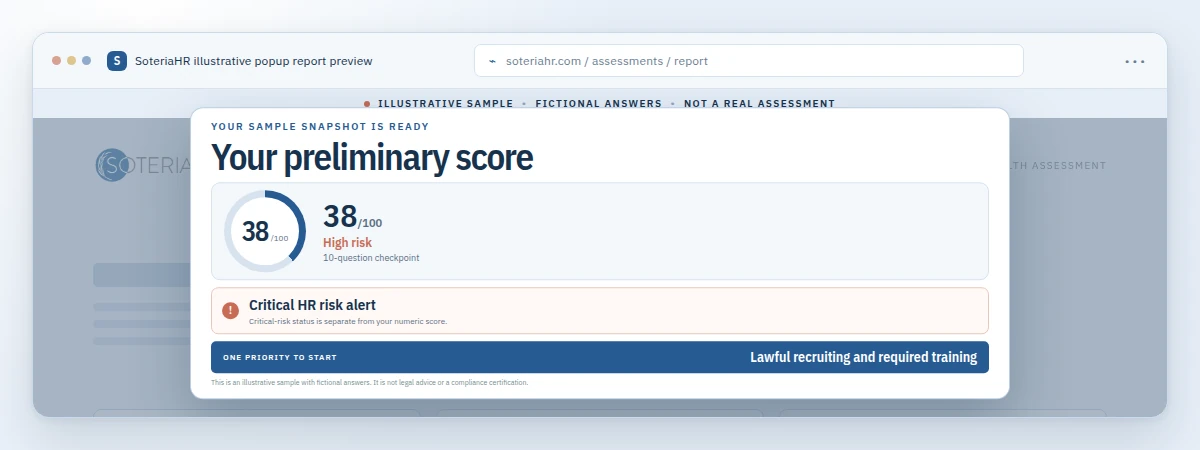
A useful starting point is the free HR Health Assessment, which includes a short Quick HR Check and a more detailed Complete HR Health Assessment. Results are self-reported and preliminary; they introduce potential gaps and priorities but do not certify compliance. You can learn more directly at Soteria HR.

Regular check-ins between managers and employees support many HR strategies for small organizations.
Frequently Asked Questions About HR Strategies for Small Organizations
What are HR strategies for small organizations?
HR strategies for small organizations are the plans and practices a growing company uses to manage hiring, compliance, benefits, and employee relations as it scales. They turn informal habits into repeatable processes that protect the business and support employees.
How many employees should a company have before building a formal HR strategy?
There is no single employee count that triggers the need for HR strategy, but many organizations start formalizing practices somewhere between 10 and 50 employees. As a result, leaders often find that the right time is when informal management starts creating inconsistency or risk.
Why do small organizations need formal HR strategies instead of informal practices?
Informal HR practices tend to create inconsistency, which can lead to employee relations issues and compliance gaps. In contrast, a documented strategy helps ensure similar situations are handled the same way every time.
What is the difference between HR administration and HR consulting?
HR administration covers day-to-day tasks, such as onboarding, records, and leave coordination. HR consulting, however, focuses on higher-level guidance, like workforce planning, culture, and performance systems.
How much does outsourced HR support typically cost?
Outsourced HR costs vary widely based on company size, scope of services, and the mix of administration, consulting, and benefits support needed. Because of this, most providers tailor pricing after understanding a specific organization’s structure and goals.
How long does it take to implement a new HR strategy?
Basic policies and processes can often be put in place within a few weeks, while a fuller strategy may take a few months to roll out. Timelines depend on current gaps, leadership availability, and how many systems need to be updated.
What is an ASO and how does it differ from a PEO?
An Administrative Services Organization, or ASO, provides tailored HR support while the client remains the employer of record. A PEO typically involves a co-employment arrangement, which some organizations prefer and others want to avoid; the right fit depends on a company’s goals and risk tolerance.
What are common HR mistakes small organizations make?
Common mistakes include outdated handbooks, inconsistent discipline, and missing documentation for leave or terminations. Additionally, many organizations wait too long to update policies as headcount and locations grow.
What HR policies should every small organization have in place?
At a minimum, most organizations benefit from an employee handbook, clear anti-harassment and complaint procedures, and documented leave and payroll practices. Specifically, policies should reflect the laws in every state where employees work.
How can small organizations manage benefits administration effectively?
Effective benefits administration starts with clear enrollment and termination procedures, consistent employee communication, and coordination with carriers. For organizations with applicable plans, this also means tracking requirements such as COBRA, Section 125, or Form 5500 filings where they apply.
What is the HR Health Assessment and how does it help small organizations?
The HR Health Assessment is a free, self-reported tool that highlights potential HR gaps and priorities for further review. It is not a certification of compliance, but it can be a useful starting point before talking with an HR advisor.
How does outsourced HR support differ from hiring an internal HR team?
An internal HR team is dedicated solely to one organization, while outsourced HR support brings in specialized expertise without the cost of multiple full-time hires. Many growing organizations use outsourced support to fill gaps or supplement an existing internal team.
What role does HR consulting play in workforce planning?
HR consulting helps leaders translate business goals into staffing plans, role structures, and performance expectations. Consequently, organizations are better positioned to hire and manage growth with fewer surprises.
How often should small organizations review their HR strategy?
Most organizations benefit from reviewing HR policies and strategy at least once a year, or whenever headcount, locations, or regulations change significantly. Regular review helps keep practices current and aligned with the business.
Bringing It All Together
Ultimately, strong HR strategies for small organizations come down to a few consistent habits: documenting policies, assigning clear ownership, and reviewing practices as the company grows. Whether handled internally, through an outsourced partner, or a combination of both, the goal is the same: give employees a fair, consistent experience while giving leadership the structure needed to scale with confidence. For organizations exploring what to prioritize first, reading more on HR strategies that help small businesses build a positive workplace culture is a reasonable next step, alongside a conversation with an HR professional. Talk to an HR expert by calling (800) 399-2458 or submitting a consultation request to discuss what your organization needs next.