Custom employee handbooks give growing businesses a clear, legally informed foundation for workplace policies instead of relying on generic, one-size-fits-all templates. For founders and HR leaders juggling hiring, compliance, and daily operations, a handbook built around the organization’s actual practices becomes one of the most practical tools available. In fact, many workplace disputes trace back to vague or missing policies rather than the underlying decision itself. Below, we explain what custom employee handbooks are, why they matter, and how to build one that protects both the business and its employees.

Custom employee handbooks work best when built around how a business actually operates.
What Are Custom Employee Handbooks?
Custom employee handbooks are workplace policy documents written specifically around one organization’s structure, culture, and applicable laws, rather than copied from a generic template. They typically combine required legal notices with company-specific practices for onboarding, conduct, pay, and leave.
An employee handbook, as described by general HR references, communicates expectations and company culture in writing. However, a handbook only protects a business when it reflects that specific employer’s jurisdiction, headcount, and day-to-day practices rather than a downloaded form.
Because employment law varies so much by state, two companies of similar size in different locations may need very different handbooks. Therefore, treating a handbook as a living document tied to the business, not a static file, is essential.
Why Custom Employee Handbooks Matter for Growing Businesses
As a company adds employees, informal verbal agreements about attendance, benefits, or conduct become harder to track and easier to apply inconsistently. Consequently, a documented handbook reduces manager guesswork and gives employees a reliable reference point.
Specifically, certain legal obligations only activate once a business crosses a headcount threshold. For example, the federal Family and Medical Leave Act applies once an employer reaches 50 employees within a 75-mile radius, according to the U.S. Department of Labor. In California, several anti-discrimination protections apply at far lower employee counts under state civil rights law.
Furthermore, a thoughtfully built handbook supports consistent discipline decisions, which matters if a claim is ever filed with an agency such as the U.S. Equal Employment Opportunity Commission. In short, the handbook becomes evidence that policies existed and were communicated, not just assumed.
What to Include in a Custom Employee Handbook
While every handbook should reflect the company’s specific circumstances, most thorough versions cover similar core categories. For a deeper look at language options, Soteria’s employee handbook policy examples page offers additional detail.
- At-will employment statement and introductory language
- Anti-discrimination, harassment prevention, and reporting procedures
- Attendance, scheduling, and leave policies, including applicable state leave laws
- Pay practices, overtime eligibility, and expense reimbursement
- Benefits summaries and eligibility windows
- Technology use, remote work, and workplace safety expectations
In addition, employers with staff in multiple states should include jurisdiction-specific addenda rather than applying one state’s rules universally. Otherwise, employees outside the primary location may receive incomplete or inaccurate guidance.
A clear checklist keeps the handbook drafting process organized from start to finish.
How to Create a Custom Employee Handbook
Building a handbook from the ground up can feel daunting, but breaking the project into clear steps makes it manageable. The process below reflects how HR professionals typically approach a custom handbook project.
- Audit existing policies. Gather every existing written or informal policy across departments and compare them against current federal, state, and local requirements.
- Identify applicable thresholds. Determine which laws apply based on employee count, since obligations often change at specific headcount milestones.
- Draft core policy sections. Write sections covering at-will employment, conduct, attendance, leave, benefits, and pay practices in plain, consistent language.
- Review with legal and HR experts. Have an HR consultant and employment attorney review the draft for jurisdictional accuracy before distribution.
- Distribute and collect acknowledgments. Share the handbook during onboarding and collect signed acknowledgment forms documenting employee receipt.
- Schedule annual reviews. Set a recurring review date and revisit the handbook whenever laws change or the company grows into a new threshold.
For businesses that prefer expert support throughout this process, Soteria’s employee handbook creation services walk through each step alongside internal teams.
Common Mistakes to Avoid With Employee Handbooks
Even well-intentioned employers make avoidable errors when building a handbook. Recognizing these pitfalls early can prevent costly rewrites later.
- Copying a generic template without adjusting it for state-specific law
- Leaving the handbook unchanged for years despite legal updates
- Writing overly rigid language that removes manager discretion in good faith situations
- Skipping legal review before the handbook is distributed company-wide
Reviewing established employee handbook best practices alongside current compliant workplace HR policies guidance can help a team avoid repeating these mistakes.
Custom Employee Handbooks vs. Generic Templates
Many small businesses start with a free or low-cost handbook template, which can be useful as a starting point. However, templates rarely account for state-specific leave laws, local wage rules, or the company’s own benefit structure.
| Factor | Generic Template | Custom Employee Handbooks |
|---|---|---|
| State law accuracy | Often generic or outdated | Tailored to employer’s jurisdictions |
| Reflects actual practices | Rarely | Built around real company policy |
| Legal defensibility | Limited | Stronger when reviewed by counsel |
Ultimately, a template can introduce more risk than it removes if it conflicts with actual company practice or local law. In contrast, a custom approach aligns the written policy with what happens in daily operations.
How Soteria HR Supports Custom Employee Handbooks
Soteria HR provides hands-on outsourced HR services for growing small and mid-sized organizations, based in Pasadena, California, and serving employers across Los Angeles, Orange County, and nationwide. As part of its HR administration and consulting services, Soteria helps employers build custom employee handbooks that reflect their workforce, benefits, and applicable state requirements.
For companies without a dedicated HR department, Soteria’s Administrative Services Organization (ASO) option offers tailored HR support without co-employment, meaning the client remains the employer of record and retains responsibility for employment decisions. This structure works equally well for businesses building HR from scratch and for internal HR teams that need additional capacity.
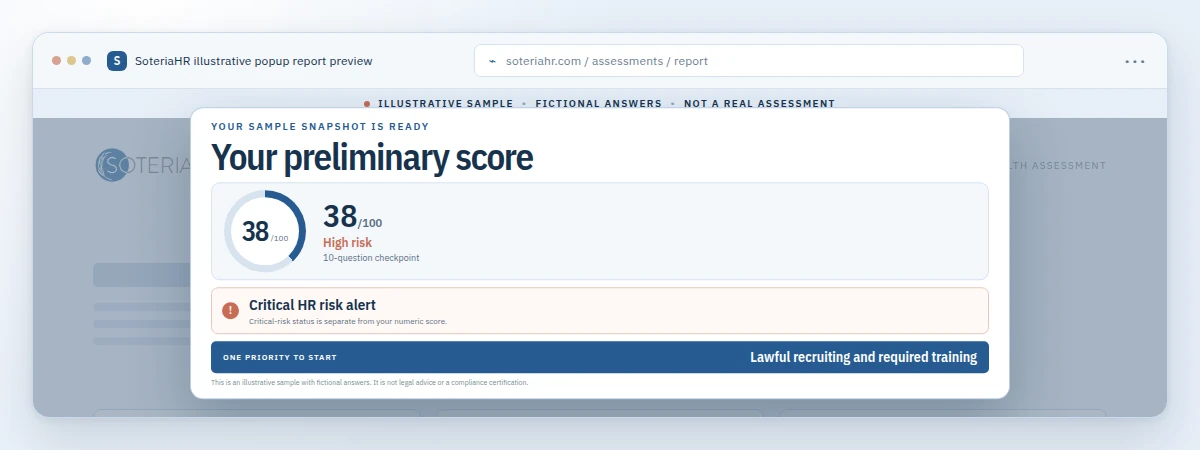
To gauge current gaps before a deeper conversation, employers can start with the free HR Health Assessment at soteriahr.ai, which offers a short Quick HR Check or a more complete review. Results are self-reported and preliminary, not a certification of compliance, but they help identify where to focus first.

Clear onboarding helps employees understand policies from day one.
Frequently Asked Questions About Custom Employee Handbooks
What are custom employee handbooks?
Custom employee handbooks are workplace policy documents written specifically around one organization’s structure, culture, and applicable laws rather than copied from a generic template. They typically cover onboarding, conduct expectations, benefits, leave, and compliance notices tailored to the employer’s jurisdiction and workforce.
How do custom employee handbooks differ from generic templates?
Generic templates apply broad, one-size-fits-all language that may not reflect state law or company practice, while custom handbooks are built around the employer’s actual policies and jurisdictional requirements. As a result, custom handbooks tend to hold up better during disputes or audits.
Why do small businesses need a custom employee handbook?
Small businesses need a custom employee handbook because it sets consistent expectations, reduces manager guesswork, and documents required notices as headcount grows. Without one, informal practices can create confusion and inconsistent treatment across employees.
What should a custom employee handbook include?
A thorough handbook typically includes at-will employment language, anti-discrimination and harassment policies, leave and attendance rules, pay practices, benefits summaries, and technology or safety guidelines. The exact content depends on company size, industry, and state requirements.
How long does it take to create a custom employee handbook?
Most custom handbook projects take two to six weeks, depending on company complexity and how many policies already exist in some form. Businesses with multi-state employees or union considerations often need additional review time.
How much does a custom employee handbook cost?
Cost varies based on company size, number of locations, and whether existing policies need updating or a handbook is being built from scratch. Working with an HR consulting partner typically provides a clearer, scoped estimate than a flat-fee template service.
How often should an employee handbook be updated?
Employee handbooks should be reviewed at least once a year and updated whenever employment laws change or the company reaches a new size threshold. Mid-year updates are also common after adding new benefits or expanding into a new state.
What are common mistakes when writing an employee handbook?
Common mistakes include copying a template without adjusting it for state law, failing to update it after policy changes, and writing overly rigid language that limits management discretion. Skipping legal review before distribution is another frequent and costly error.
Do employee handbooks need to comply with state law?
Yes, employee handbooks must reflect the employment laws of every state where staff work, since requirements for leave, meal breaks, and anti-discrimination protections vary widely. A handbook written only for one state can create compliance gaps for remote or multi-state employees.
Can an employee handbook protect a business in a lawsuit?
A well-drafted handbook can support a business’s position by showing that policies existed, were communicated, and were applied consistently. It is not a guarantee against claims, but documented policies and signed acknowledgments are valuable evidence in a dispute.
Who should review a custom employee handbook before distribution?
An HR professional familiar with current law should draft or review the handbook, and employment counsel should review it before distribution for jurisdiction-specific compliance. This combination helps catch outdated language or missing required notices.
What’s the difference between an employee handbook and an HR policy manual?
An employee handbook is typically a reader-friendly summary shared with all staff, while an HR policy manual often contains more detailed internal procedures used by managers and HR staff. Many organizations maintain both, with the handbook pointing to fuller procedures when needed. For more on this distinction, see Soteria’s guidance on building compliant HR policies.
Does Soteria HR help create custom employee handbooks?
Yes, Soteria HR works with employers in Los Angeles, Orange County, and nationwide to build custom employee handbooks as part of its HR administration and consulting services. Businesses can call (800) 399-2458 or submit a consultation request to discuss handbook needs.
Custom employee handbooks are easier to build with an experienced HR partner. Call (800) 399-2458 or visit Soteria HR to talk to an HR expert about your handbook and broader HR priorities.
Final Thoughts on Building a Compliant Handbook
In the end, custom employee handbooks give growing businesses a documented, legally aware foundation that generic templates simply cannot match. They clarify expectations for employees, support consistent decisions by managers, and provide evidence that policies existed when questions or disputes arise later.
Above all, treating the handbook as a living document, reviewed annually and updated as the company grows, keeps it useful rather than outdated. For businesses ready to build or refresh their policies, partnering with an HR consulting team like Soteria HR can turn a daunting project into a manageable, well-supported process.