HR playbook development is the process of creating a structured, written guide that documents how your organization handles core HR functions, from hiring and onboarding to discipline and termination. For growing companies without a dedicated HR department, this process turns scattered practices into consistent, defensible procedures. Soteria HR, an outsourced HR partner based in Pasadena, California, works with founders and operations leaders throughout Los Angeles, Orange County, and nationwide to build playbooks that protect the business and support its people. Whether you are starting from scratch or refining an existing manual, understanding how HR playbook development works will help you make smarter decisions about your company’s foundation.
In short: HR playbook development is the ongoing work of writing, organizing, and maintaining the policies and decision-making guidelines that govern your workforce. A well-built playbook keeps managers consistent, reduces legal exposure, and gives new HR hires a reliable reference instead of institutional guesswork.
What Is HR Playbook Development?
HR playbook development is the ongoing work of writing, organizing, and maintaining the policies, procedures, and decision-making guidelines that govern how a company manages its workforce. It typically results in a living document, sometimes called an HR operations manual, that HR staff, managers, and leadership reference whenever a question arises. Unlike a one-time handbook draft, true playbook development is revisited regularly as laws, headcount, and business needs change.
In practice, this means more than copying a template found online. A custom playbook reflects your actual industry, your state’s employment laws, and the way your leadership team wants to handle situations like performance issues or leave requests. For a closer look at what belongs in that document, Soteria HR’s guide on what to include in a custom HR playbook breaks down the sections most employers need first.

HR playbook development brings leadership and managers onto the same page before policies are finalized.
Why HR Playbook Creation Matters for Growing Businesses
As a company grows past its first handful of hires, informal habits stop scaling. A manager who “just knows” how leave requests are handled cannot pass that knowledge to a new supervisor without documentation. Consequently, inconsistent treatment of similar situations becomes one of the most common sources of employee complaints and, eventually, legal claims.
Formal policy work also matters because legal thresholds shift as headcount increases. For example, under the federal Family and Medical Leave Act, enforced by the U.S. Department of Labor, employers with 50 or more employees within a 75-mile radius must provide eligible employees up to 12 weeks of unpaid, job-protected leave for qualifying reasons. Similarly, anti-discrimination obligations enforced by the Equal Employment Opportunity Commission apply once a business crosses certain employee-count thresholds. Without documented procedures, it is easy to miss when a new requirement applies.
In addition, a clear playbook supports internal HR teams who already exist but lack formal documentation. If your organization is still defining its day-to-day HR operations, Soteria HR’s guide to HR administration explains how administrative structure and playbook content work together.
Key Components to Include When Building an HR Playbook
Every organization’s playbook looks a little different, but most effective versions share a common backbone. Above all, the document should be specific enough that a manager can follow it without guessing.
- Hiring, interviewing, and onboarding procedures, including required paperwork and timelines.
- Attendance, leave, and scheduling policies, including applicable federal and state leave laws.
- Performance management steps, from goal setting through progressive discipline.
- Compensation and benefits administration procedures, including enrollment and termination events.
- Workplace conduct expectations and harassment-prevention procedures.
- Offboarding and termination protocols, including documentation requirements.
For a deeper breakdown of each section, Soteria HR’s article on what a custom HR playbook includes walks through sample language and formatting choices that work well for growing teams.
The HR Playbook Development Process: A Step-by-Step Approach
Although every company’s situation differs, HR playbook development generally follows the same sequence. Therefore, working through these steps in order helps avoid rework later.
- Audit current practices. Review how hiring, onboarding, leave requests, discipline, and terminations are currently handled across the organization to identify gaps, inconsistencies, and undocumented habits that create risk.
- Identify applicable requirements. Determine which federal, state, and local employment laws apply based on headcount, location, and industry, since thresholds for leave, benefits, and reporting obligations vary significantly.
- Draft core policies. Write clear policies covering attendance, conduct, leave, compensation practices, and performance management, using plain language that both managers and employees can understand and apply consistently.
- Obtain qualified legal review. Have an employment attorney or qualified HR professional review draft policies for compliance with current state and federal requirements before anything is finalized or distributed.
- Train managers and roll out. Walk managers through the new playbook so they understand how to apply each policy fairly, then distribute the finalized document to employees with a clear effective date.
- Schedule ongoing reviews. Set a recurring annual review date and revisit the playbook immediately after any law change, acquisition, or significant shift in headcount to keep policies accurate and enforceable.
For a more detailed walkthrough of this process, including sample timelines, see Soteria HR’s guide on how to create a custom HR playbook for your business.

A step-by-step checklist keeps HR playbook development on track from audit to rollout.
Common Mistakes in HR Playbook Development
Even well-intentioned employers run into predictable problems. For instance, many businesses copy a generic template found online without adjusting it for their state’s specific leave and wage laws. As a result, the policy may contradict local requirements or simply fail to address situations the business actually encounters.
Another frequent mistake is treating the playbook as a one-time project rather than a living document. Laws change, teams grow, and new benefits get added; however, if nobody owns the update process, the playbook quietly becomes outdated. Likewise, skipping manager training undermines even the best-written policy, since managers who were never walked through the document tend to apply it inconsistently. Finally, bypassing legal review to save time can create far more expensive problems down the road than the review itself would have cost.
HR Playbook Development vs. HR Strategy: What’s the Difference?
It helps to separate two terms that often get used interchangeably. HR strategy sets the broader direction, including workforce planning, culture priorities, and long-term goals for the organization. In contrast, HR playbook development translates that strategy into documented, repeatable procedures that managers and employees can actually follow day to day.
In other words, strategy answers “what” and “why,” while the playbook answers “how.” Soteria HR’s overview of HR strategy explains how these two pieces fit together, and why skipping straight to policy documents without a strategic foundation often produces a playbook that doesn’t match the company’s actual direction.
When to Bring in Outsourced HR Support
Some leadership teams have the bandwidth to manage HR playbook development internally, particularly if they already have an HR professional on staff. Many growing organizations, however, do not have a dedicated HR department and need outside expertise to move the project forward without pulling focus from core operations.
This is where an outsourced HR partner can help. Soteria HR provides hands-on HR administration, HR consulting, and benefits administration support, along with an ASO (Administrative Services Organization) option that delivers tailored HR support without co-employment. Clients remain the employer and retain responsibility for employment decisions, while Soteria’s consultants help turn priorities into workable, documented processes. According to industry research compiled by the Society for Human Resource Management, organizations with clearly documented HR policies tend to resolve employee relations issues more efficiently than those relying on informal practices.
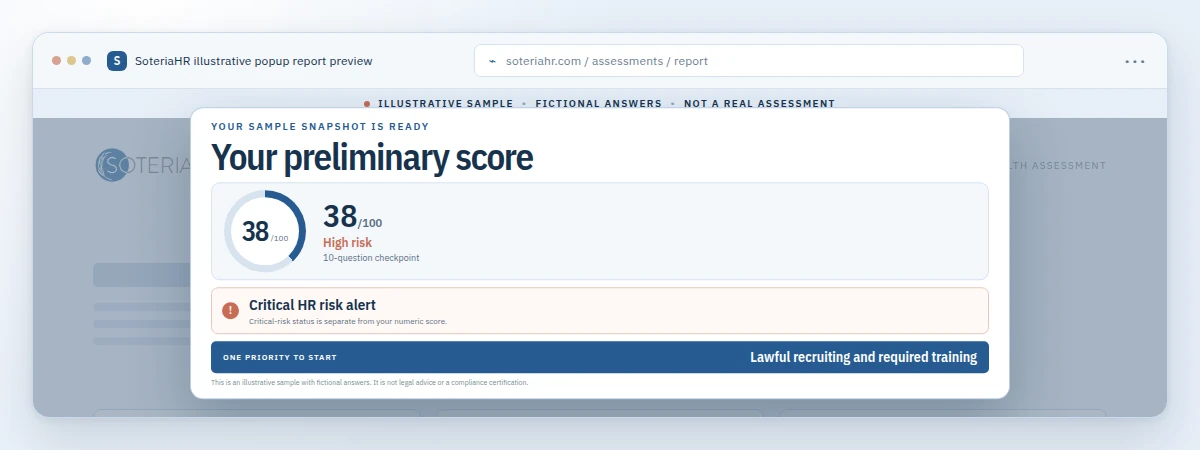
If you are unsure where your current policies stand, the free HR Health Assessment at soteriahr.ai offers a quick starting point. The 10-question Quick HR Check takes about two minutes, while the 40-question Complete HR Health Assessment takes roughly 10 to 12 minutes; results are self-reported and preliminary, not a certification of compliance. From there, you can discuss priorities directly with a Soteria HR expert by calling (800) 399-2458 or visiting soteriahr.com to request a consultation.

An outsourced HR consultant can guide leadership through HR playbook development from start to finish.
Frequently Asked Questions About HR Playbook Development
What is HR playbook development?
HR playbook development is the process of writing, organizing, and maintaining the policies and procedures that guide how a company manages its workforce. It results in a living reference document that HR staff and managers use to make consistent decisions.
How long does HR playbook development take?
A basic playbook can take a few weeks, while a comprehensive, multi-state version often takes two to three months. Timing depends on company size, complexity, and how many stakeholders review each policy.
How much does it cost to build an HR playbook?
Costs vary widely based on whether you build it in-house, hire a consultant, or outsource the work entirely. Soteria HR tailors pricing to the scope of the engagement rather than a flat template fee.
What is the difference between an HR playbook and an employee handbook?
An employee handbook is typically an employee-facing summary of policies, while an HR playbook is a broader internal guide that includes handbook content plus internal procedures and manager instructions. The playbook supports the people who administer policy, not just the people who follow it.
Why do growing businesses need HR playbook development?
As headcount grows, informal practices create inconsistency and legal exposure. Structured HR playbook development helps leaders apply policies fairly and document decisions before problems escalate.
What should be included in an HR playbook?
Core components typically include hiring and onboarding procedures, leave and attendance policies, performance management steps, and termination protocols. Benefits administration and safety procedures are often included as well, depending on company size.
How often should an HR playbook be updated?
Most employers review their playbook at least once a year and immediately after any significant law change or company restructuring. Treating the document as static is one of the most common HR playbook development mistakes.
What are common mistakes in HR playbook development?
Common mistakes include copying generic templates without jurisdiction-specific review, failing to train managers on the policies, and letting the document go stale. Skipping legal review is another frequent and costly error.
Can a small business handle HR playbook development without an HR department?
Yes, many small businesses work with an outsourced HR partner instead of hiring internal staff. This approach gives founders and operations leaders access to HR expertise without the overhead of a full department.
Does an HR playbook need legal review?
Yes, qualified legal review is strongly recommended before finalizing policies, especially for leave, wage and hour, and anti-discrimination sections. Employment law varies by state and changes frequently.
How is HR playbook development different from HR strategy?
HR strategy sets the broader direction for workforce planning, culture, and long-term goals, while HR playbook development translates that strategy into documented, day-to-day procedures. Strategy answers what and why; the playbook answers how.
How can Soteria HR help with HR playbook development?
Soteria HR works directly with leadership teams to assess current practices, draft tailored policies, and support rollout and training. Employers can call (800) 399-2458 or request a consultation at soteriahr.com to start the process.
Final Thoughts on HR Playbook Development
Ultimately, HR playbook development is not a one-time writing project; it is an ongoing discipline that keeps your policies aligned with your company’s growth and the laws that govern it. A clear, well-maintained playbook gives managers confidence, gives employees consistency, and gives leadership a defensible record when questions arise. Whether you tackle this work internally or bring in outside support, the goal remains the same: turning good intentions into documented, repeatable practice.
If your organization needs help getting started or refreshing an existing document, Soteria HR’s consultants can guide the process from audit through rollout. Call (800) 399-2458 or visit soteriahr.com to talk with an HR expert about your next steps.