HR for staffing needs covers the hiring, compliance, benefits, and payroll coordination work that staffing and recruiting companies must handle for both their internal team and the employees they place with clients. Because placements start and end quickly, a staffing firm’s HR workload looks different from a typical small business, and it grows heavier as the firm takes on more clients. As a result, many staffing leaders eventually look for outside HR support to keep pace without burning out their own team.
Quick answer: HR for staffing needs means building repeatable, compliant processes for onboarding, pay, benefits, and workforce management so a staffing or recruiting company can place workers quickly without creating legal or administrative risk.

Managing HR for staffing needs often starts with standardized onboarding and documentation.
What Is HR for Staffing Needs?
HR for staffing needs is the combination of administrative, compliance, and people-management work required to support a staffing firm’s dual workforce: the internal recruiters and account managers, plus the temporary, contract, or direct-hire employees placed with clients. Unlike a standard employer, a staffing company must track eligibility, pay rules, and benefits for workers whose assignments can start and end within weeks.
In addition, staffing firms often operate across multiple states or client sites, which means employment rules can shift from one placement to the next. Therefore, HR for staffing needs typically includes onboarding workflows, wage and hour compliance, benefits administration, and policy documentation that can flex as volume changes. Firms without a dedicated HR function often rely on recruiters or operations staff to handle this work, which increases risk as headcount grows.
Why Staffing Firms Need Specialized HR Support
Staffing and recruiting companies face HR challenges that differ from most small businesses. For example, the U.S. Department of Labor enforces wage and hour rules that apply differently depending on how workers are classified and paid, and misclassification is a frequent risk in staffing models. Similarly, the Equal Employment Opportunity Commission holds staffing agencies responsible for certain employment practices even when workers are placed at a client site.
Specifically, high placement volume means onboarding and offboarding happen far more often than in a typical business. Consequently, HR support for staffing agencies has to be fast, consistent, and well-documented. According to the American Staffing Association, the U.S. staffing industry places millions of workers annually, which underscores how much onboarding and compliance activity staffing firms handle compared to businesses with stable headcount.
Without dedicated support, many firms end up reacting to problems instead of preventing them. This is where HR administration support becomes a practical option for firms that cannot justify a full internal HR department yet.
Core HR Functions for Staffing Companies
Several HR functions for staffing companies matter more than others because they directly affect placement speed and compliance exposure. Understanding each one helps leaders decide what to handle internally and what to hand off.
Onboarding and Offboarding at Scale
Because placements can begin on short notice, onboarding has to be repeatable rather than improvised. Standardized offer letters, policy acknowledgments, and eligibility verification reduce errors when several employees start the same week. Likewise, offboarding needs a consistent checklist so final pay, benefits termination, and documentation happen correctly every time, not just when someone remembers.
Compliance Across Multiple Worksites
Staffing firms frequently place workers in different cities or states, which can trigger different wage, leave, and safety rules. As a result, HR teams must track where each employee works, not just where the agency is headquartered. For a deeper look at what this administrative layer involves, this guide on what HR administration means for growing businesses breaks down the core components.

Consistent documentation is central to HR for staffing needs across multiple client sites.
How to Build an HR Strategy for Staffing Needs
Building a workable HR strategy for staffing needs does not require a large internal team. Instead, it requires a clear process that can be repeated as volume grows. The following steps outline a practical starting point.
- Audit current HR processes. Review existing onboarding, pay, and compliance workflows to identify documentation and classification gaps before volume increases further.
- Standardize onboarding documentation. Create consistent offer letters, policy acknowledgments, and eligibility forms so every placement follows the same compliant process.
- Build a compliant pay and benefits structure. Define pay rate rules and benefits eligibility windows that account for assignment length, location, and applicable requirements.
- Create scalable policies and training. Develop handbooks, manager training, and harassment-prevention programs that apply consistently as headcount grows.
- Partner with an HR expert for ongoing support. Bring in outside HR consulting or ASO support to monitor compliance changes while leadership focuses on placements.
Firms that want help estimating cost before committing to a plan can review this breakdown of budgeting HR costs per employee for growing businesses.
In-House HR vs. Outsourced HR for Staffing Agencies
In-House HR
Full control over daily decisions, but hiring, training, and retaining an internal HR team adds fixed overhead that can be hard to justify until headcount is large and stable.
Outsourced HR
Access to experienced HR consulting and administration without a full-time payroll commitment, which scales up or down as placement volume changes.
Neither option eliminates the staffing firm’s responsibilities as the employer of record. However, outsourcing often reduces administrative burden faster than building an internal team from scratch. This comparison of outsourcing HR versus hiring in-house staff walks through the trade-offs in more detail.
Signs Your Staffing Firm Needs HR Support Now
Certain warning signs suggest a staffing firm has outgrown informal HR handling. For instance, recurring onboarding errors, inconsistent policy enforcement, or recent wage complaints are strong indicators. Similarly, if recruiters are spending more time on paperwork than on placements, HR has likely become a bottleneck rather than a support function.
Firms approaching the 10 to 250 employee range often feel this pressure first, since placement volume grows faster than internal administrative capacity. In that situation, reviewing HR admin services growing businesses need now can clarify what to prioritize.
How Soteria HR Supports Staffing and Recruiting Companies
Soteria HR, based in Pasadena, California, provides hands-on outsourced HR services for growing employers, including staffing and recruiting companies, across Los Angeles, Orange County, and nationwide. Core support includes HR administration, HR consulting, and benefits administration, with payroll coordination alongside the broader relationship.
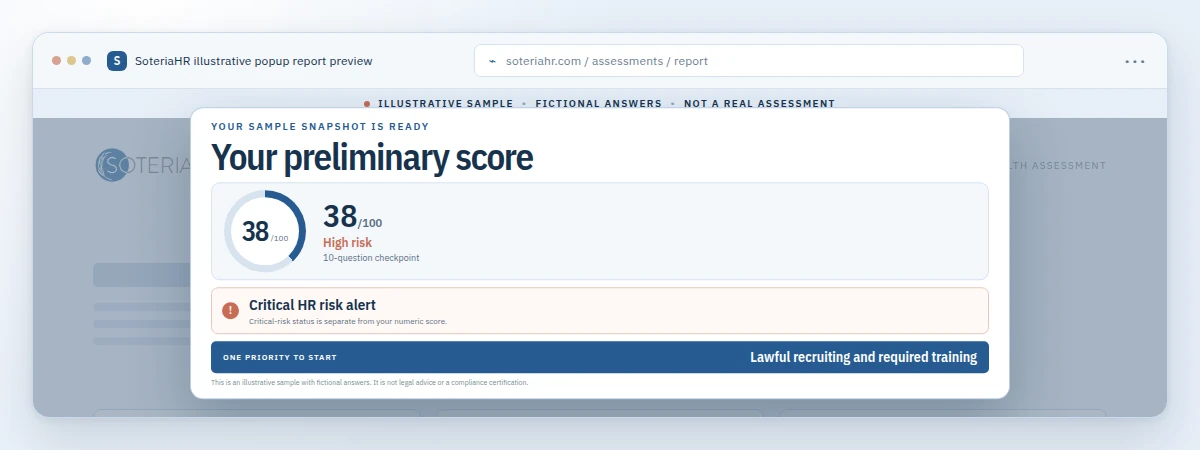
For staffing firms that want tailored support without co-employment, Soteria’s ASO (Administrative Services Organization) option is worth exploring, since the client remains the employer and retains responsibility for employment decisions. Leaders can start with the free HR Health Assessment at soteriahr.com to identify gaps before scheduling a conversation with an HR expert.

A short consultation can clarify priorities for HR for staffing needs before committing to a plan.
Frequently Asked Questions About HR for Staffing Needs
What is HR for staffing needs?
HR for staffing needs refers to the people-management practices staffing and recruiting companies use to hire, onboard, pay, and retain both their internal team and the employees they place with clients. It typically covers compliance, benefits, payroll coordination, and employee relations across multiple worksites.
How does HR support differ for staffing agencies compared to other small businesses?
Staffing agencies manage two employee populations at once, so HR must track placements, client site rules, and turnover far more actively than a typical small business. In addition, pay rates and benefits eligibility often vary by assignment.
Why do staffing companies need specialized HR compliance support?
Staffing firms face overlapping federal, state, and client-site employment rules that shift as placements move across jurisdictions. Specialized support helps catch classification, wage, and leave issues early.
What HR tasks should a staffing firm outsource first?
Most firms start by outsourcing onboarding paperwork, benefits administration, and policy documentation because these tasks are time-consuming and compliance-sensitive. Payroll coordination often follows as the firm grows.
How much does outsourced HR cost for a staffing company?
Costs vary based on headcount, service scope, and whether the firm needs full administration or occasional consulting. A tailored quote from an HR partner is the most reliable way to budget accurately.
How long does it take to set up HR support for a growing staffing firm?
A basic HR foundation, including policies and onboarding workflows, can often be built within a few weeks. Fully integrating benefits and payroll coordination typically takes longer.
What are common HR mistakes staffing agencies make?
Common mistakes include inconsistent onboarding documentation, misclassifying workers, and failing to track benefits eligibility across short-term assignments. These gaps often surface during an audit or wage claim.
Can outsourced HR handle multi-state staffing compliance?
Yes, an experienced outsourced HR partner can help monitor requirements across the states where a staffing firm places employees. However, the firm remains responsible for final compliance decisions.
Does an ASO create co-employment with staffing employees?
No, an Administrative Services Organization (ASO) model provides tailored HR support without establishing co-employment. The staffing company remains the employer of record.
What is the best practice for onboarding temporary employees quickly?
Standardizing onboarding documents and automating eligibility checks helps staffing firms place workers faster without skipping compliance steps. Consistency reduces errors as volume increases.
How does benefits administration work for staffing agencies?
Benefits administration includes managing enrollments, terminations, and carrier coordination as employees move between assignments. Applicable ACA, COBRA, and plan-document requirements should be reviewed case by case.
When should a staffing company bring in outside HR help?
A staffing firm should consider outside HR help once internal staff can no longer keep pace with onboarding volume or compliance tracking. Growing past roughly 10 to 50 employees is a common signal.
Final Thoughts
Ultimately, HR for staffing needs is about building processes that can keep pace with placement volume without sacrificing compliance or employee experience. As a staffing firm grows, the administrative load multiplies quickly, and informal handling tends to break down. Therefore, reviewing current processes, standardizing onboarding, and considering outside HR consulting or ASO support can make growth far more manageable. Leaders who want a clearer picture of their current gaps can complete the free HR Health Assessment or call (800) 399-2458 to talk with an HR expert about next steps.