Dynamic HR solutions give growing companies the flexibility to adjust HR support as headcount, compliance requirements, and business priorities shift over time. For founders and operations leaders at small and mid-sized organizations, a rigid HR setup often breaks down the moment the company adds new locations, employee types, or benefit plans. Soteria HR, based in Pasadena, California, works with employers across Los Angeles, Orange County, and nationwide to build HR administration, consulting, and benefits administration that scale with the organization. This guide explains what dynamic HR solutions are, why they matter, and how to evaluate the right level of support for your team.

Dynamic HR solutions let HR teams adjust support as a company grows.
What Are Dynamic HR Solutions?
Dynamic HR solutions are HR administration, consulting, and benefits services structured to flex with a company’s size, industry, and compliance obligations rather than staying fixed at a single scope. Instead of one static package, they combine ongoing support with the ability to add or adjust services as the organization grows. In practice, this means a company with 20 employees and one with 150 employees can both receive right-sized HR support that changes as their needs evolve.
For example, onboarding workflows, leave coordination, and unemployment support might start simple and expand as a business adds locations or departments. Similarly, benefits administration can grow from a single health plan to a multi-tier offering with ACA and COBRA considerations. If you want a broader overview of how these services fit together, Soteria HR’s guide on what HR solutions actually include is a helpful next read.
Why Growing Businesses Need Dynamic HR Solutions
Growth rarely happens on a predictable schedule, and therefore HR support that cannot adapt often becomes a bottleneck. As a company crosses certain headcount thresholds, new federal and state requirements can apply, including rules enforced by the U.S. Department of Labor and the U.S. Equal Employment Opportunity Commission. Without a flexible structure, internal teams can fall behind on compliance, documentation, and employee relations.
Small and mid-sized businesses also carry significant economic weight, which raises the stakes for getting HR right. According to the U.S. Small Business Administration’s Office of Advocacy, small businesses generate roughly 43.5% of U.S. gross domestic product, underscoring how much is riding on these organizations operating smoothly. As a result, dynamic HR solutions are not a luxury for larger companies alone; they matter just as much, if not more, for employers without a full internal HR department.
Core Components of Flexible, Scalable HR Support
Flexible, scalable HR support typically includes several interconnected pieces rather than a single service. Understanding each component helps leaders identify where gaps may exist.
- HR administration: Employee records, onboarding and offboarding, leave coordination, and payroll coordination.
- HR consulting: Guidance on workforce planning, culture, recruiting practices, and performance systems.
- Benefits administration: Enrollments, terminations, carrier coordination, and support for ACA, COBRA, and Section 125 requirements.
- ASO support: Tailored HR support without co-employment, so the client remains the employer of record.
For businesses weighing how much internal versus outsourced support makes sense, Soteria HR’s article on resource management consulting to build a stronger team breaks down how these pieces work together in practice. Manufacturing and production-heavy employers, in particular, often need a closer look at scheduling and compliance; the piece on HR consulting for manufacturing companies covers that in more depth.
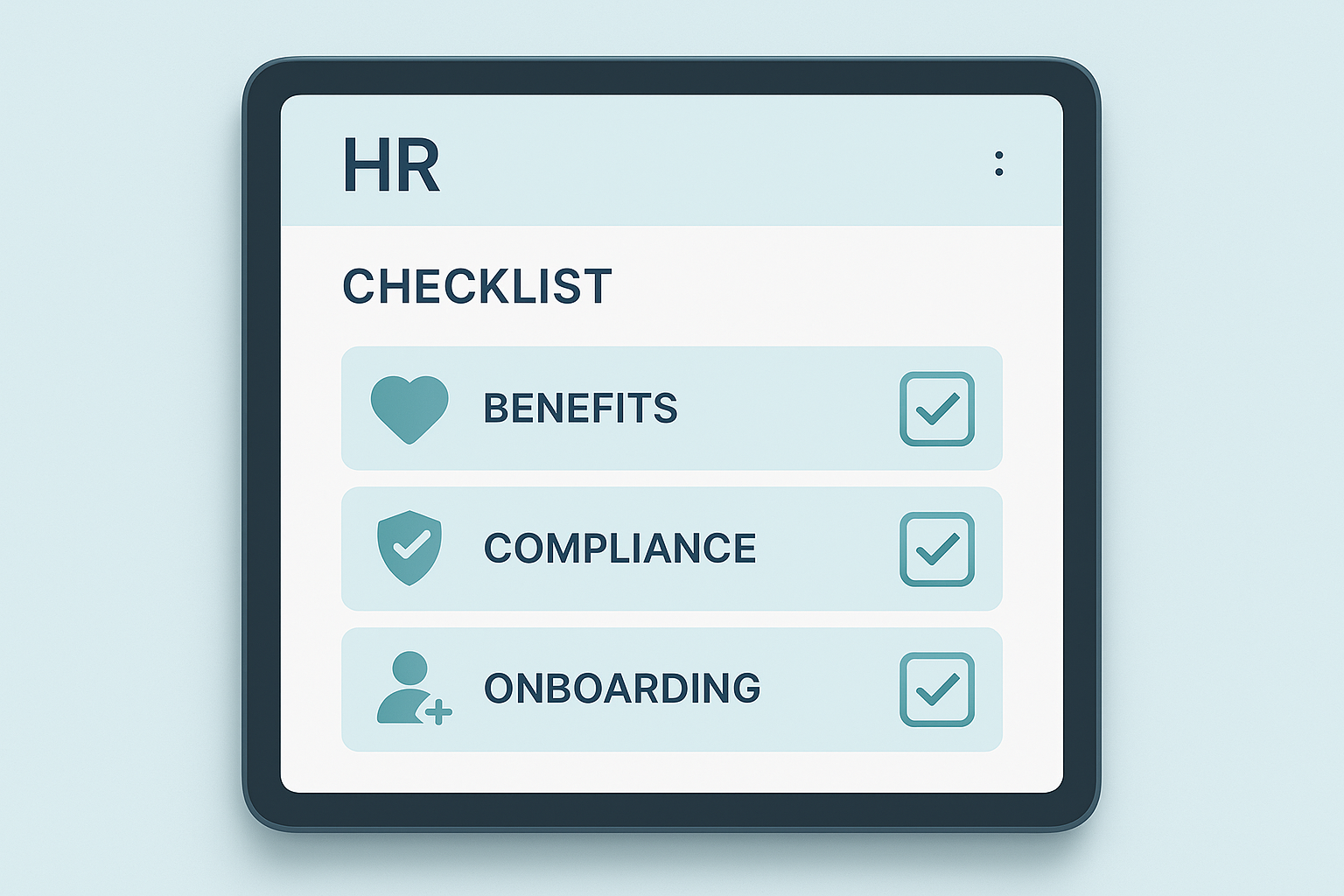
Breaking HR support into components makes it easier to scale each piece independently.
How to Build an Adaptive HR Strategy for Your Business
Building an adaptive HR strategy does not require starting over. Instead, it involves a sequence of practical steps that most growing companies can follow, regardless of industry.
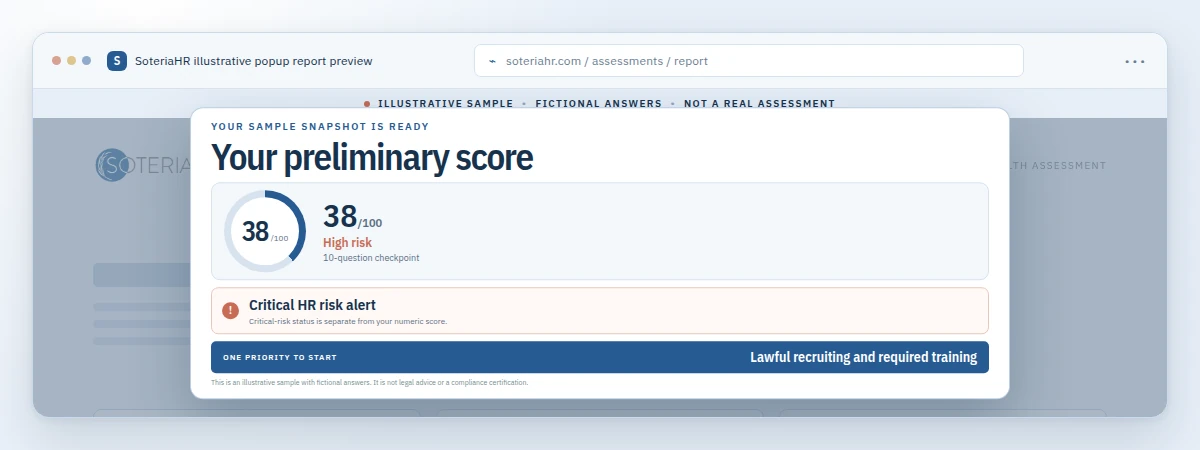
- Assess current HR gaps using a structured tool like a free HR Health Assessment to identify priorities across compliance, benefits, and employee relations before making changes.
- Define scalable policies and handbooks that can flex with headcount changes, acquisitions, or new state and local employment laws without requiring a complete rewrite each time.
- Build flexible benefits administration processes that support enrollment changes, COBRA and ACA requirements, and carrier coordination as your workforce composition shifts over time.
- Train managers on adaptable performance and employee relations practices so HR guidance keeps pace with company culture and legal requirements as the organization grows.
- Partner with outsourced HR experts or an ASO for ongoing support, allowing internal leaders to focus on strategy while specialists manage day-to-day HR administration tasks.
Notably, this sequence works whether a company is building HR from scratch or refining an existing internal team. Soteria HR’s overview of scaling HR operations as your business grows walks through similar milestones in more detail.
Signs Your Current HR Approach Isn’t Flexible Enough
Several warning signs suggest that an HR setup has become too rigid for the company’s current stage.
- Policies and handbooks have not been updated since the company was a fraction of its current size.
- Benefits enrollment or COBRA administration regularly causes delays or errors.
- Managers are unsure how to handle performance issues consistently across departments.
- Compliance questions tend to get answered reactively, after a problem has already surfaced.
If several of these sound familiar, it may be time to revisit the structure of your HR support rather than simply adding more internal headcount.
Soteria HR’s Approach to Flexible, Hands-On HR Support
Soteria HR builds HR administration, HR consulting, and benefits administration around each client’s actual stage of growth, rather than offering a one-size-fits-all package. This includes an ASO option that provides tailored HR support without co-employment, meaning clients remain the employer and retain responsibility for employment decisions and applicable obligations. Payroll coordination complements this broader HR relationship, helping information flow more smoothly between systems.
This approach serves organizations without a full HR department as well as those with an existing internal team that needs additional support. As the Society for Human Resource Management (SHRM) frequently notes, HR practices that keep pace with organizational change tend to support stronger employee relations and fewer compliance surprises. Learn more about Soteria HR’s full range of services at soteriahr.com, or try the free HR Health Assessment at soteriahr.ai to see where your current setup stands.

A consultation helps pinpoint which dynamic HR solutions fit a company’s current stage.
Scalable HR Solutions vs. Traditional HR Outsourcing
Traditional HR outsourcing often locks a company into a fixed menu of services for the length of a contract. In contrast, scalable HR solutions are built with the expectation that scope will change, whether that means adding benefits administration during open enrollment season or expanding consulting support during a hiring surge.
It is also worth distinguishing an ASO from a PEO (Professional Employer Organization) in this context. An ASO delivers tailored HR support without co-employment, so the client remains the legal employer, while a PEO typically involves a co-employment arrangement. Understanding this difference helps leaders choose the structure that best fits their risk tolerance and operational preferences.
Ready to Talk to an HR Expert?
Call (800) 399-2458 or submit a consultation request to discuss which dynamic HR solutions fit your organization’s current stage of growth.
Frequently Asked Questions About Dynamic HR Solutions
What are dynamic HR solutions?
Dynamic HR solutions are HR administration, consulting, and benefits services designed to flex with a company’s headcount, structure, and compliance needs instead of staying fixed in scope. They let a growing business add or adjust HR support as new requirements appear.
How do dynamic HR solutions differ from traditional HR outsourcing?
Traditional outsourcing often locks a company into a fixed package of services regardless of growth. Dynamic HR solutions, in contrast, are structured to expand, contract, or shift focus as the organization’s needs change over time.
Why do growing companies need dynamic HR solutions?
Growing companies face new compliance obligations, benefit requirements, and employee relations issues at nearly every headcount milestone. Dynamic HR solutions help leaders stay ahead of these changes without constantly rebuilding HR processes from scratch.
How much do dynamic HR solutions typically cost?
Cost varies based on company size, scope of services, and whether the engagement includes HR administration, consulting, benefits administration, or an ASO relationship. Most providers, including Soteria HR, tailor pricing after an initial consultation and assessment of current HR gaps.
How long does it take to implement dynamic HR solutions?
Basic HR administration support can often begin within a few weeks, while a full benefits administration or ASO transition may take one to three months depending on existing systems. Timelines depend on current documentation, payroll setup, and the complexity of benefit plans.
What industries benefit most from dynamic HR solutions?
Industries with fluctuating headcounts, multi-state employees, or heavy compliance obligations, such as manufacturing, professional services, healthcare support, and nonprofits, tend to see the most value. However, any growing small or mid-sized organization without a full internal HR department can benefit.
What’s the difference between HR administration and HR consulting?
HR administration covers the day-to-day tasks like onboarding, records, and leave coordination. HR consulting focuses on higher-level guidance, such as workforce planning, culture, and building out scalable HR processes and systems.
Can dynamic HR solutions help with compliance across multiple states?
Yes, dynamic HR solutions are often structured to monitor varying state and local requirements as a company hires across jurisdictions. Providers typically track changes through sources such as the U.S. Department of Labor and state labor agencies, though employers remain responsible for applicable compliance.
What common mistakes do businesses make when adopting dynamic HR solutions?
A common mistake is waiting until a compliance problem or employee relations issue forces a change, rather than building flexible HR support proactively. Another is choosing a rigid vendor that cannot adjust scope as the company’s headcount or benefit needs shift.
How does benefits administration fit into dynamic HR solutions?
Benefits administration within dynamic HR solutions covers enrollments, terminations, carrier coordination, and support for applicable ACA, COBRA, and Section 125 requirements. As a company’s workforce grows, this component adjusts to handle more plans, locations, or eligibility rules.
Is an ASO the same as a PEO within dynamic HR solutions?
No, an Administrative Services Organization (ASO) provides tailored HR support without co-employment, meaning the client remains the employer of record. A PEO typically involves co-employment, which is a different legal and administrative structure.
How can I start evaluating dynamic HR solutions for my company?
Start by identifying current HR gaps using a structured tool, such as a free HR health assessment, to see where administration, compliance, or benefits support is lacking. From there, a consultation with an HR expert can help map out which services fit your company’s size and growth plans.
Final Thoughts on Dynamic HR Solutions
In summary, dynamic HR solutions give growing businesses a way to keep HR administration, consulting, and benefits support aligned with their actual stage of growth, rather than forcing a fixed package onto a changing organization. From onboarding and leave coordination to benefits enrollment and manager training, each component can expand as headcount and compliance needs evolve. Consequently, companies that treat HR as a flexible system, rather than a static checklist, tend to handle growth with fewer surprises. If your current HR setup feels like it is straining under new demands, a short conversation can clarify what to adjust first. Call Soteria HR at (800) 399-2458 or submit a consultation request to talk through your options, or start with the free HR Health Assessment at soteriahr.ai to see where dynamic HR solutions could make the biggest difference for your team.