HR management for small to mid-sized businesses is the practical work of hiring, documenting, and supporting employees as a company grows—without the costly missteps that come from guesswork. For founders and operations leaders juggling a dozen priorities, HR often becomes the function that gets attention only after a problem appears. However, building a reliable system early helps protect the business and its people as headcount climbs from ten to two hundred fifty employees. This guide walks through what effective HR management looks like, how it changes as organizations scale, and when outsourced support makes sense.
In short: HR management for small to mid-sized businesses means setting up consistent systems for hiring, employee records, compliance, benefits, and performance—so leadership can make confident people decisions instead of reacting to each issue individually.
What Is HR Management for Small to Mid-Sized Businesses?
HR management for small to mid-sized businesses is the ongoing process of organizing people operations—hiring, onboarding, policies, benefits, and compliance—so a company can run consistently as it grows. Unlike large enterprises with dedicated departments for each function, smaller organizations often handle these tasks informally until gaps create real risk.
Specifically, this typically includes employee recordkeeping, leave coordination, unemployment claim support, and workplace policy enforcement. In addition, it covers payroll coordination with outside providers and ongoing communication between managers and staff. As a result, a business with structured HR management can respond to employee issues quickly instead of improvising each time something unexpected happens.
Many employers first encounter this concept when trying to understand what HR administration actually involves day to day. Understanding that distinction helps leaders decide what to handle internally and what to delegate.

Structured HR management for small to mid-sized businesses starts with clear policies and consistent documentation.
Why Small Business HR Management Matters as You Grow
Growth exposes weak HR foundations faster than almost anything else. Specifically, a company with five employees can usually manage informally, but the same approach at thirty or sixty employees often leads to missed deadlines, inconsistent discipline, and confusion over benefits eligibility.
For example, the U.S. Bureau of Labor Statistics has tracked private-sector turnover rates averaging well above 40% annually in recent years, a figure that underscores why retention-focused HR practices matter for growing companies. Furthermore, consistent onboarding and clear expectations are directly tied to lower turnover and faster productivity for new hires.
Similarly, compliance obligations often shift at specific employee-count thresholds under federal and state law. Therefore, leaders who understand these thresholds in advance can prepare rather than scramble when headcount crosses a new line. Reviewing current requirements with sources such as the U.S. Department of Labor and the EEOC is a reasonable starting point before making assumptions.
Core Building Blocks of HR for Mid-Sized Companies
As organizations move from “small” to “mid-sized,” HR management for small to mid-sized businesses typically expands to include several consistent components:
- Documented employee handbooks and policy updates
- Structured onboarding and offboarding workflows
- Benefits enrollment, terminations, and carrier coordination
- Payroll coordination with internal or external systems
- Performance management and manager training
In contrast, businesses that skip these building blocks often discover gaps only after an employee dispute, audit, or benefits error forces the issue. Readers comparing options for internal hires can review this breakdown of what an HR manager role typically covers at a small business before deciding whether to hire internally or outsource.
How to Build an HR Management Strategy for Your Growing Business
Building a dependable HR management system does not require a large internal team on day one. Instead, most growing companies benefit from following a sequence that layers in structure as needs increase.
- Assess your current HR foundation. Review existing policies, employee files, and compliance documents to identify gaps before adding new processes or hiring additional staff.
- Build core HR policies and documentation. Draft or update an employee handbook, job descriptions, and leave policies so expectations are documented consistently across the organization.
- Standardize hiring and onboarding. Create repeatable hiring steps, offer letter templates, and a structured onboarding checklist to reduce inconsistency as new employees join the team.
- Set up compliant benefits and payroll coordination. Confirm benefits enrollment processes, applicable plan requirements, and payroll coordination workflows align with current regulations and carrier obligations.
- Monitor, train, and adjust regularly. Schedule periodic policy reviews, manager training, and compliance checks so the HR management system keeps pace with headcount and regulatory changes.
Notably, many businesses find it useful to map this process against the broader meaning of HR administration, which is explained in more depth in this overview of what HR administration really means for SMBs.

A consultation often clarifies which parts of HR management for small to mid-sized businesses need the most immediate attention.
Outsourced HR Management vs. In-House Teams for SMBs
Many leaders eventually face a choice between hiring internal HR staff, outsourcing selected functions, or combining both. In-house hires offer daily presence, but they also require salary, benefits, and ongoing training investment. Outsourced HR support, on the other hand, can provide broader expertise across compliance, benefits, and HR consulting without the cost of a full department.
For organizations that already have internal staff, an Administrative Services Organization (ASO) model can supplement that team without shifting employer-of-record responsibilities. Importantly, the client remains the employer and retains responsibility for employment decisions and applicable legal obligations under this structure. This differs from a co-employment arrangement, so it is worth clarifying which model a provider actually offers.
Businesses evaluating their options quickly often start by searching broadly for local support; however, a more useful approach is comparing specific services rather than location alone, as outlined in this guide on finding the right HR support quickly. Soteria HR, based in Pasadena, California, serves employers across Los Angeles, Orange County, and nationwide through HR administration, HR consulting, benefits administration, and ASO support, which readers can review directly at soteriahr.com.
Where HRMS Software Fits Into the Picture
Technology can streamline parts of HR management for small to mid-sized businesses, particularly recordkeeping, time tracking, and document storage. Nevertheless, software alone does not replace human judgment for compliance interpretation or employee relations decisions. Those considering a platform may find it helpful to review this comparison of HRMS software solutions built for small to medium-size businesses before committing to a specific system.
Common HR Management Mistakes to Avoid
Even well-intentioned leaders make predictable errors when HR management is handled informally. Specifically, outdated handbooks, inconsistent disciplinary action, and unclear leave policies tend to cause the most friction. Furthermore, misclassifying employees as independent contractors remains one of the most common compliance missteps among growing businesses.
In addition, benefits administration mistakes—such as missed enrollment deadlines or unclear COBRA notices—can create both financial and legal exposure. Consequently, periodic reviews of policies, classifications, and benefits processes are far less costly than correcting a dispute after the fact.
Frequently Asked Questions About HR Management for Small to Mid-Sized Businesses
What is HR management for small to mid-sized businesses?
HR management for small to mid-sized businesses is the structured handling of hiring, employee records, compliance, benefits, and performance so a company runs consistently as it grows. It replaces ad-hoc decisions with documented, repeatable processes.
How does HR management differ for small businesses versus mid-sized companies?
Small businesses often need foundational policies, basic compliance, and onboarding structure, while mid-sized companies typically require formal handbooks, layered approval processes, and dedicated benefits administration. As headcount grows, informal practices create more legal and operational risk.
Why is HR management important for business growth?
Consistent HR management reduces turnover, keeps leaders focused on strategy instead of putting out fires, and limits compliance exposure as rules change with headcount. In contrast, inconsistent practices often slow hiring and create costly disputes.
How much does outsourced HR management cost for small businesses?
Outsourced HR management pricing typically depends on employee count, scope of services, and whether benefits or payroll coordination are included. Most providers offer tiered or per-employee pricing, so it is best to request a quote based on your specific needs.
How long does it take to set up an HR management system?
A basic HR foundation, including core policies and onboarding steps, can often be built within four to eight weeks. However, full benefits administration and compliance documentation may take longer depending on plan complexity and jurisdiction.
What are the most common HR management mistakes small businesses make?
Common mistakes include missing or outdated employee handbooks, inconsistent onboarding, misclassifying workers, and reacting to compliance issues instead of preventing them. These gaps often surface during audits, terminations, or rapid growth.
When should a growing business hire an HR manager or outsource HR?
Many organizations consider added HR support once they approach ten or more employees, when compliance complexity increases, or when leadership no longer has time to manage people issues directly. Outsourcing is often a practical bridge before a full internal HR department is needed.
What is the difference between HR administration and HR consulting?
HR administration covers the daily execution of HR tasks, such as records, onboarding, and leave coordination. HR consulting, by comparison, focuses on strategic guidance for workforce planning, culture, and process design.
Can a small business use HRMS software instead of hiring HR staff?
HRMS software can automate recordkeeping and workflows, but it does not replace human judgment for compliance decisions, employee relations, or policy interpretation. Most growing businesses pair software with HR expertise rather than relying on technology alone.
What HR compliance requirements apply to small and mid-sized employers?
Requirements vary by employee count and jurisdiction, but commonly include wage and hour rules, anti-discrimination protections, and benefits-related regulations such as COBRA or ACA thresholds. Employers should verify current thresholds with sources like the Department of Labor and EEOC.
What is an ASO and how does it differ from a PEO?
An Administrative Services Organization (ASO) provides tailored HR support while the client remains the employer of record. A PEO, in contrast, typically involves a co-employment arrangement, which shifts certain employer responsibilities to the PEO.
What are best practices for effective HR management in growing companies?
Best practices include documenting policies early, standardizing onboarding, reviewing compliance obligations regularly, and revisiting benefits as headcount changes. Above all, consistency across every employee interaction reduces risk and builds trust.
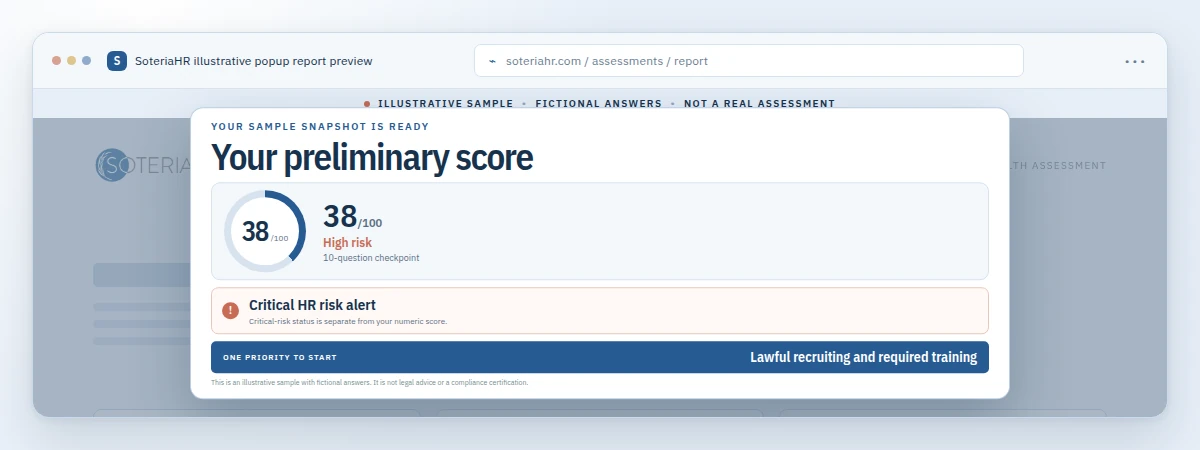
Not sure where your HR gaps are? Start with a free, preliminary HR Health Assessment, then discuss the results with a real HR professional.
Take the Free HR Health Assessment | Call (800) 399-2458 to talk to an HR expert.
In summary, HR management for small to mid-sized businesses is less about perfection and more about consistency: documented policies, standardized onboarding, compliant benefits, and regular review. Whether a company builds this internally, partners with an outsourced provider, or combines both approaches, the goal remains the same—protecting employees and the business while leadership focuses on growth. Soteria HR’s assessment results are self-reported and preliminary, not a certification of compliance, so pairing any self-check with a direct conversation remains the most reliable next step.