Employee benefits design strategies for SMBs are the practical methods small and mid-sized employers use to build a benefits package that attracts talent, controls cost, and satisfies legal requirements. For a growing company, that means weighing what employees actually want — health coverage, retirement support, and paid time off — against budget realities and rules under laws such as ERISA (the federal law that governs most employee benefit plans) and the ACA (the Affordable Care Act). Above all, an effective strategy ties benefits choices to real workforce data instead of guesswork, so the investment pays off in retention, recruiting, and compliance.
Key Takeaways: Employee Benefits Design
- ✓Effective benefits design strategies start with workforce data, not a copy of a competitor’s plan.
- ✓Benefits now make up roughly 29% of total compensation costs, so small design mistakes carry real budget weight.
- ✓A five-step process — audit, survey, budget, select, communicate — keeps benefits design on track year after year.
- ✓ASO support can deliver tailored HR and benefits administration without co-employment, while the employer keeps control.
- ✓Reviewing the strategy annually, not just at renewal, prevents gaps from compounding.
What Are Employee Benefits Design Strategies for SMBs?
Employee benefits design strategies for SMBs answer one core question: which combination of health coverage, retirement support, paid leave, and voluntary perks will do the most good for the budget available. In short, a defined process — rather than guesswork — determines what a company offers and why it offers it. Consequently, the strategy becomes a decision framework that leaders can repeat every renewal cycle instead of reinventing the plan from scratch.
In practice, the framework considers four inputs: employee demographics and feedback, cost and claims trends, legal requirements, and market benchmarks for the company’s industry and region. For example, a 25-person logistics company and a 25-person law firm will land on very different packages, even with similar budgets, because their workforces value different things. As a result, the strategy itself — not the specific plan list — is what makes the approach transferable from year to year. Soteria HR’s strategic benefits planning process applies this same structure for growing employers.
According to the U.S. Bureau of Labor Statistics, employer-provided benefits accounted for roughly 29% of total compensation costs for civilian workers in its most recent Employer Costs for Employee Compensation release. Therefore, a benefits package is not a minor add-on to payroll — it is nearly a third of total labor cost, which is exactly why a deliberate design strategy matters more than a generic template.
Why Thoughtful Benefits Design Matters for Growing Employers
Benefits design matters because it directly shapes whether a company can compete for talent without overspending. In particular, candidates increasingly compare benefits alongside salary, so a package that feels thin or confusing can cost a company its top choice of hire. Similarly, current employees weigh their benefits when deciding whether to stay, especially during open enrollment season when gaps become obvious.
Cost pressure adds urgency. The Kaiser Family Foundation’s Employer Health Benefits Survey has tracked year-over-year increases in average premiums for employer-sponsored health coverage, which means an SMB that designs its plan passively — simply renewing whatever it had last year — risks absorbing cost increases it never actually chose. In contrast, a company that reviews plan design annually can shift funding approaches, adjust tiers, or add cost-sharing options before renewal forces the decision.
Furthermore, well-designed benefits reduce administrative friction. When categories of coverage are chosen deliberately, HR teams spend less time fielding confused employee questions and more time on higher-value work. Soteria HR’s overview of common employee benefits is a useful starting reference for leaders mapping out what a baseline package typically includes before layering on strategy.
Core Elements of a Competitive Benefits Package
Most competitive packages are built from four categories. Specifically, leaders typically decide how much to invest in each category before choosing specific carriers or vendors.
Health and Welfare Benefits
This group includes medical, dental, vision, and life insurance. Because the ACA (Affordable Care Act) and the U.S. Department of Labor’s Employee Benefits Security Administration set rules on continuation coverage under COBRA (a law letting employees keep group coverage after certain job changes, typically at their own cost) and plan disclosures, this category carries the heaviest compliance weight.
Retirement Benefits
A 401(k) or similar plan, often paired with an employer match, falls here. The IRS guidance on Section 125 cafeteria plans is also relevant when pairing pre-tax benefit elections with retirement contributions, since plan design affects how contributions are treated for tax purposes.
Paid Time Off and Leave
Vacation, sick leave, holidays, and any state-mandated leave sit in this category. Notably, leave policy design varies significantly by state, so a company operating in multiple jurisdictions needs a strategy that can flex by location.
Voluntary and Supplemental Benefits
Items like accident insurance, pet insurance, or identity protection usually cost the employer little or nothing directly, yet they add perceived value. For a deeper look at building this full mix intentionally, see Soteria HR’s guide on how to build an employee benefits package your team wants.
A Step-by-Step Process for Designing Employee Benefits
A repeatable process turns employee benefits design from a once-a-year scramble into a managed project. The following five steps outline the typical sequence.
- Audit current benefits and costs. Pull enrollment numbers, claims trends, and total spend for every current benefit so the design decision starts from facts instead of assumptions.
- Survey employee needs and benchmark the market. Ask employees directly what they value, then compare the results against similar-sized employers in the same industry and region.
- Model budget scenarios and funding approach. Build at least two or three cost scenarios, factoring in premium increases, contribution splits, and any tax treatment under plans like Section 125.
- Select plan designs and partners. Choose carriers, plan tiers, and any outsourced administration support that matches the budget scenario the leadership team selected.
- Communicate, implement, and monitor. Roll out clear enrollment materials, then track utilization and feedback throughout the year rather than waiting for the next renewal to react.
For a more detailed walkthrough of this sequence, Soteria HR’s article on how to create competitive employee benefits packages expands on vendor selection and timing considerations.
Common Mistakes in SMB Benefits Strategy
Even well-intentioned employers repeat a short list of avoidable mistakes. Recognizing them early prevents costly rework later.
- Copying a competitor’s package wholesale. Two companies with different workforces rarely need the same benefits mix, so a borrowed plan often misses what actually matters to the team.
- Treating open enrollment as the only touchpoint. Benefits communication that happens once a year leaves employees confused about coverage they are already using.
- Ignoring compliance deadlines. Missed ACA reporting, COBRA notices, or Form 5500 filings can create penalties that outweigh any premium savings from a cheaper plan.
- Designing benefits without budget guardrails. Adding attractive perks without modeling multi-year cost trends often forces a painful rollback later, which damages trust more than never offering the perk at all.
A benefits package built on guesswork rarely survives its second renewal. The packages that last are the ones designed around real workforce data, reviewed on a schedule, and adjusted before cost pressure forces the decision.
Benefits Design Approaches Compared
SMBs generally choose from four approaches to getting benefits design done. Each option trades off control, cost, and administrative burden differently.
| Approach | Best Fit | Strengths | Watch For |
|---|---|---|---|
| DIY in-house design | Very small teams with simple needs | Low direct cost, full internal control | Limited benchmarking data, compliance gaps |
| Broker-led benefits only | Companies needing plan placement only | Market access, carrier relationships | Little support on day-to-day administration |
| ASO-supported administration | Growing SMBs, roughly 10–250 employees | Tailored HR and benefits support; employer stays the legal employer, no co-employment | Scope and responsibilities should be confirmed in writing |
| Full PEO co-employment | Companies wanting pooled-plan buying power | Access to larger-group plan pricing | Shared employer relationship changes some legal responsibilities |
Soteria HR’s complete guide to managing employee benefits covers the ASO model in more depth, including how it differs from traditional PEO arrangements for employers who want to remain the sole employer of record.
Reviewing and Adjusting Your Benefits Strategy Over Time
A benefits strategy is not a one-time project; it needs a review rhythm. Specifically, most employers benefit from a light quarterly check on utilization and a full annual review before renewal.
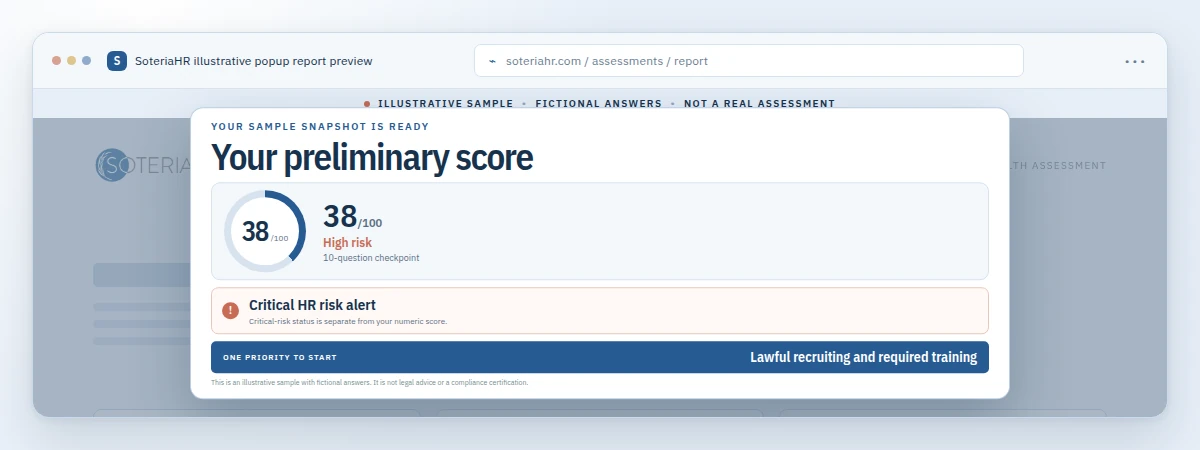
In addition, leaders who are unsure where their current package stands can start with a lower-commitment step. Soteria HR’s free HR Health Assessment, available at soteriahr.ai, offers a short 10-question Quick HR Check (about two minutes) or a more detailed 40-question Complete HR Health Assessment (about 10–12 minutes) to surface potential gaps and priorities. The results are self-reported and preliminary — not a certification of compliance or a substitute for a professional legal audit — but they give leadership a concrete starting point for a deeper conversation.
Ready to Build a Benefits Strategy That Fits Your Team?
Soteria HR provides hands-on outsourced HR support — including benefits administration, HR consulting, and ASO partnerships without co-employment — for employers across Los Angeles, Orange County, and nationwide. We’ve got your back, so you can focus on growth.
Call (800) 399-2458 to talk to an HR expert, or visit soteriahr.com to submit a consultation request.
Frequently Asked Questions About Employee Benefits Design Strategies for SMBs
What are employee benefits design strategies for SMBs?
Employee benefits design strategies for SMBs are the structured methods employers use to decide which benefits to offer, at what funding level, and how to administer them. They typically combine workforce surveys, cost modeling, and compliance checks rather than relying on a single template.
How do small businesses decide which benefits to offer first?
Most SMBs start with health coverage because it has the biggest influence on recruiting and retention. After that, retirement contributions and paid time off typically follow, based on what the budget and employee feedback support.
Why does benefits design matter for employee retention?
Employees compare their benefits to market expectations, especially during open enrollment. Therefore, a package that feels outdated or confusing can push otherwise satisfied employees to look elsewhere.
What is the difference between an ASO and a PEO for benefits support?
An ASO (Administrative Services Organization) provides tailored HR and benefits administration while the client remains the sole employer of record. A PEO (Professional Employer Organization) typically involves co-employment, which shifts some employer responsibilities to the PEO.
How much should an SMB budget for employee benefits?
Budgets vary widely by industry and location, but national data shows benefits commonly represent close to 29% of total compensation costs, according to the U.S. Bureau of Labor Statistics. Specific budget targets should be modeled against the company’s own payroll and benchmarked against similar-sized employers.
How long does it take to redesign a benefits package?
A full redesign — audit through implementation — usually takes between eight and twelve weeks, depending on how quickly carrier quotes and employee feedback come in. Starting the process well before renewal avoids a rushed decision.
What are the most common mistakes companies make when designing benefits?
The most frequent mistakes include copying a competitor’s plan, communicating only during open enrollment, missing compliance deadlines, and adding perks without checking multi-year cost impact. Each of these can usually be prevented with an annual review schedule.
What legal requirements apply to SMB benefits plans?
Requirements vary by plan type and employer size, but commonly include ERISA disclosure rules, ACA reporting, COBRA continuation notices, and Form 5500 filings where applicable. Employers should verify current thresholds with the Department of Labor, the IRS, and relevant state agencies before finalizing plan design.
How often should a company review its benefits strategy?
A light utilization check every quarter and a full strategic review ahead of each renewal is a reasonable rhythm for most SMBs. Waiting until renewal notices arrive often leaves too little time to make meaningful changes.
What is a Section 125 cafeteria plan, and why does it matter for benefits design?
A Section 125 cafeteria plan lets employees pay for certain benefits with pre-tax dollars, which can lower both employee and employer payroll tax costs. It matters for benefits design because pairing it correctly with other offerings can improve the value employees get from the same budget.
Should SMBs offer voluntary benefits in addition to core benefits?
Voluntary benefits, such as accident or pet insurance, often add perceived value at little direct cost to the employer since employees typically pay the premium. For many SMBs, they are a low-risk way to round out a package without expanding the core budget.
What is the best practice for communicating a new benefits package to employees?
Best practice is to communicate changes in plain language, in multiple formats, well before the enrollment deadline — not just once in a single email. Following up with a short Q&A session or office hours also reduces confusion and support tickets after launch.
In summary, effective employee benefits design strategies for SMBs rely on real data, a repeatable process, and ongoing review rather than a one-time decision made under renewal pressure. By auditing current spend, listening to employee needs, modeling the budget, and communicating clearly, growing employers can build a package that supports recruiting and retention without quietly outgrowing its cost. For companies without the internal bandwidth to run this process alone, working with an outsourced HR partner like Soteria HR — through HR administration, consulting, or ASO support — can turn benefits design from an annual scramble into a steady, well-managed part of the business. Call (800) 399-2458 or start with the free HR Health Assessment at soteriahr.ai to see where your current strategy stands.