HR consulting for growth gives founders, operations leaders, and HR teams a structured way to build people systems that keep pace with new hires, new markets, and new complexity. Rather than patching together policies after a problem surfaces, growing companies use HR consulting to put administration, compliance, and benefits structures in place before they become urgent. For employers trying to scale without a large internal HR department, this kind of support often becomes the difference between reactive firefighting and steady, sustainable expansion.
Direct answer: HR consulting for growth helps companies design scalable HR administration, benefits, and workforce practices as headcount increases. It typically combines practical administrative support with strategic guidance on hiring, compliance, and employee relations.

HR consulting for growth often starts with a conversation about where the business is headed next.
What Is HR Consulting for Growth?
HR consulting for growth is a service model where outside HR professionals help a company build or refine its people operations to support expansion. In particular, this usually means reviewing current practices, identifying gaps, and designing processes that will hold up as the organization adds employees, locations, or lines of business.
Unlike a one-time compliance audit, HR consulting for growth is typically ongoing. As a result, it adapts as the company’s needs change, covering everything from onboarding workflows to leadership development. Many providers, including Soteria HR, pair this consulting with hands-on HR administration so recommendations actually get implemented rather than sitting in a slide deck.
Why Growing Companies Need Strategic HR Consulting
Growth creates pressure on systems that worked fine at a smaller scale. For example, a founder who personally handled onboarding for the first 15 employees usually cannot sustain that approach at 75 employees. Consequently, policies that were once informal need to become documented, consistent, and defensible.
According to the Society for Human Resource Management, organizations commonly maintain roughly 1 to 1.5 HR staff per 100 employees, a ratio that often leaves growing companies under-resourced internally during expansion phases. In addition, the U.S. Department of Labor continues to enforce wage, classification, and leave requirements that apply regardless of company size, which means gaps in HR capacity can translate directly into compliance exposure. This is precisely where HR consulting for growth adds value: it closes the capacity gap without requiring a company to build a full department overnight.
Signs Your Organization Needs Outsourced HR Consulting
Not every company needs HR consulting at the same stage, but certain patterns tend to repeat. Specifically, leaders often notice:
- Inconsistent policies applied differently across teams or managers
- Rising turnover without a clear explanation
- Missed deadlines for benefits renewals or compliance filings
- Leaders spending hours each week on HR tasks instead of strategy
- Plans to hire in new states or significantly increase headcount
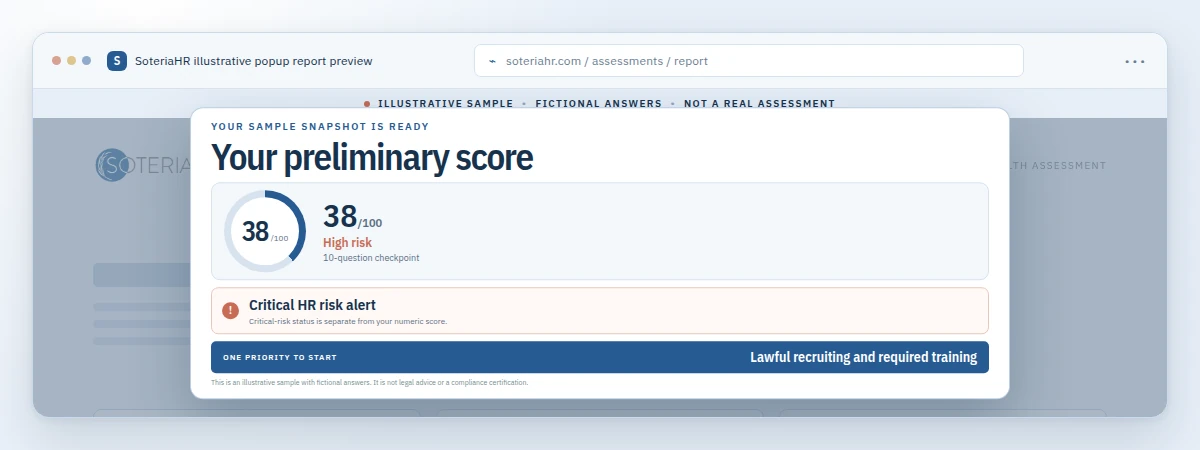
If several of these sound familiar, a free HR Health Assessment can offer a quick, preliminary look at where gaps exist before committing to a full engagement.
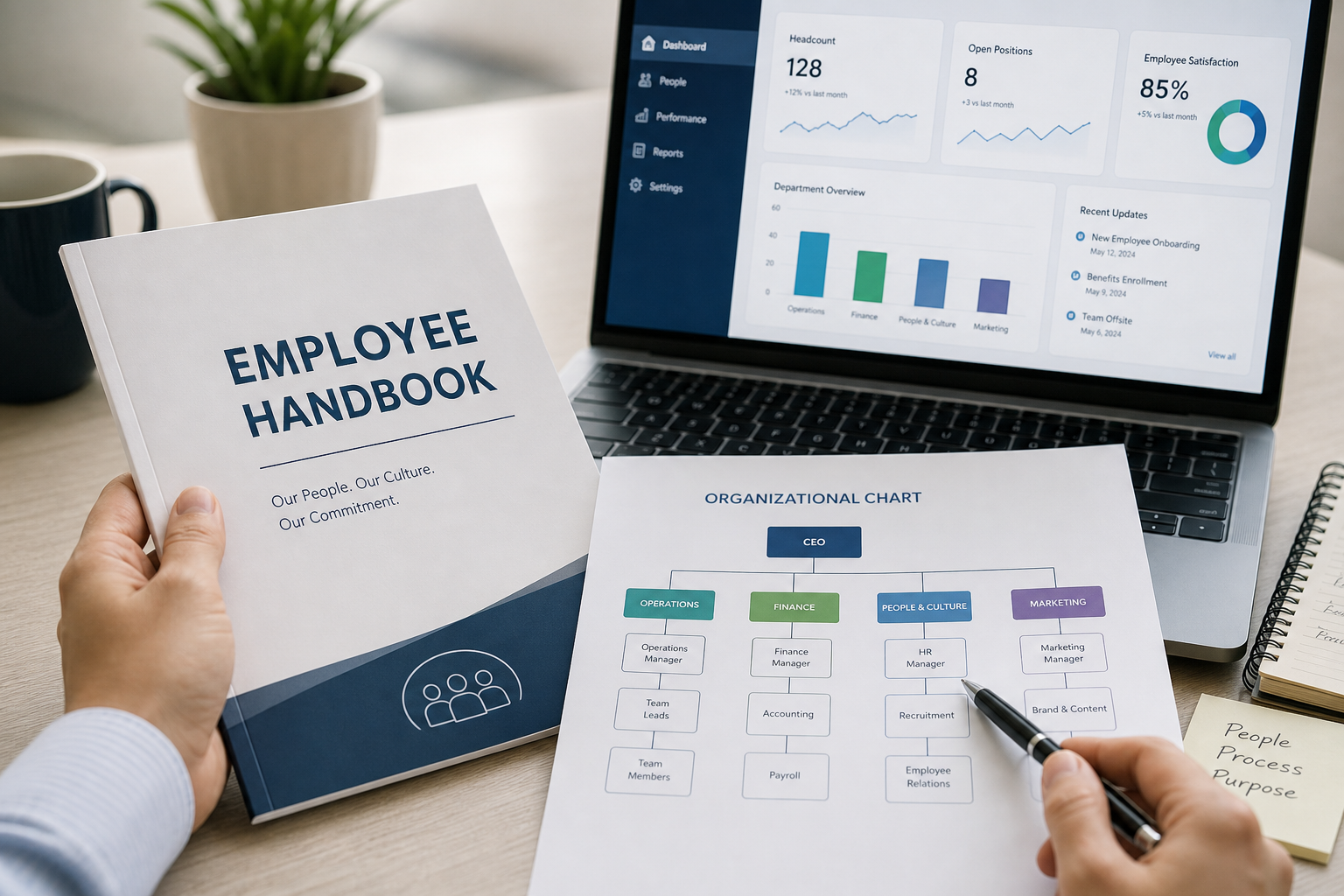
Reviewing policies against actual practice is often the first step in HR consulting for scaling companies.
Core Areas of HR Consulting for Scaling Companies
Most HR consulting for growth engagements center on a few recurring areas, though scope is always tailored to the organization. HR administration typically covers employee records, onboarding and offboarding, leave coordination, and payroll workflows. Meanwhile, benefits administration addresses enrollments, terminations, and carrier coordination, often touching requirements tied to ACA, COBRA, and Section 125 plans.
Beyond administration, consultants often advise on workforce planning, performance expectations, and manager training. Together, these pieces give a company the foundation to hire confidently without creating gaps that surface later as disputes or compliance findings. Readers interested in a deeper breakdown can review this complete guide to human capital management consulting.
How HR Consulting for Growth Typically Unfolds
While every engagement differs, most HR consulting relationships follow a similar sequence. Understanding this process helps leaders know what to expect before signing on.
- Assess current HR gaps. Consultants review existing policies, employee files, and compliance practices to flag risk areas before they grow.
- Define growth priorities. Hiring plans and expansion goals shape the scope, so support matches actual business direction.
- Select the right support model. Some companies need project-based help; others benefit from an ongoing ASO relationship without co-employment.
- Build scalable infrastructure. Policies, onboarding, and systems get documented so they hold up across a larger, more distributed workforce.
- Monitor and adjust. Periodic reviews keep practices aligned with new laws, new locations, and new headcount.
Companies evaluating providers often compare notes using resources like this overview of what strategic HR consulting involves for growing SMBs.
HR Consulting for Growth vs. Hiring Internally
A common question among leaders is whether to hire an internal HR manager instead of engaging a consultant. Both approaches have merit, but they solve different problems. An internal hire offers daily presence and institutional memory. However, a single hire rarely covers the full range of HR disciplines, from benefits compliance to employee relations to recruiting strategy.
HR consulting, by contrast, provides access to a team with varied specialties, often at a lower cost than multiple full-time salaries. For that reason, many growing companies use outsourced consulting to build infrastructure first, then layer in internal hires as the organization matures. For more on evaluating fit, see what to know about an HR management consultant.
Common Mistakes When Scaling HR Without Support
Several mistakes tend to recur among companies that delay HR consulting for growth. Specifically, teams often rely on outdated templates copied from a previous employer, assign HR duties to someone without dedicated time, or wait until a complaint or audit forces the issue. Consequently, fixes become more expensive and more disruptive than they would have been earlier.
Equally, some companies assume HR consulting is only useful for organizations without any HR function. In reality, it also supports existing internal teams that need extra capacity or specialized expertise, such as building a stronger internal team without overextending current staff. The U.S. Equal Employment Opportunity Commission continues to update guidance that affects hiring and workplace practices, which makes ongoing review a practical necessity rather than a one-time project.

A steady HR consulting partnership helps leaders focus on growth instead of administrative strain.
Getting Started with HR Consulting for Growth
Choosing the right partner starts with clarity about current gaps and future goals. Soteria HR, based in Pasadena and serving employers across Los Angeles, Orange County, and nationwide, works with organizations that lack a full HR department as well as those supporting an existing internal team. Services include HR administration, HR consulting, benefits administration, and an ASO option that provides tailored support without co-employment, meaning the client remains the employer of record.
For leaders unsure where to start, the free HR Health Assessment at soteriahr.ai offers a quick, self-reported look at potential gaps and priorities. Results are preliminary and not a certification of compliance, but they often surface useful starting points for a deeper conversation. Those ready for direct guidance can review this explanation of what HR consulting means for SMBs before reaching out.
Frequently Asked Questions About HR Consulting for Growth
What is HR consulting for growth?
HR consulting for growth is advisory and hands-on support that helps expanding companies build HR systems, policies, and processes that scale with headcount. It typically covers administration, compliance, benefits, and workforce planning.
How does HR consulting for growth differ from hiring an in-house HR manager?
HR consulting gives a company immediate access to a broader team of specialists without the cost of multiple full-time salaries. An in-house hire offers daily presence but usually covers a narrower range of HR disciplines alone.
When should a growing company start working with an HR consultant?
Many companies bring in HR consulting once they pass roughly 10 to 20 employees or begin hiring across multiple states. At that point, informal processes usually can no longer keep pace with compliance and people-management demands.
What services are included in outsourced HR consulting?
Outsourced HR consulting commonly includes HR administration, benefits administration, employee relations guidance, and workforce planning support. Scope is customized based on the organization’s size, internal capacity, and goals.
How much does HR consulting for growth typically cost?
Pricing varies widely based on company size, scope of services, and whether support is project-based or ongoing. Most providers offer a consultation to scope needs before presenting a tailored proposal.
What is an ASO, and how does it relate to HR consulting?
An ASO, or Administrative Services Organization, delivers tailored HR support without co-employment, meaning the client remains the employer of record. This differs from a PEO model and pairs well with ongoing HR consulting relationships.
Can HR consulting help with compliance as a company expands into new states?
Yes, HR consultants help review policies, leave practices, and wage requirements against the rules in each jurisdiction where the company hires. This reduces the risk of overlooking state-specific obligations during expansion.
What are common mistakes companies make when scaling HR internally?
Common mistakes include delaying formal policies, relying on outdated templates, and assigning HR duties to someone without dedicated time or training. These gaps often surface during audits, turnover spikes, or benefits renewals.
Does HR consulting for growth include benefits administration?
Many HR consulting engagements include benefits administration support, such as enrollments, terminations, and carrier coordination. Scope should be confirmed since benefit compliance requirements, including ACA and COBRA, vary by plan and employer size.
How long does it take to see results from HR consulting?
Some improvements, like updated policies or corrected classifications, can happen within the first few weeks. Larger initiatives, such as performance systems or leadership training, typically take a few months to implement fully.
Is HR consulting only for companies without an HR department?
No, HR consulting also supports existing internal HR teams that need extra capacity, specialized expertise, or project-based help. It can supplement a lean HR function rather than replace it entirely.
What size companies benefit most from HR consulting for growth?
Organizations with roughly 10 to 250 employees are a common focus for growth-stage HR consulting, though this is a priority range rather than a strict cutoff. Companies outside that range can still benefit depending on their structure and goals.
How do I know if my company needs HR consulting now?
Signs include inconsistent policies, rising turnover, missed compliance deadlines, or leaders spending excessive time on HR tasks instead of strategy. A free HR health assessment can help surface specific gaps before committing to a consultant.
Final Thoughts on HR Consulting for Growth
In summary, HR consulting for growth gives leaders a practical path to build HR systems that hold up as headcount, locations, and complexity increase. Rather than reacting to problems after they appear, companies that invest early in administration, benefits, and workforce planning tend to scale with fewer disruptions. Soteria HR provides this kind of hands-on partnership, backed by its promise that clients have support so they can focus on growth.
For leaders ready to take the next step, the free HR Health Assessment offers a quick starting point, or you can call (800) 399-2458 to talk to an HR expert directly about your organization’s priorities.