
HR support for business is the structured set of services, expertise, and systems that help companies manage their people — compliantly, strategically, and without burning out the people who are supposed to be running the company. For growing organizations, it’s not a luxury. It’s the difference between scaling with confidence and stumbling into costly, avoidable mistakes.
According to the Society for Human Resource Management (SHRM), the average cost of replacing an employee is between 50% and 200% of their annual salary. Furthermore, HR compliance failures can result in fines that easily reach tens of thousands of dollars. In short, getting HR right isn’t just good practice — it protects your bottom line.

Professional HR support for business helps leaders focus on growth while experts handle compliance, hiring, and people strategy.
What Is HR Support for Business?
HR support for business is any professional assistance that helps an organization manage its workforce effectively and legally. This includes everything from hiring and onboarding to compliance monitoring, benefits administration, employee relations, and strategic workforce planning.
In practical terms, it answers the question: who’s watching out for your people — and for you? For small to mid-sized businesses, that answer is often “nobody,” which is exactly where problems begin.
HR support can be delivered in-house by a dedicated HR team, or it can be outsourced to a partner firm. Increasingly, growing companies choose outsourced HR because it delivers senior-level expertise without the overhead of full-time salaries, benefits, and management complexity.
Why Growing Companies Can’t Afford to Skip HR
Many founders assume HR becomes necessary only when a company gets “big enough.” However, that assumption is one of the most expensive myths in business. The U.S. Small Business Administration notes that employment law obligations begin the moment you hire your first employee — not your fiftieth.
As a result, small businesses face the same compliance landscape as large corporations: wage and hour laws, anti-discrimination requirements, leave regulations, and workplace safety standards. The difference is they face it with far fewer resources.
Beyond compliance, there’s the talent problem. Specifically, companies without structured HR processes struggle to hire well, onboard effectively, and retain the people they worked hard to recruit. That cycle is expensive and exhausting.
The Real Cost of Ignoring HR
Consider these realities for businesses without dedicated HR support:
- Misclassifying employees as contractors can trigger IRS audits and back-tax liabilities.
- Inconsistent discipline or termination practices create wrongful termination exposure.
- Poorly written job offers can create unintended contractual obligations.
- Outdated employee handbooks leave businesses vulnerable to policy disputes.
- Reactive hiring without process leads to bad fits and high turnover.
Therefore, investing in HR support isn’t overhead — it’s risk management with a strong return.
Core Services Included in Business HR Support
Effective HR support for a business typically spans several interconnected functions. Together, they create a foundation that keeps your team compliant, productive, and engaged. Here’s what a comprehensive HR support program covers:
HR Administration
Day-to-day HR administration — onboarding, offboarding, record-keeping, and policy management — keeps your people programs running smoothly. Without it, small errors compound quickly into compliance gaps. Learn more about what structured HR administration services look like in practice.
Compliance and Risk Management
Employment law changes constantly. Consequently, businesses without dedicated HR oversight are perpetually behind. A proactive HR partner monitors federal, state, and local regulation changes and updates your policies accordingly — before violations happen, not after.
Recruiting and Hiring Support
Great HR support means you hire the right people, not just the available ones. This includes building job descriptions, structuring interviews, managing offers, and ensuring your hiring process is both legally compliant and designed for long-term fit.
Benefits Management
Competitive benefits are a top driver of both attraction and retention. In addition, managing benefits enrollment, renewals, and carrier relationships is time-consuming. An HR partner handles the complexity so your team gets great benefits without you spending hours on plan administration.
Employee Handbook and Policy Development
A clear, current employee handbook is one of the most valuable documents your business can have. It sets expectations, documents your culture, and provides legal protection. However, many small businesses are operating on outdated handbooks — or none at all.
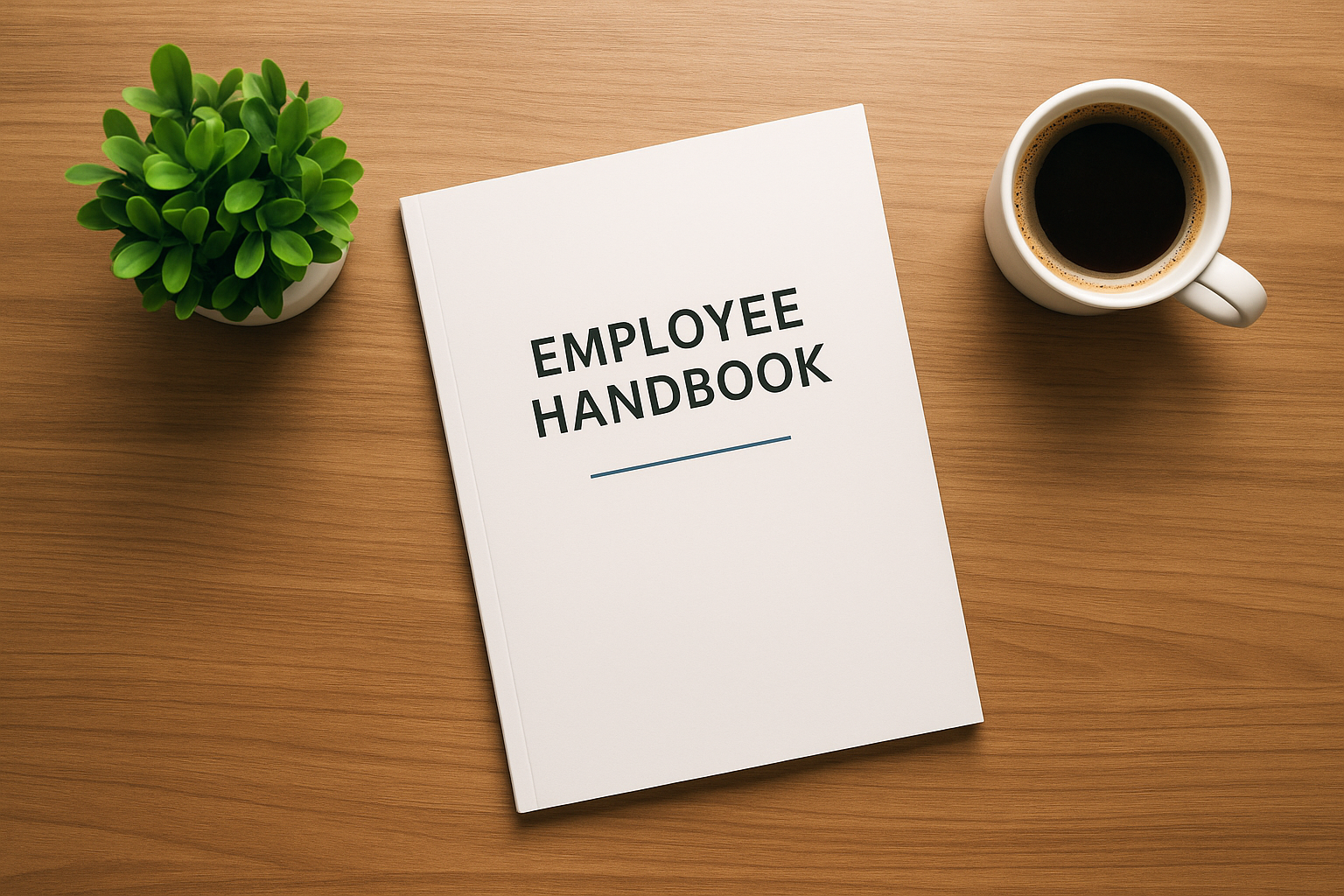
A well-crafted employee handbook is a foundational piece of any solid HR support program for business.
How to Set Up HR Support for Your Business
Setting up proper HR support doesn’t have to be overwhelming. In fact, following a clear sequence makes the process manageable — even for businesses starting from scratch.
- Assess your current HR needs and gaps. Review your existing processes, compliance status, and pain points. Identify which HR functions are missing or creating risk.
- Decide between in-house and outsourced HR support. Evaluate cost, expertise, and scalability. For most SMBs, outsourcing delivers stronger results at lower cost than building an internal department.
- Choose an HR support partner aligned with your business stage. Look for a provider that understands your industry, size, and growth goals — and prioritizes proactive strategy over reactive administration.
- Build foundational HR infrastructure. Create your employee handbook, document key policies, establish compliant onboarding and offboarding workflows, and set up payroll and benefits systems.
- Implement ongoing compliance monitoring and HR strategy. Establish a regular cadence to review regulatory changes, address employee relations issues, and align your HR approach with evolving business goals.
In-House vs. Outsourced HR: Which Is Right for You?
For companies with 10 to 250 employees, the in-house vs. outsourced question is worth examining carefully. In-house HR gives you dedicated staff embedded in your culture. However, it also comes with significant salary, benefits, and management overhead — often $80,000 to $120,000+ per year for a single mid-level HR generalist.
Outsourced HR, by contrast, provides access to a full team of specialists — compliance experts, benefits managers, and strategic HR consultants — at a fraction of that cost. Furthermore, outsourced partners like Soteria HR function as embedded partners who learn your business, not as impersonal vendors processing tickets.
For a deeper look at the outsourcing model, explore HR business process outsourcing and how it works for growing companies.
“HR shouldn’t feel like red tape. With the right partner, it becomes a competitive advantage — helping you attract better talent, reduce risk, and build a team that actually sticks around.”
What to Look for in an HR Support Partner
Not all HR support providers are created equal. Specifically, the best partners go beyond transactional administration — they think strategically about your business and get ahead of problems before they escalate. Here’s what to evaluate:
- Proactive vs. reactive approach: Do they flag issues before they become crises?
- Industry familiarity: Do they understand your sector’s specific compliance landscape?
- Scalability: Can they grow with you from 15 employees to 150?
- Full-service capability: Do they cover administration, compliance, recruiting, and strategy — or just one piece?
- Cultural alignment: Will they feel like part of your team, or like an outside vendor?
Additionally, review what human resource support services typically include so you know exactly what to ask for. For small businesses specifically, explore tailored HR support for small business options designed for your scale and budget.
According to human resource management principles, organizations that invest in structured HR practices see measurable improvements in employee engagement, retention, and productivity — outcomes that directly affect revenue and growth trajectory.

Structured HR support helps small business teams stay aligned, engaged, and compliant as they grow.
HR Support Services Tailored for Small Businesses
Small businesses have unique HR needs. They’re often navigating rapid growth, limited budgets, and founders who are simultaneously the CEO, hiring manager, and de facto HR director. As a result, the right HR support model must be flexible, practical, and built for real-world constraints.
Soteria HR works specifically with companies in this space — organizations with 10 to 250 employees that need professional HR without the overhead of a full department. From custom HR playbooks to HR support services for small business, the goal is always the same: give you the structure to grow confidently, without the guesswork.
Similarly, whether you’re dealing with a tricky termination, building out your first benefits program, or simply trying to make sure your hiring process doesn’t expose you to legal risk — having a knowledgeable HR partner in your corner changes everything.
Frequently Asked Questions About HR Support for Business
What is HR support for business?
HR support for business refers to the professional services and systems that help a company manage its people — from hiring and onboarding to compliance, payroll coordination, and employee relations. It can be handled in-house or outsourced to a dedicated HR partner.
Why do small businesses need HR support?
Small businesses face the same compliance obligations and people challenges as large corporations, but with far fewer internal resources. Without proper HR support, they risk costly legal mistakes, high turnover, and stunted growth.
When should a business get HR support?
Most businesses benefit from formal HR support once they reach 10 or more employees. However, even companies with fewer staff can face compliance requirements around hiring, payroll, and workplace safety that make early HR guidance valuable.
What is the difference between in-house HR and outsourced HR support?
In-house HR means hiring full-time HR staff employed directly by your company. Outsourced HR support means partnering with an external firm that provides the same expertise at a fraction of the cost, without the overhead of salaries and benefits for dedicated HR employees.
How much does outsourced HR support for business cost?
Costs vary widely based on company size, services needed, and provider. Many outsourced HR firms charge a monthly retainer or per-employee fee. For growing SMBs, outsourcing is typically far more cost-effective than hiring a full HR department.
What services are included in HR support for business?
Common services include HR administration, compliance management, recruiting and hiring support, employee handbook creation, benefits management, payroll coordination, and strategic HR consulting. The exact scope depends on the provider and your business needs.
What HR compliance risks do small businesses face?
Small businesses commonly face risks around wage and hour laws, anti-discrimination regulations, FMLA compliance, I-9 documentation, and workplace safety standards. Missing these requirements can result in significant fines and legal liability.
Can outsourced HR support help with employee retention?
Yes. A good HR partner helps design competitive benefits packages, build positive workplace culture, and create clear career paths — all of which directly reduce turnover. Strategic HR support addresses the root causes of employee dissatisfaction before they escalate.
Do I need an employee handbook for my small business?
Yes, an employee handbook is strongly recommended for any business with employees. It sets clear expectations, documents your policies, and provides legal protection if disputes arise. An HR partner can create a compliant, culture-aligned handbook for you.
What is a custom HR playbook?
A custom HR playbook is a tailored document that outlines your company’s HR processes, policies, and strategies aligned with your business goals and culture. It serves as an operational guide for managing your people programs consistently and effectively.
How does HR support help during business growth?
As your team grows, HR complexity increases rapidly. A dedicated HR support partner helps you scale hiring, maintain compliance, build management capacity, and preserve culture — all critical factors for sustainable business growth.
What is HR business process outsourcing (HR BPO)?
HR business process outsourcing (HR BPO) involves transferring HR functions — such as payroll, benefits administration, and compliance management — to an external provider. This allows businesses to focus on core operations while experts handle HR complexity.
Conclusion: Build a Stronger Business with the Right HR Support
HR support for business is not a back-office function — it’s a strategic lever that directly affects your ability to grow, retain great people, and stay out of legal trouble. Whether you’re a founder wearing every hat or a COO trying to scale a team from 30 to 100, having the right HR infrastructure in place changes the trajectory of your business.
The good news is that you don’t have to build it alone. Outsourced HR partners like Soteria HR provide growing companies with the expertise, structure, and proactive guidance they need — without the overhead of a full internal department. Consequently, you get a trusted partner who knows your business, anticipates problems, and helps you build the kind of workplace people actually want to stay in.
Above all, the best time to get serious about HR support is before a problem forces your hand. Start with an honest assessment of where your gaps are — and go from there.