HR technology integration is the practice of connecting separate HR systems—payroll, benefits, time tracking, applicant tracking, and core employee records—so data flows between them automatically instead of being re-entered by hand. For small and mid-sized employers, this matters because disconnected tools quietly drain hours every week and create room for costly mistakes. As a result, many growing organizations eventually reach a point where their HR software stack needs to work together, not just exist side by side.
Consequently, understanding how to approach this process well—before choosing new software or hiring a vendor—can save months of rework. This guide walks through what HR technology integration actually involves, why it matters, and how employers with 10 to 250 employees can approach it without overwhelming their internal teams.
Effective HR technology integration connects payroll, benefits, and employee records into a single, reliable workflow.
What Is HR Technology Integration?
HR technology integration is the process of linking two or more HR-related software platforms so information updates in one system automatically reflects in another. For example, a new hire entered in an applicant tracking system can flow directly into payroll and benefits platforms without someone retyping the same details three times.
In contrast to simply purchasing new HR software, integration focuses on the connections between tools. Specifically, it addresses how data moves, who owns it, and how errors get caught before they reach a paycheck or a benefits enrollment form. As the human resource management system concept has matured, more employers now expect their core HR platform to talk to payroll, benefits, and scheduling tools rather than operate in isolation. For a broader overview of what counts as HR software, see this explanation of what HR technology actually includes.
Why Connecting HR Systems Matters for Growing Businesses
Above all, disconnected systems cost time. When HR staff must log into four or five platforms to update one employee’s address or salary change, errors become almost inevitable. Industry research cited by the Society for Human Resource Management has noted that HR teams relying on manual, disconnected processes can lose several hours each week to repetitive data entry and reconciliation—time that integrated systems can largely eliminate.
Furthermore, growing companies face increasing complexity as headcount rises. A business with 15 employees might manage HR through spreadsheets and email; a business with 150 employees cannot sustain that approach without errors multiplying. Therefore, HR tech integration becomes less of a convenience and more of an operational necessity somewhere along that growth curve. To see how this plays out for a specific industry, review this breakdown of HR services suited to technology companies.

Growing teams rely on connected systems to keep payroll, benefits, and employee data accurate as headcount increases.
Key Components of an Integrated HR Technology Stack
Typically, a connected HR stack includes several core pieces. First, a central HRIS or HRMS holds employee records, job history, and compliance documentation. Second, payroll software processes wages and tax withholdings. Third, a benefits administration platform manages enrollments, terminations, and carrier communication. Finally, applicant tracking and time-and-attendance tools round out the stack for most small and mid-sized employers.
In addition, the specific platforms matter less than how well they communicate. For instance, an employer might use excellent individual tools, yet still struggle if those tools cannot exchange data through an application programming interface, commonly called an API, which is simply a defined way for two software systems to send information to each other. For a deeper look at platform options, this guide to HRMS software solutions for small and mid-sized businesses covers common choices in more detail, and the broader advantages are outlined in this piece on the benefits of HR technology for growing employers.
How to Approach HR Technology Integration Step by Step
Because integration projects can feel overwhelming, breaking the process into clear steps helps employers avoid costly missteps. The following sequence reflects a practical approach used across many small and mid-sized organizations.
- Audit current HR systems. List every platform in use—payroll, benefits, applicant tracking, time tracking—and note where data overlaps or conflicts between them.
- Define integration priorities. Rank potential connections by business impact; linking payroll and benefits enrollment, for example, often delivers the fastest return.
- Choose compatible platforms. Confirm whether existing software supports APIs or built-in connectors, and replace tools that cannot integrate cleanly with the rest of the stack.
- Map data flows and governance. Document which system owns each data field and who is responsible for correcting errors that appear across platforms.
- Test, train, and roll out in phases. Pilot the integration with one department first, train HR staff and managers, and monitor accuracy closely during the first payroll cycles.
Notably, skipping the audit step is one of the most frequent reasons integration projects stall. Without a clear inventory, it becomes difficult to know which connections will actually solve existing problems.
Common HR Technology Integration Mistakes to Avoid
Even well-intentioned projects run into predictable problems. For example, attempting to integrate every system at once often leads to confusion and data errors that are hard to trace back to their source. Similarly, failing to assign clear ownership of each data field frequently results in conflicting records between payroll and benefits platforms.
Likewise, many employers underestimate the training required once systems go live. Even a well-built integration fails if HR staff and managers do not understand the new workflow. Consequently, building in time for testing and training—not just technical setup—tends to separate successful projects from frustrating ones.
When to Bring in Outsourced HR Support for Integration
Many organizations without a dedicated HR technology specialist reach a point where internal staff simply cannot absorb another project. In that situation, an outsourced HR partner can review existing systems, recommend compatible platforms, and coordinate implementation alongside whatever internal team already exists. This approach works whether a company has no formal HR department yet or already has HR staff who need extra hands during a transition.
Soteria HR, based in Pasadena, California, supports employers across Los Angeles, Orange County, and nationwide with HR administration, HR consulting, and benefits administration that can incorporate technology integration support as part of a broader engagement. The firm’s ASO option provides tailored HR support without co-employment, meaning the client organization remains the employer of record throughout. Understanding how these systems affect day-to-day staff experience also matters; this overview of HR resources for employees explains what connected systems mean from the employee side.
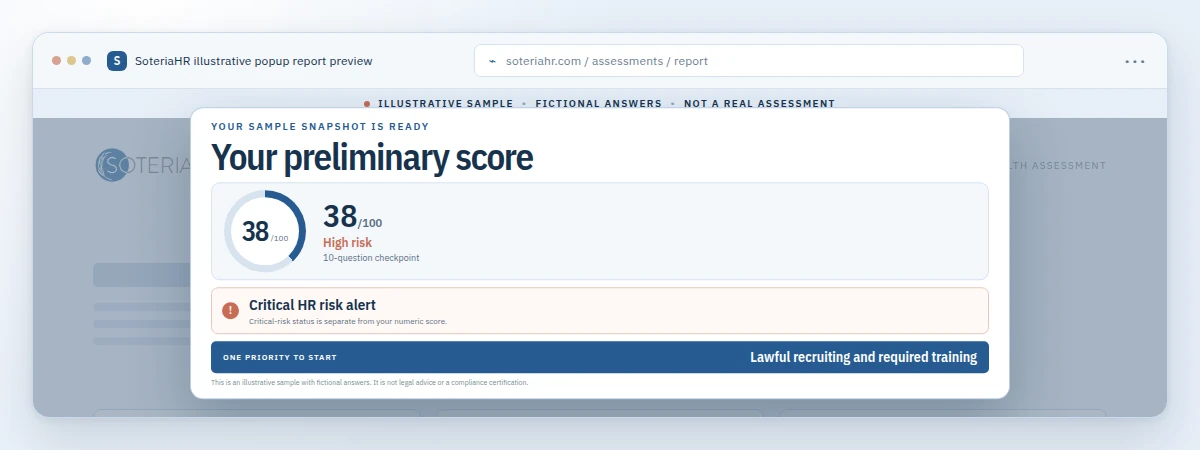
For employers unsure where their current gaps lie, Soteria’s free HR Health Assessment at soteriahr.ai offers a quick starting point: a 10-question Quick HR Check takes about two minutes, while the Complete HR Health Assessment runs roughly 10 to 12 minutes with 40 questions. Results are self-reported and preliminary rather than a certified compliance audit, but they can highlight where HR technology integration might reduce risk. You can also visit Soteria HR’s website to learn more about available services before scheduling a consultation.

An outsourced HR partner can help prioritize which systems to connect first during HR technology integration.
Frequently Asked Questions About HR Technology Integration
What is HR technology integration?
HR technology integration is the process of connecting separate HR systems, such as payroll, benefits, time tracking, and applicant tracking, so they share data automatically. This reduces manual data entry and keeps employee records consistent across platforms.
Why is HR technology integration important for small businesses?
Small businesses often run HR tasks across several disconnected tools, which increases errors and administrative time. Integration streamlines workflows so leaders can spend less time on paperwork and more on growth.
How does HR technology integration improve payroll accuracy?
When payroll systems automatically receive updated hours, benefits deductions, and status changes from other HR platforms, there is less room for manual entry mistakes. As a result, payroll corrections and related compliance exposure tend to decrease.
What systems are typically connected during HR technology integration?
Common systems include payroll software, benefits administration platforms, applicant tracking systems, time and attendance tools, and core HRIS or HRMS records. The right mix depends on the organization’s size and priorities.
How long does HR technology integration typically take?
Timelines vary widely depending on the number of systems and data complexity, ranging from a few weeks for simple payroll-benefits connections to several months for full HRIS overhauls. Generally, a phased rollout reduces disruption along the way.
What does HR technology integration cost?
Costs depend on the platforms involved, the number of integrations, and whether custom development is required. Therefore, organizations should request a detailed scope from vendors or an HR partner before committing to a project.
What are common mistakes in HR technology integration?
Common mistakes include skipping a data audit, integrating too many systems at once, and failing to assign clear data ownership. Unfortunately, these issues often create duplicate records and compliance gaps.
How is HR technology integration different from simply buying new software?
Buying software replaces one tool, while integration focuses on making existing and new tools communicate with each other. Without integration, even the best individual systems can still operate as disconnected data silos.
Can outsourced HR providers help with HR technology integration?
Yes, outsourced HR providers can review current systems, recommend compatible platforms, and coordinate implementation alongside internal teams. This support is especially useful for organizations without a dedicated HR technology specialist.
What is the difference between HR technology integration and an HRIS?
An HRIS, or human resource information system, is a single platform that stores employee data. HR technology integration connects that HRIS with other tools, such as payroll or benefits platforms, so information flows between them automatically.
How do you measure the success of HR technology integration?
Success is often measured through reduced manual data entry hours, fewer payroll errors, faster onboarding timelines, and improved data accuracy across systems. Tracking these metrics before and after implementation shows the real impact of the project.
What compliance risks should employers consider during HR technology integration?
Employers should confirm that data transfers meet applicable privacy and recordkeeping requirements, including rules tied to benefits documentation and wage records under guidance from agencies such as the U.S. Department of Labor. Reviewing vendor security practices and applicable federal and state requirements before go-live reduces exposure.
Bringing It All Together
In summary, HR technology integration is about far more than adopting new software—it is about making existing and new HR tools work together so information flows accurately and automatically. Specifically, a careful audit, clear priorities, and a phased rollout tend to separate smooth integrations from frustrating ones. For organizations that lack the internal bandwidth to manage this process alone, resources like the Society for Human Resource Management and an experienced outsourced HR partner can both help close the gap.
Ultimately, employers who invest the time to plan HR technology integration thoughtfully tend to see fewer payroll errors, faster onboarding, and more reliable compliance documentation over time. If your organization is weighing where to start, Soteria HR’s team can review your current systems and priorities. Call (800) 399-2458 or submit a consultation request to talk to an HR expert, or take the free HR Health Assessment at soteriahr.ai to get a preliminary look at where your HR systems may need attention.