HRO providers handle the day-to-day and strategic work of human resources so growing companies do not have to build an internal department from scratch. Many CEOs and operations leaders reach a point where hiring, compliance, and benefits administration eat up hours better spent running the business. That is exactly where a human resources outsourcing partner steps in. Instead of juggling multiple vendors, you get one accountable partner managing payroll coordination, employee relations, and legal compliance. This guide breaks down what HRO providers actually do, how they compare to PEOs, and how to choose one that fits your stage of growth.
Quick answer: HRO providers are outsourced firms that manage HR functions—such as payroll coordination, benefits, compliance, and employee relations—on behalf of a business, typically through a flexible service agreement rather than a shared-employer model like a PEO.
What Are HRO Providers?
HRO providers is short for human resources outsourcing providers—companies that take on some or all of your HR administrative and strategic work for a fee. In particular, they act as an extension of your leadership team rather than a separate employer of record.
Unlike hiring five specialists in-house, a single HRO partner can cover compliance, recruiting, and benefits management under one contract. As a result, growing businesses gain expertise without the overhead of a full internal department. According to the Society for Human Resource Management, companies increasingly rely on outsourced HR support as regulatory complexity grows year over year.

Choosing among HRO providers starts with understanding your company’s specific HR gaps.
How Do HR Outsourcing Companies Support Your Business?
HR outsourcing companies typically embed themselves into your existing operations rather than replacing your leadership. Specifically, they take on repetitive administrative tasks while advising on higher-level strategy, such as compensation planning or workplace culture.
For example, a solid partner will manage onboarding paperwork, coordinate payroll with your existing system, and monitor compliance deadlines. Meanwhile, your team stays focused on growth instead of paperwork. Soteria HR’s HR administration services follow this exact model, handling daily details from onboarding through offboarding.
- Payroll coordination and recordkeeping
- Benefits design and enrollment support
- Compliance monitoring and risk management
- Recruiting and hiring assistance
- Employee handbook creation and updates
HRO vs. PEO: What’s the Real Difference?
This is one of the most common points of confusion. In contrast to an HRO arrangement, a PEO enters a co-employment relationship, meaning your employees are technically employed jointly by your company and the PEO.
Consequently, PEOs often pool benefits across many client companies, which can lower costs but reduce flexibility. HRO providers, on the other hand, generally leave you as the sole employer while still delivering hands-on support. Therefore, businesses that want more control over policies and culture often prefer the HRO model.
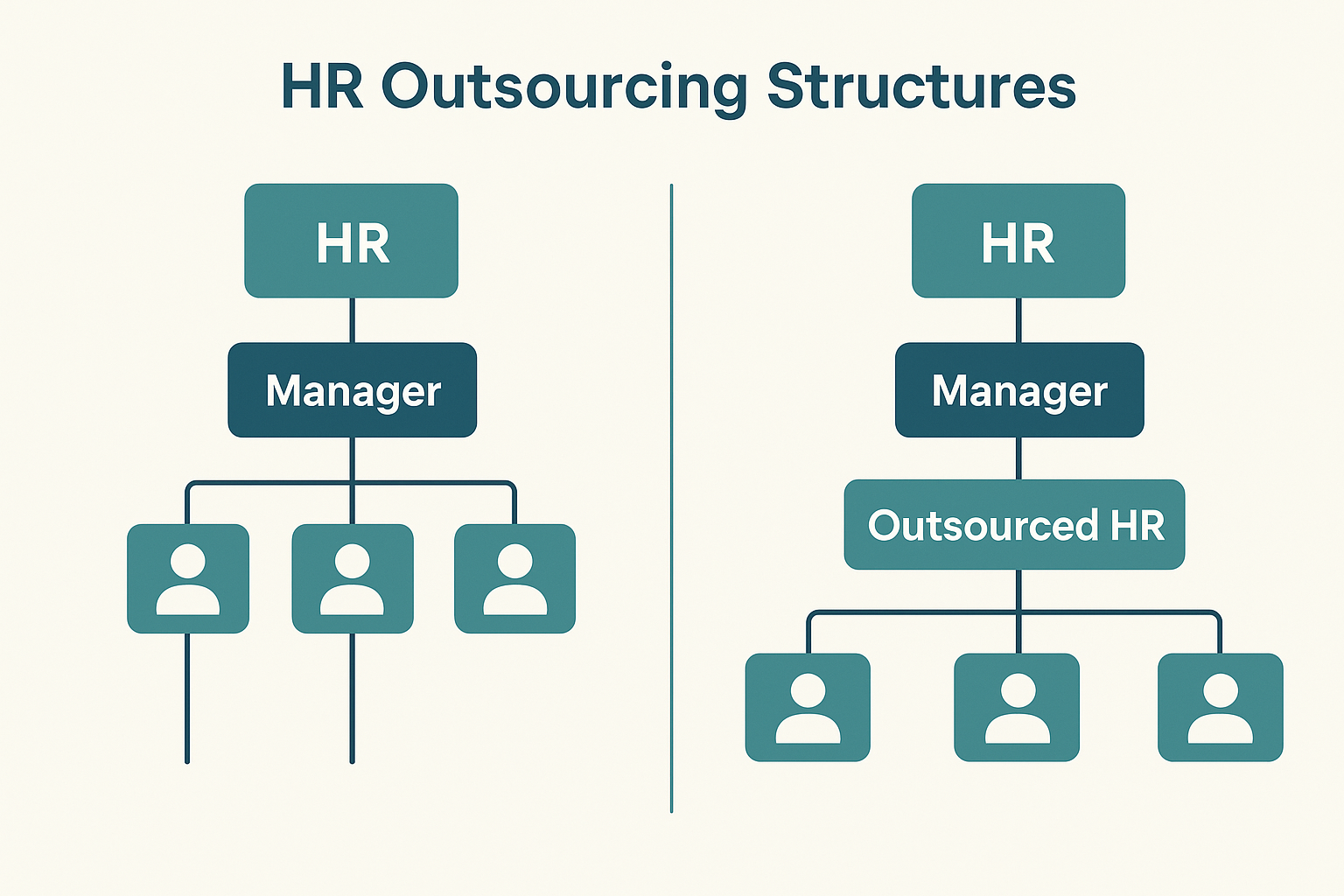
Understanding structural differences helps clarify which HR outsourcing model fits best.
What Do HR Outsourcing Firms Typically Charge?
Pricing varies widely, but many HR outsourcing firms charge between $50 and $150 per employee each month, depending on service scope. Others use a flat monthly retainer instead, especially for strategic consulting work.
However, cost should never be the only factor. Above all, a lower price often means narrower service scope, which can leave compliance gaps that cost far more later in fines or turnover. For a deeper look at pricing structures, Soteria HR’s HR outsourcing service providers page outlines typical engagement models.
How to Choose the Best HRO Provider for Your Business
Selecting the right partner takes more than a quick proposal comparison. Instead, follow a structured evaluation process to avoid costly mistakes.
- Define your HR pain points and goals. List the specific problems you need solved, such as compliance gaps, slow hiring, or inconsistent benefits administration, before contacting any vendor.
- Compare service scope and specialization. Request a detailed breakdown of included services from each candidate and confirm whether payroll, recruiting, and compliance are fully covered or extra.
- Vet compliance expertise and industry experience. Ask each provider how they track changing labor laws and whether they have direct experience serving companies in your specific industry.
- Evaluate technology, reporting, and communication style. Review the software platforms used for payroll and benefits, and confirm how quickly the provider responds to urgent employee relations questions.
- Review pricing structure and contract flexibility. Compare flat-fee versus per-employee pricing models and check for reasonable termination clauses in case your needs change as you scale.
In addition, ask for references from companies of similar size. Specifically, a provider that succeeds with a 15-person team may struggle to support one nearing 200 employees.

A clear checklist makes comparing HRO providers far less overwhelming.
Why Growing Companies Partner With Soteria HR
Soteria HR works specifically with small to mid-sized organizations of 10 to 250 employees that need proactive HR leadership without the cost of a full internal department. For instance, clients often start with HR services and consulting and expand into full administration as they scale.
Furthermore, companies facing complex leadership gaps sometimes benefit from a fractional CHRO arrangement, while others need help managing employee healthcare management alongside payroll and compliance. You can review Soteria HR’s full approach at soteriahr.com to see which service tier fits your growth stage.
Frequently Asked Questions About HRO Providers
What are HRO providers?
HRO providers are outsourced firms that manage human resources functions like payroll coordination, benefits, and compliance on behalf of a business. They act as an extension of your team rather than replacing it entirely.
How do HRO providers differ from a PEO?
HRO providers typically work as a vendor without co-employment, while a PEO enters a shared-employer relationship. This affects liability, benefits pooling, and how payroll taxes are filed.
How much do HRO providers typically cost?
Pricing usually ranges from a flat monthly fee to a per-employee charge, often between $50 and $150 per employee monthly. Costs vary based on service scope and compliance complexity.
How long does it take to onboard an HRO provider?
Most companies complete onboarding within 30 to 60 days, depending on data migration needs. A phased transition plan helps avoid payroll or benefits disruptions.
What services do outsourced HR partners usually include?
Common services include payroll coordination, benefits administration, compliance monitoring, employee handbooks, and recruiting support. Many also offer strategic consulting for performance and culture.
Are HRO providers a good fit for small businesses?
Yes, they are often ideal for small to mid-sized businesses that need HR expertise but cannot justify a full internal department. They provide scalable support as headcount grows.
What is the biggest mistake companies make when choosing an HR outsourcing company?
The most common mistake is choosing based on price alone without checking compliance expertise. This can lead to costly gaps in legal protection later.
Do HRO providers handle payroll directly?
Some process payroll directly, while others coordinate with your existing payroll system or software. Clarify this scope before signing a contract.
Can HRO providers help with compliance in multiple states?
Many specialize in multi-state compliance, tracking varying wage, leave, and tax laws across jurisdictions. This is especially valuable for remote or distributed teams.
What is the difference between HRO providers and an in-house HR manager?
An in-house manager offers daily on-site presence but limited specialized knowledge, while HRO providers bring a full team of specialists. Many growing companies use a hybrid model of both.
How do I know if my company is ready to switch HRO providers?
Signs include recurring compliance issues, slow response times, or outgrowing your provider’s current service scope. A gap analysis against your pain points usually clarifies the decision.
What should be included in an HRO provider’s service agreement?
A strong agreement should define scope of services, response times, data ownership, and pricing structure clearly. Ambiguous contracts often lead to disputes later.
Do HRO providers offer benefits administration?
Most HRO providers design and manage benefits packages, including health insurance and retirement plans. This helps smaller employers offer competitive benefits without added administrative burden.
Final Thoughts
Ultimately, HRO providers give growing companies a way to access professional HR expertise without the cost of a full internal team. Whether you need help with compliance, benefits, or hiring, the right partner should feel like an embedded extension of your leadership rather than another vendor to manage.
As you compare options, focus on service scope, industry experience, and contract flexibility rather than price alone. In the end, choosing the right HRO providers protects your business from costly mistakes while freeing you up to focus on growth. You can review the U.S. Department of Labor’s compliance resources as a starting point, then reach out to a partner like Soteria HR to build a plan tailored to your team.