
Companies HR policies are the formal, written rules that define how a business manages its people — from hiring and onboarding to discipline and offboarding. Without them, even well-intentioned employers face costly disputes, legal penalties, and high employee turnover. In short, strong HR policies are not optional; they are the backbone of a healthy, compliant workplace.
According to the U.S. Equal Employment Opportunity Commission (EEOC), workplace discrimination charges have consistently numbered in the tens of thousands each year — many of which stem from unclear or absent HR policies. Therefore, investing time in solid policy documentation is one of the smartest moves any employer can make.
What Are Companies HR Policies?
Companies HR policies are documented guidelines that govern the employment relationship between a business and its workers. They set expectations for behavior, outline employee rights and responsibilities, and establish consistent procedures for handling workplace situations. Essentially, they serve as the rulebook that keeps everyone on the same page.
Furthermore, these policies protect both parties. Employees gain clarity about what is expected of them and what they can expect from their employer. Meanwhile, employers gain a defensible framework they can point to if a dispute arises.
It is important to distinguish between a policy (the rule) and a procedure (the step-by-step process for following it). Both are necessary, but they serve different functions within your HR framework.

Well-documented companies HR policies give HR managers a clear framework for consistent decision-making.
Core Types of Workplace HR Policies Every Business Needs
Not all policies carry equal weight, but several categories are considered essential for virtually every employer. Here is a breakdown of the most critical areas to address.
1. Equal Opportunity and Anti-Discrimination
These policies confirm that your company hires, promotes, and treats all employees without regard to race, gender, age, religion, disability, or other protected characteristics. In many jurisdictions, this type of policy is legally required. Specifically, U.S. federal law under Title VII of the Civil Rights Act mandates non-discrimination for employers with 15 or more employees.
2. Anti-Harassment and Workplace Conduct
A clear anti-harassment policy defines unacceptable behavior and explains how employees can report concerns safely. Consequently, having this policy in place — and enforcing it — dramatically reduces legal exposure for your organization.
3. Attendance and Leave Management
Attendance policies set clear expectations for work hours, punctuality, and absence reporting. Leave policies cover vacation time, sick leave, parental leave, and any statutory leave entitlements required by law. Together, these prevent misunderstandings and ensure fair treatment across your workforce.
4. Compensation and Benefits
Your compensation policy should describe how pay is determined, when employees are paid, and what benefits are available. Transparency in this area builds trust and reduces the likelihood of pay-related grievances.
5. Performance Management and Discipline
A performance management policy outlines how employees are evaluated and what happens when performance falls short. Similarly, a disciplinary policy establishes a fair, progressive process — from verbal warnings to termination — that protects both the employee and the employer.
How to Build Effective Employee Handbook Policies
Creating strong HR policies does not have to be overwhelming. Follow this step-by-step process to build a solid foundation for your business.
- Audit your current HR situation. Review existing policies, recent employee complaints, and any legal changes in your jurisdiction. This helps you identify gaps before drafting new documents.
- Identify required and recommended policy areas. List the policies your jurisdiction legally mandates alongside best-practice additions like remote work and social media guidelines.
- Draft clear, plain-language policy documents. Write each policy so that any employee — regardless of their background — can understand the purpose, scope, rules, and consequences.
- Have policies reviewed by an HR or legal professional. An expert can catch compliance issues before they become expensive problems. Resources like Soteria HR specialize in exactly this kind of review.
- Distribute policies and collect signed acknowledgments. Share the finalized handbook during onboarding and require employees to sign a receipt form. This creates a documented record of awareness.
- Schedule annual policy reviews and updates. Employment laws change. Therefore, set a recurring reminder to revisit every policy at least once per year.
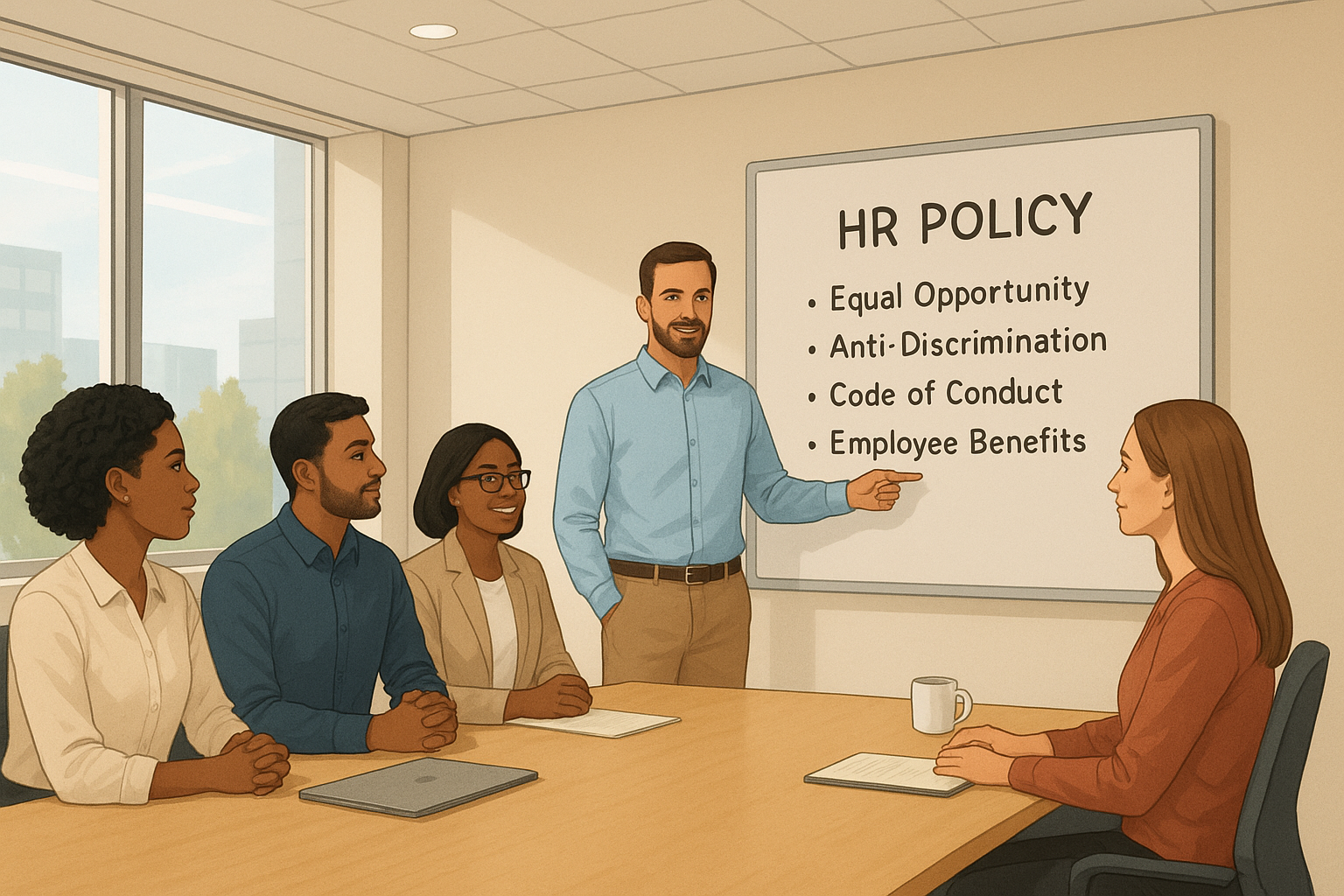
Onboarding sessions are one of the most effective ways to communicate HR policies to new employees.
Why HR Compliance Is Non-Negotiable for Modern Businesses
HR compliance means aligning your workplace practices with all applicable employment laws and regulations. However, compliance is not just about avoiding fines — it is about building a culture of fairness and accountability. To learn more about what this entails, explore this detailed guide on what is HR compliance and why it matters for businesses of all sizes.
Research consistently shows that companies with strong HR practices outperform their competitors. For example, a Gallup study found that organizations with highly engaged workforces — often driven by clear, fair policies — see 21% higher profitability compared to those with low engagement. In addition, they experience significantly lower absenteeism and turnover.
Furthermore, non-compliance carries real financial risk. The average cost of an employment lawsuit settlement in the United States exceeds $200,000, according to data from the Equal Employment Opportunity Commission. For small and mid-sized businesses, that kind of exposure can be devastating.
Common Mistakes Companies Make With HR Policies
Even well-meaning employers frequently make avoidable errors when developing their HR policy frameworks. Recognizing these pitfalls is the first step toward avoiding them.
- Using generic templates without customization. A one-size-fits-all policy may not reflect your specific industry, state laws, or company culture. Always tailor templates to your context.
- Failing to update policies regularly. Laws change, and outdated policies can create liability. Specifically, remote work and data privacy laws have evolved rapidly in recent years.
- Not communicating policies effectively. A policy buried in a drawer or an unread email does little good. Employees must be trained on key policies, not just handed a document.
- Inconsistent enforcement. Applying rules differently to different employees — even unintentionally — opens the door to discrimination claims. Consistency is critical.
- Ignoring remote and hybrid work considerations. As a result of the shift to flexible work, many traditional policies no longer reflect how employees actually work. Update your policies to address this reality.
The Role of HR Administration in Policy Management
Policies are only effective when someone is actively managing them. That is where HR administration comes in. HR administration refers to the day-to-day operational tasks that keep your HR function running — including maintaining policy documents, tracking compliance, and handling employee inquiries.
For a deeper understanding of this function, the resource on what is HR administration offers a comprehensive overview of responsibilities and best practices. In short, strong administration ensures your policies are not just written — they are lived.
Moreover, smaller businesses that lack a dedicated HR team can benefit from outsourced HR services. These services provide professional policy management without the overhead of a full-time HR department. As a result, even companies with fewer than 50 employees can maintain the same level of compliance as much larger organizations.

Collaborative HR administration ensures policies stay current, consistent, and legally compliant.
Frequently Asked Questions About Companies HR Policies
What are companies HR policies?
Companies HR policies are formal, written rules that govern how a business manages its employees. They cover areas like hiring, conduct, leave, compensation, and termination to ensure consistency and legal compliance.
Why do small businesses need HR policies?
Small businesses need HR policies to protect themselves from legal liability and to treat employees fairly. Even a single employee can trigger employment law obligations, making documented policies essential.
How often should HR policies be updated?
HR policies should be reviewed at least once a year or whenever employment laws change. Regular updates ensure your policies remain compliant and reflect current workplace practices.
What is the difference between an HR policy and an HR procedure?
An HR policy states the rule or principle a company follows, while an HR procedure describes the step-by-step process for carrying it out. Both work together to create consistent workplace management.
What happens if a company does not have HR policies?
Without HR policies, companies risk inconsistent decision-making, employee disputes, and legal penalties. Courts often look for documented policies when evaluating employment lawsuits.
Which HR policies are legally required?
Legally required policies vary by country and state, but commonly include anti-harassment, equal opportunity, and leave policies. In the U.S., the EEOC mandates anti-discrimination policies for most employers.
How do I create an employee handbook?
Start by listing the core policy areas your business needs, then draft clear, plain-language rules for each. Have an HR professional or employment attorney review the handbook before distributing it to employees.
What should a code of conduct policy include?
A code of conduct policy should define expected professional behavior, outline prohibited actions, and explain consequences for violations. It should also cover social media use, conflicts of interest, and confidentiality.
How do HR policies support employee retention?
Clear HR policies build trust by showing employees that the company treats everyone fairly. Research shows that organizations with strong HR practices have significantly lower turnover rates than those without structured policies.
Can HR policies be applied differently to different departments?
Core HR policies should apply consistently across all departments to avoid discrimination claims. However, some operational procedures may be tailored to specific teams while still following the overarching policy.
What is an at-will employment policy?
An at-will employment policy means either the employer or employee can end the employment relationship at any time without cause, as long as no laws are violated. Most U.S. states follow at-will employment by default.
How should companies communicate HR policies to employees?
Companies should distribute HR policies through an employee handbook, onboarding sessions, and a digital HR portal. Requiring employees to sign an acknowledgment form creates a documented record of receipt and understanding.
Conclusion: Strong HR Policies Are a Business Investment
In summary, companies HR policies are far more than administrative paperwork. They are a strategic investment in your workforce, your culture, and your legal standing. When policies are clear, consistently enforced, and regularly updated, they reduce conflict, improve morale, and protect your business from costly legal disputes.
Above all, remember that great policies only work when they are communicated clearly and applied fairly. Whether you are building your first employee handbook or overhauling an outdated set of rules, the steps outlined in this guide provide a practical roadmap. For professional support, consider working with an experienced HR partner like Soteria HR to ensure your policies meet every legal and cultural standard your business needs to thrive.