
Human resources support is the operational and strategic backbone that keeps your workforce running smoothly, your business protected, and your people engaged. For growing small to mid-sized businesses, it’s often the difference between scaling confidently and scrambling through costly mistakes. Whether you’re managing your first ten employees or your first hundred, the right HR support changes everything.
In this guide, we’ll break down exactly what HR support covers, why it matters more than most business owners realize, and how to get it right—without building a full internal HR department from scratch.
What Is Human Resources Support?
Human resources support is the combination of administrative, compliance, and strategic services that help organizations manage their people effectively. It encompasses everything from hiring and onboarding new employees to navigating terminations, maintaining legal compliance, and building a workplace culture that retains top talent.
Specifically, HR support includes functions like benefits administration, policy development, payroll coordination, performance management, and employee relations. For many growing companies, these functions are handled reactively—and often poorly—until something goes wrong.
According to the Society for Human Resource Management (SHRM), replacing a single employee can cost between 50% and 200% of that person’s annual salary. That number alone makes the case for proactive HR investment.

Proactive human resources support helps business owners avoid costly compliance gaps and people problems before they escalate.
Why Growing Companies Can’t Afford to Skip HR
Many founders and CEOs assume HR is something they’ll “get to later.” However, by the time HR problems surface—a wrongful termination claim, an I-9 audit, or a wave of turnover—the damage is already done. The U.S. Department of Labor enforces dozens of employment regulations that apply even to businesses with just one employee.
Furthermore, as your team grows from 10 to 50 employees, new federal thresholds kick in—like FMLA eligibility at 50 employees and ACA reporting requirements. Each milestone brings new compliance complexity that requires dedicated attention.
In short, the cost of not having HR support is almost always higher than the cost of getting it right from the start.
The Real Cost of HR Mistakes
Consider a few common scenarios. A misclassified independent contractor triggers back taxes and penalties. An outdated employee handbook exposes you to a discrimination claim. A poorly documented termination turns into an unemployment dispute. Each of these is entirely preventable with proper HR infrastructure in place.
For more context on how HR administration support protects your business day-to-day, Soteria HR outlines the full scope of what proactive HR management looks like in practice.
Core Areas of HR Support Every Business Needs
Effective HR support isn’t one-size-fits-all. However, there are core pillars that every growing organization needs to have covered. Here’s what a complete HR support framework looks like:
- Compliance and Risk Management: Staying current with federal, state, and local employment laws to avoid penalties and lawsuits.
- Recruiting and Hiring: Building a consistent, legally compliant process that surfaces the right candidates faster.
- Onboarding and Offboarding: Structured processes that protect the company and create a strong first (and last) impression.
- Benefits Administration: Designing and managing competitive benefits packages that attract and retain talent.
- Employee Relations: Handling conflicts, performance issues, and investigations with consistency and documentation.
- Policy Development: Creating clear, enforceable policies that protect employees and employers alike.
- Payroll Coordination: Ensuring accurate, on-time pay while maintaining compliance with wage and hour laws.
Together, these functions form the foundation of a healthy, compliant, and productive workplace. For a deeper breakdown, the HR administration services guide from Soteria HR walks through each area in detail.
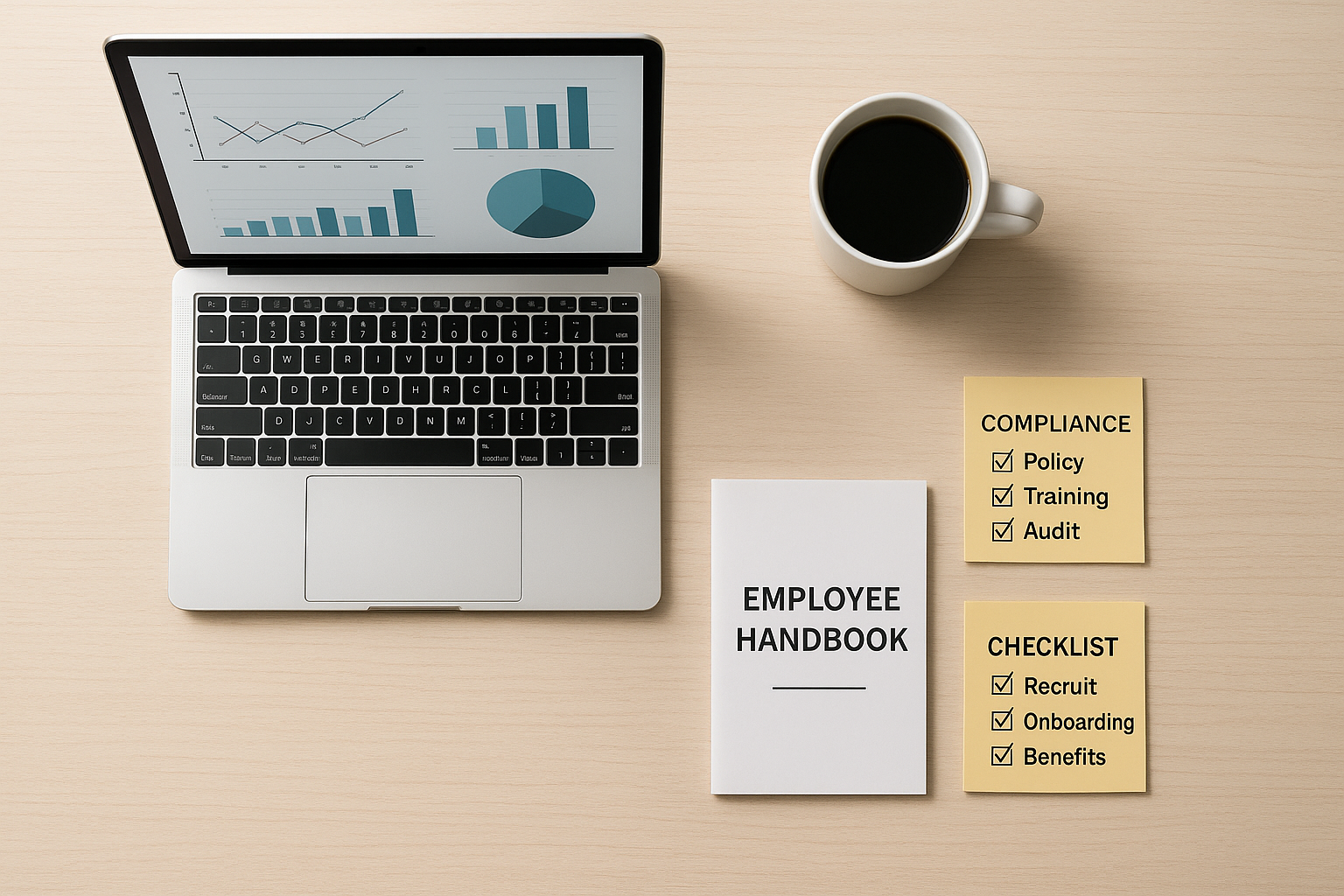
A well-organized HR foundation—including compliant policies and documentation—is central to effective workforce management.
How to Set Up HR Support for Your Growing Business
Setting up HR support doesn’t have to be overwhelming. In fact, following a clear process makes it far more manageable—even for companies starting from scratch. Here’s a proven five-step approach:
- Assess Your Current HR Gaps. Start by reviewing your existing HR practices, documentation, and compliance status. Identify where the risks and inefficiencies are before deciding what kind of support you need.
- Define Your HR Needs and Budget. Determine which HR functions require outside help—administration, compliance, recruiting, or strategic consulting. Then establish a realistic budget. Outsourced HR typically costs far less than a full-time HR director, who averages over $100,000 annually in the U.S.
- Choose the Right HR Support Partner. Evaluate providers based on industry experience, breadth of services, and their ability to act as a proactive embedded partner—not just a reactive vendor. The right partner will feel like an extension of your leadership team.
- Build Your HR Foundation. Work with your partner to create or update your employee handbook, onboarding process, job descriptions, and compliance documentation. This baseline protects you immediately.
- Launch and Iterate Continuously. Roll out your HR programs, gather employee feedback, and refine processes as your company grows. Employment laws change, and your HR support should evolve with them.
Additionally, reviewing your HR policies and procedures regularly ensures you stay aligned with current regulations and your evolving company culture.
Outsourced HR vs. In-House: What’s Right for Your Business?
Many business owners assume they need to hire a full-time HR professional to get serious HR support. In reality, outsourcing is often the smarter choice—especially for companies between 10 and 250 employees.
An in-house HR hire gives you dedicated capacity, but it comes with significant overhead: salary, benefits, training, and the limitation of a single person’s expertise. By contrast, outsourced HR gives you access to a team of specialists across compliance, benefits, recruiting, and strategy—at a fraction of the cost.
Furthermore, outsourced HR partners like Soteria HR function as embedded advisors who understand your business, anticipate problems, and proactively guide your decisions. That’s fundamentally different from a vendor who only reacts when you call.
What Makes Outsourced HR Worth It
According to Wikipedia’s overview of human resource management, effective HR practices directly impact organizational performance, employee satisfaction, and long-term business outcomes. Outsourced HR brings those practices to businesses that couldn’t otherwise afford them.
Specifically, outsourced HR support offers scalability. As your headcount grows, your HR partner scales with you—adding services, adjusting strategies, and keeping you compliant at every stage. That flexibility is difficult to replicate with a single in-house hire.
For a full breakdown of available services, explore Soteria HR’s human resource support services page to see what a tailored partnership looks like in practice.

Strategic HR partnerships give growing teams access to expert guidance that scales with their business.
HR Support Best Practices for SMBs
Beyond choosing the right support model, how you implement HR matters just as much. Here are the practices that consistently separate thriving companies from struggling ones:
- Document everything. From performance conversations to policy acknowledgments, documentation is your best legal protection.
- Update your handbook annually. Employment law changes constantly. An outdated handbook can actually work against you in a dispute.
- Train your managers. Most HR problems originate with untrained managers. Consistent leadership training prevents escalation.
- Build a feedback culture. Regular check-ins and structured feedback loops reduce turnover and surface problems early.
- Act proactively, not reactively. The best HR support anticipates issues before they become crises—not after.
For practical guidance your employees can act on directly, Soteria HR’s resource on human resources advice for employees covers the top tips that make HR work better for everyone in your organization.
Frequently Asked Questions About Human Resources Support
What is human resources support?
Human resources support refers to the services, guidance, and administration that help organizations manage their workforce effectively. It covers everything from hiring and onboarding to compliance, benefits, and employee relations. For growing businesses, it’s the infrastructure that keeps people programs running and legal exposure low.
Why do small businesses need human resources support?
Small businesses face the same HR compliance requirements as large corporations but often lack the internal expertise to manage them. Without proper HR support, companies risk costly fines, employee disputes, and high turnover that can derail growth.
What does outsourced HR support include?
Outsourced HR support typically includes HR administration, compliance monitoring, benefits management, recruiting assistance, employee handbook creation, payroll coordination, and strategic HR consulting. The exact scope depends on the provider and the business’s needs.
How much does outsourced HR support cost?
Costs vary based on company size, services needed, and provider. Outsourced HR is generally far less expensive than hiring a full-time HR director, which averages over $100,000 per year in the U.S. Many providers offer tiered or customized pricing to fit different budgets.
When should a company invest in HR support?
Companies should consider HR support as soon as they hire their first employee, but it becomes critical around 10 to 25 employees when compliance complexity and team management demands increase significantly. Waiting until a problem arises is almost always more expensive.
What is the difference between HR administration and HR consulting?
HR administration handles day-to-day operational tasks like onboarding, recordkeeping, and payroll coordination. HR consulting is more strategic, focusing on organizational design, performance management, and long-term workforce planning. Many businesses need both.
How does HR support help with compliance?
HR support keeps businesses current with federal, state, and local employment laws. Providers monitor regulatory changes and update policies, handbooks, and practices accordingly. This reduces legal exposure and helps businesses avoid costly penalties from agencies like the Department of Labor.
Can HR support help reduce employee turnover?
Yes. Effective HR support improves hiring quality, onboarding experiences, and workplace culture—all proven drivers of employee retention. According to SHRM, replacing an employee can cost up to 50–200% of their annual salary, making retention a direct financial priority.
What is a custom HR playbook and why does it matter?
A custom HR playbook is a tailored set of HR strategies, policies, and processes aligned with a company’s goals and culture. It ensures consistency, reduces guesswork for managers, and supports scalable growth without reinventing the wheel at every stage.
What common HR mistakes do small businesses make?
Common mistakes include misclassifying employees, failing to update handbooks, skipping proper onboarding, ignoring performance documentation, and not staying current on employment law changes. Each of these is entirely preventable with the right HR support in place.
How is outsourced HR different from a PEO?
A Professional Employer Organization (PEO) co-employs your staff and bundles HR services with payroll under a shared employer arrangement. Outsourced HR firms like Soteria HR act as an embedded partner without co-employment, giving you more flexibility, direct control, and a more tailored approach.
Does HR support include help with employee handbooks?
Yes. Most comprehensive HR support services include creating, reviewing, and updating employee handbooks to ensure they reflect current laws and company culture. An up-to-date handbook protects both the employer and the employee and reduces the risk of disputes.
Conclusion: Make HR Support a Growth Strategy, Not an Afterthought
The most successful growing businesses treat human resources support as a strategic investment—not a checkbox. When your HR foundation is solid, you hire better, retain longer, stay compliant, and lead with confidence. The alternative is managing crises instead of building momentum.
Soteria HR exists to give small and mid-sized businesses exactly that kind of embedded, proactive HR partnership—without the overhead of a full internal department. From compliance and benefits to recruiting and custom HR playbooks, the right support is available at every stage of your growth.
Ready to stop guessing and start growing? Explore how Soteria HR delivers tailored human resources support that protects your business and powers your team forward.