
Tips for managers managing employees can make the difference between a thriving team and one that quietly falls apart. Whether you’re a first-time supervisor or a seasoned operations leader, the way you communicate, coach, and hold people accountable shapes everything from morale to retention. In particular, growth-stage companies often feel this pressure most, since new managers get promoted quickly without much formal training. At Soteria HR, we work with growth-minded organizations every day who need practical, no-nonsense guidance on people management—so we’ve pulled together the strategies that actually move the needle.
Quick Answer: Tips for managers managing employees are practical strategies—like setting clear expectations, giving consistent feedback, and resolving conflict early—that help supervisors build trust and improve team performance. The strongest managers pair structure with empathy, so employees feel both accountable and supported.
What Are the Best Tips for Managers Managing Employees?
The best tips for managers managing employees center on communication, consistency, and coaching. Above all, employees want to know what’s expected of them, how they’re doing, and that their manager actually has their back.
According to Gallup research, managers account for at least 70% of the variance in employee engagement scores across business units. Consequently, the habits a manager builds—good or bad—ripple through an entire team’s morale and output. That’s why investing time in management fundamentals pays off far beyond any single hire.

Regular one-on-ones are one of the simplest tips for managers managing employees well.
Why Strong People Management Matters for Growing Companies
As companies scale past 10 or 15 employees, informal management style stops working. Suddenly, there are more personalities, more compliance requirements, and more room for miscommunication.
Therefore, leaders who invest in solid people management practices tend to see lower turnover and stronger culture. In fact, the Society for Human Resource Management estimates that replacing a salaried employee can cost six to nine months of that employee’s salary. For a growing business, that’s a painful line item to repeat over and over.
In contrast, companies that equip their managers with real tools—like the frameworks outlined in our guide on how to manage employees effectively—tend to retain talent longer and spend less time firefighting.
5 Practical Steps for Managing Employees Successfully
Good management isn’t about big gestures. Instead, it’s built from small, repeatable habits. Here are five steps worth building into your weekly routine.
- Set Clear Expectations from Day One. Outline specific goals, deadlines, and communication norms during onboarding so employees never have to guess what success looks like in their role.
- Communicate Consistently and Transparently. Hold regular one-on-ones and team check-ins, and explain the reasoning behind decisions so employees feel informed rather than managed from a distance.
- Deliver Feedback Early and Often. Address small issues before they grow into bigger performance problems, and balance constructive feedback with genuine recognition of good work.
- Invest in Employee Development. Offer training, stretch assignments, or mentorship so employees see a future with your company instead of looking elsewhere for growth.
- Address Conflict Before It Escalates. Step in early when tension arises between team members, and document the conversation so there’s a clear record if the issue continues.
For a deeper dive into keeping teams engaged long after onboarding, take a look at our resource on how to improve employee engagement.

Clear team goals keep everyone aligned and reduce miscommunication.
Common Mistakes Managers Make When Managing Employees
Even well-intentioned managers fall into a few predictable traps. Recognizing these patterns early can save a lot of frustration—for both managers and their teams.
Micromanaging vs. Empowering Your Team
Micromanagement often comes from good intentions, but it signals distrust and slows everyone down. Instead, effective managers set clear guardrails and then step back, letting employees own their work.
Avoiding Compliance Blind Spots
Meanwhile, compliance mistakes—like inconsistent discipline or undocumented performance issues—create real legal exposure. The U.S. Department of Labor outlines wage, hour, and workplace safety requirements that every manager should understand, even at a basic level.
Similarly, unresolved conflict between employees rarely fixes itself. If tension is brewing on your team, our guide on how to resolve employee disputes walks through a practical approach.
Building a Custom HR Playbook to Support Your Managers
Individual tips help, but they work best inside a bigger system. A custom HR playbook gives managers consistent language, policies, and processes to lean on—rather than making judgment calls alone every time.
For example, a playbook might spell out how to run performance reviews, handle PTO requests, or escalate a disciplinary issue. As a result, managers spend less time guessing and more time actually leading. This consistency also protects the business, since similar situations get handled the same way across departments.
Culture plays a role here too. Our insights on maintaining a positive company culture pair well with any manager playbook, since culture and process reinforce each other.
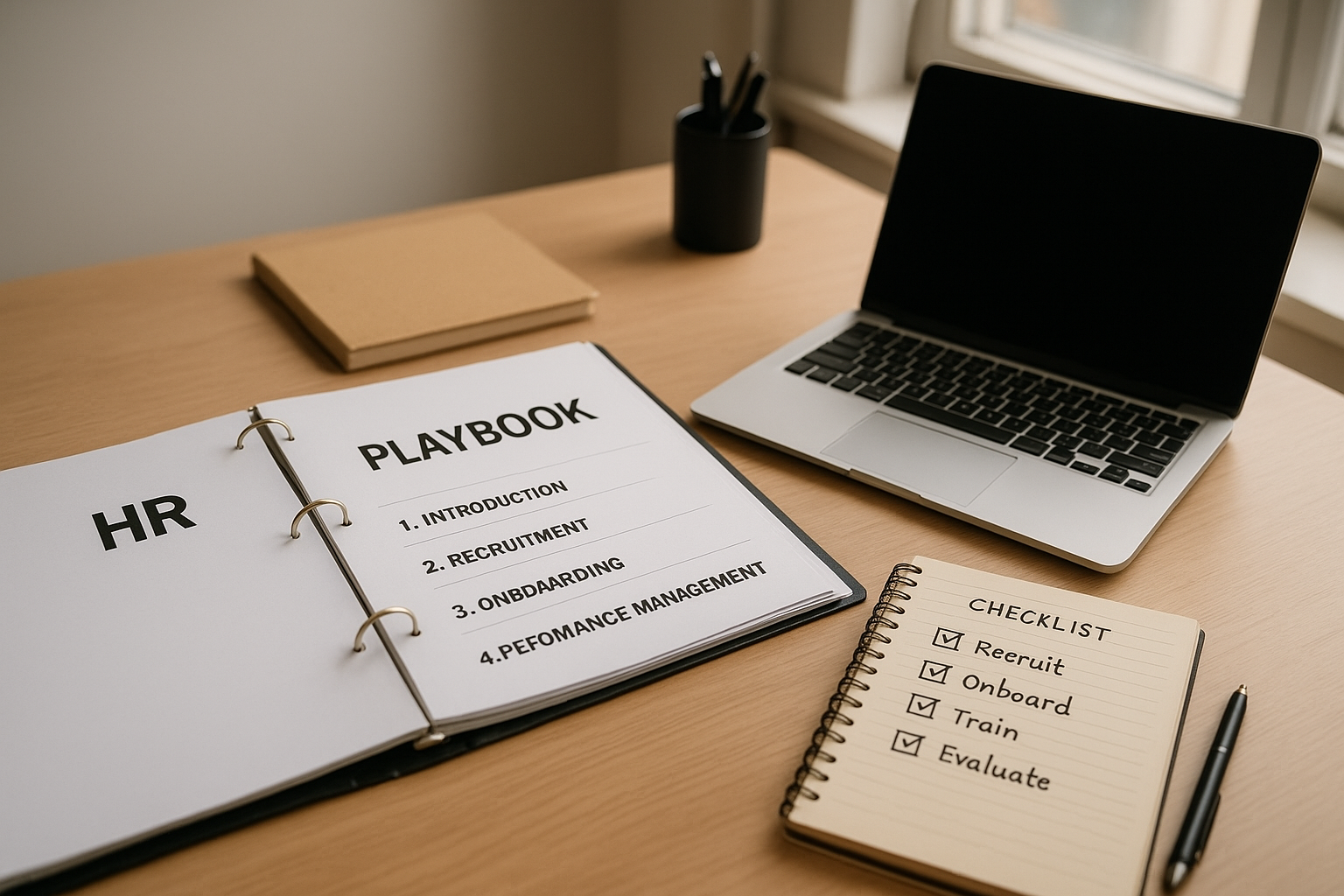
A written HR playbook helps managers stay consistent across every employee interaction.
When to Bring in Outside HR Support
Sometimes the gap isn’t a lack of effort—it’s a lack of bandwidth or specialized expertise. If your managers are drowning in HR admin, compliance questions, or recruiting needs, that’s usually a sign it’s time for outside support.
Soteria HR partners with growing companies to provide the strategic guidance, compliance oversight, and hands-on tools managers need to succeed—without the cost of a full internal HR department. Our guide on people management best practices is a good next stop if you want to keep building your team’s management muscle. You can also explore our full range of services at Soteria HR to see how embedded HR support works in practice.
Frequently Asked Questions About Tips for Managers Managing Employees
What are the most important tips for managers managing employees?
The most important tips for managers managing employees are setting clear expectations, communicating consistently, and giving feedback early rather than waiting for annual reviews. Together, these habits build trust and prevent small issues from becoming bigger problems.
How can new managers build trust with their team quickly?
New managers build trust fastest by being transparent about decisions and following through on what they say they’ll do. Consistency, even in small things like starting meetings on time, signals reliability to a new team.
What is the difference between managing and leading employees?
Managing typically focuses on processes, deadlines, and day-to-day coordination, while leading focuses on vision and motivation. The strongest managers do both, keeping operations on track while still inspiring their team.
How often should managers give employees feedback?
Feedback works best when it’s frequent and specific, ideally through short weekly or biweekly check-ins rather than a single annual review. Waiting too long to address performance issues usually makes them harder to fix.
What are common mistakes new managers make?
New managers often micromanage out of anxiety, avoid difficult conversations, or fail to document performance issues. Each of these habits tends to erode trust and create bigger problems down the road.
How much does poor management actually cost a business?
Poor management contributes to costly turnover, and SHRM estimates that replacing a salaried employee can cost six to nine months of their salary. Disengaged teams also produce lower-quality work and need more oversight.
How long does it take to become a strong manager?
Most people need six months to a year of consistent practice before management habits start to feel natural. Ongoing coaching and feedback can speed up that timeline considerably.
What is the best way to handle an underperforming employee?
Start with a direct, private conversation that outlines the gap between expected and actual performance, then set a specific improvement plan with timelines. Documenting the conversation protects both the employee and the business later.
How can managers avoid burnout while managing a team?
Managers avoid burnout by delegating appropriately, setting boundaries around after-hours availability, and leaning on HR support for administrative tasks. Trying to do everything alone is one of the fastest routes to burnout.
Should managers document performance conversations?
Yes, documenting performance conversations is one of the simplest ways to protect both the employee and the company. Written records create a clear timeline if an issue escalates or leads to disciplinary action.
How can outsourced HR support help managers succeed?
Outsourced HR support gives managers access to compliance guidance, HR playbooks, and coaching they might not have in-house. This lets managers focus on leading their team while experts handle legal and administrative complexity.
What tools help managers manage employees more effectively?
Simple tools like structured one-on-one templates, performance tracking software, and a clear employee handbook all help managers stay organized. Even without expensive software, a written HR playbook can accomplish much of the same goal.
Final Thoughts on Managing Employees Well
Great management doesn’t happen by accident—it’s built through consistent habits, clear communication, and a willingness to address problems early. Ultimately, the tips for managers managing employees outlined here work best when they’re backed by solid HR systems, not just good intentions. If your team is ready for more structure, support, or an outside perspective, Soteria HR is here to help you build a workplace where both your managers and your employees can thrive.