Employee benefit design is the strategic process of building a benefits package that attracts top talent, controls costs, and keeps your company compliant with ever-shifting labor laws. For growing small and mid-sized businesses, getting this right often determines whether good employees stay or start browsing job boards. In this guide, we’ll walk through what employee benefit design actually means, why it matters, and how to build a strategy that fits your company’s size, budget, and culture. Along the way, we’ll flag the mistakes that trip up even well-intentioned employers.

Thoughtful employee benefit design starts with understanding your team’s real needs.
What Is Employee Benefit Design?
Employee benefit design is the process of selecting, structuring, and pricing the benefits—like health insurance, retirement plans, and paid time off—that a company offers its team. It requires balancing employee needs, budget realities, and legal requirements to create a package that supports recruitment and retention. Done well, it becomes a competitive advantage; done poorly, it becomes a costly liability.
For example, as Wikipedia’s overview of employee benefits explains, offerings can range from mandatory items like Social Security contributions to optional perks like tuition reimbursement. In other words, benefit design isn’t a single decision—it’s an ongoing system of choices that should reflect your company’s stage of growth and your team’s actual priorities, not just industry norms.
Why a Strong Benefits Strategy Matters for Growing Companies
As companies scale past 10 or 20 employees, informal benefits arrangements start to break down. Consequently, what worked during the startup phase can quickly become a compliance risk or an employee relations headache. According to a KFF employer health benefits survey, average annual premiums for employer-sponsored family health coverage now exceed $23,000, which means even small missteps in plan design carry real financial weight.
Furthermore, benefits consistently rank among the top reasons employees stay with—or leave—an employer. Because of this, a deliberate employee benefits plan built to retain talent is no longer optional for companies that want to keep their best people through periods of rapid growth. In short, good benefits design protects both your budget and your culture at the same time.
Key Elements of a Winning Employee Benefits Package
Most effective benefits packages are built around two categories of offerings. Understanding the difference helps you allocate budget where it matters most.
- Core benefits — health insurance, retirement contributions, and paid leave that most employees expect as a baseline.
- Voluntary benefits — optional add-ons like pet insurance, legal plans, or identity protection that employees can choose and often pay for themselves.
- Wellbeing programs — mental health support, flexible schedules, or wellness stipends that address burnout before it costs you a good employee.
If you’re unsure which mix fits your team, our guide on how to build an employee benefits package your team actually wants walks through prioritization in more detail. Similarly, many growing companies find that voluntary employee benefits offer a low-cost way to expand perceived value without straining the budget.
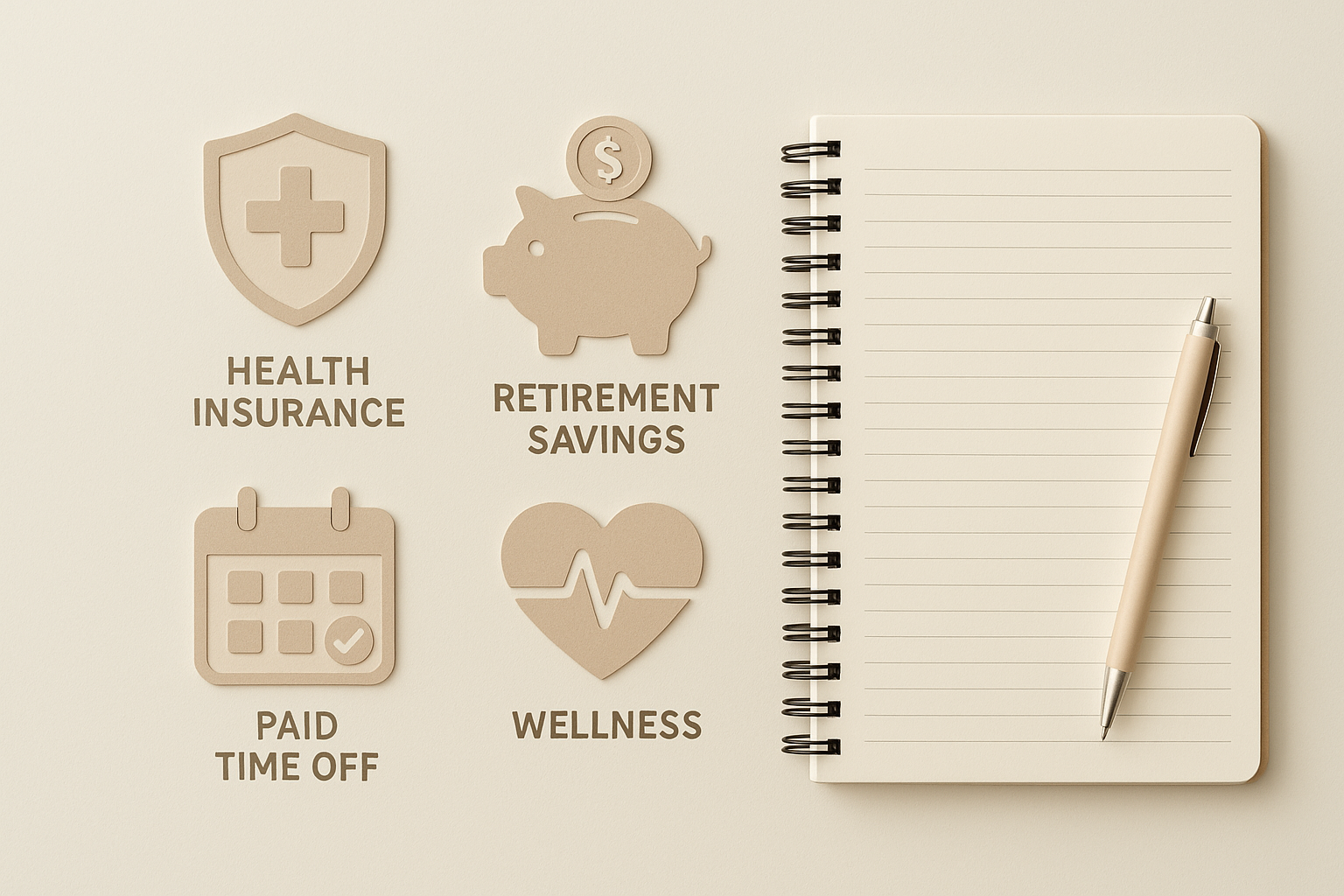
Balancing core and voluntary benefits is central to smart employee benefit design.
How to Build Your Employee Benefit Design Strategy, Step by Step
Because every company’s needs differ, a repeatable process matters more than copying a competitor’s plan. Here’s the sequence we walk clients through:
- Assess your workforce’s needs. Survey employees and review demographics such as age, family status, and tenure to identify gaps in your current offering before spending on new benefits.
- Set a realistic benefits budget. Calculate your total cost per employee, factoring in premiums, contributions, and administrative fees, so the plan stays sustainable as you grow. Our cost of benefits per employee calculator guide can help with the math.
- Choose core and voluntary benefits. Decide which benefits are non-negotiable versus optional add-ons employees can opt into at their own expense.
- Confirm compliance with federal and state law. Cross-check your plan against ACA, ERISA, and state mandates; the U.S. Department of Labor’s benefits and leave resources are a solid starting point.
- Communicate, roll out, and gather feedback. Explain the reasoning behind each benefit clearly, and build a feedback loop so the plan evolves as your team changes. Learn more in our guide on how to manage employee benefits after launch.
Common Mistakes in Designing Employee Benefits
Even well-intentioned employers stumble here. For instance, many companies copy a competitor’s plan without ever surveying their own team, which often leads to spending on benefits nobody uses. Others underestimate administrative overhead, only to discover mid-year that payroll coordination and vendor management require far more time than expected.
In addition, poor communication is a frequent culprit. Even a generous plan falls flat if employees don’t understand what they’re getting or how to use it. As a result, enrollment stays low and the ROI on your benefits investment quietly disappears.
The Real Cost of a Well-Designed Employee Benefits Package
According to the Society for Human Resource Management, employers typically spend between 25% and 40% of an employee’s total compensation on benefits. That’s a significant investment, so it pays—literally—to get the structure right the first time.
Specifically, health insurance premiums usually represent the largest single line item, followed by retirement contributions and paid leave. Therefore, before adding new perks, it’s worth revisiting whether your existing spend on cost per employee for benefits is actually delivering retention value.
How Soteria HR Supports Your Employee Benefits Plan
This is exactly the kind of work Soteria HR handles for growth-minded companies every day. Rather than handing you a generic template, our team builds an employee benefit design strategy around your budget, industry, and workforce demographics—then manages the ongoing administration so nothing falls through the cracks.
Whether you need help selecting vendors, staying ahead of compliance changes, or simply want a second opinion before open enrollment, you can explore Soteria HR’s outsourced HR solutions to see how an embedded partner approach compares to going it alone.

An embedded HR partner can turn employee benefit design from guesswork into strategy.
Frequently Asked Questions About Employee Benefit Design
What is employee benefit design?
Employee benefit design is the process of selecting, structuring, and pricing the benefits a company offers, such as health insurance, retirement plans, and paid time off. It balances employee needs, budget, and legal compliance to support recruitment and retention.
Why is employee benefit design important for small businesses?
Small businesses often compete with larger companies for talent, and thoughtful design can level that playing field. It also helps control costs and reduces the risk of compliance mistakes.
How much does employee benefit design typically cost?
Benefits costs vary widely, but employers generally spend between 25% and 40% of an employee’s total compensation on benefits. Health insurance premiums are usually the largest single expense within that budget.
What is the difference between core and voluntary benefits?
Core benefits are essential offerings a company fully or mostly funds, like health insurance and retirement matching. Voluntary benefits are optional add-ons, such as pet insurance or legal plans, that employees can purchase at group rates.
How often should a company review its employee benefits plan?
Most companies should review their plan annually, ideally before open enrollment. However, rapid growth, new hires, or regulatory changes may call for a more frequent review.
Can small companies really compete with large-company benefits?
Yes, small companies can compete effectively by focusing on flexibility and voluntary benefits rather than matching every large-company perk. Thoughtful employee benefit design often matters more to employees than sheer benefit volume.
What compliance laws affect employee benefit design?
Employee benefit design must account for laws like the Affordable Care Act, ERISA, COBRA, and applicable state mandates. Missing a requirement can trigger penalties, so many companies work with HR partners to stay current.
What are the most common mistakes in designing employee benefits?
Common mistakes include copying a competitor’s plan without surveying your own team, underestimating administrative costs, and failing to communicate benefits clearly. These errors often lead to low enrollment and wasted budget.
How long does it take to redesign a benefits package?
A full redesign typically takes 60 to 90 days, including needs assessment, vendor selection, and rollout. Smaller adjustments, like adding a voluntary benefit, can happen much faster.
Should employee benefit design change as a company grows?
Absolutely. A package that worked for 15 employees often needs restructuring at 50 or 100 employees, both for cost efficiency and to meet new compliance thresholds.
What role does employee feedback play in benefits design?
Employee feedback helps identify which benefits are actually valued versus which are underused. Surveys and enrollment data are two of the most reliable ways to gather this input.
How do you measure the return on investment of employee benefits?
ROI is typically measured through retention rates, reduced turnover costs, and employee satisfaction scores before and after changes. Some companies also track recruiting speed as a proxy for benefits competitiveness.
Final Thoughts on Employee Benefit Design
Ultimately, employee benefit design isn’t a one-time project—it’s an ongoing practice that should evolve alongside your company. When you start with real employee needs, set a sustainable budget, and stay ahead of compliance requirements, your benefits package becomes a genuine retention tool rather than a line item you dread each renewal season.
If building or refining your strategy feels overwhelming, you don’t have to figure it out alone. Soteria HR partners with growing companies to design, manage, and continuously improve their benefits programs, so you can focus on running your business while your team stays protected and engaged.