HR guidelines are the backbone of every well-run workplace, and if you lead a growing company, you’ve probably wondered whether yours are strong enough to protect your team and your bottom line. In this guide, we’ll break down what HR guidelines actually are, why they matter, and how to build ones that work for your business without the legal jargon or guesswork. Along the way, we’ll show you how a partner like Soteria HR helps growing companies get this right the first time.
Quick answer: HR guidelines are the written standards and procedures a company uses to manage its workforce — covering everything from hiring and onboarding to conduct, compliance, and termination. They give employees clarity on expectations and protect employers from legal and operational risk.

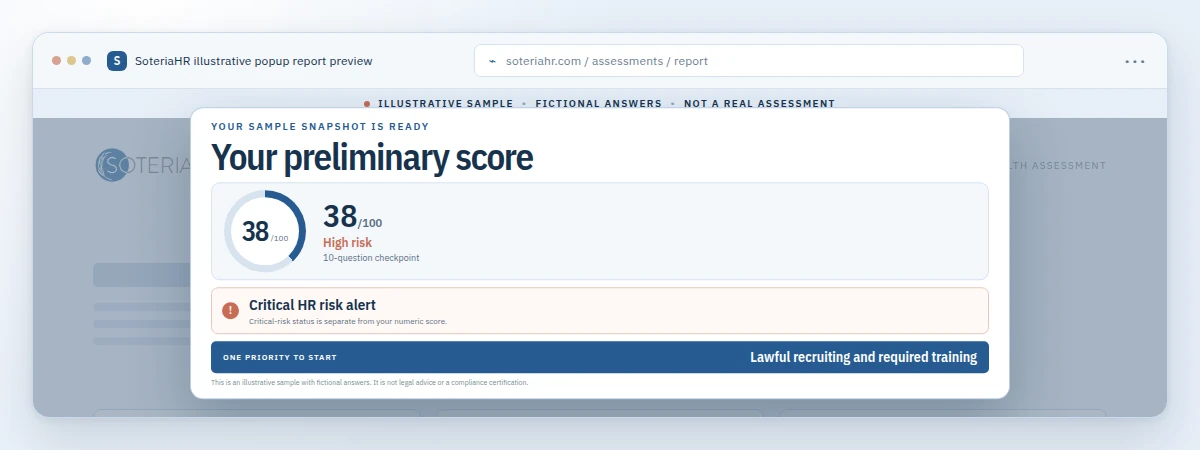
Reviewing HR guidelines together helps leadership teams spot gaps before they become costly problems.
What Are HR Guidelines?
HR guidelines are the documented rules and standards that shape how a business treats its people, from the moment someone applies for a job to the day they leave. In particular, they cover hiring, pay, benefits, conduct, leave, and discipline in one consistent reference point. Without them, managers are left to make judgment calls on the fly, which often leads to inconsistency and, eventually, legal trouble.
Think of HR guidelines as the operating manual for your workforce. Similarly to a playbook for a sports team, they tell everyone the rules of the game before they need them. As a result, employees know what’s expected, and managers have a clear standard to apply fairly across the board.
Why Every Growing Business Needs Clear HR Guidelines
As companies scale past 10, 50, or 100 employees, informal “we’ll figure it out” HR quickly becomes a liability. In fact, the U.S. Equal Employment Opportunity Commission received nearly 81,000 workplace discrimination charges in a recent fiscal year alone, according to EEOC data. Consequently, businesses without clear workplace policies are far more exposed when disputes arise.
Beyond legal protection, however, strong HR guidelines also build trust. Employees who understand the rules feel respected rather than surprised by decisions. For a deeper look at how documented expectations reduce friction, our guide on helping your employees help you covers this in more detail.
In addition, well-built guidelines make it easier to onboard new managers, since they don’t have to rely on tribal knowledge or guesswork to make fair decisions.
Key Components of Strong HR Guidelines
Not all HR policies are created equal. Above all, effective guidelines should be specific enough to guide real decisions, yet flexible enough to apply across different situations. A strong set of HR guidelines typically addresses the following areas:
- Hiring, onboarding, and job classification standards
- Compensation, benefits, and payroll coordination
- Workplace conduct and anti-harassment expectations
- Leave policies, including sick time and family leave
- Performance management and discipline procedures
- Termination and offboarding steps
For a deeper breakdown of how these pieces connect to specific job roles and career paths, take a look at our HR policies and job roles guide. Meanwhile, if compliance is your biggest concern right now, our HR compliance checklist is a practical companion piece to this article.
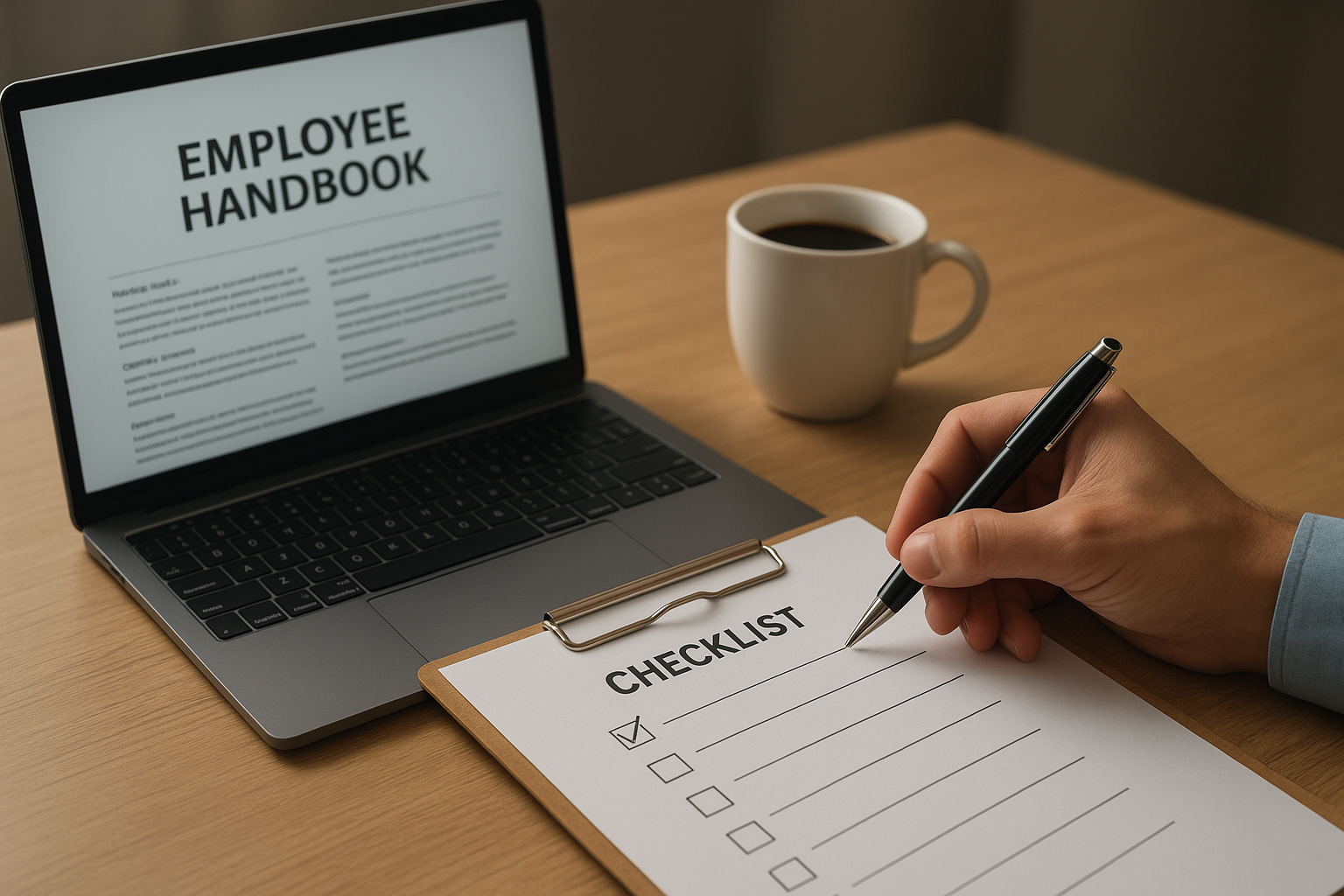
A written checklist keeps HR guidelines organized and easy to update as laws change.
How to Build HR Guidelines in 5 Steps
Creating HR guidelines from scratch can feel overwhelming, but breaking it into stages makes the process manageable. Here’s a simple, five-step approach growing companies can follow:
Audit your current practices. Review how your company already handles hiring, discipline, leave, and terminations so your guidelines reflect reality, not a generic template.
Research applicable laws. Identify the federal, state, and local employment laws that apply to your company size and locations before drafting policy language.
Draft core policy sections. Write clear, plain-language sections covering hiring, compensation, conduct, leave, and termination using consistent formatting throughout.
Get leadership and legal review. Have leadership and legal counsel review the draft to confirm it aligns with company values and reduces legal exposure before rollout.
Communicate and train managers. Roll out the finalized guidelines through training so managers apply them consistently in everyday decisions.
Once your guidelines are drafted, they should feed directly into a broader HR risk management strategy so leadership can spot problems before they escalate, rather than reacting after the fact.
HR Guidelines vs. Employee Handbooks: What’s the Difference?
People often use these terms interchangeably, but they’re not quite the same thing. Specifically, HR guidelines are the internal standards HR and managers use to make consistent decisions, while an employee handbook is the polished, employee-facing document that communicates those policies in plain terms.
In other words, the handbook is the “front door” version of your guidelines. For example, according to guidance referenced by the U.S. Department of Labor, employers benefit from documenting policies clearly to reduce disputes over pay, leave, and classification. A well-written handbook, built from solid guidelines, does exactly that.
Common Mistakes That Weaken HR Guidelines
Even well-intentioned companies stumble when putting HR guidelines into practice. For instance, some businesses copy generic templates that don’t reflect how their team actually operates. Others write policies once and never revisit them, even after major law changes.
Above all, guidelines that sit unread in a shared drive are just as risky as having none at all. If a workplace conflict does occur, having documented procedures matters just as much as having lawyers on standby. Our article on how to conduct an employee relations investigation shows exactly how strong guidelines support a fair, defensible process when issues arise.
How Soteria HR Supports Your HR Guidelines
Building HR guidelines in-house takes time most growing companies simply don’t have. That’s where Soteria HR comes in. As an outsourced HR partner for organizations with 10 to 250 employees, we create custom HR playbooks, employee handbooks, and compliance frameworks tailored to your industry and culture, not a cookie-cutter template.
Whether you need help drafting policies from scratch or auditing what you already have, our team acts as an embedded HR partner who spots problems before they become expensive. In short, you get the structure and protection of a full HR department without the overhead of hiring one.
Frequently Asked Questions About HR Guidelines
What are HR guidelines?
HR guidelines are the written standards and procedures that define how a company manages its workforce, covering hiring, conduct, benefits, and termination. They give employees clarity and protect employers from legal exposure.
Why are HR guidelines important for small businesses?
HR guidelines protect small businesses from costly compliance mistakes and inconsistent treatment of employees. They also create a fairer, more predictable workplace that supports retention.
How do HR guidelines differ from an employee handbook?
HR guidelines are the internal rules HR teams use to make decisions, while an employee handbook is the employee-facing document that communicates those policies. The handbook is essentially a readable version of the guidelines.
How often should HR guidelines be updated?
Most companies should review HR guidelines at least once a year, or whenever employment laws change. Rapid growth or new benefits programs are also good triggers for a review.
What should be included in HR guidelines?
Strong HR guidelines cover hiring and onboarding, compensation and benefits, performance management, workplace conduct, leave policies, and termination procedures. They should also address federal, state, and local compliance requirements.
How much does it cost to create HR guidelines?
Costs vary depending on whether you build guidelines in-house, hire a consultant, or partner with an outsourced HR firm. Many growing companies find outsourced support more cost-effective than hiring a full-time HR director.
What happens if a company doesn’t have HR guidelines?
Without HR guidelines, companies risk inconsistent decision-making, higher turnover, and greater exposure to lawsuits or penalties. Managers are also left guessing how to handle sensitive situations.
Can outsourced HR help create HR guidelines?
Yes, outsourced HR partners like Soteria HR specialize in building custom HR guidelines tailored to a company’s size, industry, and culture. This gives growing businesses professional-grade policies without a full internal HR department.
What’s the difference between HR guidelines and HR policies?
The terms are often used interchangeably, but guidelines tend to describe broader principles while policies are the specific rules that implement them. Most companies blend both into a single HR playbook.
How long does it take to develop HR guidelines?
Developing a full set of HR guidelines usually takes four to eight weeks, depending on company size and complexity. Working with an experienced HR partner can shorten that timeline significantly.
What are common mistakes when writing HR guidelines?
Common mistakes include copying generic templates, failing to update policies after law changes, and writing in confusing legal jargon. Guidelines that are never communicated are just as risky as having none.
Do small businesses legally need HR guidelines?
There’s no single federal law requiring every small business to have written HR guidelines, but many specific policies, like anti-harassment procedures, are effectively required to demonstrate compliance. Documented guidelines also strengthen your legal defense if a dispute arises.
How do HR guidelines support employee performance?
Clear HR guidelines set consistent expectations for reviews, promotions, and discipline, reducing confusion and favoritism. Employees who understand the rules tend to be more engaged and productive.
Who should be involved in creating HR guidelines?
Ideally, leadership, HR professionals, and legal counsel all weigh in before guidelines are finalized. Input from department managers also helps ensure the guidelines reflect how work actually gets done.
How can I make sure employees follow HR guidelines?
Consistent enforcement, clear communication, and manager training are the best ways to ensure HR guidelines are followed. They should also be easy to find and written in plain language.
Building HR Guidelines That Protect and Empower Your Team
At the end of the day, HR guidelines aren’t red tape — they’re the foundation that lets your business grow with confidence. Clear, well-communicated policies reduce legal risk, build trust with employees, and free up leadership to focus on strategy instead of putting out fires. Therefore, investing time in strong HR guidelines now pays off many times over as your team scales.
If you’re not sure where your current guidelines stand, a quick audit is a great place to start. And if you’d rather have an experienced partner build them for you, Soteria HR is ready to help you create HR guidelines that actually work for your business.