An employee benefits strategy is the planned approach a company uses to design, budget for, and communicate the benefits it offers its workforce, from health coverage to retirement plans and paid leave. Without one, benefits decisions tend to happen reactively, which can drive up costs and leave employees unsure of what they actually have. For growing organizations, building this strategy deliberately is one of the most reliable ways to attract and keep good people.
Direct answer: An employee benefits strategy aligns what a company offers, such as health insurance, retirement contributions, and paid time off, with its budget and business goals. A good strategy is reviewed yearly, benchmarked against similar employers, and communicated clearly so employees understand its value.
What Is an Employee Benefits Strategy?
An employee benefits strategy is a documented plan that explains why a company offers the benefits it does, how much it will spend, and how those choices support recruiting and retention goals. Unlike a single health plan or policy document, the strategy sits above individual offerings and connects them to the business.
For example, a company with a young workforce might prioritize flexible paid time off and student loan assistance, while a company with more tenured employees might weight retirement contributions more heavily. In both cases, the strategy comes first; the specific plan selections follow from it.
Why a Strong Benefits Program Matters for Growing Employers
As a company grows past a handful of employees, informal benefits decisions stop scaling. Therefore, a structured benefits program becomes important both for cost control and for fairness across departments and locations.
According to the U.S. Bureau of Labor Statistics, benefits typically account for roughly 29 to 30 percent of total compensation costs for private industry workers, based on the agency’s Employer Costs for Employee Compensation data. That means benefits are not a minor add-on; they are a major line item that deserves the same planning rigor as salary budgets.
In addition, candidates increasingly compare benefits packages when weighing job offers, particularly for roles where base pay is similar across competing employers. A thoughtful benefits program design can be the deciding factor, especially for small and mid-sized companies competing against larger employers for talent.

Reviewing data together helps leaders build an employee benefits strategy grounded in real workforce needs.
Building an Effective Employee Benefits Plan: Step-by-Step
Most employers can move from a loose set of offerings to a working strategy by following a consistent process. The steps below outline how that typically unfolds in practice.
- Review existing benefits usage, employee feedback, and demographic shifts to identify gaps between what the organization offers and what its workforce actually needs.
- Decide whether the priority is recruiting, retention, or cost control, then set a benefits budget as a percentage of payroll that leadership can sustain long term.
- Compare plan types, contribution levels, and perks against competitors of similar size and industry so offers stay competitive without overspending on unnecessary extras.
- Choose carriers, plan tiers, and ancillary benefits that match the budget and goals, then document eligibility rules, waiting periods, and contribution structures clearly.
- Explain the benefits package to employees in plain language, run enrollment smoothly, and schedule a yearly review to adjust the strategy as costs and needs change.
For a closer look at translating these steps into an actual package, Soteria’s guide on how to build an employee benefits plan that retains talent walks through plan design choices in more depth.
Common Benefits Strategy Mistakes to Avoid
Even well-intentioned employers run into predictable problems. Specifically, three mistakes show up again and again in benefits planning.
First, some companies copy a competitor’s package without checking whether it fits their own workforce’s age, income level, or family structure. Second, many employers set a plan once and never revisit it, which leads to paying for coverage employees no longer value. Third, poor communication is common; employees frequently underestimate what they already have simply because no one explained it clearly during onboarding or open enrollment.
As a result, companies end up spending on benefits that do not move the needle on retention. Addressing these gaps is often the fastest way to get more value from an existing budget, as outlined in Soteria’s guide to creating competitive employee benefits packages.
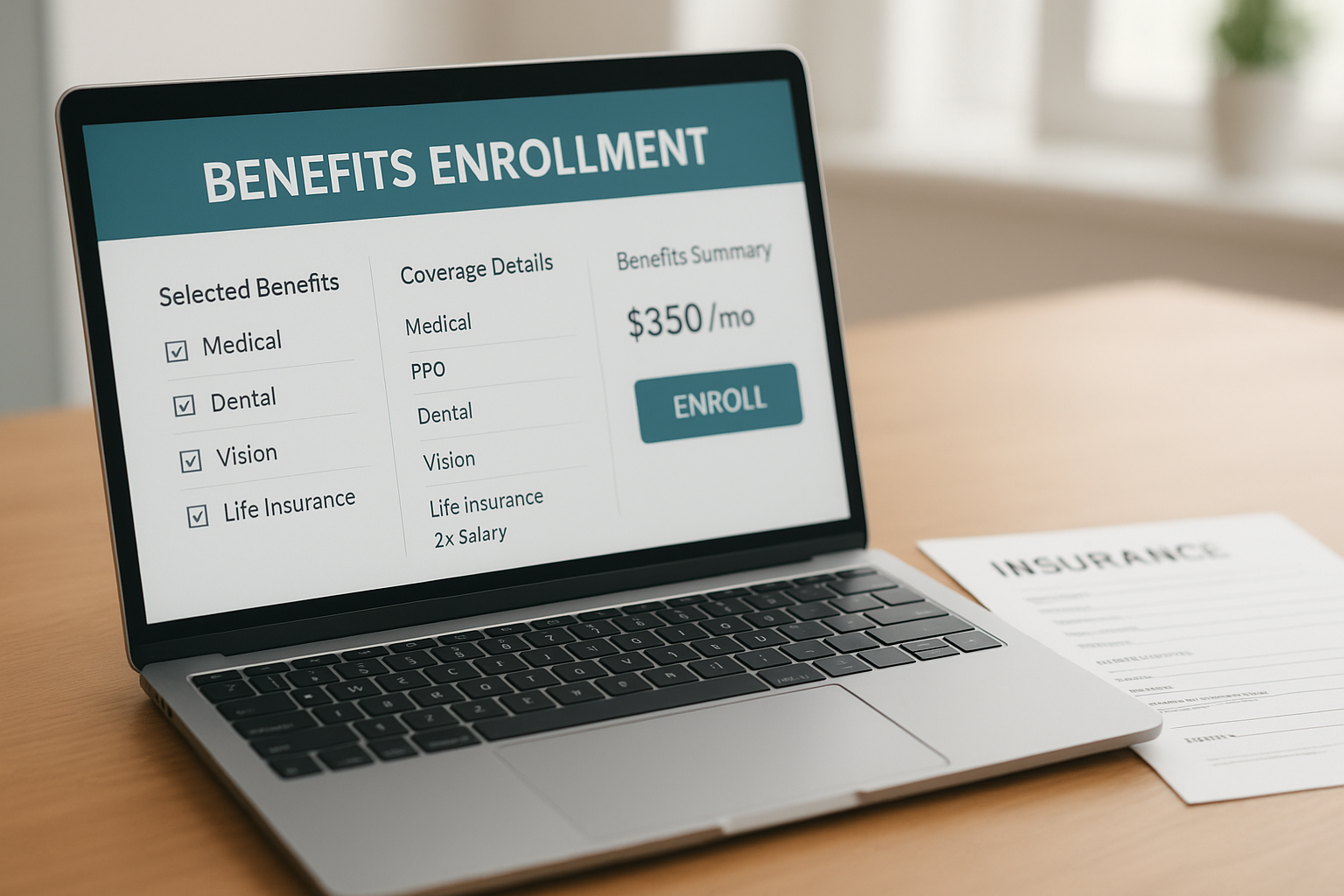
Clear documentation and communication keep an employee benefits strategy consistent during open enrollment.
What Employee Benefits Strategies Cost — and the Return You Get
Cost is usually the first question leadership asks, and it is a fair one. Benefits spending generally scales with headcount, plan richness, and location, so there is no single industry-wide number that applies to every business.
However, employers can estimate roughly by starting with base payroll and adding 25 to 40 percent to account for health coverage, retirement contributions, and payroll taxes tied to benefits. In contrast, the cost of replacing an employee who leaves over inadequate benefits is often far higher once recruiting, training, and lost productivity are factored in. For that reason, many leaders treat benefits spending as a retention investment rather than a pure expense, a theme covered in Soteria’s article on proven strategies for retaining employees.
When to Bring In Outsourced HR Support for Your Benefits Program
Many growing companies reach a point where benefits administration takes up more time than the internal team can spare, especially if there is no dedicated HR hire yet. At that stage, outsourced support becomes worth considering.
Soteria HR, based in Pasadena, California, works with employers across Los Angeles, Orange County, and nationwide on exactly this kind of support. Soteria’s benefits administration services cover enrollments and terminations, employee communications, carrier coordination, and help navigating applicable ACA, COBRA, Section 125, and Form 5500 requirements, with scope confirmed for each engagement. For companies that want outside help without changing their employer status, the Administrative Services Organization (ASO) model, which is an arrangement for administrative support without co-employment, lets the client remain the legal employer while still getting hands-on HR guidance.
To see how outsourced partners typically help smaller teams compete for talent, Soteria’s overview of how employee benefits providers help small companies attract talent is a useful next read.
How Soteria HR Supports Your Total Rewards Strategy
A total rewards strategy, which is the broader combination of pay, benefits, and workplace culture, works best when benefits administration runs smoothly in the background. Soteria HR pairs benefits administration with HR consulting and HR administration, so plan design decisions connect to the rest of a company’s HR operations rather than sitting in isolation.
Readers building a package from scratch may also find it helpful to review how to build an employee benefits package your team actually wants, which complements the planning steps above. For general background on the legal framework behind employer-sponsored plans, the U.S. Department of Labor’s overview of the Employee Retirement Income Security Act (ERISA) is a reliable starting point, and SHRM’s benefits resources offer ongoing benchmarking data.

Partnering with an HR consultant can turn a rough idea into a working employee benefits strategy.
Frequently Asked Questions About Employee Benefits Strategy
What is an employee benefits strategy?
An employee benefits strategy is a planned, written approach to designing, funding, and communicating the benefits a company offers, built around budget, workforce needs, and business goals. It guides decisions on health coverage, retirement plans, paid leave, and other perks so they work together rather than being added piecemeal.
Why do growing companies need a formal benefits strategy?
Growing companies need a formal benefits strategy because ad hoc decisions become expensive and inconsistent as headcount rises. A documented strategy helps control costs, supports recruiting, and keeps the benefits program compliant as the organization scales.
How much should a small business budget for employee benefits?
Budgets vary widely by industry and location, but benefits commonly add 25 to 40 percent on top of base wages once health coverage, retirement contributions, and payroll taxes are included. Employers should model costs against revenue and compare several plan options before committing.
How is an employee benefits strategy different from a benefits plan?
A benefits plan is the specific set of offerings, such as a particular health insurance policy or 401(k) provider, while the strategy is the overarching framework that decides why those offerings were chosen and how they support business goals. The strategy shapes the plan, not the other way around.
What are the most common employee benefits strategy mistakes?
Common mistakes include copying a competitor’s package without checking workforce fit, skipping annual plan reviews, and failing to communicate benefits clearly to employees. Another frequent error is overlooking compliance requirements tied to plan size and funding structure.
How long does it take to build a new benefits strategy?
A basic benefits strategy review can take two to four weeks, while a full redesign with new carriers or plan types often takes two to three months to implement properly. Timelines depend on current contract end dates and how many stakeholders are involved.
Should small employers offer benefits even without a legal requirement?
Many small employers choose to offer benefits even when not legally required, because competitive benefits improve hiring and retention in a tight labor market. The decision should weigh budget against the cost of turnover and recruiting.
What is the difference between an ASO and a PEO for benefits support?
An Administrative Services Organization (ASO) provides HR and benefits administration support while the client remains the legal employer, whereas a Professional Employer Organization (PEO) typically involves co-employment. Employers who want outside support without shifting employer status often prefer an ASO model.
How often should a company review its benefits strategy?
Most companies should review their benefits strategy at least once a year, typically before open enrollment, and again after any significant change in headcount or business structure. Annual review helps catch cost increases and shifting employee needs early.
What benefits matter most to employees today?
Health insurance, paid time off, and retirement contributions consistently rank among the benefits employees value most, though preferences shift by generation and industry. Flexible work arrangements and mental health support have also become significant factors in recent years.
Can outsourced HR help with employee benefits strategy?
Yes, outsourced HR partners can help design, benchmark, and administer a benefits program without requiring the employer to build a full internal HR department. This support typically covers plan selection, carrier coordination, enrollment, and ongoing compliance questions.
What compliance rules affect an employee benefits strategy?
Depending on plan size and type, employers may need to address ERISA, ACA reporting, COBRA continuation coverage, and Section 125 cafeteria plan rules. Requirements vary by headcount and funding method, so employers should confirm current applicability with qualified counsel or the Department of Labor.
In summary, an effective employee benefits strategy connects budget, workforce needs, and business goals into a plan that actually supports recruiting and retention, rather than a patchwork of offerings added over time. Building one takes honest assessment, realistic budgeting, and a yearly review cycle, and getting outside guidance often speeds that process up considerably.
Soteria HR has your back, so you can focus on growth. Call (800) 399-2458 to talk to an HR expert, or visit soteriahr.com to request a consultation and take the free HR Health Assessment at soteriahr.ai.