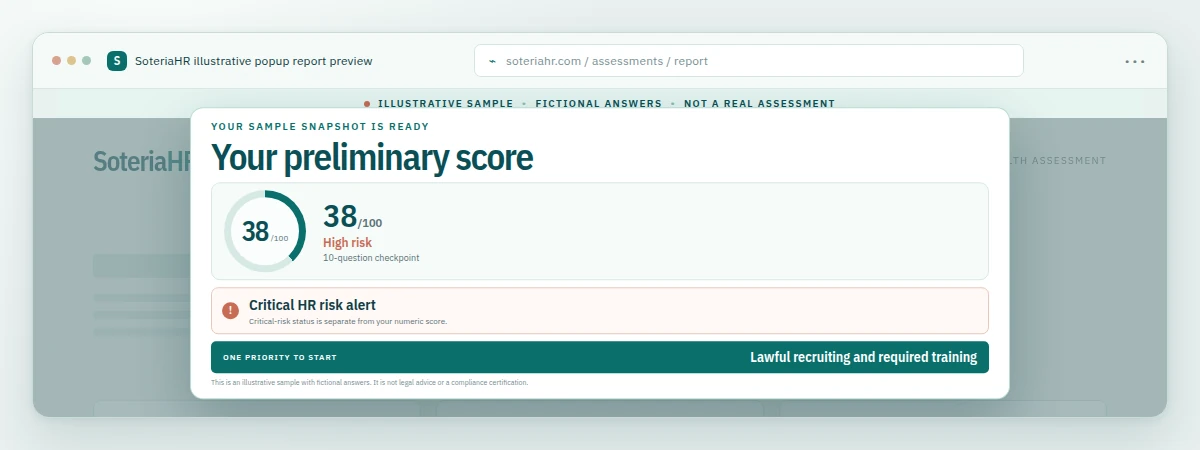
Recruiting and talent management is the backbone of every growing organization, yet many small and mid-sized businesses treat it as an afterthought until a hiring mistake or a wave of turnover forces the issue. In fact, the two functions work together: recruiting brings people in, and talent management keeps them engaged, productive, and loyal. For companies scaling past the 10 to 250 employee mark, getting this right often determines whether growth feels exciting or exhausting.
This guide breaks down what recruiting and talent management actually involves, why it matters more than most leaders realize, and how to build a process that protects your business while helping it grow. Along the way, you will find practical steps, common pitfalls, and answers to the questions leadership teams ask most often.

Effective recruiting and talent management starts with a clear, documented process.
What Is Recruiting and Talent Management?
Recruiting and talent management is the combined process of attracting, hiring, developing, and retaining the people who drive a business forward. In short, recruiting fills the seats, and talent management makes sure those seats turn into long-term contributors.
Specifically, recruiting covers sourcing candidates, screening applicants, and extending offers. Talent management, on the other hand, picks up where recruiting leaves off, covering onboarding, performance reviews, career development, and succession planning. According to the Wikipedia overview of talent management, organizations that treat these as one continuous strategy, rather than separate silos, tend to see stronger workforce stability over time.
Why Talent Acquisition Matters for Growing Businesses
Growing companies face a unique challenge: they need to hire quickly without sacrificing quality or compliance. As a result, talent acquisition becomes far more than posting a job ad and hoping the right resume lands in the inbox.
According to SHRM, the average cost-per-hire for U.S. employers hovers near $4,700, and that figure climbs sharply when a bad hire has to be replaced within the first year. In addition, the U.S. Bureau of Labor Statistics regularly reports elevated turnover rates across industries, which underscores why retention deserves as much attention as hiring.
For a deeper look at how strategic hiring supports long-term growth, this overview of the benefits of talent acquisition outlines the measurable business impact of a proactive approach.
Core Components of a Strong Hiring and Retention Strategy
A strong hiring and retention strategy rests on a few consistent pillars. Without them, even talented recruiters end up patching problems instead of preventing them.
First, clear job descriptions set accurate expectations from day one. Second, a structured interview process reduces bias and speeds up decision-making. Third, a documented onboarding plan helps new hires become productive faster. Finally, ongoing development and feedback keep employees engaged well past their first 90 days. Together, these elements form the foundation that separates reactive hiring from a true talent strategy, a distinction explored further in this comparison of talent acquisition vs. recruitment.
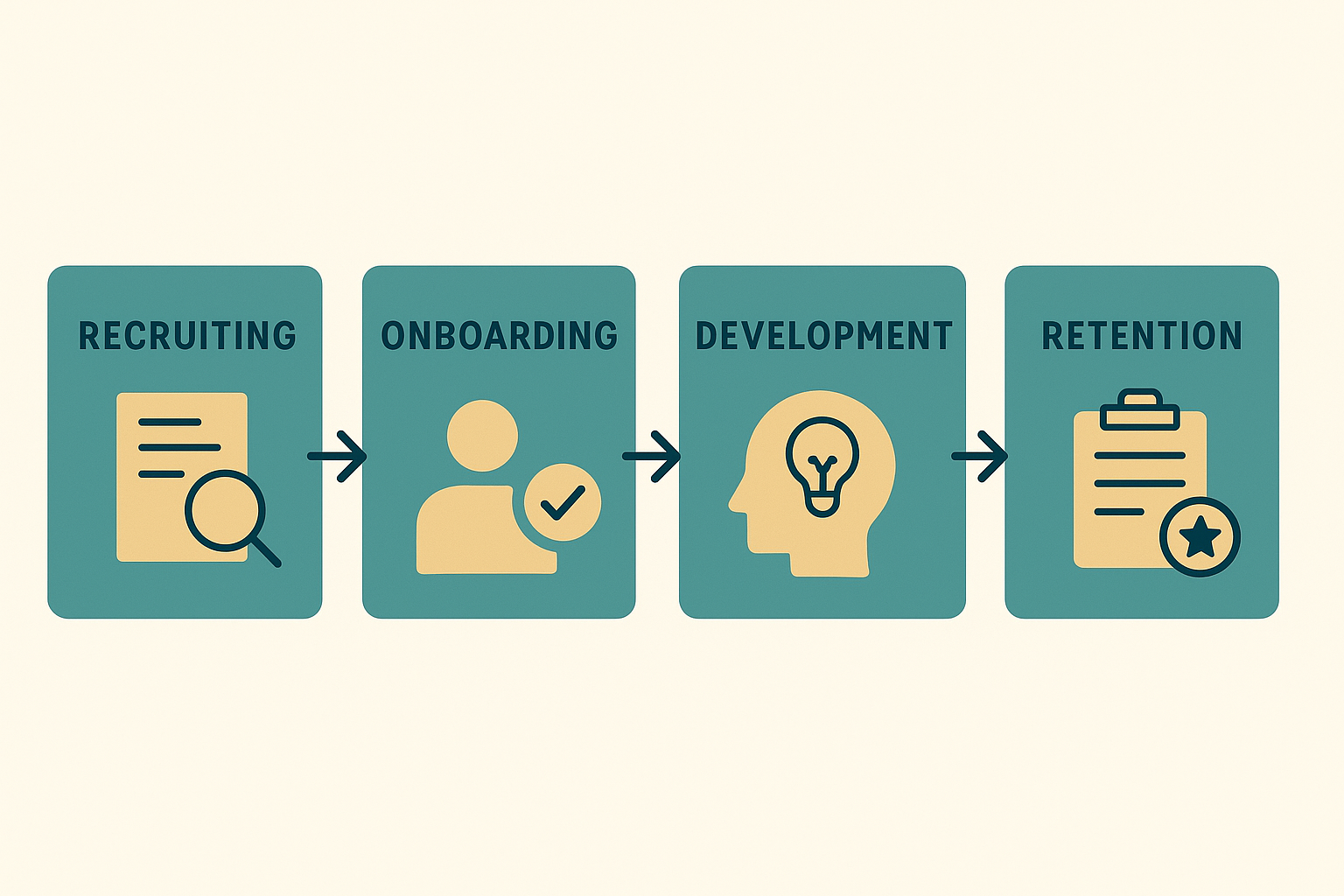
Recruiting and talent management works best as a connected lifecycle, not isolated steps.
How to Build a Recruiting and Talent Management Process
Building a reliable recruiting and talent management process does not require a massive HR department. It does, however, require intention and consistency. Consider these steps as a starting framework:
- Audit current hiring and workforce needs against upcoming growth plans.
- Document a repeatable recruitment strategy covering sourcing, interviews, and approvals.
- Standardize onboarding so every new hire gets the same strong start.
- Invest in retention programs like feedback loops and career pathing.
- Monitor compliance and revisit policies at least twice a year.
For a more detailed walkthrough of the first two steps, this guide on how to develop a recruitment strategy offers practical templates and timelines. Similarly, exploring what talent acquisition really means helps clarify how this fits into the broader hiring picture.
Common Workforce Planning Mistakes to Avoid
Even well-intentioned leaders make avoidable errors when workforce planning is squeezed in between other responsibilities. Recognizing these patterns early can save significant time and money.
Common mistakes include hiring reactively only after someone quits, skipping structured onboarding, and failing to update job descriptions as roles evolve. Furthermore, many companies overlook compliance reviews during hiring, which can quietly create legal exposure. In contrast, businesses that build a documented playbook tend to catch these issues before they become expensive problems.
How Soteria HR Supports Growing Teams
Soteria HR partners with growth-minded companies that need dependable recruiting and talent management without building an internal department from scratch. Rather than offering generic templates, Soteria builds custom HR playbooks tailored to each client’s culture, industry, and growth stage.
Specifically, Soteria HR supports recruiting and hiring, benefits management, compliance monitoring, and employee handbook creation, giving leaders one embedded partner instead of a patchwork of vendors. To see how this approach works in practice, visit Soteria HR or explore this resource on talent acquisition management for a closer look at full-service support options.

A strong welcome sets the tone for long-term retention and engagement.
Frequently Asked Questions About Recruiting and Talent Management
What is recruiting and talent management?
Recruiting and talent management is the combined process of attracting, hiring, developing, and retaining employees who help a business meet its goals. It covers everything from job postings to onboarding, performance reviews, and succession planning.
How does recruiting differ from talent management?
Recruiting focuses on sourcing and hiring candidates, while talent management is the broader, ongoing effort to develop and retain those employees. Together, they form a complete workforce strategy rather than two separate functions.
Why is recruiting and talent management important for small businesses?
Small businesses often lack dedicated HR staff, which makes hiring mistakes and turnover more costly. A structured approach reduces legal risk, improves retention, and helps smaller teams compete for skilled workers.
How much does outsourced recruiting and talent management cost?
Costs vary based on company size, hiring volume, and the scope of services needed, but outsourced partners typically charge a monthly retainer or per-project fee. This is usually far less expensive than hiring a full internal HR team.
How long does it take to build an effective talent management strategy?
Most companies can establish a basic framework within 60 to 90 days, though refining it into a mature program takes longer. Consistent quarterly review helps the strategy evolve alongside growth.
What is the difference between talent acquisition and recruitment?
Recruitment generally refers to filling an immediate open role, while talent acquisition is a longer-term, strategic approach to building a pipeline of future talent. This comparison of talent acquisition vs. recruitment breaks the distinction down further.
What are the most common mistakes companies make in talent management?
Common mistakes include vague job descriptions, inconsistent onboarding, and waiting too long to address performance issues. Skipping compliance reviews during hiring is another frequent and costly error.
What are best practices for improving employee retention?
Best practices include clear career paths, regular feedback, competitive benefits, and a documented onboarding process. Companies that invest in manager training also see meaningfully lower turnover.
How can small businesses compete with larger companies for talent?
Smaller companies can compete by emphasizing culture, flexibility, and growth opportunities that larger organizations often struggle to offer. A fast, well-organized hiring process also gives smaller teams an edge over slower corporate pipelines.
What role does a custom HR playbook play in talent management?
A custom HR playbook documents hiring steps, onboarding checklists, and performance policies so every process stays consistent as the company grows. It also reduces reliance on any one person’s institutional knowledge.
How does compliance affect recruiting and talent management?
Compliance shapes nearly every stage of the process, from job postings to interview questions and termination procedures. Ignoring these requirements can expose a business to fines, lawsuits, or reputational damage.
Can outsourced HR partners handle recruiting and talent management?
Yes, outsourced HR partners like Soteria HR can manage recruiting, onboarding, benefits, and compliance so internal leaders can focus on running the business. This approach gives growing companies access to expertise without the overhead of a full department.
What metrics should I track to measure recruiting success?
Time-to-fill, cost-per-hire, offer acceptance rate, and 90-day retention are among the most useful metrics. Tracking these consistently helps leaders spot bottlenecks and improve future hiring cycles.
Final Thoughts on Recruiting and Talent Management
Ultimately, recruiting and talent management is not a one-time project; it is an ongoing discipline that grows more important as headcount increases. Companies that document their process, invest in retention, and stay ahead of compliance tend to build stronger, more resilient teams.
If your business is ready to move from reactive hiring to a proactive talent strategy, exploring resources like this Soteria HR overview is a practical next step. With the right partner and process in place, recruiting and talent management can become a genuine growth advantage rather than a constant source of stress.