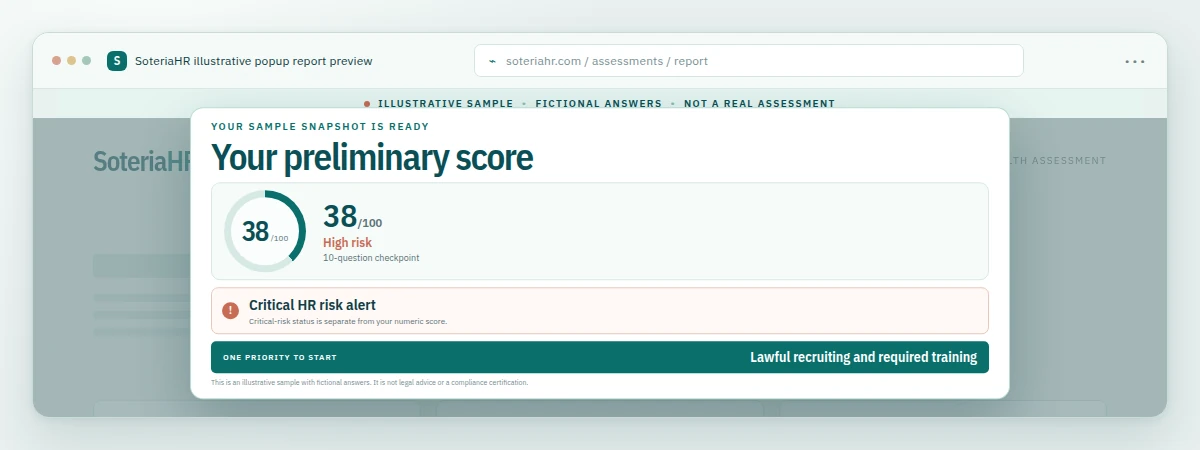
An HR policy template is the fastest way for a growing business to put clear, consistent rules in writing without starting from a blank page. Whether you’re building your first employee handbook or tightening up compliance gaps, a solid template gives you structure, saves time, and helps protect your company from costly missteps. This guide walks through what a good template includes, how to customize one for your business, and mistakes to avoid along the way.
Quick Answer: An HR policy template is a standardized document format outlining a company’s rules on a specific workplace topic, such as attendance or benefits. It typically includes a purpose, scope, procedure, and effective date so businesses can adapt it quickly and consistently across policies.

Customizing an HR policy template is often the first step toward a compliant employee handbook.
What Is an HR Policy Template?
An HR policy template is a reusable document framework that lays out the structure for a specific workplace rule, such as paid time off, remote work, or code of conduct. Instead of writing each policy from a blank page, businesses can use a consistent format that includes a purpose statement, scope, detailed procedures, exceptions, and an effective date.
For example, the Society for Human Resource Management (SHRM) offers sample templates that many small businesses use as a starting point. However, a generic template is rarely a finished product. It needs customization to reflect your state’s laws, your industry’s risks, and your company’s culture.
Why Growing Companies Need Employee Policy Templates
As a company grows past 10 or 15 employees, informal, word-of-mouth expectations start to break down. Consequently, inconsistent enforcement of unwritten rules becomes one of the most common sources of employee complaints and legal exposure. In fact, research from the U.S. Equal Employment Opportunity Commission shows that inconsistent policy application is a recurring factor in workplace discrimination claims.
Employee policy templates solve this by creating one documented standard everyone follows. As a result, managers make faster, more consistent decisions, and employees know exactly what to expect. Furthermore, documented policies give leadership a defensible record if a dispute or audit ever arises. For a deeper look at building this foundation, see our guide on HR policies and procedures.

Reviewing policy language as a team helps ensure new rules match daily operations.
What to Include in an HR Policy Template
A strong HR policy template covers a few core sections no matter the topic. Above all, clarity matters more than legal jargon. Here’s what to include:
- Purpose: Why the policy exists and what problem it solves.
- Scope: Which employees, locations, or roles the policy applies to.
- Procedure: Step-by-step expectations for how the policy is followed or enforced.
- Exceptions: Any special circumstances, such as union agreements or state-specific rules.
- Effective date and owner: When the policy took effect and who is responsible for updates.
If you’re unsure where to start, our resource on how to develop HR policies breaks this process down step by step for growing teams.
How to Build Your HR Policy Template Step by Step
Building a usable HR policy template doesn’t have to be overwhelming. In particular, breaking the process into stages keeps it manageable, even for a lean team without a dedicated HR department.
- Audit your current policies. Review existing documentation, informal practices, and past employee questions to identify gaps or inconsistencies.
- Choose a template structure. Select a format with purpose, scope, procedure, exceptions, and effective date sections for consistency across policies.
- Customize for your state and industry. Adjust language to reflect applicable employment laws and industry-specific risks.
- Align policies with your culture. Write in a tone that matches how your company actually communicates day to day.
- Get expert or legal review. Have an employment attorney or outsourced HR partner check for compliance gaps before rollout.
- Roll out and collect acknowledgments. Distribute the finished policies and require signed acknowledgment forms.
For guidance on communicating these changes effectively, see communicating policy changes to employees.
Common Mistakes When Using an HR Policy Template
Even a well-designed HR policy template can create problems if it’s applied carelessly. For instance, one of the most common mistakes is copying a generic template word-for-word without adjusting it for state-specific labor laws. Requirements around sick leave, final paychecks, and harassment training vary significantly by state, according to the U.S. Department of Labor.
Other frequent errors include vague procedure language that leaves too much room for interpretation, skipping the legal review step, and failing to collect signed acknowledgment forms. Additionally, many businesses set a policy and forget it, never revisiting the document as laws or company needs change. Our article on updating HR policies and procedures covers how often to review and refresh your documents.
HR Policy Template vs. a Custom HR Playbook
A template gets you started, but it isn’t the finish line. Specifically, a custom HR playbook builds on your policy templates by tying them to your business goals, culture, and growth stage. This is where an embedded HR partner adds real value.
At Soteria HR, we help growth-minded small and mid-sized businesses move beyond generic templates toward custom HR playbooks tailored to their industry and team size. Rather than handing you a document and walking away, our approach combines proactive compliance monitoring, benefits management, and hands-on HR leadership so policies actually work in practice, not just on paper. For a broader view of this process, check out our practical guide to HR guidelines for growing companies.
When to Update Your HR Policy Documents
Policies aren’t a set-it-and-forget-it project. As a general rule, review your HR policy documents at least once a year, and update them immediately whenever relevant employment laws change. Fast-growing companies should also revisit policies whenever headcount doubles, new locations open, or benefits offerings shift.
Similarly, if you notice managers interpreting a policy inconsistently, that’s often a signal the language needs clarification. Consequently, treating your HR policy template as a living document, not a one-time task, keeps your business protected as it scales.
A simple checklist helps confirm every HR policy template section is complete before rollout.
Frequently Asked Questions
What is an HR policy template?
An HR policy template is a pre-built document framework that outlines a company’s rules and expectations around topics like attendance, benefits, and conduct. It gives growing businesses a starting structure they can customize instead of writing every policy from scratch.
How do I create an HR policy template from scratch?
Start by listing the topics your business needs to cover, then draft clear language for each policy and review it against current labor laws. Many companies find it faster to adapt an existing framework and tailor it to their culture and state requirements.
Why does my small business need an HR policy template?
Without documented policies, businesses face inconsistent decisions, employee confusion, and greater legal exposure. A template creates consistency and gives leaders a defensible record if disputes arise.
What’s the difference between an HR policy template and an employee handbook?
An HR policy template is a single document format for one policy, while an employee handbook compiles many finished policies into one reference guide for staff. Templates are the building blocks; the handbook is the finished structure.
How much does it cost to create HR policies?
Costs vary widely, from free downloadable templates to several thousand dollars for attorney-drafted, industry-specific policy sets. Outsourced HR partners often bundle policy development into a flat monthly fee, which is more predictable for growing companies.
How long does it take to build a complete HR policy template set?
A basic set of core policies can often be drafted within one to two weeks, while a comprehensive, legally reviewed handbook may take four to six weeks. Timelines depend on company size, industry complexity, and how many states you operate in.
What are common mistakes when using an HR policy template?
The most frequent mistake is copying a generic template without adjusting it for state or industry-specific laws. Other common errors include vague language, missing acknowledgment forms, and failing to update policies as regulations change.
What sections should every HR policy template include?
Every policy template should include a purpose statement, scope, detailed procedures, exceptions, and an effective date. Clear ownership of who enforces the policy also helps prevent inconsistent application.
Can I use a free HR policy template found online?
Free templates can be a helpful starting point, but they’re rarely tailored to your state laws or industry risks. Always have a qualified HR professional or employment attorney review any free template before rolling it out.
How often should I update my HR policy template?
Review policies at least once a year, and update immediately when relevant employment laws change. Fast-growing companies should also revisit policies whenever headcount, locations, or benefits offerings shift significantly.
Do HR policy templates need to be state-specific?
Yes, many employment laws vary by state, including sick leave, final pay timing, and harassment training requirements. A template built for one state may create compliance gaps if used as-is in another.
Should a lawyer or HR professional review my HR policy template?
Yes, a review from an employment attorney or experienced HR professional helps catch compliance gaps before policies go live. This step is especially important for policies covering leave, discipline, and termination.
What’s the best way to roll out new policies to employees?
Communicate changes clearly, explain the reasoning, and give employees a chance to ask questions before requiring signed acknowledgment. A short training session or memo often improves adoption compared to simply emailing a new document.
Final Thoughts
In the end, an HR policy template is only as strong as the customization behind it. A generic document can get you started, but state laws, industry risk, and company culture all shape whether a policy actually protects your business. Therefore, treat your template as a foundation, not a finished product, and revisit it regularly as your team grows.
If building and maintaining compliant HR policy documents feels like one more thing on an already full plate, that’s exactly where an embedded HR partner can help. Soteria HR works alongside growing businesses to turn generic templates into custom playbooks that fit how your company actually operates, so you can focus on growth instead of guesswork.