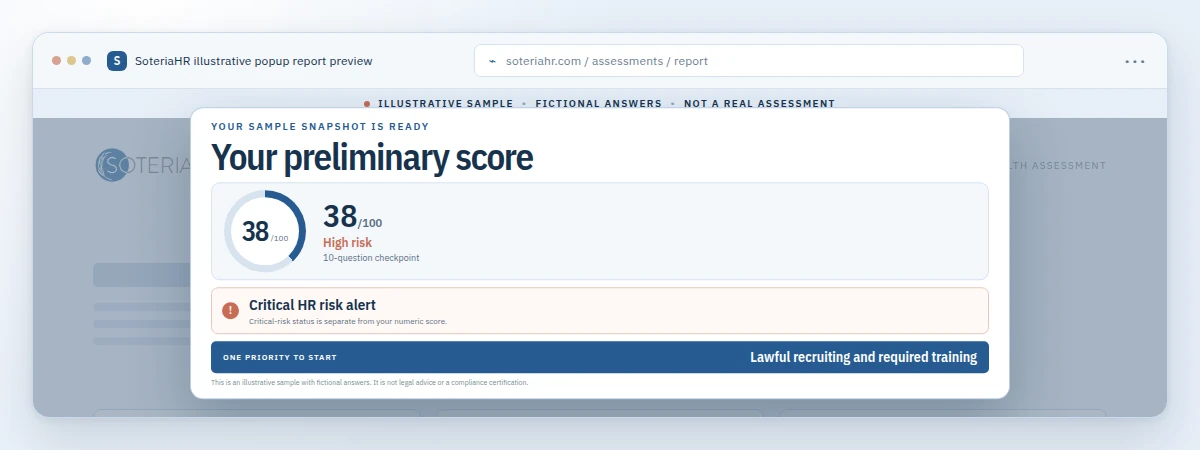
A human resources management consultant is an outside HR expert who helps growing businesses handle hiring, compliance, benefits, and workplace policy without the cost of a full-time HR department. For founders and operators juggling too many hats, this kind of support can feel like a lifeline. It brings order to the parts of running a business that owners rarely learn in school but can absolutely sink a company if ignored.
Direct answer: A human resources management consultant is a professional advisor, often working through an HR consulting firm, who manages compliance, hiring, benefits, and policy for businesses that need HR expertise without hiring a full-time HR director. Most small to mid-sized companies bring one on once employee headcount and legal complexity outpace what an owner or office manager can safely handle alone.
What Is a Human Resources Management Consultant?
In short, a human resources management consultant is a hired specialist who applies HR best practices to your specific business without becoming a permanent line item on payroll. Unlike a single in-house hire, a consultant usually brings an entire team’s worth of knowledge, covering compliance, benefits, recruiting, and culture-building all at once.
For example, Soteria HR works with organizations between 10 and 250 employees, stepping in as an embedded partner rather than a distant vendor. Consequently, clients get strategic guidance alongside the everyday administrative work that keeps HR programs running smoothly.
Why Growing Companies Hire an Outsourced HR Partner
Growth is exciting, but it also multiplies HR risk. As a company adds employees, the rules around wage law, leave policy, and workplace safety become harder to track manually. Therefore, many leaders bring in outside help before a small oversight becomes a costly legal problem.
According to the U.S. Bureau of Labor Statistics, demand for human resources specialists is projected to keep growing faster than the average for all occupations through the next decade, reflecting how essential this expertise has become for businesses of every size. In particular, industries like human services, tech, and manufacturing tend to feel the pressure earliest because of complex staffing and safety requirements.
Common triggers for hiring an HR consulting partner include:
- Rising employee turnover with no clear root cause.
- A recent compliance scare, audit, or complaint.
- Rapid hiring that has outpaced existing HR processes.
- A founder or office manager stretched too thin to lead HR well.

A human resources management consultant often meets regularly with leadership to review hiring, compliance, and culture goals.
Core Services a Human Resources Management Consultant Provides
Not every HR consultant offers the same scope of work, so it helps to know what a well-rounded partner typically covers. Below is a look at the services most businesses should expect from a strong HR consulting partner.
Compliance and Risk Management
Above all, a good consultant monitors ever-changing labor laws so you are not caught off guard. This includes wage and hour rules, leave policies, and workplace safety standards, similarly to how a compliance officer would operate inside a larger company.
Employee Handbooks and HR Playbooks
Clear, compliant policies protect both the company and its people. As a result, consultants often draft or refresh employee handbooks and build custom HR playbooks aligned with company goals and culture.
Recruiting, Benefits, and Payroll Coordination
Beyond compliance, many consultants also support recruiting and hiring, benefits management, and payroll coordination. For a deeper breakdown, see this list of HR consulting services or this guide to what’s typically included in HR consulting.
Human Resources Management Consultant vs. In-House HR Team
Choosing between an outsourced consultant and a full in-house HR hire depends on budget, complexity, and growth stage. In contrast to a single employee, a consulting partner often provides broader coverage across specialties like benefits, compliance, and recruiting at once.
| Factor | HR Consultant | In-House HR Hire |
|---|---|---|
| Cost | Flexible retainer, no benefits cost | Salary, benefits, payroll taxes |
| Expertise Range | Access to a full specialist team | Limited to one person’s background |
| Availability | Scales up or down as needed | Fixed capacity regardless of workload |
To explore this comparison in more depth, this expert guide to HR consulting breaks down when each option makes the most sense.
How Much Does a Human Resources Management Consultant Cost?
Pricing varies based on company size, service scope, and industry risk level. That said, most outsourced HR consultants charge a predictable monthly retainer rather than billing unpredictable hourly fees for every question.
Specifically, retainers can range from a few hundred dollars a month for lighter administrative support to several thousand dollars for full-service compliance, benefits, and recruiting coverage. Meanwhile, a full-time HR director’s salary alone, before benefits and overhead, often exceeds what a year of outsourced consulting would cost. As a result, many growing businesses find consulting to be the more budget-friendly path while they scale toward needing a dedicated internal hire.

Employee handbooks and compliance files are a core deliverable for most HR consulting partners.
How to Start Working With a Human Resources Management Consultant
Getting started is more straightforward than most leaders expect. Below is the typical process for onboarding a human resources management consultant successfully.
- Assess your HR needs and pain points. Identify where your current HR processes create risk, consume time, or slow down growth, such as onboarding, compliance, or recruiting.
- Request a consultation or HR assessment. Reach out to a human resources management consultant for an initial assessment call to discuss your team size, industry, and current compliance gaps.
- Review the proposed HR playbook and scope. Ask for a written scope of work, including deliverables like employee handbooks, benefits administration, and ongoing HR support timelines.
- Onboard the consultant into your systems. Grant access to payroll, HRIS, and communication tools so the consultant can integrate smoothly with your existing operations and team.
- Establish ongoing check-ins and reporting. Schedule regular strategy reviews so the consultant can track compliance updates, employee relations issues, and hiring progress over time.
For businesses exploring this path, this overview of an HR manager consultant arrangement outlines what a typical engagement looks like from start to finish. You can also learn more directly at Soteria HR.
Common Mistakes When Choosing an HR Consulting Partner
Even well-intentioned leaders can pick the wrong fit. Specifically, three mistakes show up again and again among growing businesses.
First, choosing based on price alone often backfires, since the cheapest option may lack the depth needed for real compliance protection. Second, skipping reference checks leaves you without proof the consultant has handled situations similar to yours. Third, waiting too long to bring in help allows small policy gaps to grow into expensive legal exposure. In contrast, businesses that vet a human resources professional consulting partner early tend to avoid costly surprises down the road.

Strong HR consulting blends compliance protection with steady, sustainable growth support.
Frequently Asked Questions About Human Resources Management Consultants
What does a human resources management consultant do?
A human resources management consultant advises growing businesses on hiring, compliance, benefits, and employee relations without joining the company as a full-time employee. They typically build HR playbooks, manage risk, and handle day-to-day HR administration on a flexible basis.
How is a human resources management consultant different from an HR generalist?
An HR generalist usually works inside one company handling a broad mix of tasks, while a consultant serves multiple clients and brings outside expertise across industries. Consultants often spot compliance gaps faster because they see similar issues repeatedly across different businesses.
When should a small business hire an HR consultant?
Most small businesses benefit from HR consulting once they cross roughly 10 to 15 employees, or as soon as compliance complexity outpaces the owner’s bandwidth. Warning signs include rising turnover, unclear policies, or a recent compliance scare.
How much does a human resources management consultant cost?
Costs vary widely, but many outsourced HR consultants charge monthly retainers ranging from a few hundred to a few thousand dollars depending on company size and service scope. This is typically far less expensive than a full-time HR director’s salary and benefits.
Can a human resources management consultant handle compliance issues?
Yes, compliance and risk management are core services most HR consultants provide, including wage law updates, leave policies, and workplace safety requirements. They monitor changing federal and state regulations so business owners do not have to track every legal update themselves.
What is included in outsourced HR consulting services?
Outsourced HR consulting services commonly include employee handbook creation, benefits management, recruiting support, payroll coordination, and ongoing strategic guidance. The exact mix depends on the provider and the client’s stage of growth.
How long does it take to see results from HR consulting?
Many businesses notice improved processes within the first 30 to 60 days, especially around onboarding and documentation. However, cultural changes like reduced turnover usually take three to six months to fully materialize.
What industries benefit most from HR management consulting?
Human services, technology, professional services, and manufacturing companies frequently benefit because they face complex staffing, compliance, or safety demands. Any organization scaling past its founder’s ability to manage people issues alone is a strong candidate.
Is hiring an HR consultant cheaper than hiring an in-house HR manager?
In most cases, yes, because consultants avoid the cost of salary, benefits, payroll taxes, and office space tied to a full-time hire. Businesses also gain access to a broader team of specialists rather than relying on one person’s knowledge.
What qualifications should a human resources management consultant have?
Look for professional certifications such as SHRM-CP or PHR, along with hands-on experience in your industry and company size range. References from similar businesses are also a reliable indicator of real-world results.
What common mistakes do companies make when choosing an HR consultant?
Common mistakes include hiring based on price alone, skipping reference checks, and failing to clarify the scope of services upfront. Businesses also sometimes wait too long to bring in help, letting small compliance issues grow into costly problems.
How does a human resources management consultant help with employee handbooks?
A consultant drafts or updates employee handbooks to reflect current federal and state laws while aligning policies with company culture and goals. This reduces legal exposure and gives employees clear, consistent expectations from day one.
Final Thoughts
In the end, a human resources management consultant gives growing companies the structure and protection they need without the overhead of a full internal department. Whether the goal is fixing compliance gaps, reducing turnover, or simply sleeping better at night, the right consulting partner acts as an embedded ally rather than a distant vendor. As your organization scales, that kind of steady, proactive support often makes the difference between reacting to HR problems and preventing them altogether. For more detail on what this looks like in practice, this SHRM resource and the U.S. Bureau of Labor Statistics outlook offer additional context on the field’s growth and standards.