Employee engagement programs are structured sets of policies, activities, and communication practices that help employees feel connected to their work, their coworkers, and the mission of the company. For growing small and mid-sized businesses, these programs have moved from a “nice to have” to one of the clearest predictors of retention, productivity, and financial performance. In this guide, we will walk through what effective employee engagement programs actually look like, how to build one step by step, and where many employers go wrong along the way.

Open discussion is often the starting point for effective employee engagement programs.
What Are Employee Engagement Programs?
Employee engagement programs are the combined set of initiatives — recognition systems, feedback loops, career development paths, and culture-building activities — that an organization uses to increase how committed employees feel toward their work. In other words, engagement is not a single event or perk. It is an ongoing system that touches hiring, onboarding, daily management, and long-term growth.
According to Gallup’s long-running workplace research, engaged employees show measurably higher productivity and lower absenteeism than their disengaged peers, and global engagement levels have historically hovered around just one in five employees (Gallup, State of the Global Workplace). That gap represents a real opportunity for employers willing to invest in a deliberate program rather than hoping engagement happens on its own.
Why Employee Engagement Initiatives Matter for Growing Companies
Small and mid-sized employers often compete against larger companies for the same talent pool, yet they rarely match corporate salary budgets. As a result, employee engagement initiatives become a practical way to compete on experience instead of pay alone. For example, consistent recognition and clear career paths can matter just as much to employees as an extra percentage point in salary.
Furthermore, disengagement carries a direct cost. Replacing an employee can run from half to twice their annual salary once recruiting, training, and lost productivity are factored in, according to research summarized by the Society for Human Resource Management (SHRM). For a deeper look at how specific programs affect smaller teams, see this breakdown of which employee engagement programs improve retention in small companies.
Key Components of Effective Employee Engagement Programs
Most successful employee engagement programs share a handful of common building blocks. Rather than copying a one-size-fits-all template, employers typically combine several of the following elements based on their size and culture.
- Recognition and appreciation: Regular, specific feedback that acknowledges good work, not just an annual award.
- Career development: Clear growth paths and skill-building opportunities. See examples in this guide to professional development for staff.
- Two-way communication: Surveys, stay interviews, and open channels for feedback to leadership.
- Manager training: Equipping supervisors to lead consistent, supportive check-ins.
- Wellbeing support: Benefits, flexibility, and workload management that reduce burnout.

Reviewing survey data regularly helps employers track whether their employee engagement programs are working.
How to Build an Employee Engagement Strategy That Works
Building an engagement strategy from scratch can feel overwhelming, especially without a dedicated HR team. However, breaking the process into clear steps makes it manageable for even a lean organization.
- Assess current engagement levels. Start by measuring where things stand today using a pulse survey, stay interviews, or a structured HR health assessment so you have a clear, honest baseline before introducing new initiatives.
- Define specific, measurable goals. Set concrete targets, such as reducing voluntary turnover by a set percentage or increasing survey participation, instead of vague goals like “improve morale.”
- Choose initiatives that match your workforce. Select recognition, communication, and development activities sized to your budget and culture rather than copying programs built for much larger companies.
- Train managers to lead engagement conversations. Equip frontline supervisors with simple scripts and feedback habits, since employees consistently report that their direct manager shapes how engaged they feel day to day.
- Review results and adjust quarterly. Revisit survey scores, turnover data, and manager feedback every few months, then adjust the program so it keeps responding to real employee experience.
In addition, employers looking for budget-friendly ways to get started can review these appealing and inexpensive employee engagement options before committing to a larger investment.
Common Mistakes That Undermine Employee Engagement Efforts
Even well-intentioned programs can fail if leadership overlooks a few common pitfalls. Specifically, surveying employees and then doing nothing with the results is one of the fastest ways to damage trust. Employees who take the time to share honest feedback expect to see some response, even if it is simply an acknowledgment of what can and cannot change right now.
Similarly, treating engagement as a single event — like a one-time party or survey — rather than an ongoing practice tends to produce short-lived enthusiasm. Finally, leaving managers out of the process is a frequent misstep, since supervisors are the people employees interact with daily. Without manager buy-in, even a well-designed program struggles to gain traction.
How Outsourced HR Strengthens Employee Engagement Initiatives
Many small and mid-sized employers simply do not have the internal bandwidth to design, launch, and maintain a full engagement program alongside daily HR administration. This is where outsourced HR support can help. An experienced partner can design surveys, recommend initiatives suited to your workforce, and train managers without requiring the company to build out an entire internal HR department.
For a closer look at how this partnership works in practice, see this explanation of how outsourced HR can help develop employee engagement initiatives. Soteria HR, based in Pasadena, California, works with employers across Los Angeles, Orange County, and nationwide — typically organizations in the 10 to 250 employee range — to build engagement support into a broader HR relationship that includes HR administration, consulting, and benefits administration.

Consistent one-on-one conversations are a core part of many employee engagement programs.
Measuring Results: Is Your Program Working?
Measurement is what separates a real engagement program from a collection of one-off activities. Therefore, employers should track a small set of indicators consistently rather than chasing every available metric. Voluntary turnover rate, survey participation, and manager-reported team morale are a practical starting point for most small businesses.
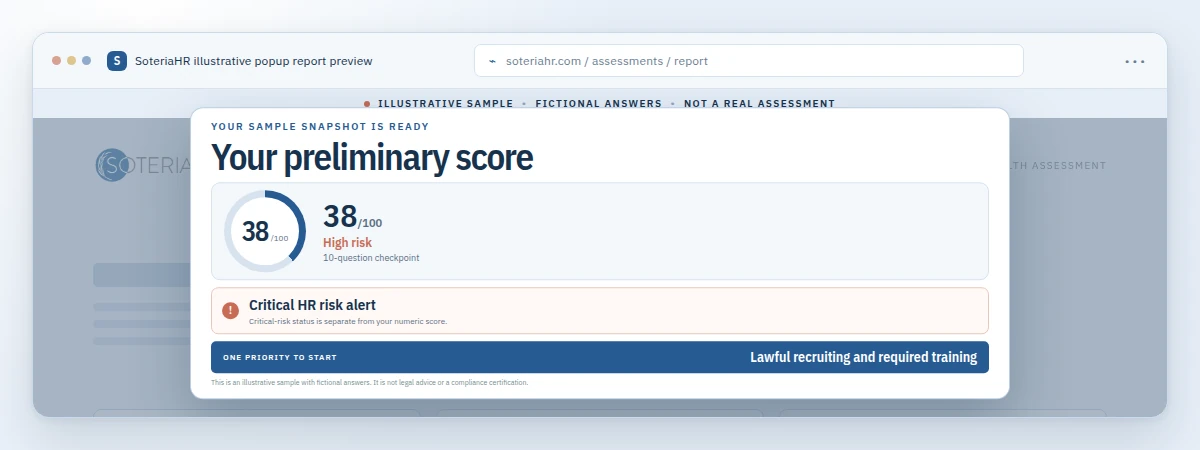
As a result, these numbers should be reviewed on a regular cadence — quarterly works well for most teams — so adjustments happen before small problems grow into larger retention issues. For more on why this matters financially, this resource on the impact of employee engagement walks through the connection between engagement and business performance in more detail. Employers who want an outside perspective can also start with Soteria HR’s free HR Health Assessment, which introduces potential engagement and compliance gaps before a deeper consultation.
Frequently Asked Questions About Employee Engagement Programs
What are employee engagement programs?
Employee engagement programs are organized sets of policies and activities — such as recognition, feedback, and development initiatives — designed to increase how connected and motivated employees feel at work. They typically combine communication, recognition, career growth, and manager training into one coordinated effort.
How do employee engagement programs improve retention?
Engagement programs improve retention by addressing the reasons employees leave, such as feeling unrecognized or disconnected from leadership. When employees feel heard and valued, they are more likely to stay with the company long term.
Why do small businesses need employee engagement programs?
Small businesses often lose talent to larger competitors with bigger budgets, which makes engagement a key differentiator. A structured program helps smaller employers compete on culture and experience rather than pay alone.
What is the difference between employee engagement and employee satisfaction?
Employee satisfaction measures whether employees are content with their job conditions, while engagement measures how motivated and invested they are in the company’s success. An employee can be satisfied yet disengaged, which is why both metrics matter.
How much does it cost to run an employee engagement program?
Costs vary widely, from low-cost recognition practices to paid survey platforms and outsourced HR support. Many small businesses start with low-budget initiatives and scale spending as the program proves its value.
How long does it take to see results from an engagement initiative?
Most organizations see measurable shifts in survey scores or turnover within two to three quarters of consistent effort. Results depend heavily on how well leadership follows through on the feedback employees provide.
What are common mistakes when launching engagement programs?
Common mistakes include collecting survey feedback without acting on it, treating engagement as a one-time event, and leaving managers out of the process. These errors quickly erode employee trust in future initiatives.
Can outsourced HR help manage employee engagement programs?
Yes, outsourced HR providers can design surveys, recommend initiatives, and train managers without requiring a company to build an internal HR department. This is especially useful for employers without dedicated HR staff.
What is the best way to measure employee engagement?
Pulse surveys, stay interviews, and turnover data together give the clearest picture of engagement levels. Combining quantitative scores with qualitative feedback helps leaders understand the “why” behind the numbers.
How often should companies update their engagement strategy?
Most HR professionals recommend reviewing engagement strategy quarterly, with a deeper annual assessment. Frequent small adjustments tend to work better than infrequent, large overhauls.
Do remote teams need different engagement programs?
Remote teams generally need more intentional communication and virtual recognition, since casual office interactions do not happen naturally. Video check-ins, digital recognition tools, and clear expectations become more important for distributed teams.
What role do managers play in employee engagement?
Managers are often the single biggest influence on whether an employee feels engaged, since they shape daily feedback and recognition. Programs that skip manager training tend to underperform regardless of other investments.
How does employee engagement affect productivity and profit?
Engaged employees tend to produce higher-quality work, take fewer unplanned absences, and stay longer, which reduces costly turnover. Research from Gallup has repeatedly linked higher engagement to stronger business outcomes.
What size companies benefit most from formal employee engagement programs?
Companies roughly in the 10 to 250 employee range often benefit the most, since they are large enough to need structure but may lack a full HR department. That said, any organization can benefit from a scaled-down version of these practices.
Is employee engagement the same as workplace culture?
Culture is the broader environment and shared values of an organization, while engagement is a measurable outcome influenced by that culture. Strong employee engagement programs are usually built on top of an intentional, well-defined culture.
Ready to strengthen engagement at your company?
Talk to an HR Expert at (800) 399-2458 or request a consultation to discuss a tailored employee engagement strategy.
Final Thoughts
In summary, employee engagement programs are not a one-time project but an ongoing commitment that touches recognition, communication, career growth, and daily management. Above all, consistency matters more than scale — a small business with a modest, well-run program can outperform a larger one running on autopilot. Whether you are starting from scratch or refining an existing effort, the goal remains the same: help employees feel seen, heard, and invested in where the company is headed. For employers without the internal bandwidth to build this alone, outsourced HR support, like that offered through Soteria HR, can turn a good intention into a working employee engagement program.