HR support during organizational change helps leaders manage mergers, restructurings, layoffs, and leadership transitions without losing employee trust or compliance footing. When a company reorganizes, adjusts headcount, or shifts leadership, the human resources side of that transition often determines whether the change succeeds or quietly causes turnover and legal exposure. Because small and mid-sized employers rarely have a dedicated HR department, this stage is where many organizations stumble.
Direct answer: HR support during organizational change means having a structured plan for communication, documentation, and compliance so employees understand what is happening and the company stays protected. It typically includes updated policies, a communication timeline, and review of legal obligations tied to the specific type of change.
What Is HR Support During Organizational Change?
HR support during organizational change is the set of guidance, documentation, and communication structures a company uses to manage transitions such as mergers, restructuring, leadership turnover, or workforce reductions. It covers everything from updating job descriptions to reviewing layoff selection criteria for fairness. In short, it is the connective tissue between a leadership decision and how that decision actually lands with employees.
For a company without an internal HR department, this support often comes from an outsourced provider. For companies with an existing HR team, it can mean bringing in consulting expertise to handle a specific transition without overloading internal staff.

Structured planning meetings are often where HR support during organizational change begins.
Why Organizational Change Puts HR at Risk
Organizational change tends to expose weaknesses that were manageable during stable periods. For instance, a handbook that hasn’t been updated in years may contradict the new reporting structure. Similarly, benefits enrollment records can fall out of sync when roles or hours change.
Research widely cited in change management literature suggests that a large share of organizational transformation efforts fail to meet their original objectives, often because the human side of the change was underestimated. Consequently, companies that treat HR planning as an afterthought tend to see higher voluntary turnover in the months following a major change. As a result, the cost of skipping HR planning usually shows up later, through disputes, confusion, or departures of valued employees.
Furthermore, equal employment considerations become more pressing during layoffs or restructurings. The U.S. Equal Employment Opportunity Commission has long emphasized that selection criteria for reductions in force must be applied consistently to avoid disparate impact on protected groups.
Common Types of Organizational Change That Need HR Guidance
Not every transition looks the same, and the right HR guidance through change depends on what is actually happening inside the company. The table below outlines several common scenarios.
| Type of Change | Primary HR Focus |
|---|---|
| Mergers and acquisitions | Policy harmonization, benefits alignment, culture integration |
| Workforce reductions or layoffs | Selection fairness, required notices, benefits termination |
| Leadership transitions | Communication planning, reporting structure updates |
| Rapid growth or scaling | Onboarding systems, policy scalability, compliance thresholds |
If your organization is scaling quickly rather than contracting, the considerations shift somewhat. You can read more about how to support a growing team effectively for guidance specific to expansion periods.
How to Build an HR Support Plan for Organizational Change
Building a plan does not need to be complicated, but it does need to follow a logical order. Below is a practical sequence that works for most restructurings, mergers, or leadership shifts.
- Assess current HR practices and risk areas. Review existing handbooks, job descriptions, and compliance documentation to identify gaps before announcing any organizational change to employees.
- Build a communication timeline. Create a sequence for informing leadership, managers, and employees so that information reaches people consistently and reduces rumors or confusion.
- Review compliance obligations for the specific change. Confirm notice requirements, benefits continuation rules, and equal employment considerations that apply, especially for layoffs or mergers.
- Update HR documentation and benefits records. Revise handbooks, organizational charts, and benefits enrollment records to reflect the new structure accurately and promptly.
- Train managers and monitor employee feedback. Equip managers with talking points and escalation paths, then track employee questions so issues get addressed before they affect retention.
This process aligns closely with broader guidance on why HR support matters for growing businesses, since the same documentation and communication principles apply even outside a specific change event.

Updated documentation is a core part of HR support during organizational change.
Signs Your Organization Needs Outside HR Support
Some companies try to manage organizational change entirely with internal resources. However, certain signs suggest that outside expertise would reduce risk. For example, if your leadership team is spending more time debating HR logistics than running the business, that is a signal. Likewise, if your company lacks anyone trained in employment law, a restructuring or layoff carries more legal exposure than most leaders realize.
In particular, companies between roughly 10 and 250 employees often sit in a difficult middle ground. They are too large to manage change informally but not large enough to justify a full internal HR department. In this situation, an outsourced partner or an Administrative Services Organization (ASO) arrangement can provide structure without requiring the company to give up its role as employer. Under an ASO model, the client organization remains the employer and keeps responsibility for employment decisions, while receiving tailored administrative support.
For a broader look at what outsourced HR coverage typically includes, see this overview of HR support for business and why it matters.
How Soteria HR Supports Companies Through Change
Soteria HR works with founders, CEOs, and operations leaders at companies that do not have a full internal HR department, as well as organizations with an existing HR team that needs extra capacity during a transition. Based in Pasadena, California, Soteria serves employers across Los Angeles, Orange County, and nationwide through HR administration, HR consulting, and benefits administration.
During organizational change specifically, this often looks like reviewing documentation, coordinating with payroll providers, and helping leadership think through communication timing before any announcement goes out. Because the engagement is customized, the level of involvement can expand or contract depending on what the transition actually requires. You can learn more directly at Soteria HR.
Culture also tends to shift during periods of change, sometimes in ways leaders do not anticipate. For more on this connection, see leveraging HR’s role in fostering a positive organizational culture.
Mistakes to Avoid When Managing HR Through a Transition
Even well-intentioned leaders make predictable mistakes during organizational change. First, announcing a restructuring before documentation and talking points are ready often creates confusion that is hard to undo. Second, skipping a review of layoff selection criteria can expose the company to claims of unfair treatment, something the EEOC has addressed repeatedly in guidance on reductions in force.
Third, some companies forget to review payroll and benefits timing, which can leave departing employees without clarity on their final pay or continuation coverage. The U.S. Department of Labor maintains guidance on wage and benefits obligations that employers should confirm against their specific jurisdiction before finalizing a plan. Finally, leaders sometimes assume employees will “figure it out,” when in reality, consistent communication is what keeps a team engaged through uncertainty. For more on this, see how to help your employees help you during periods of change.

Clear communication helps employees move through change with confidence.
Where to Start If You Haven’t Planned for Change Yet
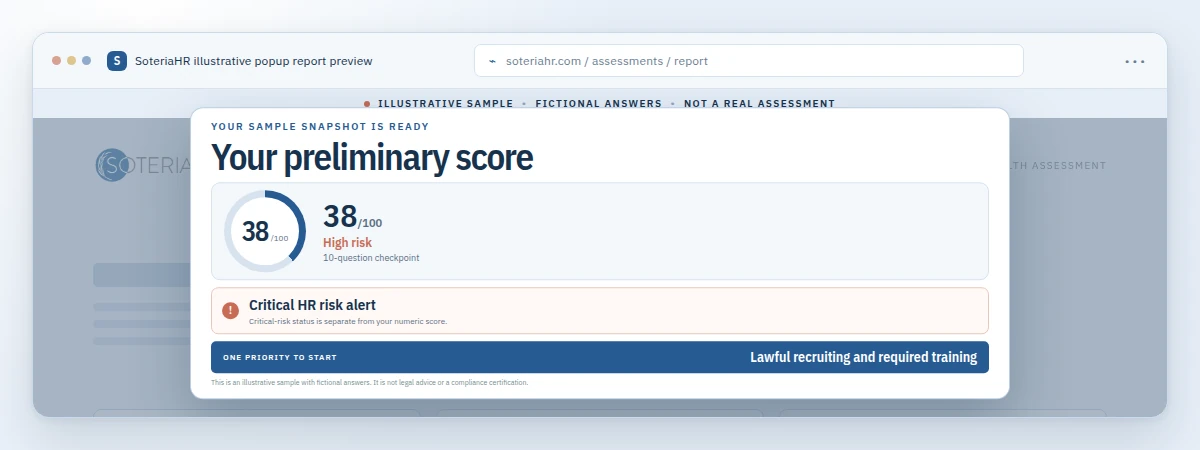
If your company is already in the middle of a transition without a plan, the best starting point is a quick assessment of where the gaps are. Soteria HR offers a free HR Health Assessment at soteriahr.ai, available as a 10-question Quick HR Check or a more detailed 40-question Complete HR Health Assessment. Results are self-reported and preliminary, not a certification of compliance, but they can highlight priorities worth discussing with an HR professional.
Additionally, for companies looking for ongoing guidance beyond a single transition, this resource on where to find practical HR resources for growing companies offers a useful next step.
Frequently Asked Questions About HR Support During Organizational Change
What is HR support during organizational change?
HR support during organizational change is the guidance, documentation, and communication structure that helps a company manage transitions like restructuring, mergers, or leadership shifts while staying compliant and keeping employees informed.
Why do small and mid-sized companies struggle with change management?
Many smaller employers lack a dedicated HR team, so change initiatives often rely on managers who are not trained in employment law or structured communication. This gap increases compliance risk and employee turnover during transitions.
How long does it take to plan HR support for a company restructuring?
Planning typically takes two to six weeks, depending on the size of the change and whether layoffs, benefits changes, or role reassignments are involved. Larger or multi-state changes usually require a longer runway.
What is the difference between HR support and an ASO during organizational change?
HR support generally refers to guidance and administrative help, while an Administrative Services Organization (ASO) provides broader, ongoing HR infrastructure without co-employment. The company remains the employer of record in both arrangements.
How much does outsourced HR support cost during a transition?
Cost varies based on company size, scope, and whether support is project-based or ongoing. Most outsourced HR providers price services around employee count and complexity, so a consultation is the most accurate way to get a quote.
What are common mistakes companies make during organizational change?
Common mistakes include announcing changes without a communication plan, skipping documentation of role or benefits changes, and failing to review layoff decisions for disparate impact under equal employment laws.
Does HR support help with layoffs and reductions in force?
Yes, HR support helps structure layoffs, review selection criteria for fairness, prepare required notices, and coordinate benefits termination timelines. This reduces legal exposure and helps maintain morale among remaining employees.
How does HR support during organizational change affect employee retention?
Clear, consistent HR communication during change tends to reduce uncertainty, which is a leading driver of voluntary turnover. Employees who understand how a transition affects their role and benefits are more likely to stay engaged.
What documents should be updated during a company restructuring?
Employee handbooks, organizational charts, job descriptions, benefits summaries, and payroll records should all be reviewed and updated. Outdated documents are a common source of confusion and compliance gaps after a change.
When should a company bring in outside HR help for a transition?
A company should consider outside HR help as soon as a merger, leadership change, or workforce reduction is being planned, rather than after announcements are made. Early involvement allows HR to shape the plan instead of reacting to it.
Can HR support help with mergers and acquisitions?
Yes, HR support plays a central role in mergers by aligning policies, harmonizing benefits plans, and managing communication between combining workforces. Without this coordination, mergers often experience higher-than-expected turnover.
What is the first step in building an HR plan for organizational change?
The first step is a structured assessment of current HR practices, policies, and risk areas before any announcement is made. This baseline helps leaders identify gaps that could cause problems once the change begins.
Planning a restructuring, merger, or leadership change? Talk to an HR Expert at Soteria HR by calling (800) 399-2458 or submitting a consultation request. You can also start with the free HR Health Assessment at soteriahr.ai to identify priorities before your next conversation.
Final Thoughts on Managing HR Through Change
Organizational change is rarely simple, and it almost always touches more parts of the business than leadership expects at the outset. Nevertheless, with a structured approach, HR support during organizational change does not have to be a source of chaos. By assessing risk early, building a communication plan, updating documentation, and training managers, companies can move through mergers, restructurings, or leadership transitions with far less disruption.
Ultimately, whether a company handles this internally or brings in outside guidance, the goal is the same: protect employees and the organization at the same time. For leaders who want a second set of experienced eyes on an upcoming transition, Soteria HR’s promise is straightforward: we’ve got your back, so you can focus on growth. Reach out through the resources above, or explore additional guidance on practical HR resources for growing companies to keep building a stronger foundation.