Benefits vendors are the companies that design, administer, and support the health insurance, retirement plans, and other perks your employees rely on every day. For growing small and mid-sized businesses, choosing the right partner among the many benefits vendors available can feel overwhelming. However, the decision affects everything from employee satisfaction to compliance risk and your bottom line. In this guide, we’ll break down what benefits vendors do, how to evaluate them, and how a trusted HR partner can help you avoid costly missteps.
Quick answer: Benefits vendors are third-party providers, such as insurance carriers, retirement plan administrators, and benefits technology platforms, that help employers deliver and manage employee benefits programs. The right mix of vendors keeps your program compliant, cost-effective, and easy for employees to use. Consequently, partnering with an experienced HR advisor helps you vet, negotiate, and manage these relationships so nothing falls through the cracks.
How Employee Benefits Providers Work
Benefits vendors are the specialized companies that sit behind the scenes of every employee benefits program. Specifically, they handle the design, funding, administration, or technology that makes benefits work day to day.
In particular, most employers work with several categories of benefits vendors at once. Insurance carriers underwrite the actual coverage, such as medical, dental, and vision plans. Third-party administrators (TPAs), meanwhile, process claims and manage plan documents without taking on insurance risk themselves.
Benefits technology platforms are another common type of vendor. These systems handle enrollment, deductions, and compliance reporting, often integrating directly with payroll. Additionally, some vendors specialize in ancillary benefits like life insurance, disability coverage, or voluntary perks such as pet insurance and legal plans.
For a deeper look at how these pieces fit together, our guide to benefits administration solutions walks through each component in more detail. Above all, understanding who does what helps you ask better questions when you’re evaluating a potential partner.

Comparing proposals side by side is one of the clearest ways to evaluate different benefits vendors.
Why Choosing the Right Benefits Vendor Matters for Growing Companies
The stakes of vendor selection rise as your headcount grows. For example, a company with 20 employees might tolerate a clunky enrollment platform, but that same friction becomes a real problem at 100 employees.
Indeed, benefits costs are a major line item for most businesses. According to the U.S. Bureau of Labor Statistics, benefits account for nearly 30 percent of total employee compensation costs nationwide. As a result, even small inefficiencies in vendor selection can translate into significant wasted spend over time.
Beyond cost, compliance risk is another reason vendor choice matters so much. Federal laws like ERISA and the Affordable Care Act set strict rules for how benefits plans must be administered and disclosed. A vendor who misses a filing deadline or mishandles a COBRA notice can expose your company to penalties. Therefore, vetting a vendor’s compliance track record isn’t optional, it’s essential.
Finally, employee experience matters more than many leaders realize. Confusing enrollment portals or slow claims processing frustrate staff and erode trust in your benefits program, even when the underlying coverage itself is solid.
Types of Employee Benefits Vendors You’ll Encounter
Not all employee benefits vendors play the same role. Understanding these categories makes it easier to build the right vendor team for your organization.
- Insurance carriers underwrite medical, dental, vision, and life coverage.
- Benefits brokers help shop the market and negotiate rates on your behalf.
- Third-party administrators manage claims, COBRA, and plan documents.
- HR and benefits technology platforms handle enrollment, deductions, and reporting.
- PEOs bundle benefits with payroll and HR under a co-employment model.
- Ancillary and voluntary benefits vendors provide add-ons like pet insurance, legal plans, or identity protection.
Each vendor type brings different strengths, and most growing companies end up working with several at once. That said, coordinating them well requires a clear point of ownership internally, which is exactly where many businesses turn to an outsourced benefits administration partner rather than juggling every vendor relationship alone.
How to Evaluate Benefits Vendors: A Step-by-Step Process
Selecting the right benefits vendors doesn’t have to be guesswork. Instead, following a consistent evaluation process protects you from costly surprises later.
- Assess your workforce needs and budget. Start by reviewing employee demographics, current utilization, and what you can realistically afford to contribute toward premiums each year.
- Request detailed proposals from multiple vendors. Ask each candidate for pricing, service level agreements, implementation timelines, and references from clients of similar size and industry.
- Vet compliance credentials and service history. Confirm the vendor’s track record with ERISA, ACA, and state-specific benefits regulations, and ask how they’ve handled past compliance issues.
- Evaluate the technology and employee experience. Test the enrollment portal yourself and ask current clients how easy claims and customer service have been to navigate.
- Check references and review complaint history. Speak directly with two or three existing clients and check for unresolved complaints with your state insurance department.
- Negotiate contract terms and renewal clauses. Pay close attention to rate guarantee periods, termination notice requirements, and any automatic renewal language before signing.
Following these steps consistently helps you separate strong benefits vendors from ones that look good on paper but fall short in practice.
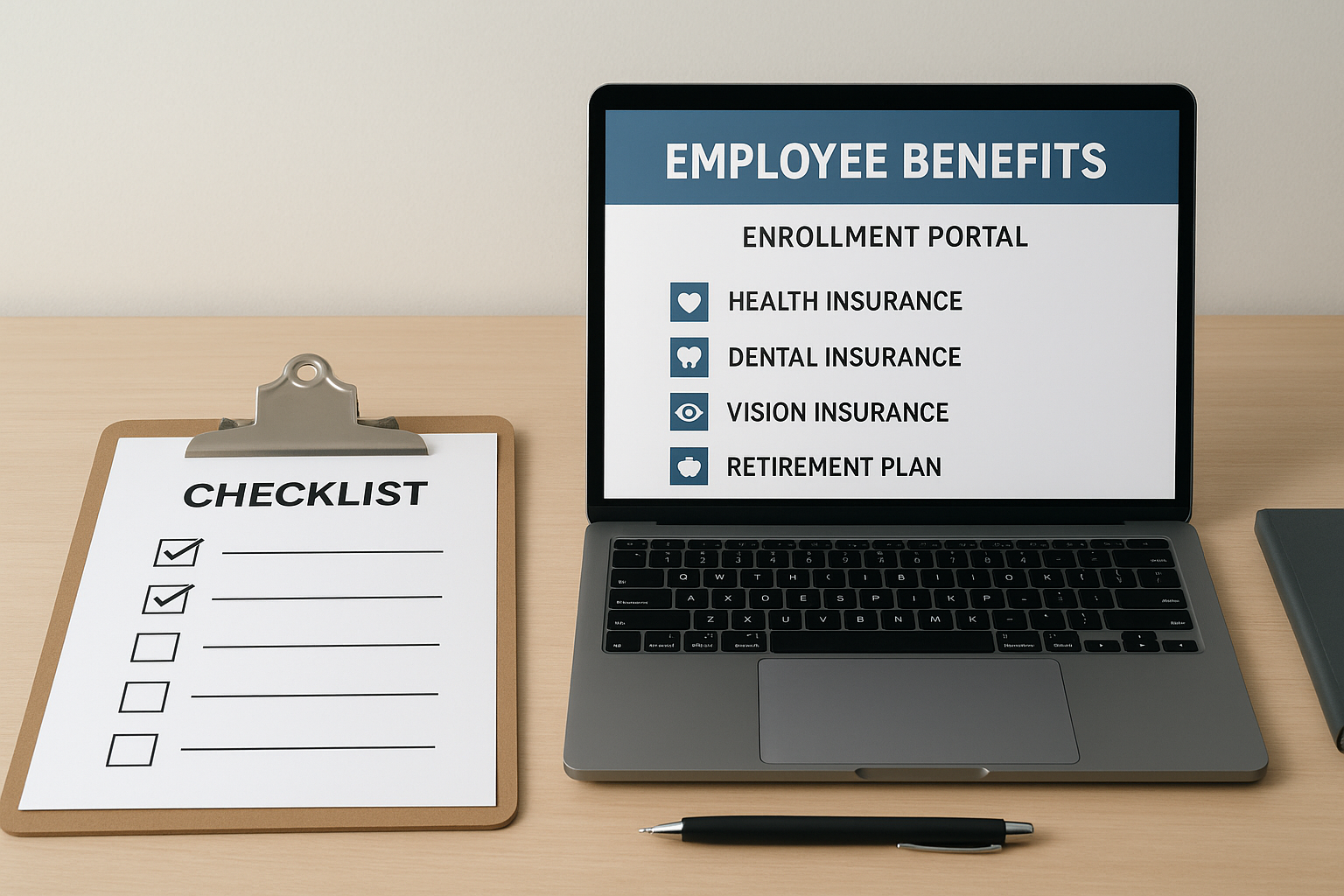
A written checklist keeps the evaluation of benefits vendors consistent across every proposal.
Common Mistakes When Choosing a Benefits Vendor
Even experienced HR leaders fall into predictable traps when selecting vendors. Recognizing these mistakes ahead of time can save you a painful renewal season.
One frequent error is choosing based on price alone. A cheap premium often means a narrow network or weak customer service, which creates hidden costs down the road. Similarly, many companies skip reference checks entirely, relying only on the vendor’s own sales pitch.
Another common mistake is failing to read renewal and termination clauses closely. Some contracts auto-renew with only a narrow cancellation window, trapping employers in unfavorable terms for another full year. In addition, businesses sometimes underestimate the importance of implementation support, only to discover mid-rollout that the vendor’s team is stretched too thin to help.
Benefits Providers vs. Brokers vs. PEOs: What’s the Difference?
It’s easy to confuse these three types of partners, yet each plays a distinct role. Benefits providers, such as insurance carriers and TPAs, actually deliver or administer the coverage itself.
Brokers, in contrast, act as intermediaries. They shop the market, negotiate rates, and often help with plan design, but they typically don’t administer claims directly. PEOs (professional employer organizations) go a step further, bundling benefits with payroll and HR compliance under a shared employment arrangement, which can simplify things for very small employers but reduces flexibility as you grow.
For a closer comparison of these outsourcing models, this breakdown of benefits outsourcing companies explains which option tends to fit different company sizes and growth stages.
How Soteria HR Helps You Manage Benefits Vendor Relationships
Vetting and managing benefits vendors is exactly the kind of work that pulls busy leaders away from running the business. That’s where Soteria HR comes in.
As an outsourced HR partner for growing small and mid-sized organizations, Soteria HR helps companies design and manage competitive, cost-effective benefits programs without hiring a full internal HR team. Specifically, our team helps you shop and vet benefits vendors, negotiate renewal terms, and stay ahead of compliance requirements like ACA reporting and COBRA administration.
Rather than leaving you to compare proposals alone, Soteria HR acts as an embedded partner who understands your business and tailors vendor recommendations to your budget and workforce. To see how this works for companies your size, our guide on what makes a benefits management service stand out for small companies outlines the specific qualities worth prioritizing.
If you’re ready to simplify how you manage employee benefits administration outsourcing, visit Soteria HR to learn more about our approach.

An experienced HR partner can take the guesswork out of managing benefits vendors long term.
Frequently Asked Questions About Benefits Vendors
What are benefits vendors?
Benefits vendors are third-party companies, such as insurance carriers, third-party administrators, and benefits technology platforms, that help employers deliver and administer employee benefits programs. Most employers rely on several of these vendors working together.
How many benefits vendors does a typical small business use?
Most small to mid-sized companies work with three to six vendors at once, covering health insurance, benefits technology, ancillary coverage, and COBRA administration.
What’s the difference between a benefits vendor and a benefits broker?
A vendor delivers or administers coverage directly, while a broker acts as an intermediary who shops the market and negotiates rates on the employer’s behalf.
How do I know if my benefits vendor is compliant?
Ask the vendor directly about their ERISA and ACA compliance history, and request documentation of any past audits or corrective actions taken.
How much does it cost to switch benefits vendors?
Switching costs vary by vendor and plan complexity, but most employers time the transition around renewal to avoid extra fees, with implementation taking roughly 60 to 90 days.
How long does it take to onboard a new benefits vendor?
Implementation typically takes 60 to 90 days, depending on plan complexity and how quickly employee census data can be transferred and verified.
What questions should I ask before hiring a benefits vendor?
Ask about service level agreements, implementation support, claims turnaround time, and references from clients of similar size and industry.
Can a PEO replace the need for separate benefits vendors?
A PEO bundles benefits administration with payroll and HR compliance, which reduces the number of vendors managed directly, though it also limits plan flexibility.
What is the biggest mistake companies make when choosing benefits vendors?
Choosing based on price alone, without checking references or reading renewal contract terms, is the most common and costly mistake employers make.
Do benefits vendors handle COBRA administration?
Some vendors, particularly TPAs and benefits technology platforms, include COBRA administration as part of their service, while others require a separate specialist.
How often should I re-evaluate my benefits vendors?
Most HR experts recommend reviewing vendor performance annually, ideally about 90 days before your plan’s renewal date.
Can outsourced HR help manage benefits vendors?
Yes, an outsourced HR partner like Soteria HR can vet, negotiate, and manage vendor relationships on a company’s behalf, saving internal leaders significant time.
Final Thoughts on Choosing Benefits Vendors
Ultimately, choosing the right benefits vendors is one of the most consequential decisions a growing company makes. The right partners protect you from compliance risk, control rising costs, and give employees a smooth, trustworthy experience. In contrast, the wrong vendor mix can quietly drain your budget and your team’s patience for years.
Above all, remember that you don’t have to navigate benefits vendors alone. As explored throughout this guide from employee benefits fundamentals to vendor evaluation, a structured process paired with the right HR partner turns a stressful decision into a confident one. Soteria HR is ready to help your company vet, negotiate, and manage benefits vendors so you can focus on growing your team.